


How to design a rain garden or infiltration garden?
From design to plant selection, here are our tips for a successful absorbent garden
Contents
The rain garden, also known as a “infiltration garden”, “stormwater management garden” or “absorbent garden”, is an ecological, economical, and aesthetic way to manage precipitation. Water management has indeed become an essential issue with climate change. On one hand, we are experiencing increasingly frequent drought periods; on the other, there is an increase in natural disasters. The water garden helps control water influxes to limit the risks of flooding and erosion, but also to enhance rainwater, which can even be filtered and reused.
To top it all off, these rain gardens also promote biodiversity by contributing to the development of wetland areas.
These installations of all sizes can easily be integrated into private gardens. Here are our tips for easily installing a rain garden at home.

What is the purpose of a rain garden?
Definition
The rain garden allows for the exploitation and control of runoff water, creating a water point and a wet area. Specifically, it is a space of varying size and depth that retains water generated by natural precipitation. It is composed of stones and plants.
On a collective scale, it is used to slow down the runoff of rainwater, so that it reaches the sewers and treatment plants less quickly. Some also act as purifiers of water before it infiltrates the soil.
This technique has been used in landscaping for many years, in France and elsewhere. It can be found particularly in the terraced and pebble gardens of the southeast of France: during heavy rains associated with Mediterranean episodes, such as Cevennes episodes, rainwater is retained in these areas instead of flowing abundantly.

Rain garden in a park in Hong Kong
Advantages
The rain garden offers several ecological and economic benefits, as it:
- allows for the storage of rainwater for potential reuse (in the garden, at home, etc.);
- contributes to the management of flooding, infiltration, and erosion issues;
- promotes ambient cooling;
- is beneficial for biodiversity (amphibians, insects, birds, small mammals…);
- is aesthetically pleasing, naturally integrated into the landscape;
- is easy to set up.
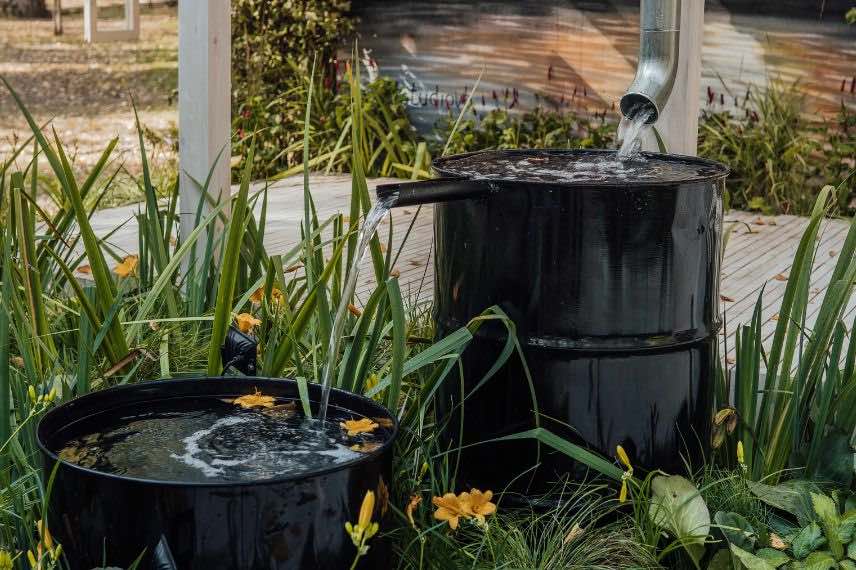
Simple “home” version to implement
Read also
How to save water in the garden?Choosing the location
The installation site should be carefully chosen, based on the terrain configuration and its exposure. The rain garden will be established in a location subject to precipitation, near a water recovery tank, a downspout, or a natural drainage pathway.
Conversely, avoid placing it too close to the dwelling (allow at least 3 to 4 metres of distance) to prevent the risk of infiltration. Avoid areas where cables, pipes, or other infrastructure are buried. The proximity of trees with a developed root system may also hinder the proper functioning of the rain garden.
You can choose a naturally sloped location, reuse an existing drain or basin. On flat terrain, an incline will need to be created. The defined area must be permeable and capable of supporting the weight of the water.
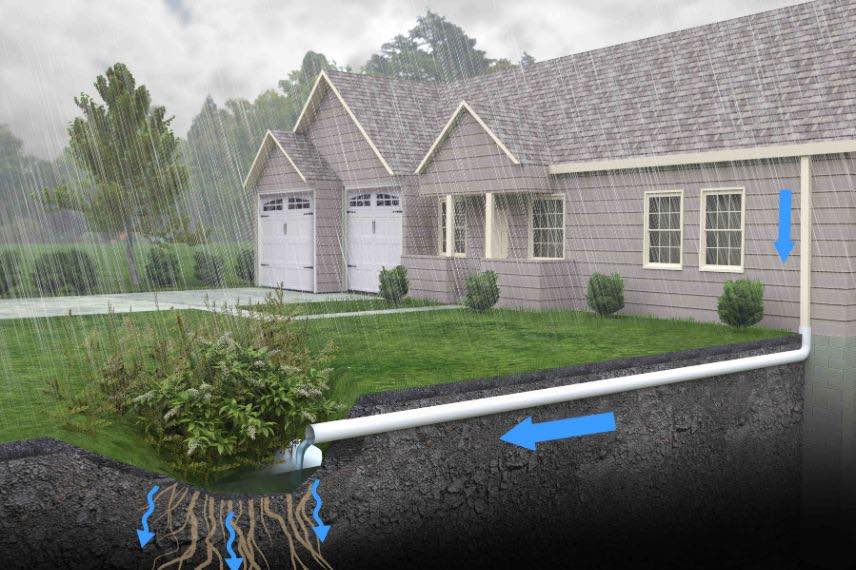
A possible installation diagram
The installation of the rain garden
The design of a rain garden must take various criteria into account.
The first is to choose how it will be fed by rainwater: downspout, overflow from a rainwater harvesting tank, drains, other natural drainage paths, etc. Next, you will need to direct this water towards the natural basin below. To do this, dig a channel and reinforce the edges of the path with large stones. This helps prevent erosion and contain high flows, reducing the force of the water flow.
Then, you will need to choose the depth of the basin to be dug, which will be located at the bottom of the slope. To calculate this optimally, consider:
- the natural infiltration capacity and speed of the soil (these figures are lower for clay soil than for sandy or permeable soil);
- the annual precipitation amounts in your region;
- the catchment area.
Mark out the space and dig using a manual or mechanical shovel, depending on the size of your project and your resources.
Finally, you will need to develop this final collection area. It will be structured and complemented with stones and plants (see paragraph below). If necessary, adjust the soil: add draining materials (sand, gravel) or loosen overly heavy and clayey soils. A mound of about fifteen centimetres can also be installed around the basin to prevent overflow. It is also possible to plan for the drainage of excess water, for example using semi-buried PVC pipes.
An optimal rain garden does not allow water to stagnate for more than 2 days.
In case of doubt or for particularly large projects, do not hesitate to seek help from a landscape designer.
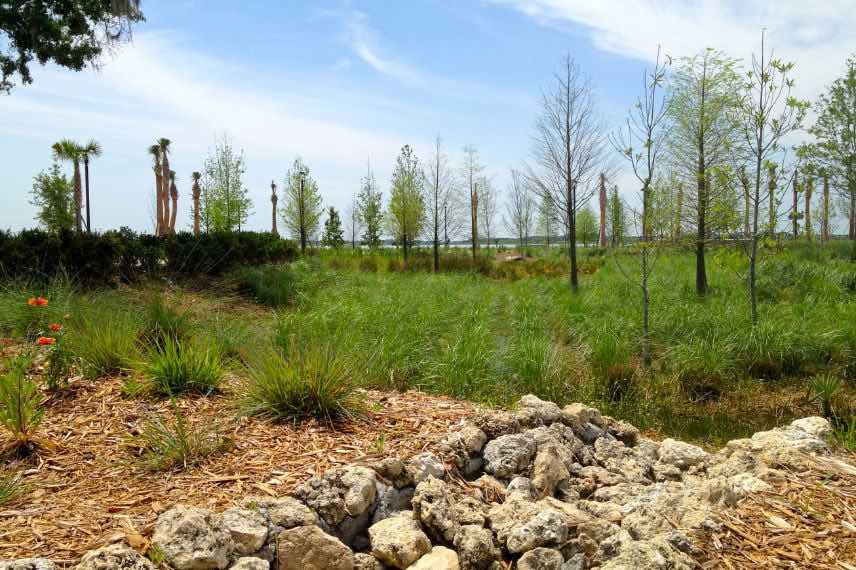
Rain garden at Kissimmee Lakefront Park in Florida
Plants to grow in a rain garden
Wetland edge plants are perfect for greening a rain garden, as they thrive in cool to moist soils. Some aquatic plants may also be suitable, but they often require continuous immersion to develop, which may not be guaranteed depending on the regions and the time of year. These plants will help stabilise the edges of the rain garden and limit erosion, while also providing a filtering function for some.
As with a traditional garden, these plants should be chosen based on:
- the nature of your soil (sandy, clayey, stony, calcareous…);
- the garden’s exposure (sunny, shaded…);
- the specifics of the climate (harsh winters, constant humidity, dry spells, etc.);
- the size of the landscaped area.
Remember to diversify the types of plants: grasses, evergreen foliage, different flowering periods, etc.
Logically, the most water-demanding plants will be placed closest to the pond, while those that can tolerate having their feet dry occasionally can be positioned further away.
You can choose native plants (marsh iris, Athyrium filix-femina…), which will have the advantage of establishing easily, or opt for more exotic plants (marsh Hibiscus, Gunnera manicata…).
Also consider:
- horsetails
- cattails
- Arums
- Carex
- rushes
- Houttuynias
- Hostas
- Acorus
- Ligularias
- water mint
- willows (which can even tolerate flooded soils)
- birches
- etc.
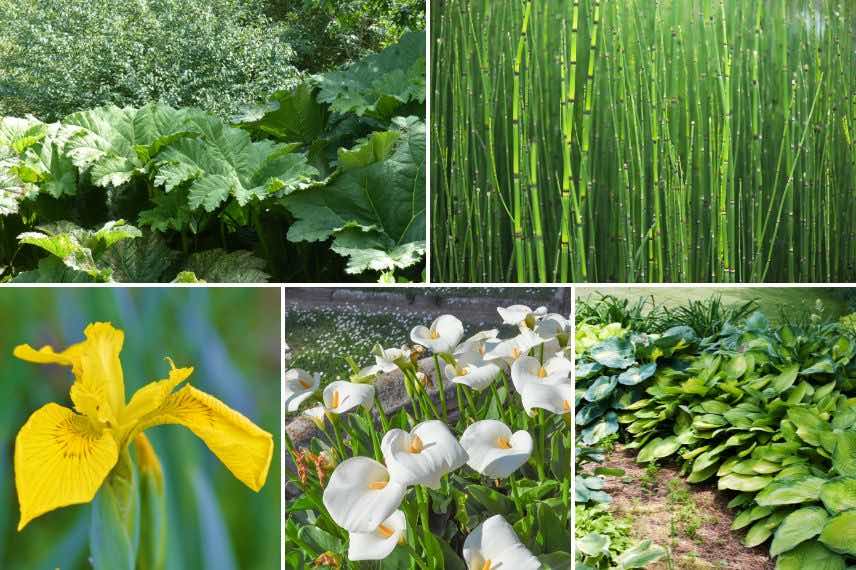
Plants suitable for a rain garden: Gunnera, Horsetails, Marsh Iris, Arums, and Hostas
The maintenance to be planned
During the first few months after planting, plants will need to be watered regularly to encourage their rooting. They will then become self-sufficient, except in cases of prolonged drought.
Regularly remove adventive plants (weeds) to allow new plants to establish themselves without competition.
Check the rain garden after heavy rainfall and at least 1 to 2 times a year. Ensure that rainwater follows the designated path without overflowing or diverting. If necessary, add stones to reinforce the path.
- Subscribe!
- Contents

Comments