





























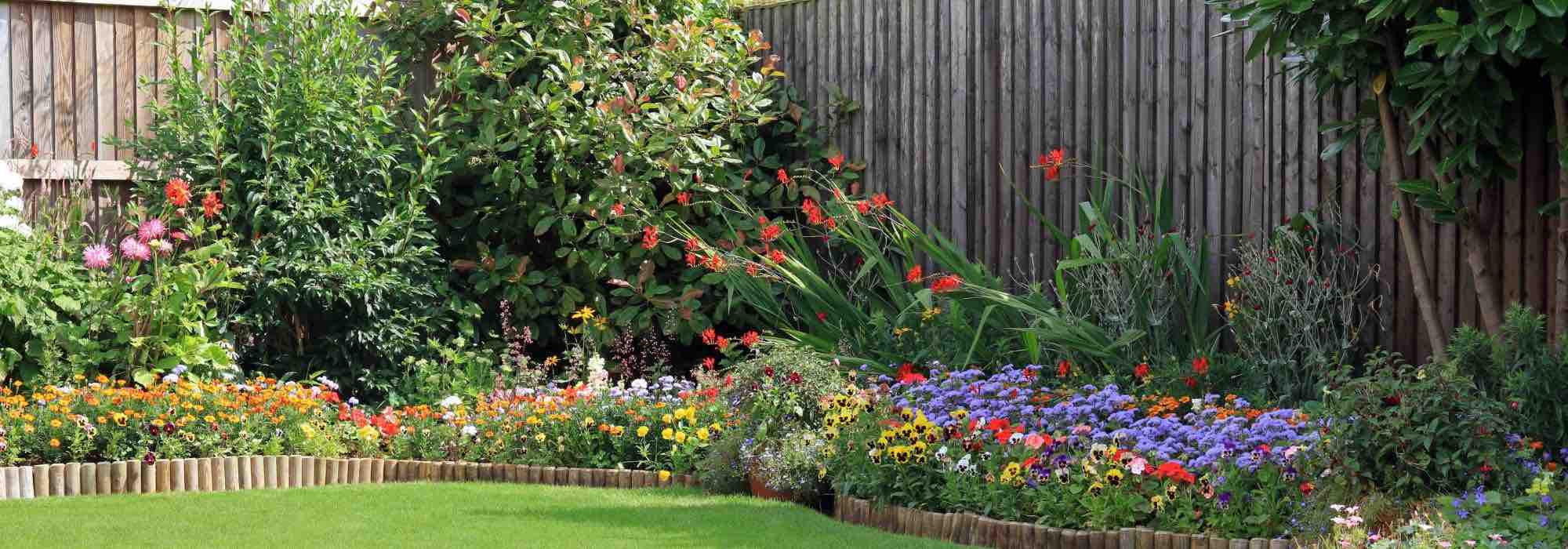
How to design a West-facing garden?
Tips and tricks for layout and selection of plants
Contents
Setting up a garden requires taking into account several criteria such as climate, soil and exposure. A West-facing garden enjoys strong sunlight in the afternoon and evening. West-facing exposure is the warmest exposure, just after south-facing exposure, and it requires selecting plants that can withstand these growing conditions. Regional winds can add extra constraints to consider to achieve successful plantings. Discover how to design a West-facing garden and how to select the most suitable plants.

Characteristics of a west-facing garden
A west-facing garden benefits from direct afternoon sun until sunset. This late exposure brings intense heat in the late afternoon, which can be beneficial for some plants, but too scorching for others, for example in summer or in regions with hot climates. Plants must therefore be able to withstand this heat and make the most of the late-day light. This type of garden is ideal for species that enjoy partial shade and afternoon sun.
West-facing exposure also brings the possibility of winds that can be drying or strong. Depending on the region where your garden is located, you may have to contend with different regional winds. In southern France, the Mistral, a cold, dry wind, blows from the northwest towards the Marseille region and from the west towards the Var and Corsica. Another cold and powerful wind, the Tramontane, blows from the west and northwest across the Pyrenees and the Massif Central. On the Côte d’Azur and Corsica, you may also have to deal with the Libeccio, a wind coming from the southwest. On the Atlantic coast, the westerly wind brings spray and humidity. Storms with strong gusts may also occur. The presence of wind in your garden should be taken into account to adapt your plantings, either by protecting them with hedges or screens, or by selecting wind-tolerant plants.
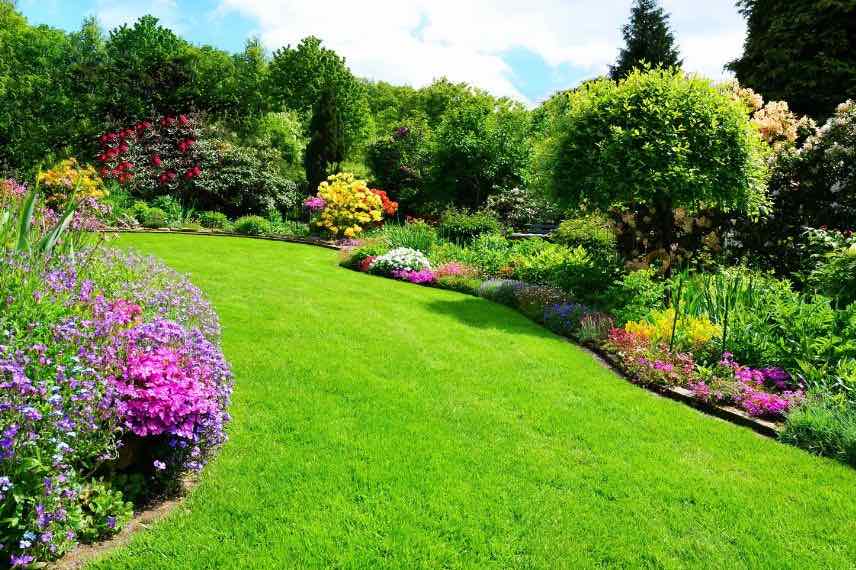
Many flowering plants can thrive in a west-facing garden, which receives many hours of hot sun
Which flowers to plant in the west?
Flowers that tolerate partial shade as well as the sun and the heat of the afternoon are good candidates for a west-facing garden.
Roses, with their need for light and heat, are particularly well suited. They require sun, but also tolerate partial shade. They come in a wide range of shapes, sizes and colours, from old-fashioned roses to climbing or shrub roses.
You can also choose to plant hardy geraniums which thrive in sun or partial shade, along with arums, agapanthus, hemerocallis, liriope, cinquefoils, euphorbias, cannas, crocosmias, tulips.
Also consider Mediterranean plants such as lavender, which love sun and well-drained soils, as well as aromatic herbs such as rosemary or thyme.
If you are exposed to winds, choose plants suited to this constraint, such as ornamental grasses. Airy and architectural, grasses largely enjoy sun and withstand winds and drought-prone soils. Moreover, the rustling and swaying of their leaves in the wind has a soothing quality that can be appealing.
For climbing plants, train them up on pergolas or arches, clematis, honeysuckles or climbing roses after first ensuring that the growing conditions suit your climate or soil.
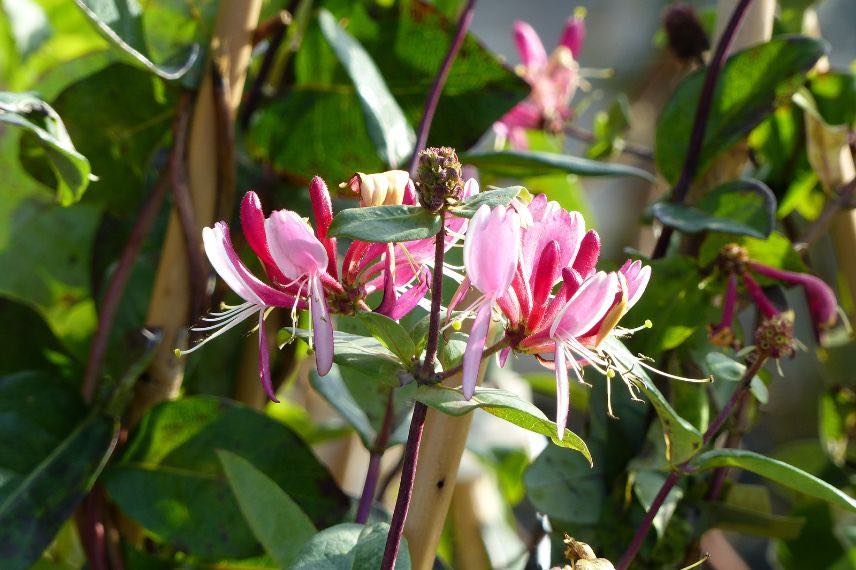
Honeysuckle is a suitable climbing plant for this type of exposure
Which shrubs and trees to plant on the west-facing side?
Shrubs and trees that tolerate semi-shade as well as heat and direct afternoon sun can be favoured.
You can plant the Mexican orange blossom with its fragrant flowering, the Deutzia, the mock orange, the Buddleia which attracts butterflies or the Lagerstroemia.
If you love exotic and lush surroundings, opt for palms, the hardiest being the hemp palm (Trachycarpus) and the dwarf palm (Chamaerops).
To create a windbreak hedge, Elaeagnus is a good choice that you can pair with Photinias. You could also opt for Abelias, and spindle trees.
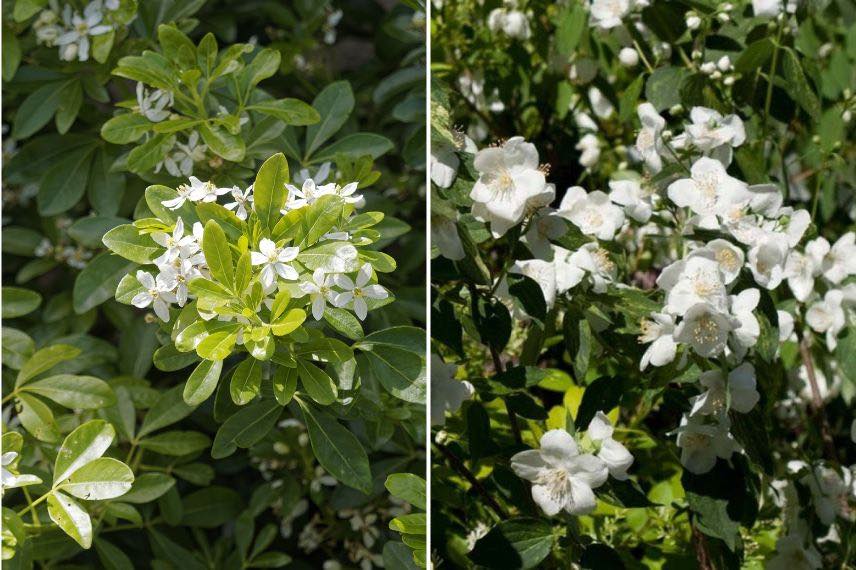
Choisya and mock orange are two bushes with delightfully fragrant flowers suited for a west-facing garden
Read also
How to design an East-facing garden?Which vegetables should be planted on the west side?
Vegetables generally need six hours of sunlight per day to perform at their best. In a west-facing garden, the sun will only warm the crops in the afternoon, which will affect the growth of the vegetables you grow there. Leafy vegetables are among the most shade-tolerant. In this category, You can plant, for example, lettuce, salad leaves, rocket, Chinese cabbage, leeks, spinach, and rhubarb. Culinary herbs also tolerate a bit of shade. Consider growing tarragon, parsley, sorrel, and mint. In a west-facing garden, you can also plant root vegetables such as carrots, beetroot, parsnips or the radishes which can also tolerate a little shade. The strawberries and the raspberries are woodland-origin small fruits and tolerate being grown in partial shade.
Finally, fruiting vegetables such as tomatoes, squashes and aubergines are really sun-loving and heat-loving. It will be harder to grow them in partial shade.
Be sure to water your vegetables regularly to prevent them from suffering from the intense afternoon heat, and because they need plenty of water in order to give you good harvests. For example, you could install an automatic irrigation system to make the task easier and to prevent your crops from suffering if you forget to water.
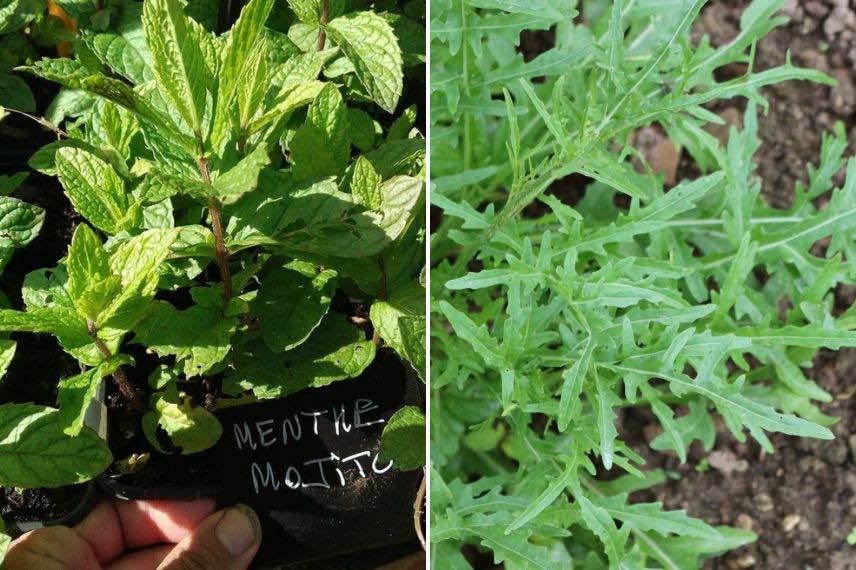
Mint and rocket do not need as much sun as tomatoes, for example; they can quite happily grow with afternoon sun
Tips for designing a west-facing garden
- To design a west-facing garden, it’s worth creating shaded areas to protect the plants most sensitive to heat and sun. You can install shade sails or a large parasol to shield yourself from the sun’s scorching rays. Also consider pergolas, arches or lattices on which you’ll grow climbing plants. These shaded areas you create can also be used to set up a dining or relaxation corner.
- Identify wind-exposed zones in the garden and protect them if needed with hedges or screens.
- Place sun-tolerant plants in areas most exposed to direct natural light, and those needing more protection under shaded areas.
- Mulch your plantings to retain soil moisture and protect roots from heat.
- Regular, deep watering is essential to prevent plant water stress, especially in summer. Consider installing an automatic irrigation system.
- To keep your garden cool, you can add water features such as fountains, a misting system or a small pond, which can also benefit wildlife in the garden.

Shaded areas in summer are welcome in a west-facing garden
- Subscribe!
- Contents
Comments