





























How to diagnose your soil using organic indicator plants?
Wild plants reveal the nature of your soil
Contents
To get your garden off to a good start, it is essential to know your soil well. Understanding the characteristics of your soil helps you choose the right species to grow, adjust cultural practices and anticipate nutrient and water needs. A natural and accessible method for diagnosing soil quality is the observation of wild plants that grow there. These plants, called organic indicators, naturally grow in specific environments and thus indicate the nature of the soil, its composition, sometimes its pH, its degree of compaction, or its richness in nutrients. By learning to read these natural indicators, you can tailor your interventions in a more eco-friendly and effective way.

What is an organic indicator plant?
Bio-indicator plants are plant species that, through their presence and development in a given environment, reveal valuable information about the nature and quality of the soil. Unlike cultivated plants, bio-indicator plants grow spontaneously, in direct response to local pedological conditions, such as acidity, soil compaction, nutrient richness, or moisture. Their presence is not random; it is closely linked to the soil’s specific characteristics. For example, some plants thrive only on acidic soils, while others prosper on calcareous or clay soils.
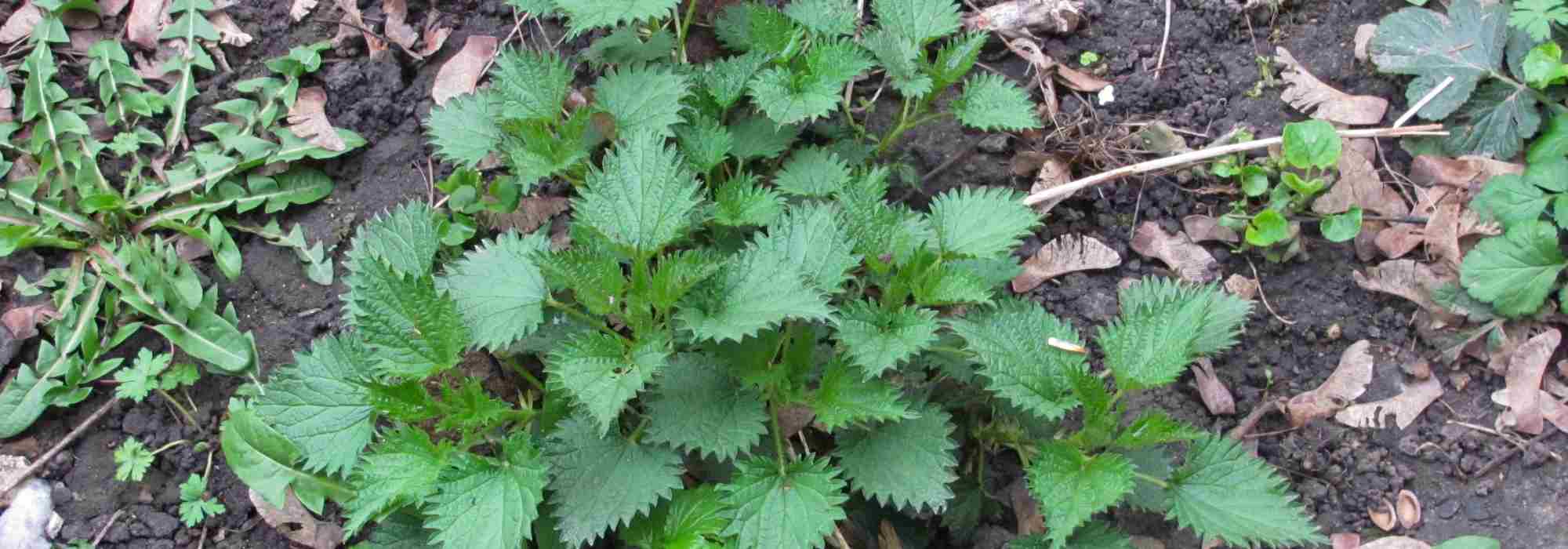
When a bio-indicator plant appears in abundance in a garden, it sends a clear signal about the soil’s condition. For example, the presence of nettle can indicate a soil rich in nitrogen, while horsetail points to a moist and compacted soil. These plants, through their diversity, allow a fine and detailed assessment of the soil without recourse to costly or complex chemical analyses.
The more diverse an ecosystem, the more precise and varied the information that can be drawn from it. A wide range of bio-indicator plants indicates a balanced and healthy soil, where different conditions coexist, supporting rich biodiversity. By contrast, the dominance of a few bio-indicator species can reveal an imbalance, such as excessive acidity or significant compaction, which requires intervention to restore soil more conducive to cultivation.
Oli’s little note: if a native plant becomes invasive in your garden, it is always worth asking why. For example, why on earth do I have so much common avens all of a sudden? By questioning and carrying out research, one realises that the Geum urbanum or common avens indicates a calcareous soil, rich in forest humus and carbon-rich organic matter. In short, this soil is perfect for growing forest plants, such as many ferns, but not suitable for lavender planting…
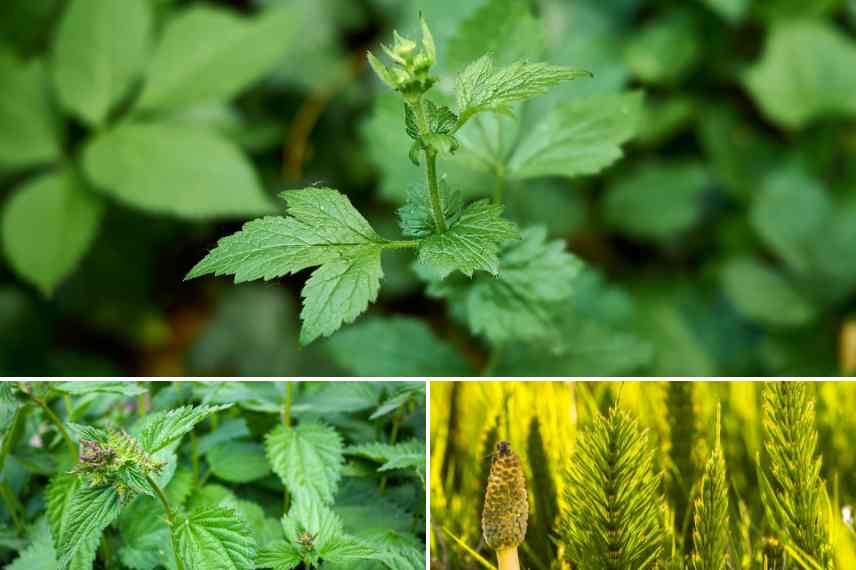
Common avens clearly indicates a calcareous soil, nettle a soil rich in nitrogen, and horsetail a moist soil
Some examples of bioindicator plants
Plants indicating acidic soil
The following plants signal soil with a low pH, often low in calcium:
- Wild sorrel (Rumex acetosa) and Small sorrel (Rumex acetosella): typical of acidic and low-calcium soils.
- European oxalis (Oxalis stricta): it prefers acidic, light soils often poor in nutrients.
- Common knotgrass (Polygonum aviculare): widespread on compacted, acidic soils.
- Bracken (Pteridium aquilinum): common in acidic and poor soils.
- Heather (Calluna vulgaris): a good indicator of acidic, sandy soils.
Actions: Add calcareous amendments such as the dolomitic lime or wood ashes. Promote organic inputs to stimulate soil life.
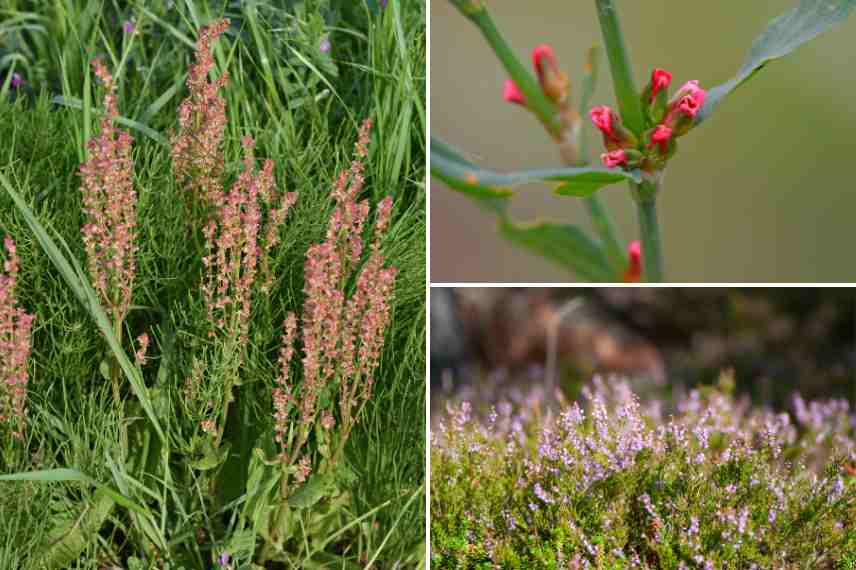
Wild sorrel, common knotgrass and heather are signs of acidic soils
Plants indicating calcareous soil
These plants indicate calcium-rich, sometimes alkaline soils:
- Wild carrot (Daucus carota): thrives on calcareous, light and dry soils.
- Common avens (Geum urbanum): prefers alkaline soils rich in organic matter.
- Poppy (Papaver rhoeas): more associated with well-drained calcareous soils.
- Wild marjoram (Origanum vulgare) : indicates an alkaline soil, often dry.
- Yarrow (Achillea millefolium) ‘Pomegranate’: common in poor and dry alkaline soils.
Actions: Add organic mulching to retain moisture and favour plants suited to the site, such as lavender, thyme, or other Mediterranean herbs.
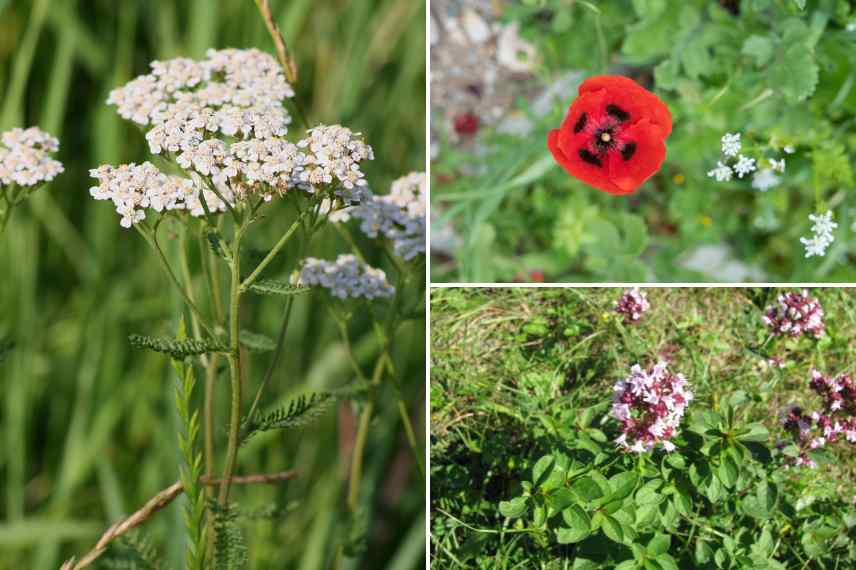
Yarrow, common poppy and oregano
Plants indicating a compacted or poor soil
Compacted or poorly structured soils attract these plants:
- Dandelion (Taraxacum officinale): tolerates hard soils, but rich in nutrients.
- Greater plantain (Plantago major): common on soils compacted by trampling.
- Common knotgrass (Polygonum aviculare): spreads on compacted, nutrient-poor soils.
- White dead-nettle (Lamium album): prefers poor and compacted soils.
- Field bindweed (Convolvulus arvensis): grows in heavy, poorly fertile soils.
Actions: Aerate the soil with a broadfork, add compost to enrich and lighten the structure, and rotate crops to prevent soil exhaustion.
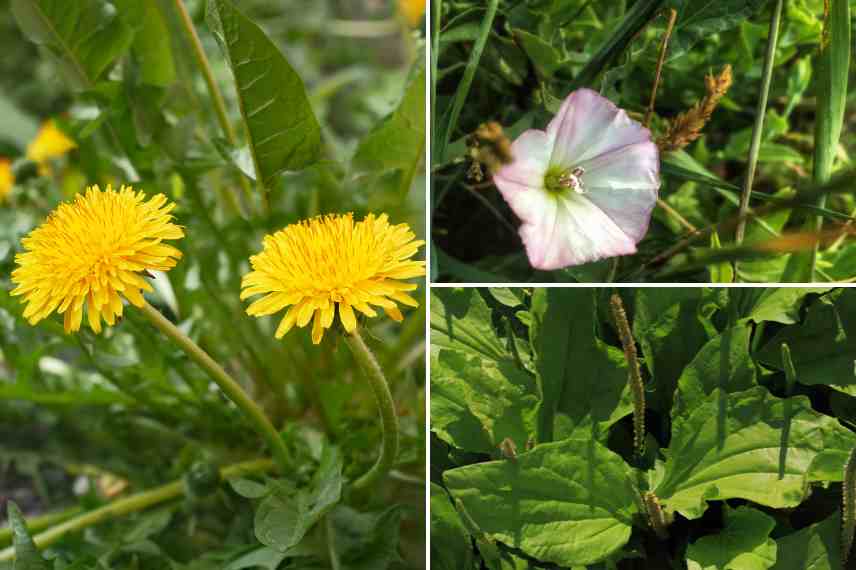
Do you have dandelions, bindweeds and other plantains in your lawn? These indicate compacted, often poor soils
Plants indicating a high nitrogen content
Nitrogen-rich soils favour plants such as:
- Nettle (Urtica dioica): thrives in nitrogen-rich soils and organic matter.
- Fat Hen (Chenopodium album): common on soils with excess nitrogen.
- White dead-nettle (Lamium album): a sign of fertile soils rich in nitrogen.
- Black nightshade (Solanum nigrum): grows on soils well supplied with nitrogen, often overly rich.
- Black elder (Sambucus nigra): thrives on very nutrient-rich soils.
Actions: Reduce chemical nitrogen fertilisers, introduce heavy-feeding crops such as squash or tomatoes, and favour balanced fertilisers.
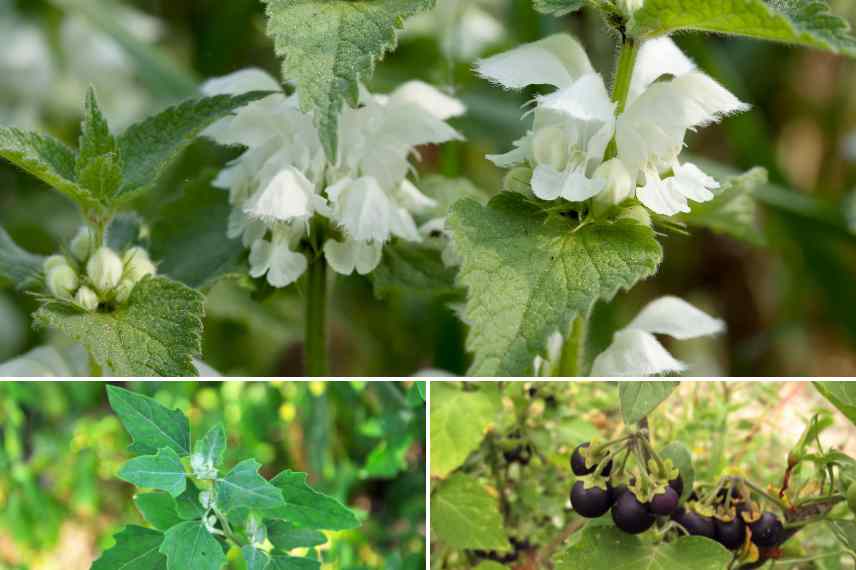
White dead-nettle, Fat hen and Black nightshade
Plants indicating excess moisture
These plants are typical of poorly drained soils:
- Horsetail (Equisetum arvense): proliferates on compacted, damp soils.
- Persicaria maculosa (Persicaria maculosa): grows in waterlogged or poorly drained areas.
- Common loosestrife (Lysimachia vulgaris)
- Sagina (Sagina procumbens): common on damp and compacted soils.
- Rush (Juncus spp.): a clear sign of poorly drained or flooded soil.
Actions: Improve drainage by incorporating sand or gravel, raise moisture-loving crops, and choose plants suited to wet areas, such as sedges or alders.
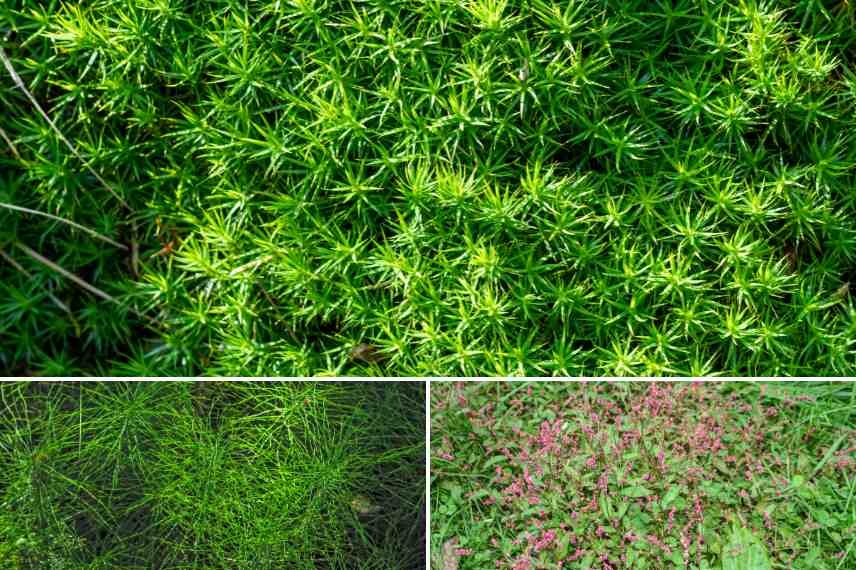
Sagina, field horsetail and persicaria
Plants indicating poor or sandy soils
Light, nutrient-poor soils attract:
- Poppy (Papaver rhoeas): a classic of poor, well-drained soils.
- Common viper’s-bugloss (Echium vulgare): thrives on sandy, dry soils.
- Sainfoin (Onobrychis viciifolia): grows on light, often poor soils.
- Broom (Cytisus scoparius): prefers acidic, nutrient-poor soils.
- Fescue (Festuca spp.): characteristic of meadows on poor, dry soils.
Actions: Regularly apply compost or manure to enrich organic matter and favour plants suited to such conditions, such as lupins or other legumes, which enrich the soil with nitrogen.
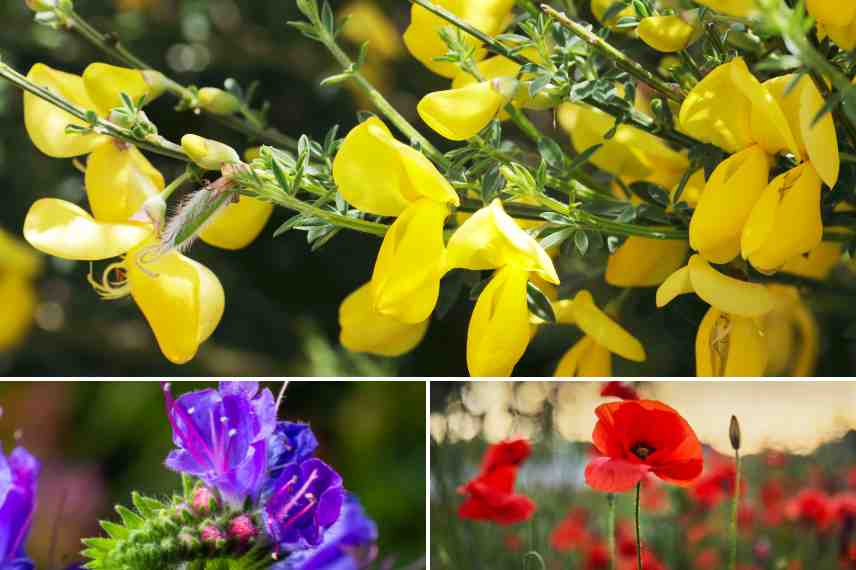
Gorse, viper’s-bugloss and poppy, pretty plants betraying a poor, dry soil
Attention! Bio-indicator plants offer useful clues about the nature of a soil, but they remain approximate and can sometimes be misleading. For a thorough and reliable understanding of your soil, nothing replaces a thorough soil analysis.
Observe your garden and work with nature through the seasons
Bio-indicator plants evolve throughout the year, offering a dynamic and precise reading of your soil. Some species appear in spring, while others emerge in summer or autumn, each revealing specific information about soil conditions at those times. By regularly observing your garden over a full year, you can cross-reference these indicators to better understand seasonal variations and adapt your practices accordingly.
This approach aligns perfectly with the principles of permaculture, which promote a harmonious collaboration with nature. Bio-indicator plants are not ‘weeds’ to eradicate, but allies for understanding your soil. By favouring beneficial plants for the ecosystem, while gently and respectfully controlling the spread of unwanted species, you contribute to maintaining a natural balance. This sustainable method improves soil health and strengthens biodiversity, while reducing artificial interventions. In short, learning to read the signs that nature sends you, season after season, is a key to gardening that is more ecological and resilient.
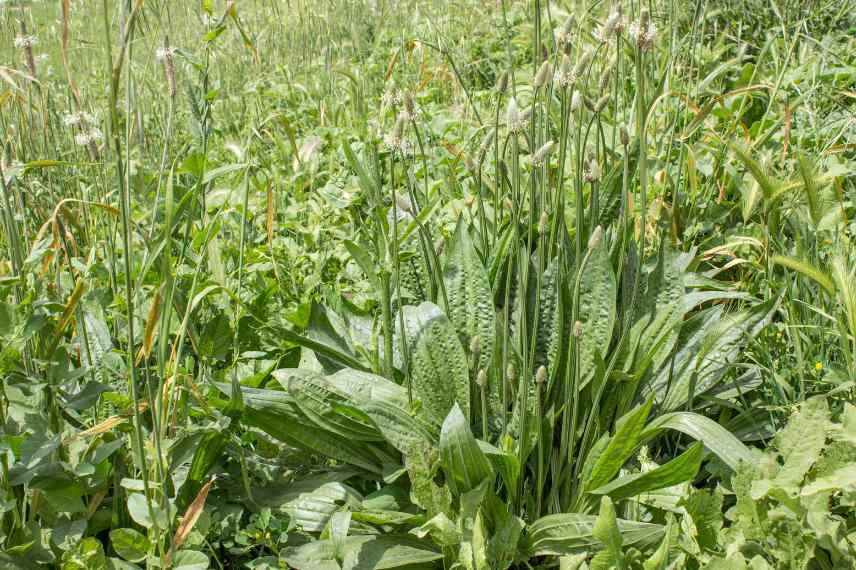
Plantain, accustomed to compacted soils
Focus on common mistakes
Observing bio-indicator plants is a simple method, but some errors can limit its effectiveness.
The first is to mistake a bio-indicator plant for an ordinary adventive plant: not all spontaneous plants provide precise information about the soil. To avoid this, take the time to correctly identify species using tools such as specialist books or free apps like PlantNet, which allow you to recognise plants from photos.
Another common mistake is to want to eradicate these plants without seeking to understand the problem they indicate. For example, systematically eradicating nettles or horsetail does not resolve soil imbalances, such as excess nitrogen or compaction. Act on the causes, not just the symptoms!
Finally, beware of excess: correcting an identified problem, such as an acidic pH, requires a measured intervention. Too much an addition of lime or compost will disturb the soil balance. In addition to bio-indicator plants, a simple pH test (available in garden centres) or a soil analysis can help you adjust your inputs with precision.
- Subscribe!
- Contents
Comments