





























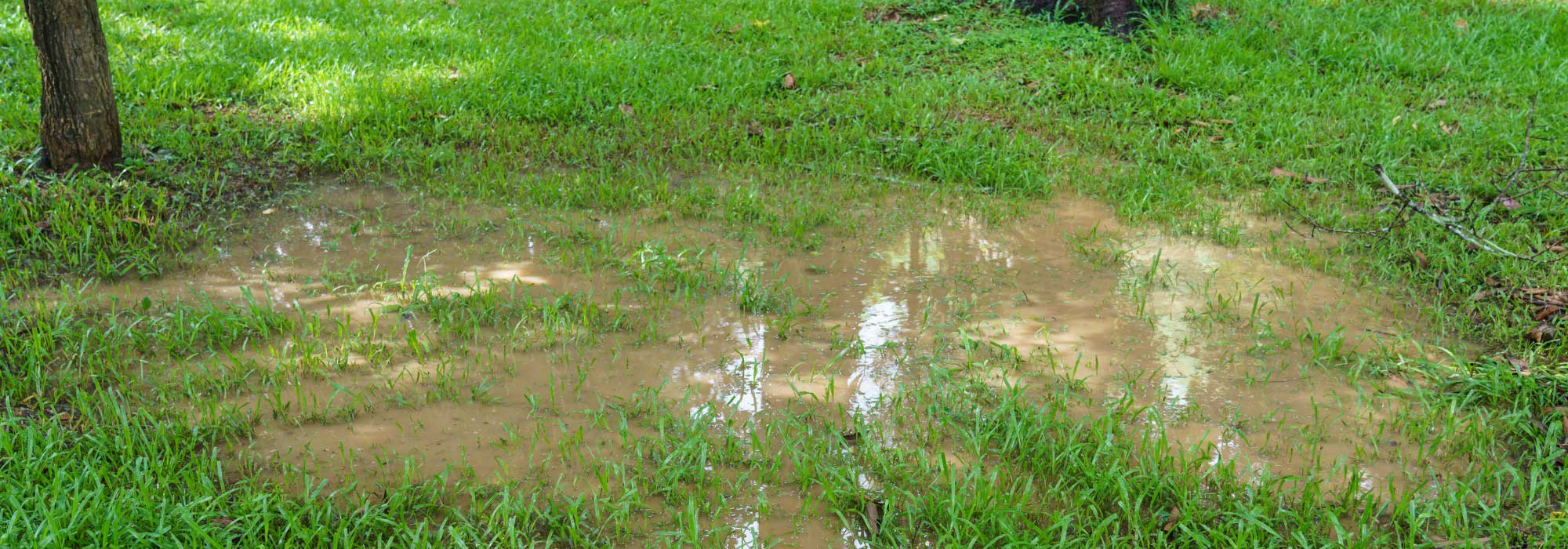
How to drain a lawn that is too wet?
Our single and effective solutions to remove excess water and drying out the lawn
Contents
Is your lawn staying damp, even muddy, long after rainfall? Are you tired of walking on a waterlogged herb and seeing puddles of standing water? An overly damp lawn can quickly become a nightmare. Besides being unworkable, it can also promote the proliferation of diseases and harm the health of your lawn. Fortunately, there are simple and effective solutions to improve your lawn drainage and restore a healthy and attractive lawn. Follow our expert advice!

Why is my lawn always damp?
If you have noticed that your lawn is constantly damp, even after short spells of rain, there’s every chance you have a drainage issue. First, it is important to understand why water pools on your lawn. This may be due to a clayey soil that holds a lot of water, an insufficient slope or an inadequate drainage system. A compacted soil retains water on the surface, preventing deep infiltration. This creates waterlogged conditions that can lead to root rot and the development of fungal diseases. Compacted soils lack porosity, which reduces air movement through the soil. They have a reduced capacity to absorb rainwater, which can lead to surface runoff and increased erosion. Nutrients are washed away with the runoff, further depleting the soil. Before taking drainage measures, it is therefore essential to identify the problem. Start by identifying the areas of your lawn where water pools the most. This will help you target the areas that require intervention.
Read also
All about soil drainage in the gardenWhy draining your lawn?
With good drainage, your lawn dries more quickly after showers. And what you want is to be able to enjoy it whatever the weather! A poorly drained lawn can lead to waterlogging, creating puddles that make the ground muddy and unusable. Standing water can damage the grass, leading to bare patches and an uneven lawn. Excessive moisture promotes fungal diseases such as powdery mildew or downy mildew, and fusarium wilt, which can be devastating for the lawn. A stagnant soil moisture is also conducive to moss growth on the lawn. Effective drainage helps to maintain soil moisture at an optimal level, thereby reducing the risk of diseases. Grass roots require a balance of water and oxygen to stay healthy. A waterlogged soil can suffocate the lawn, preventing proper growth and reducing its vigour. Good drainage allows roots to breathe and to grow vigorously.
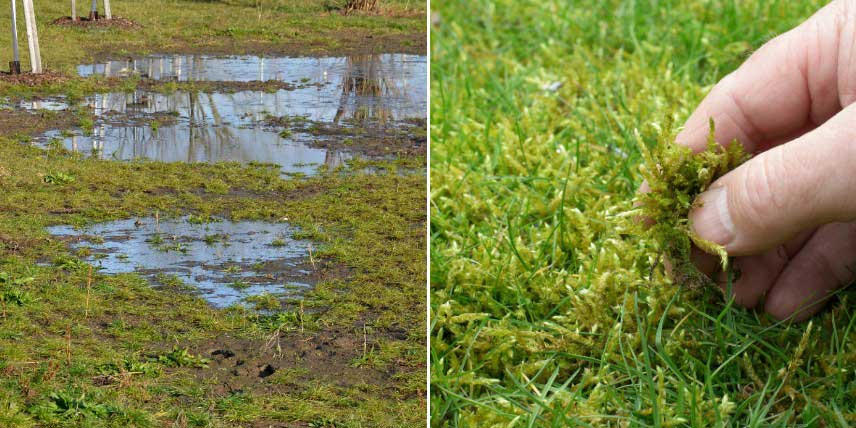
A poorly drained lawn is likely to develop puddles and mud during heavy rain, and encourages moss growth
How can you improve soil drainage naturally?
Improve soil structure
Incorporating organic matter such as well-decomposed compost and well-decomposed manure, dead leaves, or draining materials mixed with topsoil can help lighten clayey and compacted soils and improve their porosity. To promote drainage, here are a few natural and effective options:
Compost
You can add compost. A good proportion of compost helps to aerate the soil and facilitate water infiltration. It is recommended to spread a layer of 5 to 10 cm of compost on your lawn, then incorporate it into the soil using a hand cultivator or a rotavator.
You can notably incorporate green compost, derived from plant waste such as leaves, grass clippings and plant residues. It is rich in organic matter and essential nutrients, which boost soil health. Green compost improves soil structure, increases porosity and stimulates microbial activity, which is essential for good drainage. Do a spring and autumn light cultivation to incorporate this organic matter.
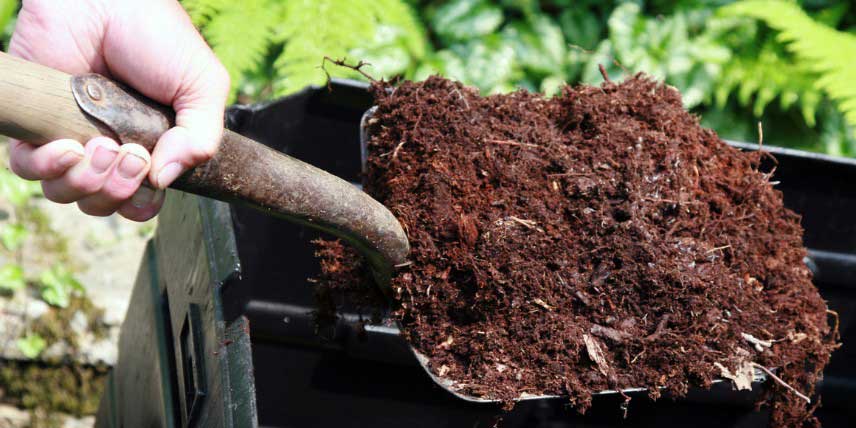
Compost is ideal for improving soil structure and making it more permeable
Biochar
Biochar is a form of organic charcoal produced by the pyrolysis of plant material in a low-oxygen environment. Adding biochar to the soil can significantly improve its structure, fertility and its ability to retain water and nutrients. Biochar is particularly effective for clay soils, as it helps to increase porosity and reduce compaction, thereby enabling better water infiltration and more effective drainage. To use biochar in your garden, you can incorporate it into the soil at a depth of 10 to 20 cm. You can also mix it with compost or other organic amendments to spread it over your lawn.
Coconut fibre
Coconut fibres, derived from the shell of coconuts, have remarkable water-retention capabilities while promoting good drainage and aeration of the soil. Coconut coir potting mix is particularly useful for improving the texture of clay soils. Coconut fibres help to loosen the soil, thereby increasing permeability and drainage. There are even coconut coir potting mixes with perlite integrated for an airy structure.
Perlite
Perlite is a natural mineral amendment obtained from heating volcanic rock until it expands. This light, porous substance is commonly used in soil mixes to improve aeration and drainage. It is particularly effective in damp areas, as it prevents soil compaction and facilitates water movement. Although beneficial, it can be quite costly, especially if you are considering it for a large lawn or area. For very large surfaces, it is sometimes possible to order it in bulk.
Vermiculite
Vermiculite is a natural mineral which, like perlite, has a high absorption capacity. It helps to retain water and nutrients while improving soil porosity. Vermiculite is particularly useful for soils that require both better moisture retention and good drainage. It is used in mixes with potting compost or planting soil. Nevertheless, buying and applying vermiculite on a large lawn can also be costly; in that case, turn to gravel.
Gravel
Gravel is an excellent option in very clayey soils where drainage is a persistent problem. By mixing gravel into the soil, you will allow water to flow more easily. To determine the amount of gravel needed, calculate the surface area and depth of the trenches to be filled. Here is a simple formula: Gravel quantity (m³) = Length (m) × Width (m) × Depth (m). For example, for a lawn requiring trenches with a total length of 10 metres, a width of 0.45 metres and a depth of 0.075 metres (7.5 cm), the amount of gravel would be: 0.3375 m³. Dig trenches about 10 to 15 cm deep and 30 to 45 cm wide in problem areas. These trenches will act as natural drains. Place a layer of gravel about 5 to 8 cm deep at the bottom of each trench, then backfill with the excavated soil.
Our tip: After improving drainage, monitor your lawn during wet periods to ensure water drains properly. Adjust the quantities of drainage materials and the techniques used according to observed results.
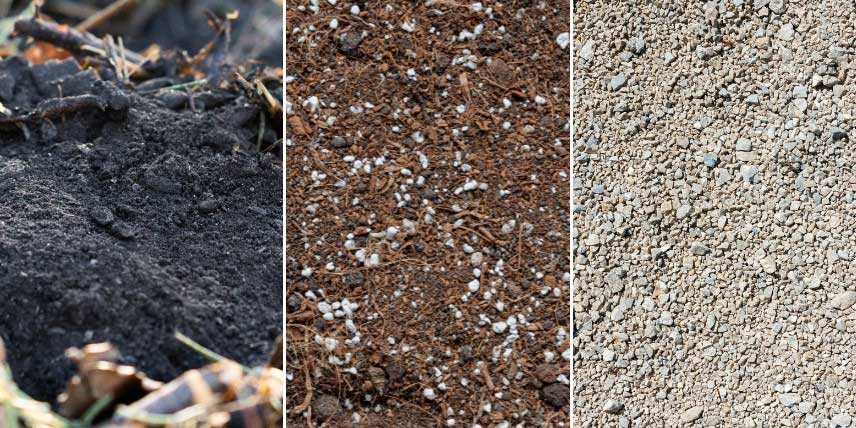
Some materials are particularly useful for improving drainage: biochar, coconut fibre and perlite, gravel
How can soil drainage be improved mechanically?
Scarify!
Throughout the year, organic debris such as grass clippings and moss accumulate and, together with foot traffic, form a thatch layer on the soil. This compact layer blocks water absorption by the soil. By scarifying your lawn regularly—once to twice a year depending on its condition—with a scarifier, you break up this thatch. This action aerates the soil’s surface and significantly improves its ability to absorb water.
For more information, see our advice sheet: “How to scarify the lawn?”
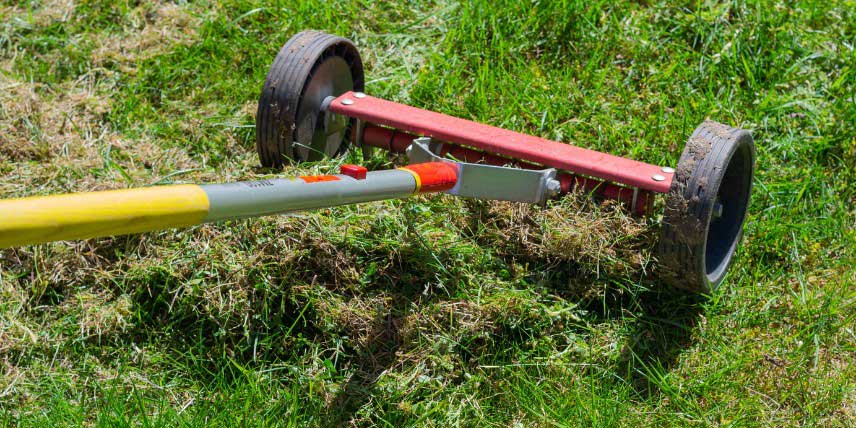
Scarify the lawn to aerate the soil’s surface layer and improve water absorption
Aerate the soil!
Aeration is a highly effective method for improving drainage in compacted soils. It involves perforating the soil with small holes to allow air, water and nutrients to penetrate the soil more effectively. Use a soil aerator, or even a simple fork to perforate the soil in several places, especially after periods of heavy rainfall.
Create a slope
If your site is flat or lacks slope, water can accumulate and cause moisture issues. To remedy this, where possible you can reshape the ground to create a gentle slope, mounds or raised beds to help water flow away from the overly damp area. This technique is particularly effective in areas with very heavy soil and is often combined with the installation of drains to maximise drainage efficiency. It is recommended to create a slope of 2–3% to allow for efficient water runoff.
Install drains
If drainage does not improve with the previous methods, consider installing French drains or drainage trenches, as noted above. These systems redirect water to a place where it can be better absorbed or discharged. It’s best to hire a professional to install a drainage system.
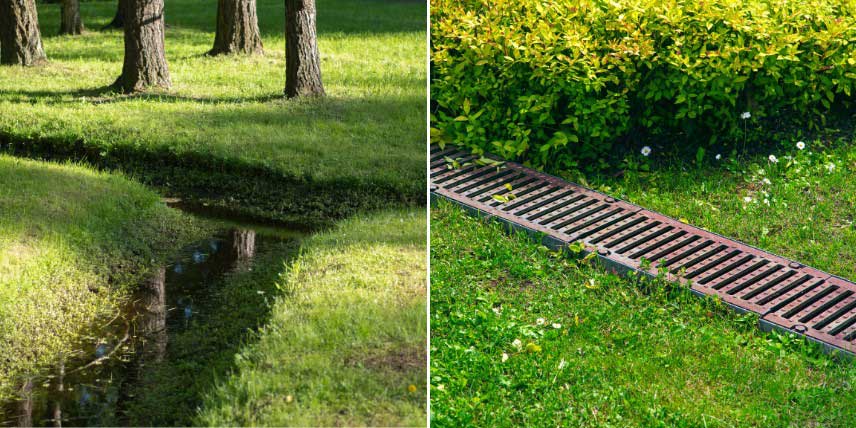
Create trenches or drains to channel rainwater
Choosing a moisture-tolerant lawn
To get a good lawn, you first need to choose lawn seed that suits soil conditions. There are displays that adapt to clay soils and damp soils. For example, ryegrass, red fescues and meadow grass are grass species more tolerant of moisture than others.
Replacing the grass of a small, perpetually damp lawn is another option. The solution?An alternative to lawn! Houttuynia cordata is a perennial groundcover that tolerates damp and marshy areas and transforms into a carpet of vegetation. With heart-shaped foliage that persists if winter is mild, it establishes itself in cool, moist, waterlogged soils, even occasionally submerged. Green manures such as clover also help prevent soil compaction. Their roots create natural pathways for water.
Choose water-loving plants.
Using buffer plants adapted to wet soils in areas most likely to retain water can also be an effective strategy in gardens that remain permanently waterlogged, taking on something of a marshy appearance. These plants will absorb excess water by reducing runoff. They are renowned for their ability to thrive in very wet conditions and their roots help to drain waterlogged soils. You’ll kill two birds with one stone by improving drainage while greening these damp corners. We offer a selection of perennial plants for cool, moist soils, some of which can have their feet in water all year round, among the wet-border plants:
- the Carex
- the Juncus
- the Acorus
- the Ligularias
- the Willows
- the Japanese iris (Iris ensata) and yellow flag iris (Iris pseudacorus) and Siberian iris (Iris sibirica)
- the Filipendula
- the Glutinous alder
- the Astilbes
- the Common Rose mallow
- the Gunnera manicata
When planting these plants, consider your garden’s specific conditions, such as sun exposure and available space. Plan strategically their placement to maximise their effect on drainage while creating a harmonious display. For example, plants that require a lot of water can be placed in areas of the garden where water tends to collect, whereas those that require less moisture can be placed on slight elevations or in areas improved with adequate drainage.
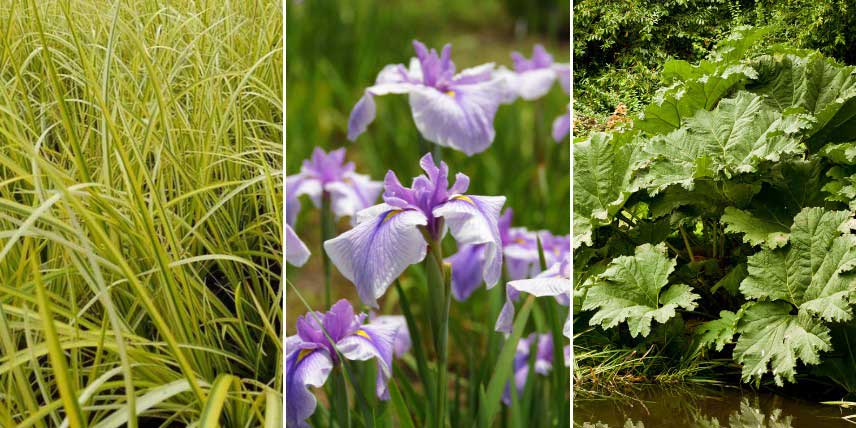
Some examples of plants that enjoy wet soils: Acorus gramineus ‘Ogon’, Japanese iris (Iris ensata) and Gunnera manicata
Prevention tips
To prevent drainage problems and keep a lawn and a garden in good health, effective preventive measures can be implemented from the garden design stage and during regular maintenance. To avoid issues with excessive moisture, before planting or landscaping, assess the topography of your site. Identify areas that are naturally damp or low-lying where water tends to accumulate. This will help you choose the right plants for each area and plan drainage solutions if needed.
Incorporate organic amendments such as compost to improve soil structure from the early stages of your garden design to prevent compaction issues.
And if nothing helps, you may need to make the most of this poor drainage and consider a stunning rain garden, also known as an ‘infiltration garden’ to control water inflows to make the most of these wet areas, Gwenaëlle explains everything!
- Subscribe!
- Contents
Comments