





























How to get rid of caterpillars on plants?
Caterpillar control and prevention in the garden
Contents
Have you found caterpillars on your plants? Before panicking and reaching for insecticidal products, know that there are gentler, more environmentally friendly solutions. Whether it’s the cabbage white butterfly, leek moth, processionary caterpillar or box tree moth, discover how to prevent and treat caterpillar infestations using natural and organic methods in your garden.

Which caterpillars are in the garden?
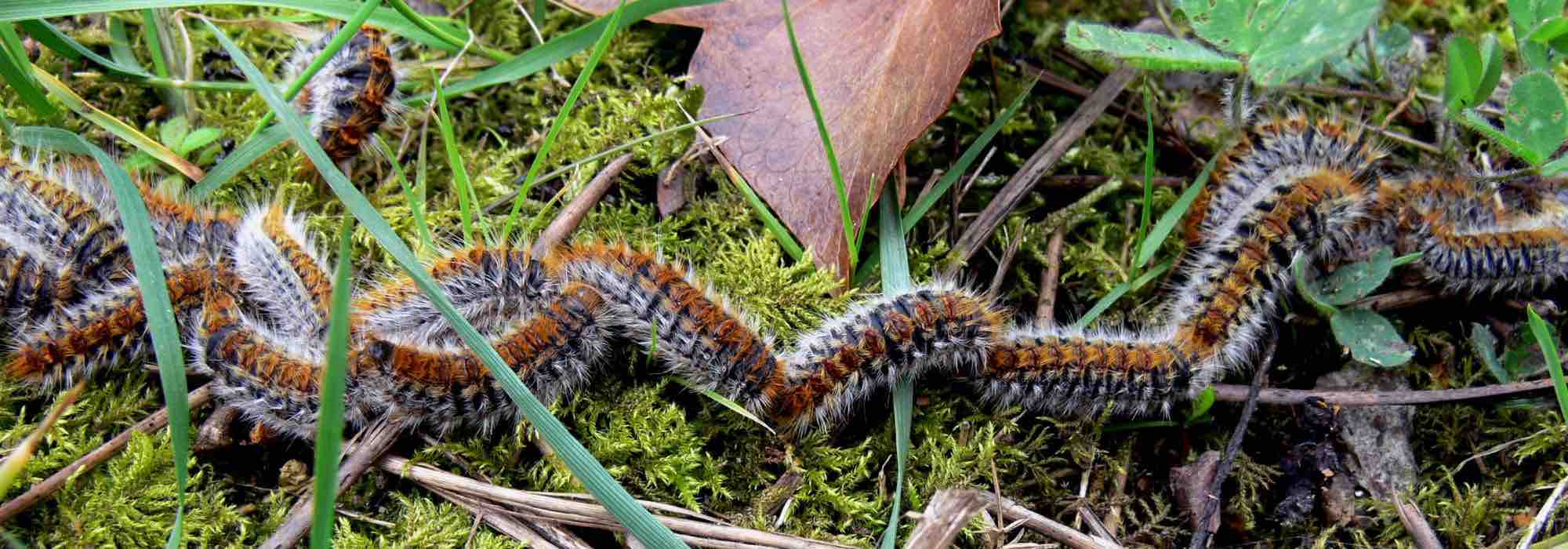
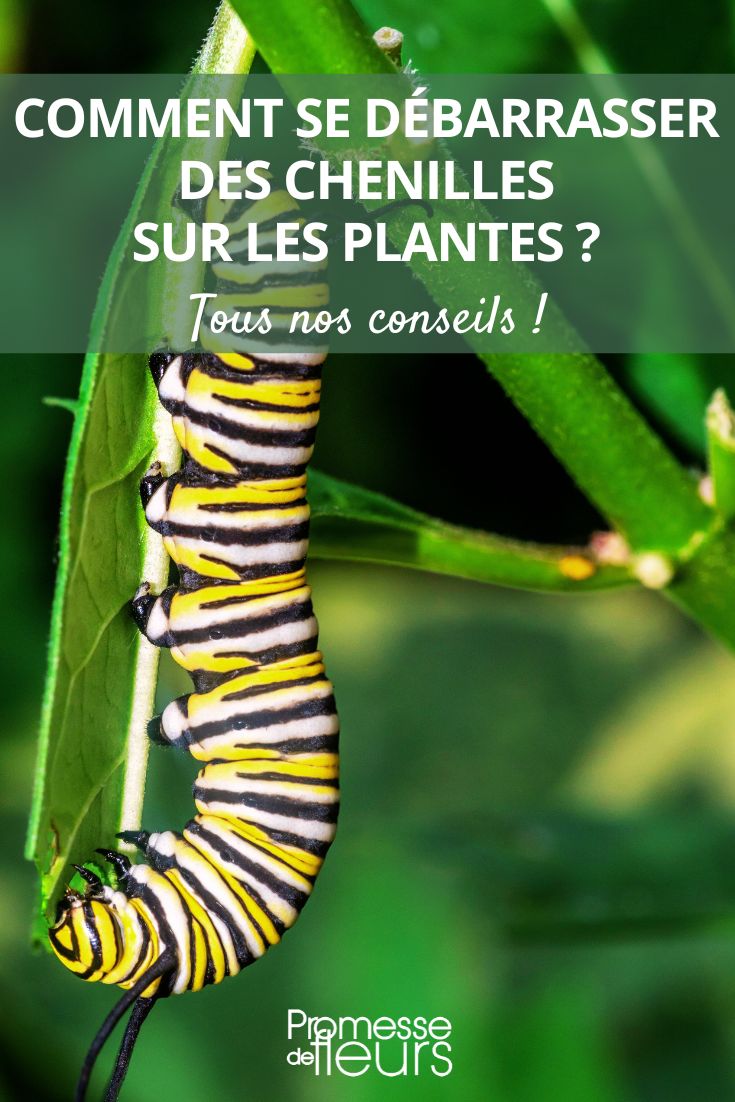
Caterpillars are the larval stage of moths or butterflies. There are many species, from the cabbage white butterfly to the pine processionary caterpillar. Caterpillars can cause damage in a garden, and even on a balcony, as they bore galleries into plants and feed on vegetation, vegetables or fruit. You recognise their presence by leaves that are gnawed or curled, as well as fine webs or droppings left behind by some caterpillars.
Among the caterpillars you may encounter in our gardens, you may cite:
- the cabbage white butterfly: it is the larva of a butterfly with cream-coloured wings. The eggs are yellow. Present throughout France, it is most active from late spring to October.
- the leek moth or leek caterpillar: this caterpillar comes from a grey and white butterfly and bores galleries right into the heart of the leek, making it inedible. It thrives from spring to the end of summer. The symptoms of an attack are brown spots followed by yellowing leaves.
To learn more about leek moth, see our advice sheet: “Leek diseases and pests.” - the box tree moth: it is the larva of the nocturnal moth Cydalima perspectalis, with pearly white wings edged with brown. The caterpillar has a shiny black head and a light green body striped with dark green with black warts and small white hairs. An attack is evidenced by the presence of silk threads, dark green droppings and caterpillars that are generally found in the lower and central part of the shrub.
- the pine processionary caterpillar: this is the larva of a nocturnal butterfly. It is very urticating and dangerous to humans and animals. It is dark in colour with a hint of orange and, above all, urticating hairs. It attacks pines, creating silk balls in the branches. These are their nests. They descend from them in processions.
- the palm moth caterpillar Paysandisia archon, which is particularly active in the south of France. This caterpillar causes the death of a palm tree within a few years
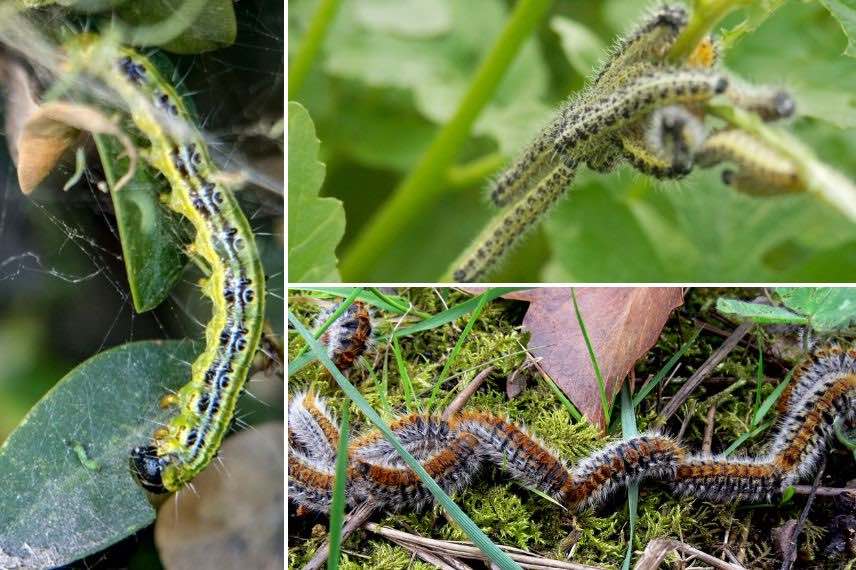
On the left, box tree moth, then cabbage white butterfly and pine processionary caterpillar
How can you get rid of caterpillars in your garden?
Here are the various ways to combat caterpillars, to be adapted according to the type of caterpillars.
- Mechanical control: start by identifying the type of caterpillars attacking your plants. Once you have identified the caterpillar species to eliminate and if they are not urticating or dangerous caterpillars, wear gloves and remove the caterpillars by hand. If they are caterpillars that should not be touched, such as pine processionary caterpillars which are urticating and dangerous for people and animals, use other control methods such as specific traps.
- Biological control: you can resort to biological control and use natural predators of caterpillars such as Bacillus thuringiensis. They are used in the form of a product to spray onto the leaves of the plant. This bacterium is ingested by the caterpillar and destroys it.
For more information about this bacterium, consult our advice sheet: “Bacillus thuringiensis: a natural insecticide”.
Nematodes are also predators of caterpillars which can be used as part of a biological control. We particularly use the nematode Steinernema carpocapsa against the palm moth. - Insect nets: Another method of fighting caterpillars: the installation of insect-protective nets over plants. Placed hermetically, they prevent butterflies from laying eggs on the vegetation and from parasitising them. They are used particularly to combat the cabbage white butterfly.
- Traps: We can also set up pheromone traps for moths as well as glue traps to capture caterpillars.
To combat the pine processionary caterpillar, there are eco-trap collars specifically that can be placed on tree trunks, from January to March.
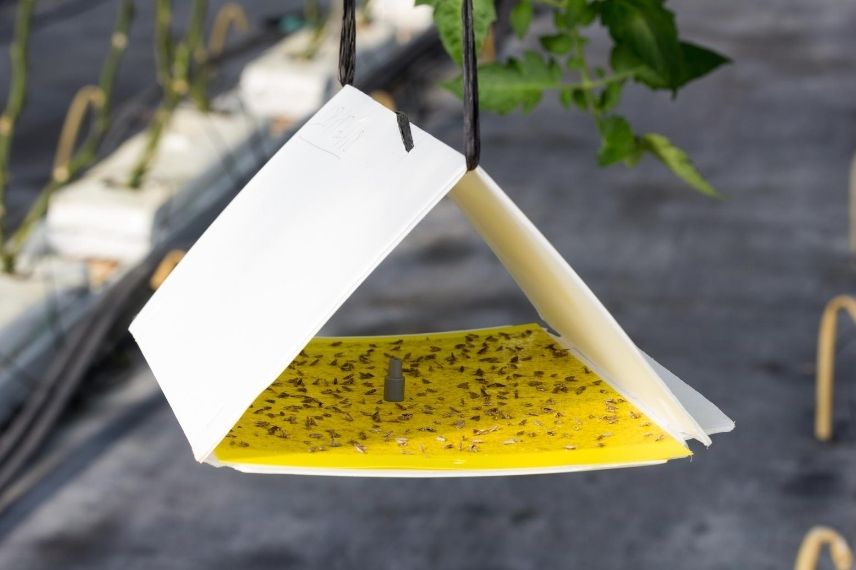
Pheromone trap
How can you prevent caterpillar infestations?
Prevention is better than cure, as the saying goes. Combatting caterpillars also begins with good prevention of their establishment. Several preventive measures exist.
- It is advisable to practise crop rotation to prevent caterpillars from establishing themselves in your garden. You can also practise companion planting by planting plants known for their repellent properties.
- Attracting the gardener’s natural allies—namely birds such as blue tits, which feed on caterpillars, is also a good preventive measure, as well as a method of control. You can install nesting boxes in your garden to encourage them to settle.
- Spraying natural manures such as the tansy infusion, the tomato manure and the rhubarb manure is another option. To combat leek moth, use one of these manures and spray twice a week. Against the cabbage white butterfly, spray tomato manure every 2 or 3 days. Here’s how to prepare them:
1. Preparing tansy infusion : Place 30 g of fresh tansy into 1 litre of boiling water. Let it infuse and strain. Spray the product as is. Be careful not to overdo it.
2. Preparing tomato manure : harvest 1 kg of tomato leaves and suckers. Place them in 10 litres of rainwater and let ferment for 4 days, stirring the mixture daily. Strain and spray undiluted onto the plants.
3. Preparing rhubarb manure : harvest 1.5 kg of rhubarb leaves and chop them. Place them in a container with 10 litres of water and macerate for 72 hours. Spray undiluted onto the plants.
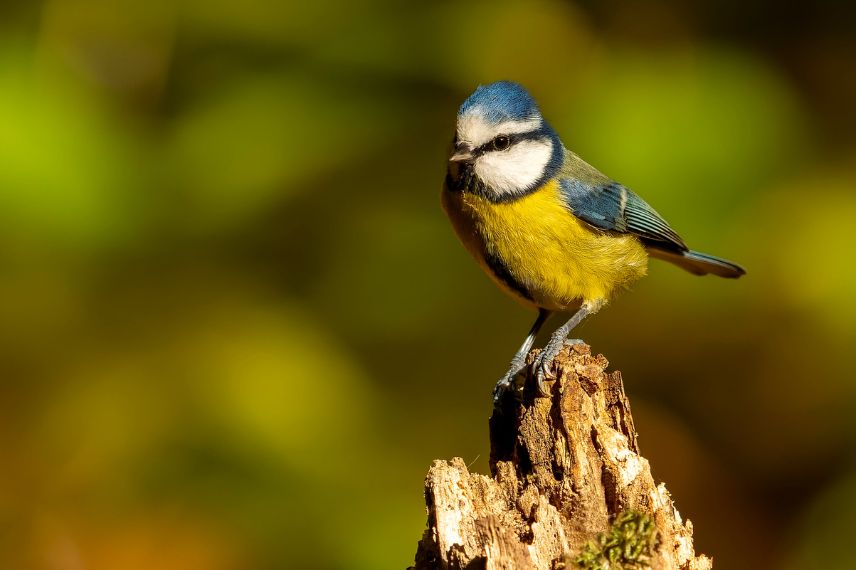
Encourage birds to visit your garden
- Subscribe!
- Contents
Comments