






























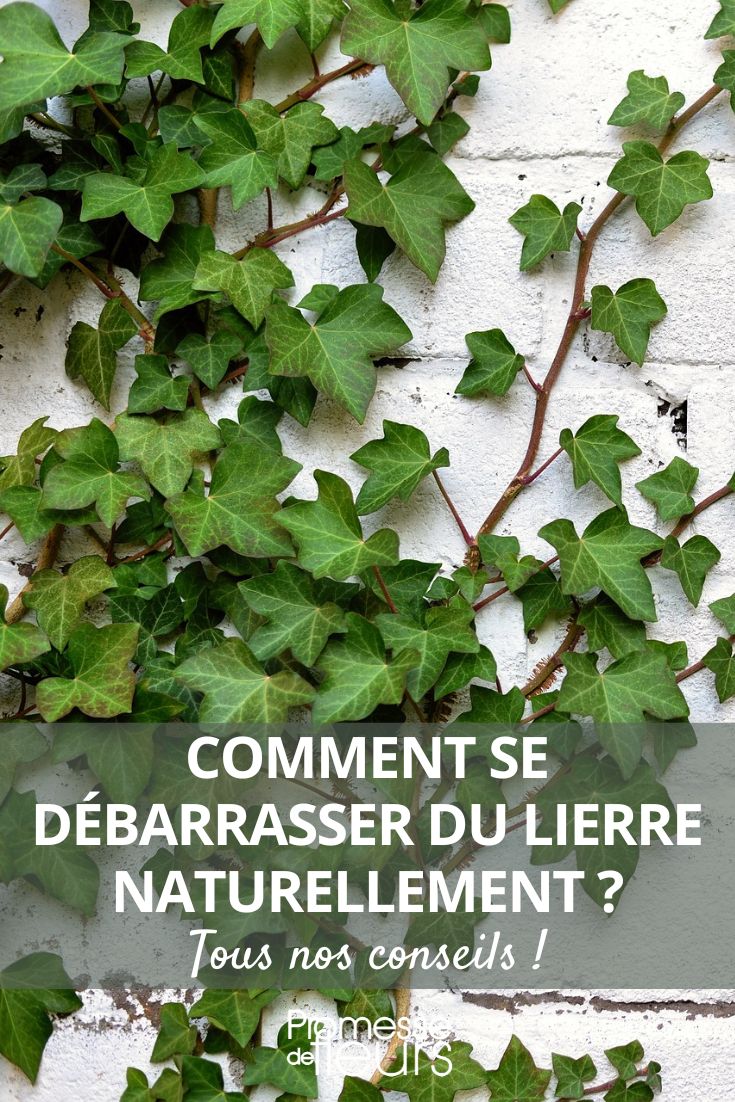
How to get rid of ivy naturally?
Tips to remove ivy naturally
Contents
Ivy is a climbing plant commonly found in nature and gardens. Useful for creating a verdant setting, covering an old tree or an old wall and serving as a refugium for birds and insects, it can also become too invasive. Vigorous, it can indeed grow up to 20 metres long, depending on the species, and uses its climbing roots to cling to a support. When left unmanaged, this plant can cause problems for gardeners, who then seek to remove it. How can you remove ivy from a garden while using natural solutions? Discover our tips on getting rid of ivy without harming the environment.

Why removing ivy?
Ivy, with its evergreen leaves and rapid growth, can sometimes become difficult to control and causes problems for:
- a wall in poor repair or a roof: Climbing ivy attaches to walls, fences and other structures using its climbing roots. These can cause damage by worsening already crumbly mortar joints or by lifting roof tiles.
- a tree: Although ivy is not parasitic, as it does not draw nutrients directly from the tree, it can nevertheless use a tree’s trunk for support. While this generally does not affect large, healthy trees, it may be problematic for old trees nearing the end of their life or for young specimens. For these latter two, ivy can quickly become too invasive.
- other plants: Ivy can smother other plants in the garden by covering them and monopolising resources such as light, water and nutrients. This dominance can reduce biodiversity, to the detriment of native plants and wild flowers.
- it can also attract certain pests: Ivy can be a refugium for some animals beneficial to the garden, but also for those considered pests, such as rodents or insects.
For these reasons, gardeners may choose to limit the growth of ivy, or even remove it. However, this decision should be taken with regard to ivy’s ecological role and by using removal methods that do not harm the garden’s overall environment.
For more information, read our article: “5 common misconceptions about ivy“.
Read also
5 common misconceptions about ivyHow to remove ivy from a wall?
Removing ivy from a wall requires patience, time and taking precautions to avoid damaging the structure.
Here is a natural, step-by-step method :
- Before you begin, equip yourself with gardening gloves, safety goggles and appropriate clothing to protect yourself from any insects that live in the ivy.
- Some people recommend watering the ivy before removing it to soften it and make the job easier
- Start by cutting the trunk of the ivy at ground level and at the base of the wall using a pruning shear or a saw. This step is crucial to cut off the supply of nutrients and water to the ivy.
- You can then wait for the ivy to wither, which will make removing the remaining branches easier, or gently remove the ivy from its support by cutting it into sections if necessary.
- Dig up the roots from the soil using a spade and be sure to remove all pieces.
- You can also spread coarse salt on the trunk and on the soil.
- To remove small pieces of ivy and residues that remain stuck, you can use a wire brush, taking care to test on a corner of the wall first so as not to damage the wall itself.
- After removing the ivy, monitor the area for any regrowth. If new shoots appear, remove them immediately. You can also cover the soil with mulch to prevent the ivy from regrowing
- Check the condition of the wall and make repairs if necessary.
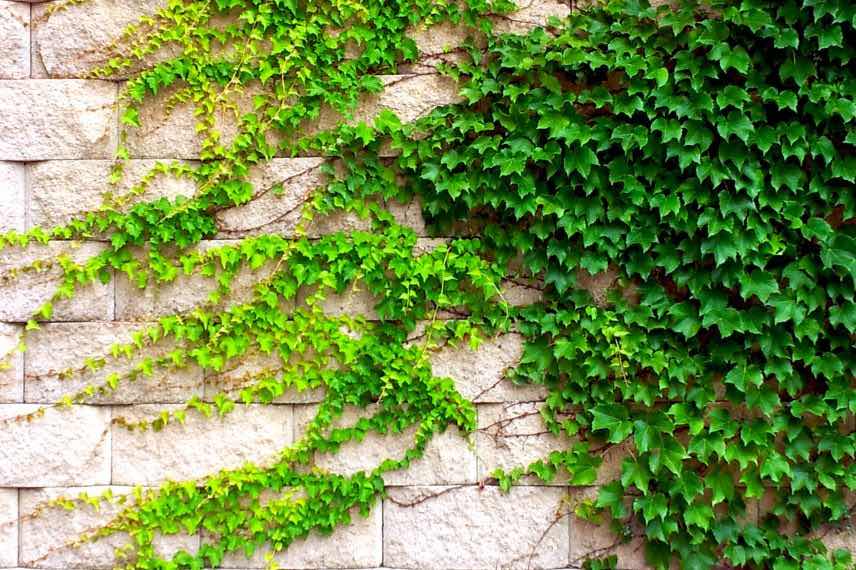
It’s often the first place that ivy colonises
How to get rid of ivy on the ground?
The ivy that grows on the soil can quickly invade large areas and smother other plants.
Here’s how to remove it :
- Before you begin, protect yourself with thick gloves and protective clothing.
- Cut the ivy into sections with pruning shears, then pull the stems and leaves out of the soil.
- After removing the majority of stems and leaves, use a spade or fork to dig up the roots. It is crucial to remove as many roots as possible, because pieces left in the soil can regrow.
- For particularly hard-to-reach areas, one method is to smother the ivy. Cover the area with a thick, opaque tarpaulin, securing it firmly. Leave it in place for several months. This will deprive the ivy of light and air.
- Even after an initial removal, the ivy can regrow from remaining roots. Monitor the area regularly and pull out any new shoot as soon as it appears.
If you are looking to replace the removed ivy, consider planting native groundcovers that are less invasive and offer similar ecological benefits.
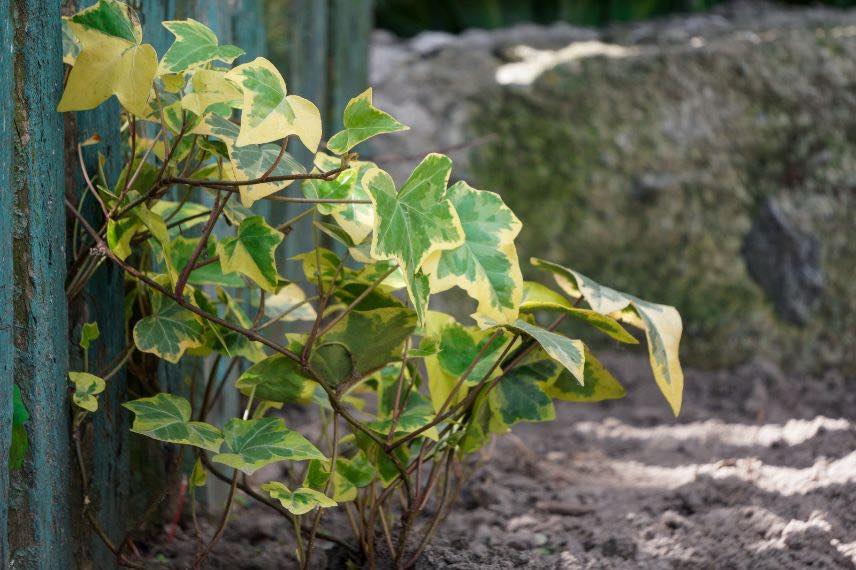
Small ivy will become large. Consider its future spread before planting it
How can I remove ivy from trees?
- Before starting, inspect the tree and the ivy to determine the extent of the work required.
- Use a pruning shear or a saw to cut the trunk at soil level as well as the ivy lianas arranged around the tree’s trunk.
- After cutting, you can remove the ivy from the tree by cutting it into sections if necessary or, if this risks damaging the tree, leave the ivy in place and wait for it to die.
- Dig up the ivy’s roots with a spade and make sure to remove everything.
- After removing the ivy, continue to monitor the tree for any regrowth and remove it
- Once the ivy has been removed, inspect the tree for any signs of disease or damage and address them.
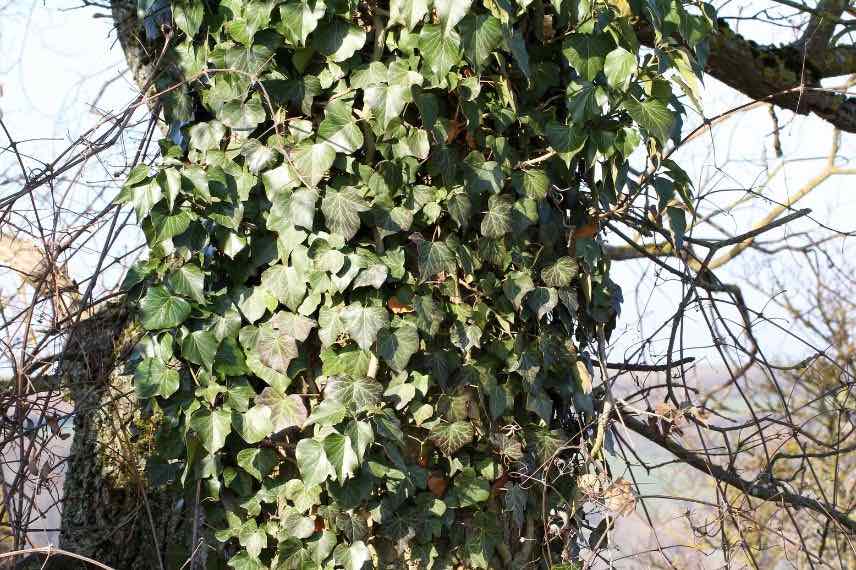
Ivy climbing up a tree
What are the benefits of ivy in a garden?
Although ivy is known for its rapid growth and invasive character, it offers appreciable ecological and aesthetic benefits when properly managed:
- It is a habitat for wildlife. Ivy serves as a refugium and habitat for many animals, including birds, insects and small mammals. Its dense leaves provide protection against predators and extreme weather conditions, while its flowers attract pollinating insects and its berries are an important food source for birds in winter.
- As a groundcover plant, ivy helps stabilise the soil and prevent erosion, particularly on slopes or in areas where other plants struggle to establish.
- On walls, ivy can act as a natural insulator, helping to regulate temperature inside buildings. In summer it provides shade and reduces the surface temperature of walls, while in winter it can help retain heat.
- Ivy is capable of absorbing a significant amount of atmospheric pollutants, making it an asset in urban environments for improving air quality.
- Aesthetically, ivy adds a vertical dimension and a lush appearance to gardens. It can be used to create green backdrops, cover unattractive structures or as an ornamental plant.
- Ivy is a hardy plant that requires little maintenance once established. It is drought-tolerant and can thrive in a variety of soil and light conditions.
- In urban and peri-urban gardens, ivy can increase plant and animal biodiversity, offering a richer and more varied ecosystem.
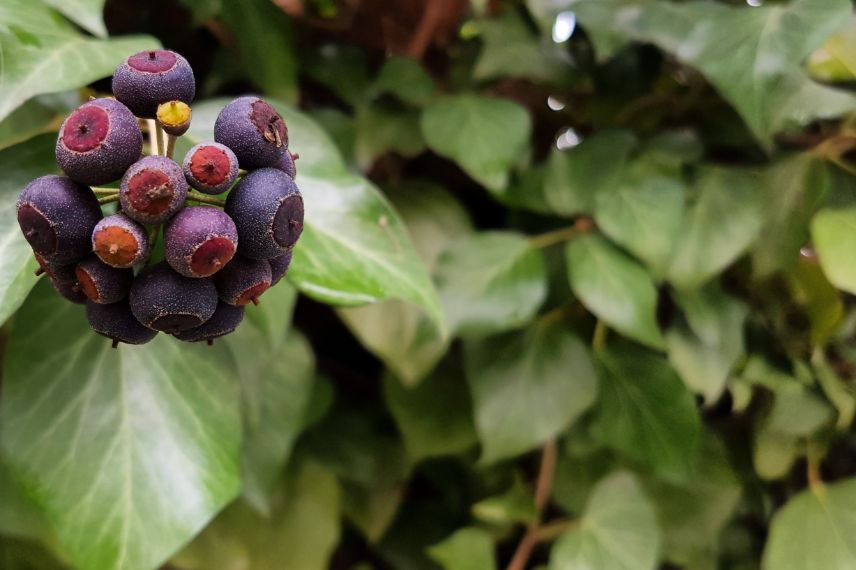
Ivy berries in winter, a precious resource for animals
- Subscribe!
- Contents
Comments