





























How to get rid of leaf miners on plants?
Our tips for identifying these pests and getting rid of them naturally
Contents
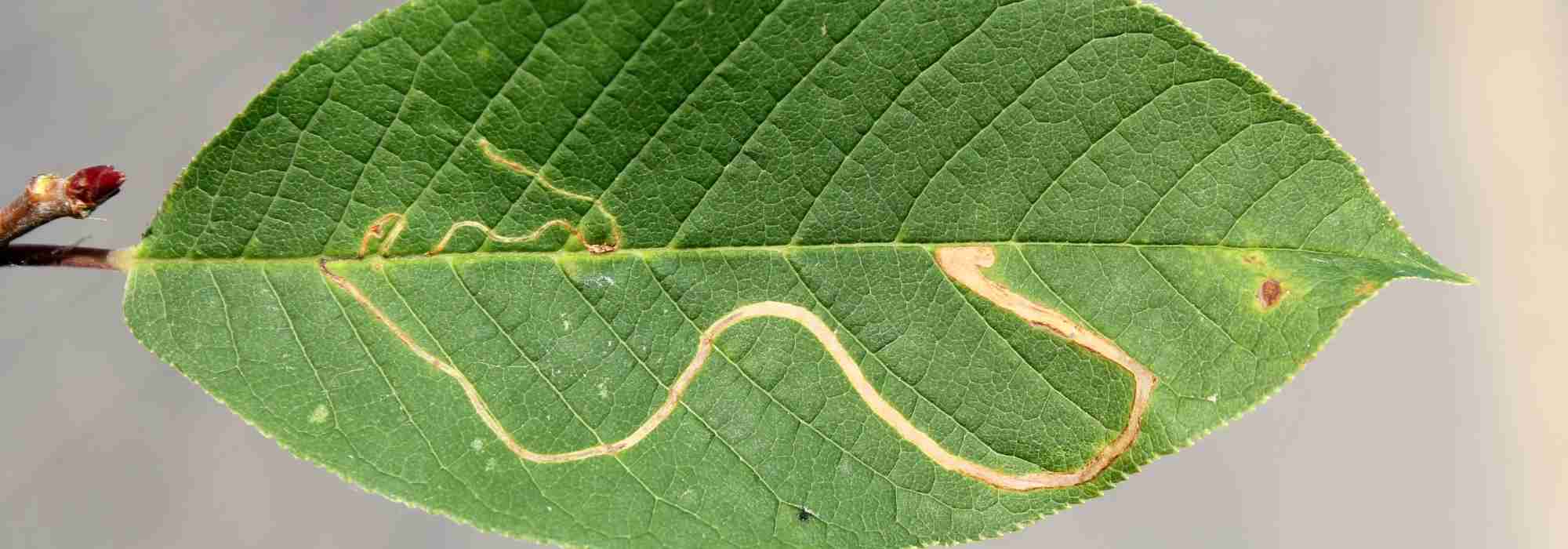
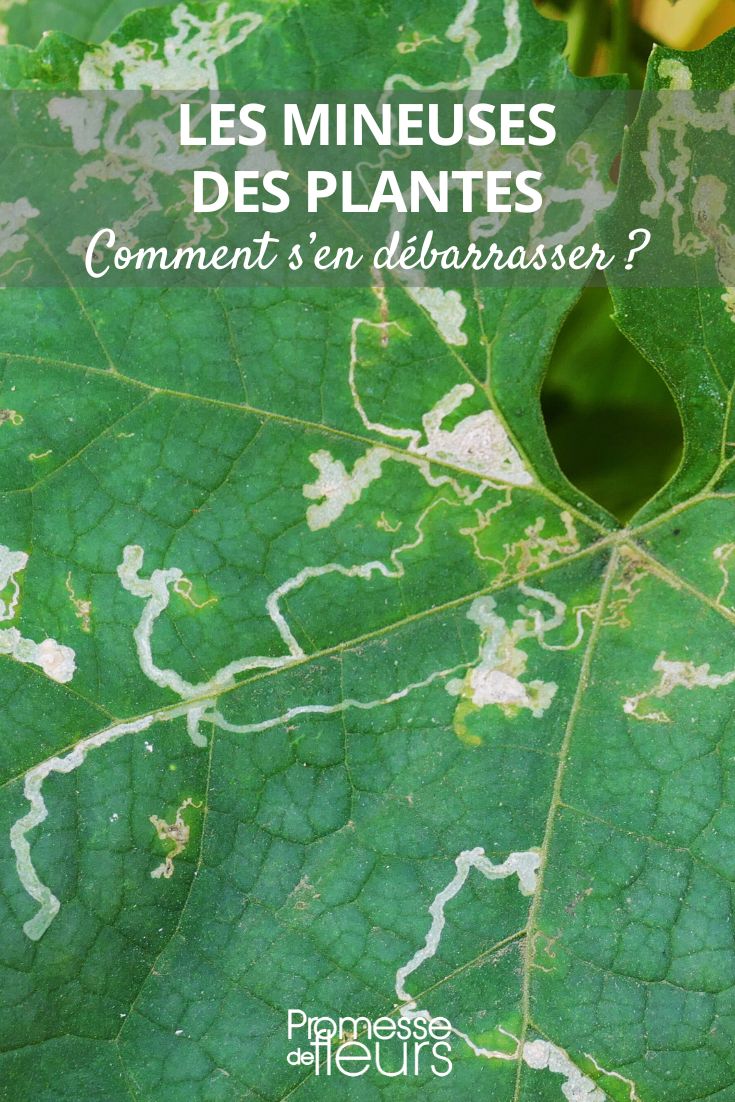
Leafminers: this broad vernacular term, very broad, designates not a single leafminer, but several belonging to different species. All these tiny larvae feed on plants in ornamental gardens, vegetable plots or orchards. And the damage they cause varies considerably depending on the insect involved. Nevertheless, an attack by leafminers is fairly easy to spot: they bore galleries in the leaf tissues, just beneath the epidermis, drawing, in passing, arabesques, sometimes quite intricate.
If the damage caused by these leafminers is easy to identify, it is less easy to counter. That is why preventive measures are often essential for biologically controlling these garden pests.
Discover how to identify the different leafminers, combat them and, above all, prevent their invasion.

Different species of leaf miners and their life cycles
There isn’t a single leaf miner, but several species of leaf miners, all belonging to different families of parasitic insects.
Leaf miners of different species
In any case, they are all larvae, mostly invisible to the naked eye and worm-like in appearance, passing through several stages of development. Their parent species belong to two main distinct groups:
- Lepidoptera: these are small caterpillars, i.e. butterfly larvae, of several types. For example, Lyonetia clerkella mainly targets fruit trees, Cameraria ohridella attacks the horse-chestnut, Phyllocnistis citrella targets citrus trees, Tuta absoluta prefers tomatoes and the Solanaceae, Acrolepiopsis assectella attacks leeks, Stigmella on brambles and the Rosaceae, while Anarsia lineatella has a predilection for peach leaves, but also for apricot, plum, almond and cherry trees.
- Diptera: these are small flies, for example named Phytomyza gymnostoma, which primarily attack alliums (leek, garlic, onion, shallot…), or also tomatoes or cabbages (Liriomyza). Phytomyza ilicis prefers holly leaves, Chromatomyia syngenesiae has a preference for chrysanthemum leaves, Acromyza for cereals.
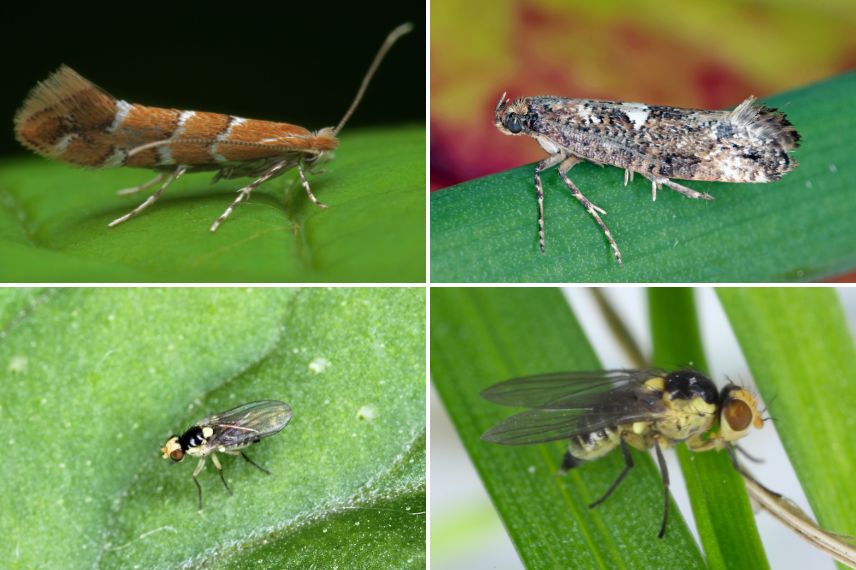
Leaf miners belong to different species. They are Lepidoptera or Diptera
Less commonly, leaf miners belonging to Hymenoptera and to Coleoptera can also be found. Hymenopteran leaf miners attack broadleaf trees such as elms and birches.
To identify which pest it is, simply observe the “mines”, i.e. the galleries left behind. Indeed, all leaf miners have the peculiarity of digging galleries between the two epidermises of the leaves. They all share a fairly similar life cycle.
A life cycle that is more or less identical
Adults emerge in spring, between April and May, and perform their nuptial flight. This emergence often depends on climate conditions and temperature. Then, eggs are laid, usually directly on the host plant, beneath the epidermis. Each species selects the oviposition site carefully, either on the edge of the leaves, or on the veins, central or lateral. The larvae penetrate the leaf tissues, sometimes the buds, the roots, even the flowers and fruits. These same larvae pass through several stages, feeding on the tissue of the targeted plants. Once they reach the last stage of development, the larvae prepare for pupation. Some become pupae, others fall to the ground to bury themselves there over winter.
Read also
Leeks diseases and pestsHow to recognise a leaf miner attack?
Leaf miners belong to a vast group of insects, but all share the habit of mining leaf tissue. Indeed, these larvae consume the tissues of the plants from the inside, between two layers of epidermis. This is thus a form of endophagy (from Ancient Greek endo meaning “inside” and phagos meaning “eater”) which contrasts with ectophagy, a term describing the feeding of leaves on the surface. Invisible to the naked eye, as they are concealed within leaf tissues, these larvae can nonetheless be detected by the traces they leave on the leaves. Leaf mines form beautiful arabesques, all in curling patterns. But I doubt you will appreciate their artistic appeal!
Different forms of leaf mines
There are thus different forms of mines, which can, moreover, help identify the pest. Some larvae move straight ahead to feed and form narrow mines, sometimes straight, but more often curved, tortuous or spiralled. These galleries are called “corridor mines”. Others feed around their oviposition site, in all directions, forming wide, plate-like mines. But most are blocked by the veins, which they cannot cross. A few rare miners stay on the surface and protect themselves in a sheath made of bristles. These are tentiform mines.
All of these mines are generally white, grey or light brown, speckled with dots or blotches, ranging from brown to black or greenish. These are the faeces, also known as frass. A mine that is entirely white is most often abandoned.
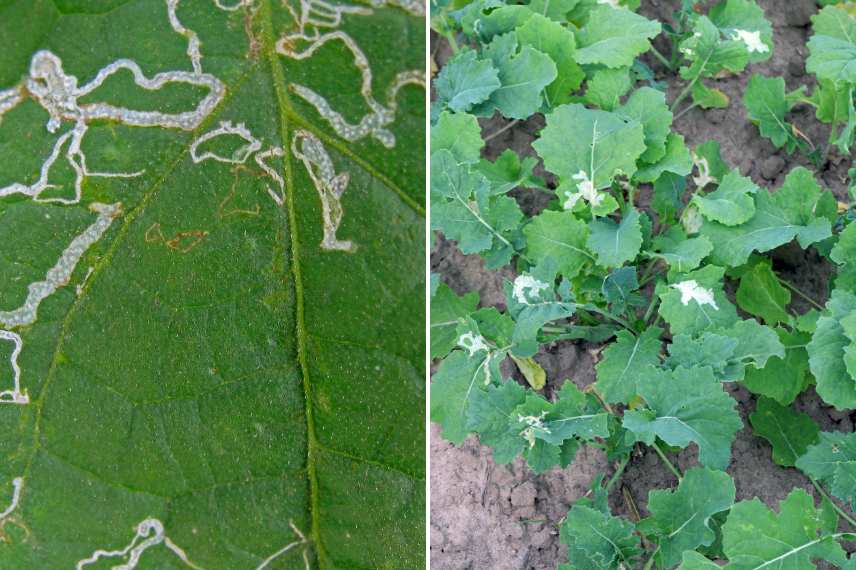
Leaf mines can take various forms, winding or broader, plate-like
Damage can vary in severity
These mines cause damage ranging from minor to severe. Ornamental plants are primarily affected aesthetically. Leaves may also dry up and drop prematurely, without necessarily affecting the growth of the shrub or tree. If the leaf miners attack fruit trees or vegetables, the consequences can be more significant. Indeed, yields can be affected and the harvest quite meagre. Moreover, two to three generations can succeed one another in a single year. And the number of larvae is increasing.
Among the most impactful leaf miners, one can cite the horse chestnut leaf miner, also known as the miner moth Cameraria ohridellia, Cameraria ohridellia in its Latin binomial. Indeed, the leaves of horse chestnut trees (Aesculus) brown prematurely and drop, a little as if the tree believed it was autumn, except the phenomenon occurs in midsummer. In case of a heavy attack, the tree’s survival may be at risk. This same leaf miner can also settle on the leaves of the sycamore maple (Acer pseudoplatanus) or the Norway maple (Acer platanoides).
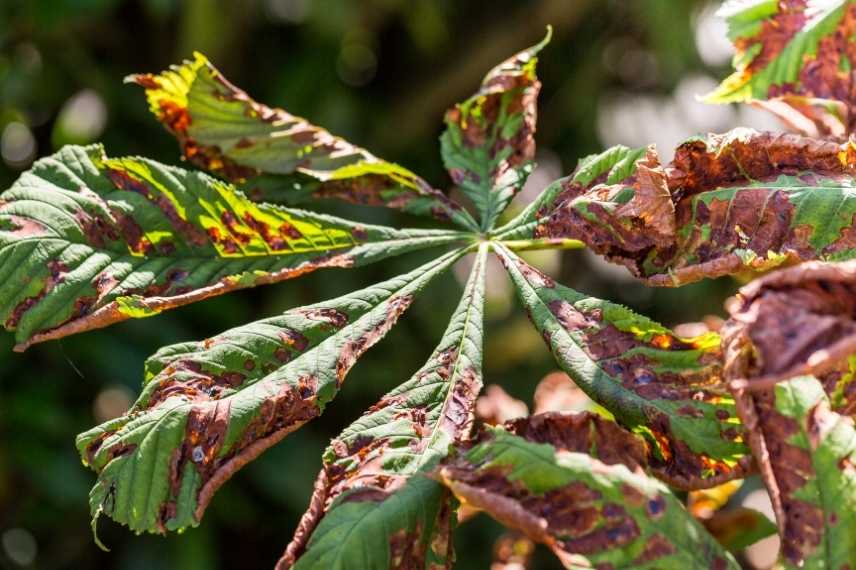
On the leaves of the horse chestnut, Cameraria ohridellia can cause severe damage
How to control leaf miners?
It’s very difficult to achieve a curative effect against leaf miners, which live well concealed beneath the epidermis of the leaves. That’s why we can only rely on the natural enemies of leaf miners, namely a few parasitoid wasps or garden birds. Thus, as an example, the small wasp Diglyphus isaea proves very effective against the leaf miners of the Liriomyza species that particularly favour the Solanaceae (tomatoes, aubergines…) or ornamental plants. As for Macrolophus pygmaeus, it is also a useful ally, a predator of leaf-miner larvae. It is a polyphagous bug that also preys on whiteflies, mites, and some thrips… It is very effective in the fight against the tomato leaf miner (Tuta absoluta). These predatory insects, in larval or adult form, establish themselves directly within the crops. But it is also possible to attract them by cultivating melliferous plants such as yarrow, centaureas, borage…
Among other natural predators of leaf miners, there are also blue tits, coal tits. But their effectiveness is very limited, as leaf miners are difficult to access and hard to spot beneath the epidermis of the leaves.
Some manures or decoctions can also have some efficacy against certain species of leaf miners. In particular the rhubarb liquid manure or the tansy decoction. But these treatments remain highly variable, especially if the leaf miner is not clearly identified. Moreover, these sprays must be renewed several times.
Read also
Diseases and Pests of the Horse ChestnutHow to control and prevent leaf miner infestations?
As direct control remains fairly difficult to carry out once the leaf miners are established, it is sometimes wiser to talk about population control. Similarly, prevention is essential to combat as effectively as possible the various leaf miners.
Thus, many methods can be deployed to counter all leaf miners:
-
- The deployment of insect-proof nets is certainly one of the most effective solutions for preventing egg-laying on the foliage. These insect-proof nets are mainly used in the vegetable garden to protect vegetables susceptible to leaf miners, such as tomatoes, leeks, onions, cabbages… However, you must choose nets with a fine mesh that should be placed at the time of the spring flight. To be 100% effective, these nets must never touch the plants. These nets should remain in place until harvest, as several generations can succeed one another
- The installation of pheromone traps is also feasible, from April to early October, to trap the males and limit mating and thus egg-laying. Pheromone traps are specifically dedicated to horse chestnut leaf miners, others to citrus leaf miners
- Some adult leaf miners may be attracted by the colour yellow. This is why yellow sticky traps can be useful. Alternatively, the yellow bowl traps or the box can be tried against certain dipterans
- Sticky bands, placed around the trunks of trees, prevent some female leaf miners from climbing to lay eggs. This solution can be deployed against the horse chestnut leaf miner.
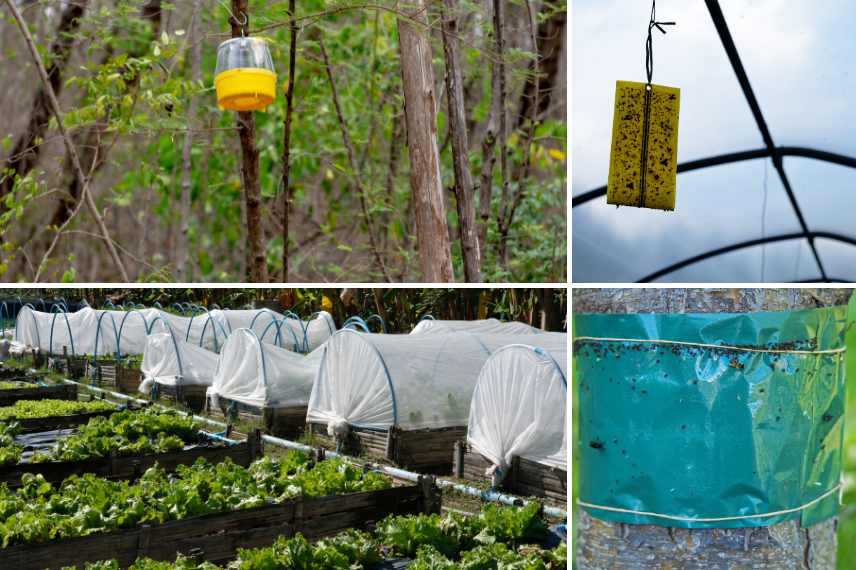
Different methods can be implemented to prevent the appearance of leaf miners
Otherwise, the most important step to limit spread is to collect the affected dead leaves and dispose of them carefully to reduce future populations. These leaves can be composted if they reach a sufficiently high temperature (at least 60 °C). If in doubt, it is preferable to take the leaves to the recycling centre. As with contaminated leek waste.
In the vegetable garden, a strict crop rotation also helps prevent an infestation the following year.
And, to give yourself every chance, it may simply be enough to combine all of these preventive biological control measures.
- Subscribe!
- Contents
Comments