





























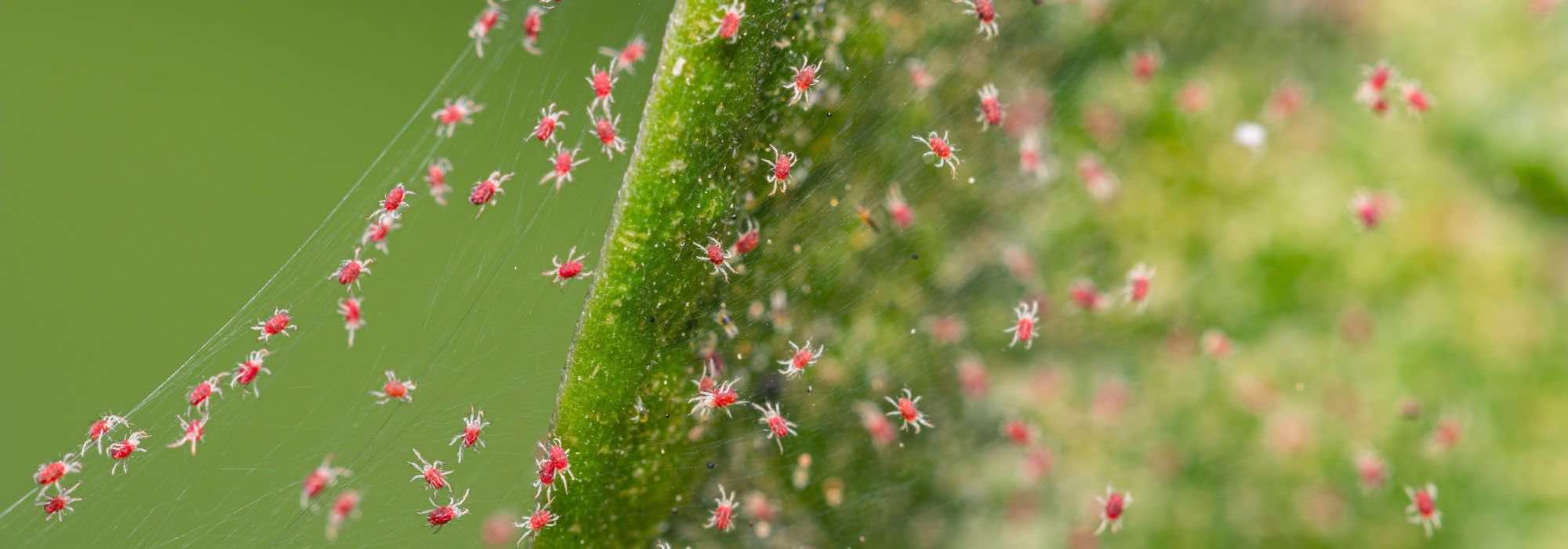
How to get rid of mites on plants?
How to naturally get rid of mites on your plants?
Contents
Mites are tiny pests that attack ornamental plants, vegetables and fruit trees. Invisible to the naked eye, they suck the plant juices from the leaves without being noticed, causing discolouration of the leaves, then desiccation and finally the death of the plants. They thrive in a dry and warm medium, especially indoors and in greenhouses, but they can also develop outdoors if the medium is favourable. How to get rid of these pests naturally? Discover our tips for combating mites or red spider mites and for preventing their appearance in the garden.

What are mites?
Mites are tiny arachnids that attack plants. They are distinguished from insects by having eight legs (four pairs), whereas insects have six.
Red spider mites are the best-known pest mites. They measure about 0.5 mm and are barely visible to the naked eye.
They are also known as web-spinning spider mites because they weave fine webs on the leaves.
They are yellow, green or red.
They suck the sap from the leaves of the plants, which become speckled with small white, yellowish or greyish spots. The leaves then turn yellow and then brown before falling.
The plants dry up and then die.
Another way to spot them: fine silks or webs on the undersides of the leaves. These webs are even more visible when the leaves are sprayed with water.
These pests multiply very quickly in a dry, warm environment. They lay eggs from around 12°C and develop rapidly from around 30°C.
They can kill plants and tend to settle mainly indoors or in greenhouses, where the warm and dry conditions suit them. Outdoors, they develop particularly in summer. They are notoriously difficult to combat, as they are often detected late.
They can attack both vegetables and fruit trees, conifers, ornamental garden or balcony plants, and indoor plants.
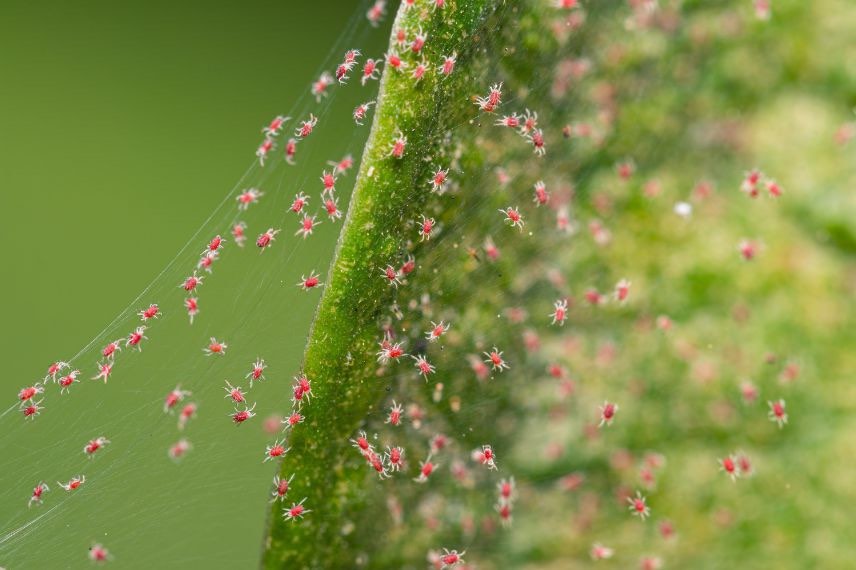
Seen up close here, red spider mites are sometimes visible to the naked eye, but it is usually the webs that you notice first
Read also
Nettle manure: how to make it?Mite control methods
Once a spider mite attack has been confirmed, start by removing the leaves and the affected parts of the plant. Then spray the plants with soft water. You can then make sprays of natural products. The most commonly used are diluted black soap in water and nettle manure. Some also use mineral oil sprays.
- Preparation of the nettles manure : place 1 kg of nettles in a large container and add 10 litres of water. Let ferment for between 4 days and about ten days, stirring the mixture for 10 minutes each day. Strain the product then dilute the manure at a rate of 25 cl in 5 litres of water. Spray this nettle manure onto the affected plant, particularly on the leaves and their undersides where red spider mites settle. Carry out spraying early in the morning or in the evening. Spray the leaves every 2 to 3 weeks.
- Preparation of the black soap solution: Pour 1 teaspoon of liquid black soap into 500 ml of lukewarm water. Stir and spray onto the plants. This product is biodegradable and works by neutralising the respiratory systems of red spider mites. If the affected plants are indoors or in a greenhouse, take them outside and spray the leaves. Then proceed to remove the affected parts and to spray products.
- Another way to get rid of mites: biological control. You can introduce predatory mites that will eat the red mites and their eggs. One of the most commonly used predatory mites against red mites is the Phytoseiulus persimilis, available from Promesse de fleurs. Beetles, lacewings and earwigs are also natural predators of mites. You can attract these beneficials to your garden by creating refugia conducive to their establishment, such as a pile of wood and leaves.
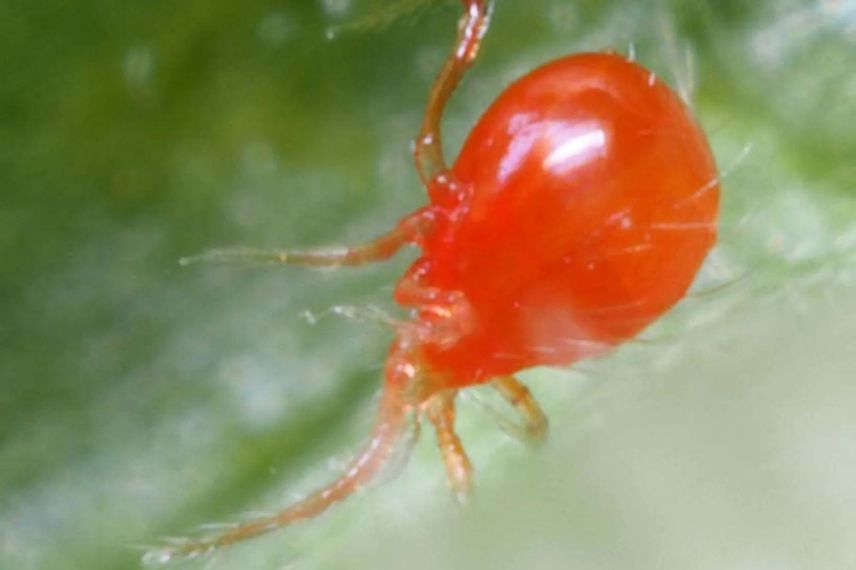
Phytoseiulus mites are natural predators of red spider mites
How can you prevent mites from appearing on your plants?
Best way to combat mites or red spider mites is prevention of their appearance.
- To prevent mites from taking hold, create a humid atmosphere they dislike. You can regularly mist the leaves of your plants with soft water to deter them from settling. These mists will also help you detect the presence of red spider mites. If, after misting the leaves, a fine web appears, your plant is infested.
- Ensure good air circulation by spacing plants adequately.
- Keep the growing medium moist, especially if you grow your plants indoors or in a greenhouse. For example, you can mulch around the base of the plants to keep it moist.
- Avoid nitrogen-based fertilisers, as they favour the development of mites.
- Carry out sprays of nettle manure or horsetail manure as a preventative measure.
- Prioritise biological control by attracting red spider mite predators such as lacewings, predatory bugs and earwigs.
For further reading, see our advice sheet on Red Spider Mite: Identification and Treatment.

Nettle manure has insecticidal and fungicidal properties
- Subscribe!
- Contents
Comments