





























How to prune and care for evergreen shrubs?
Everything you need to know about resplendent shrubs
Contents
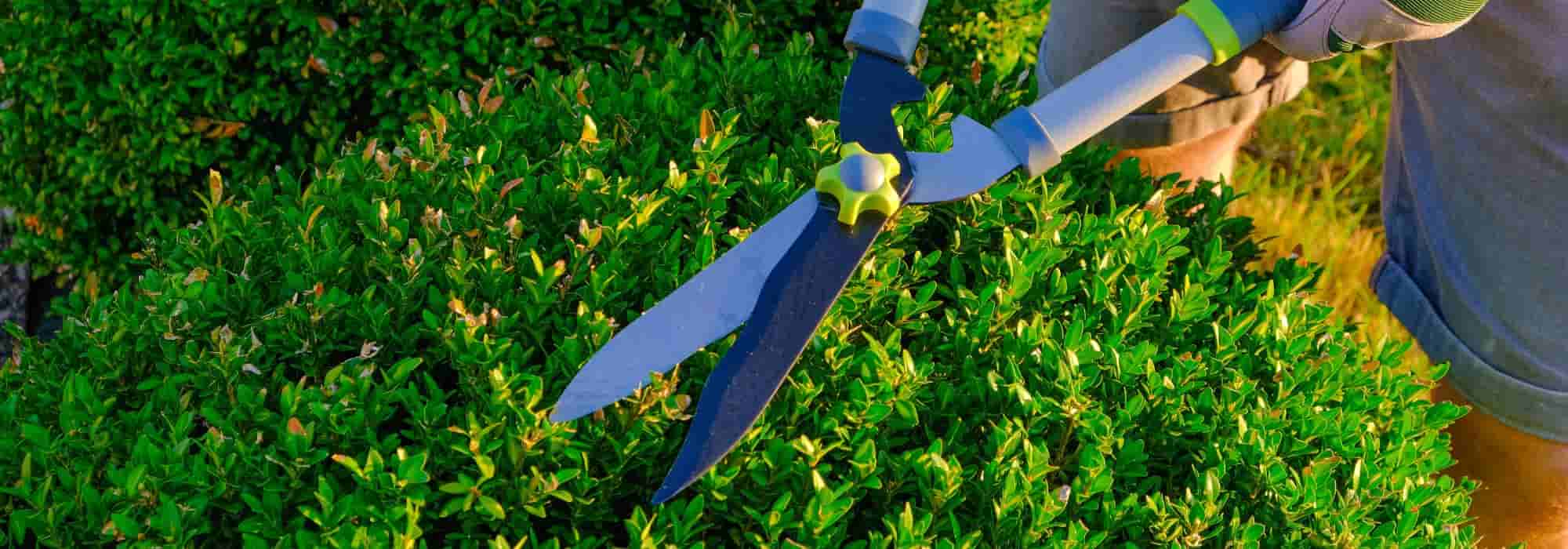
With their year-round foliage, the evergreen shrubs bring colour and vitality to the garden throughout the year. However, to maintain their attractive appearance and good health, regular maintenance is essential, including pruning! In this article, discover why it is important to prune your evergreen bushes, when to carry out this task depending on the type of shrub and how to carry out effective pruning. So, grab your pruning shears — we’ll take you through everything you need to know about pruning for resplendent evergreen bushes!

Why pruning your evergreen shrubs?
You may be wondering why pruning your evergreen shrubs is so important. In fact, there are several reasons that go well beyond mere aesthetics:
Plant health and well-being
Firstly, pruning your shrubs contributes to their overall health. By removing dead or diseased branches, you reduce the risk of disease and allow better air circulation. This thus promotes healthier, more vigorous growth.
More abundant flowering
If your shrubs are flowering varieties, pruning can stimulate an even more spectacular future flowering. By cutting the old branches, you make room for new floriferous shoots. Moreover, this “stress” caused by pruning encourages the shrub to produce seeds and therefore flowers.
A harmonious garden
Regular pruning also helps maintain an attractive shape and balanced proportions, which is essential for the harmony of your garden.
Controlling size
Finally, if space in your garden is limited, pruning allows you to control the development of your shrubs. You can make them more compact or, conversely, open them up for a more natural look.
Read also
Evergreen bushes for shadeWhen to prune evergreen shrubs?
The ideal time to prune your evergreen shrubs depends on several factors, including their flowering cycle and their type.
Shrubs that flower in winter or early spring
For evergreen shrubs that flower in winter or early spring, such as the camellia or the laurustinus (laurestine), it is best to prune just after flowering so as not to compromise the next season’s flowers.
Summer-flowering shrubs
For those that flower in summer, such as the oleander, is most appropriate.
Evergreen shrubs sensitive to pruning
Some evergreen shrubs, such as the rhododendron, the Japanese azalea and the pieris, are more sensitive to pruning. These shrubs often have slower growth and a delicate branch structure. Inappropriate pruning can stress them and affect their health and flowering. For these shrubs , it is best not to touch them. However, if the pruning shear tempts you, you can opt for a light, targeted pruning just after flowering.
Evergreen hedges and conifers
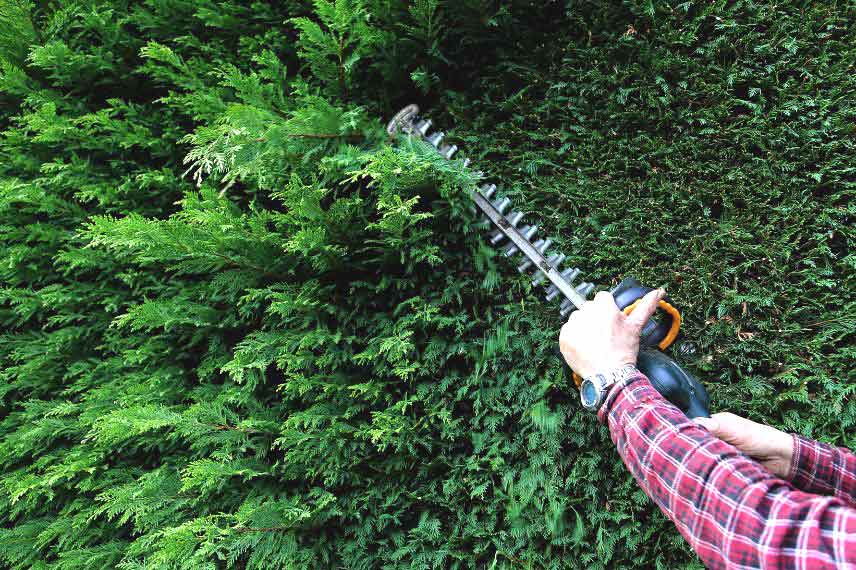
Evergreen hedges and conifers generally require several prunings throughout the year to maintain a neat shape. A pruning in early spring and another at the end of summer are most suitable.
Frequency of pruning
Although many evergreen shrubs are content with an annual pruning, some may require more frequent prunings, up to two or three times a year, to maintain optimal shape and health.
Conversely, other shrubs prefer very infrequent pruning, such as oleander which prefers a refresh every 4 to 5 years.
It’s best to check each plant (which you can find in our category: plant profile).
Ingrid’s tip: I record all my shrubs’ pruning dates in a gardening notebook organised month by month. This ensures I prune each shrub at the optimal time, promoting their health and flowering.
Good to know:
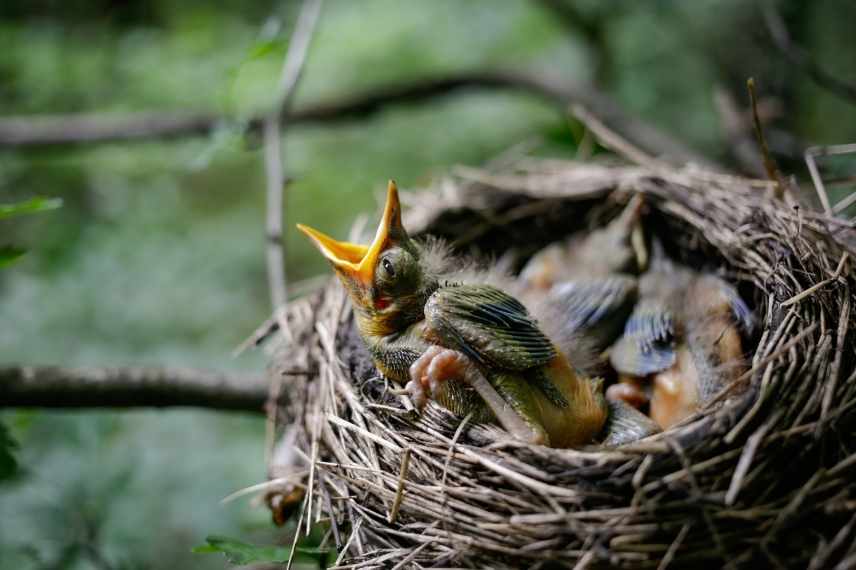
It is recommended not to prune hedges, trees and shrubs between 15 March and the end of July so as not to disturb bird nesting and their chicks! If you can, prune your shrubs before and after this period. For more on the subject, read our article: “Do not prune hedges between 15 March and the end of July!“
How to prune evergreen shrubs?
How you prune your evergreen shrubs depends on several factors, including their age, their health and their type. Here are some general tips to guide you :
Necessary tools
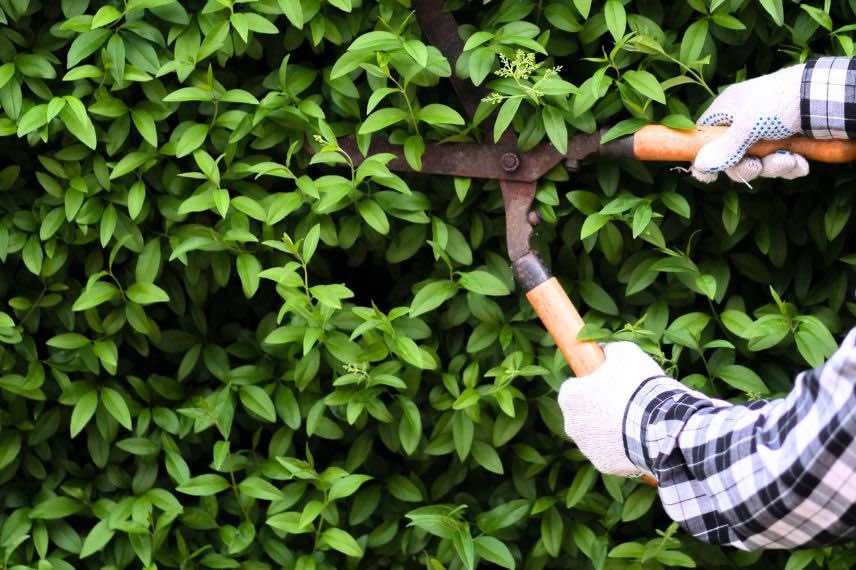
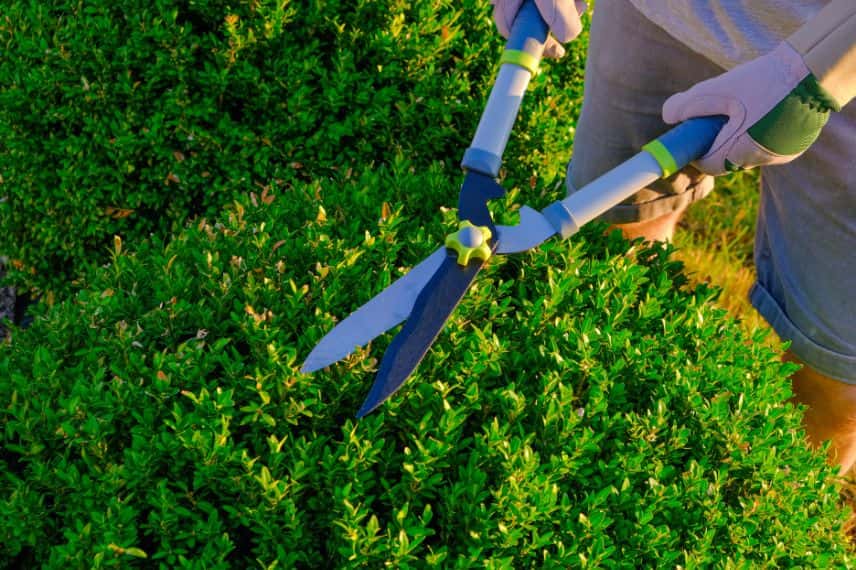
Before you begin, make sure you have the right tools. A pruning shear well-sharpened is essential for clean cuts. For thicker branches, use a pruning saw or a branch cutter. In all cases, disinfect your tools to prevent the spread of diseases and fungi between plants.
Basic steps
Start by removing dead, diseased or damaged branches. Then, prune the branches that cross to prevent the shrubs from becoming too dense. The aim is to allow good air circulation and better light penetration into the centre of the shrub.
Severe or light pruning?
The severity of the pruning depends on the shrub in question. Some, like the oleander, tolerate very severe pruning (but spaced out over time), whereas others, like the camellia, prefer a gentler approach. Feel free to read their specifics in our different plant sheets.
Formative and maintenance pruning
For young shrubs, formative pruning can be beneficial to encourage balanced growth, to encourage it to become denser and to tame its shape.
For older shrubs, regular but light maintenance pruning helps maintain their shape and encourage flowering.
After pruning
Don’t forget to care for your shrubs after pruning. A supply of compost or specific fertiliser can help the growth of new branches.
- Subscribe!
- Contents

Comments