





























How to retain heat in a greenhouse during winter?
Our solutions to prevent your plants from freezing in winter in a greenhouse
Contents
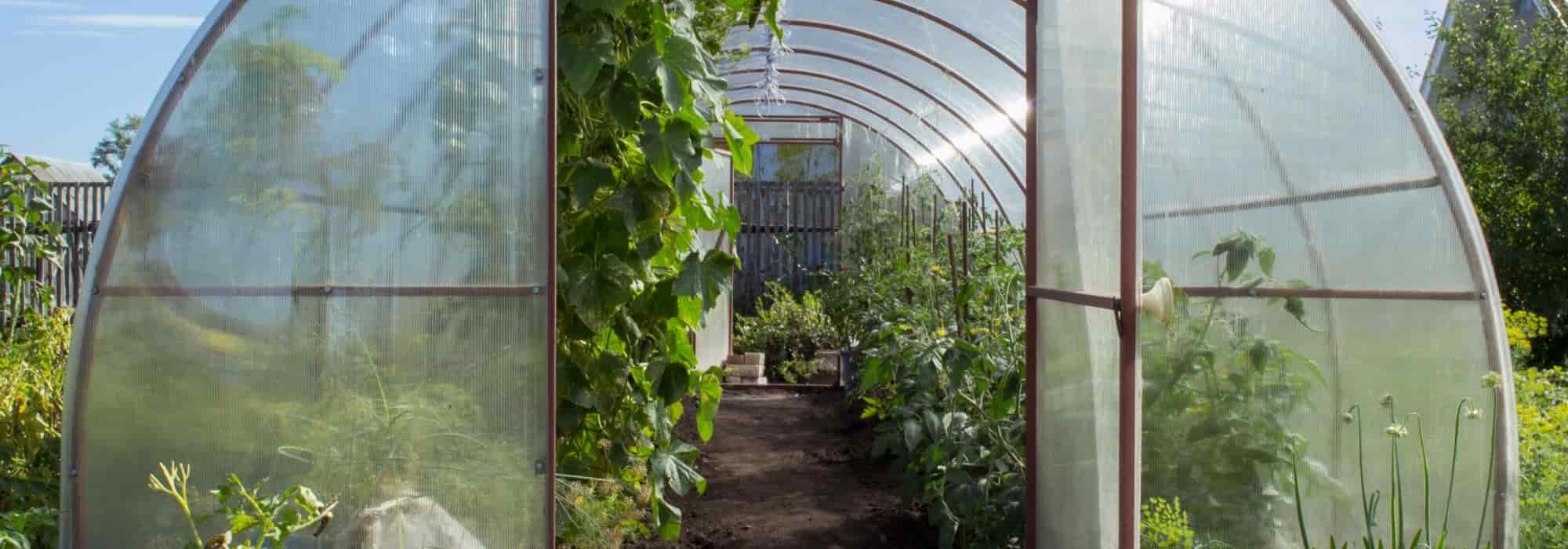
To carry out early sowing, protect your young plants from the cold and bad weather, and winter your frost-sensitive plants… the greenhouse is an interesting investment, varying in cost depending on the materials used. The structure can indeed be made of aluminium, steel, wood, or plastic, while the panels are designed from glass, polycarbonate, or simply a special greenhouse cover. However, in regions where winters can be harsh, the temperature in a cold greenhouse can quickly drop below 0°C.
That’s why it is essential to prepare your greenhouse for winter. And especially to find economical solutions to avoid having to heat it. I will share some tips and advice on how to insulate your greenhouse or heat it without heating.

The right exposure for the greenhouse
If your greenhouse is not yet installed and you are considering buying one, it is crucial to carefully consider its location. A good location is essential not only for managing heat episodes in summer and cold in winter.
In regions with a temperate or oceanic climate, it is preferable to position your greenhouse along an east-west axis, with the entrance facing east. Why? Simply because bad weather often comes from the west. Additionally, one of the long sides of the greenhouse should be exposed to the south to capture maximum solar radiation, especially in winter.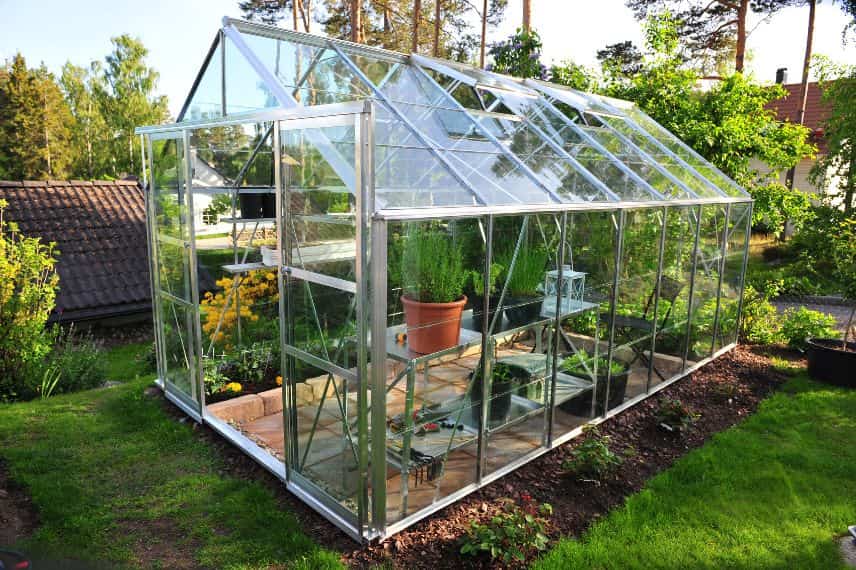
For regions further south, a north-south orientation is preferable, with the lengths of the greenhouse facing east and west.
For maximum winter protection, greenhouses attached to the house are ideal, as they benefit from thermal inertia.
Of course, your greenhouse should be sheltered from strong winds that can cause significant damage, especially in autumn.
Finally, regardless of the materials used for your greenhouse, it is essential to ensure very good natural ventilation, including in winter. This is to avoid stagnation, which is often a source of disease development.
Read also
How to choose a greenhouse?How to prepare your greenhouse for winter?
Gently, autumn is settling in… Work in the vegetable garden is reducing, and you will need to think about wintering your tender plants in your greenhouse. This is the perfect time to prepare your greenhouse, which has been heavily used this year. Indeed, it is important to clean it to prevent the spread of diseases, and especially to check its condition for a peaceful winter.
Autumn cleaning of the greenhouse
Autumn is certainly the best season to give your greenhouse a good clean. The days are still sunny, temperatures are pleasant, and the soil is still warm. It’s time for cleaning and disinfecting the greenhouse! A thorough clean is crucial for the preservation of the plants that will winter there, as well as for brightness!
Start by taking stock of all your growing supports, trays, pots, shelves, young plants, and other growing plates. Clear them of any remaining substrate and wash them with black soap. Take the opportunity to clean your growing tables.
Next, you will need to attend to the walls of your greenhouse both inside and out. To maximise brightness in winter, it is essential to clean them. Soapy water is perfect for this essential task. The inside of the greenhouse can also be disinfected. For this, simply add a few drops of tea tree essential oil or white vinegar to your soapy water. Don’t forget to rinse with clear water.
Finally, let’s focus on the ground. If you are growing in open soil under your greenhouse, remove the last remnants of crops, rake the soil, add an organic amendment like compost, and mulch with fallen leaves, straw, or RCW.
You can also add growing tables. Placing tender plants on or beneath them allows you to create a sort of microclimate.
Checking for sealing
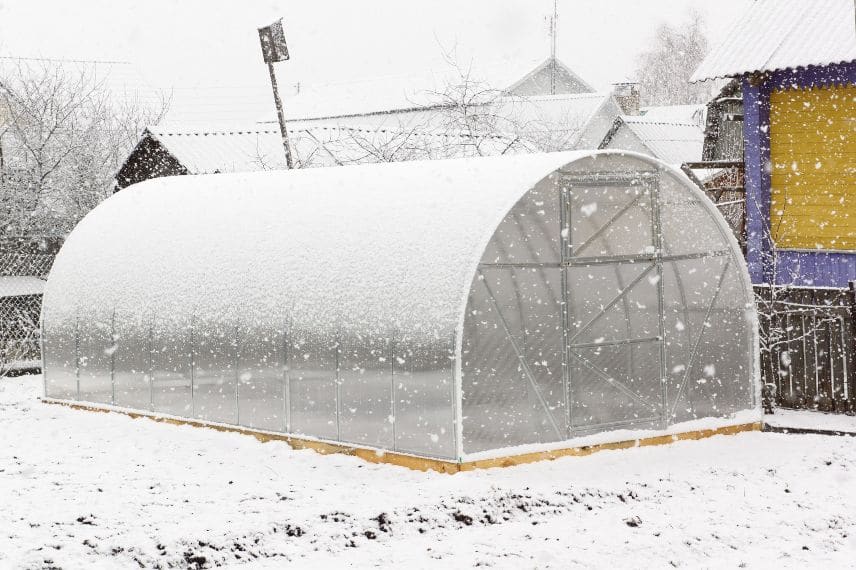
Take advantage of this big autumn clean to check the proper sealing of your greenhouse, both on the panels and the joints. This sealing is even more important in winter, as it helps prevent thermal bridges. Additionally, drafts can be fatal in winter for the most fragile plants.
Don’t forget to check the ground fixings and hinges, in case of strong winds or snowfall.
As for humidity, which is critical in winter in a greenhouse, it will be avoided by suspending watering.
How to insulate a greenhouse to retain heat?
In winter, in a cold greenhouse, the temperature is logically a few degrees higher than outside. About 4 to 5 degrees in a glass or polycarbonate greenhouse or 2 to 3 degrees simply under a plastic greenhouse. This is why, in the coldest regions, it is perfectly possible for it to freeze in a greenhouse, at night but also during the day.
Of course, it is possible to keep your greenhouse frost-free with electric, gas, or oil heating systems. But is it really reasonable and wise during these times of climate change and energy crisis? 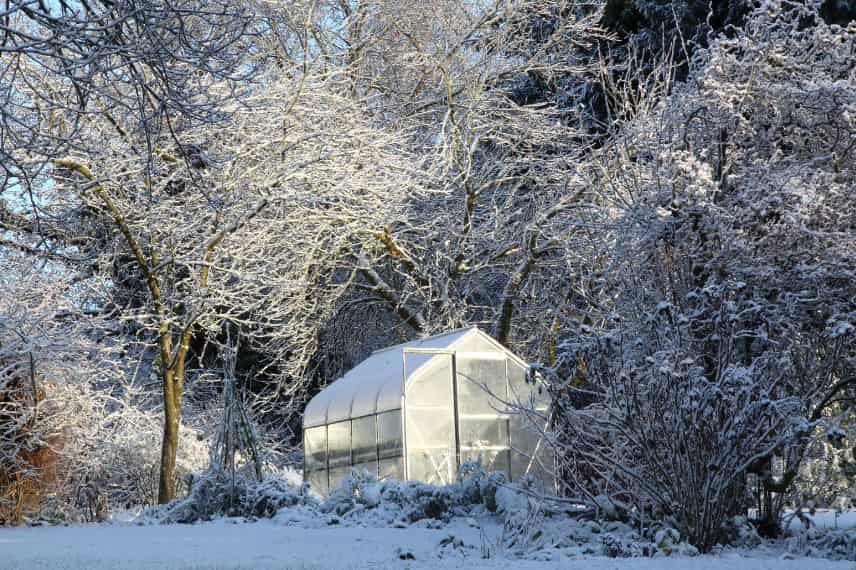
The best option is to insulate your greenhouse as much as possible without depriving your wintered plants of light. In this regard, several solutions are available:
- Installing bubble wrap on the interior walls of the greenhouse using special clips or simply double-sided tape
- Installing a polyethylene cover to create an additional layer
- Fitting professional thermal screens on the roof of the greenhouse
- Installing external blinds that can be lowered at night
The north-facing panel is the most exposed to the cold. To gain a few degrees, do not hesitate to insulate it with polystyrene sheets. If your greenhouse is not in the ground, also place polystyrene sheets on the floor to insulate the plants from the cold.
As for the most frost-sensitive potted plants, place them higher so they receive maximum light. You can also put the pots in boxes filled with insulating materials like straw. It is also possible to wrap the pots in winter fleece.
Read also
How to manage watering in a greenhouse?How to heat a greenhouse without heating?
If greenhouse insulation is important, it is not sufficient to raise the temperature! That’s why it is necessary to heat the greenhouse in the most economical and ecological way possible.
Once again, several solutions are possible: one can rely on the principle of thermal mass, or create a heat source using compost or a hot bed.
Heating a greenhouse with thermal mass
Thermal mass refers to the ability of certain materials to retain and absorb heat from the sun during the day and release it at night. Therefore, it is enough to place these materials inside the greenhouse to heat it. Among the elements that accumulate heat, we can mention brick, terracotta, iron, stone… and water!
Thus, it is possible to spread broken tiles or stones (which can be quite heavy to carry!). You can also fill a black barrel with water. Placed in the sun during the day, it will absorb heat that will be released at night.
In the same vein, a simple large bowl filled with boiling water can warm the atmosphere of the greenhouse at night.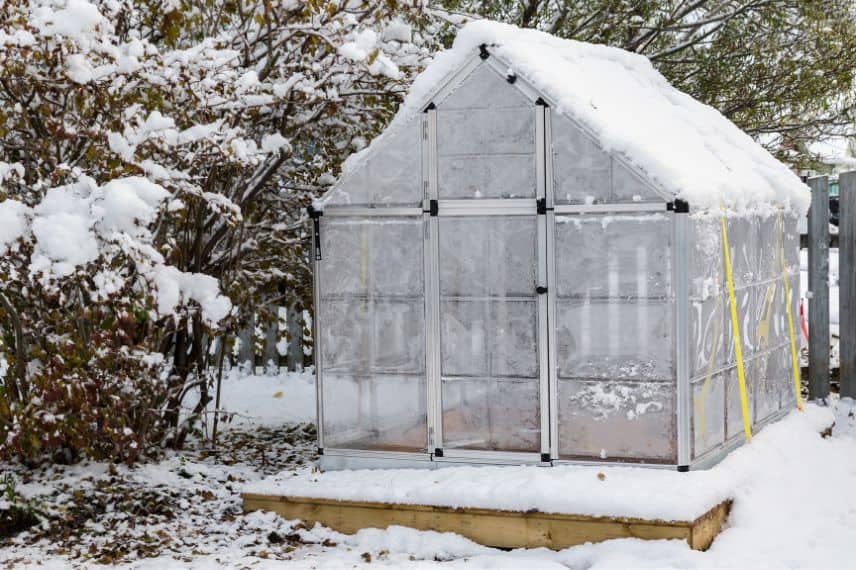
The compost or hot bed solution
You have been practicing composting for a long time. And your compost bin proudly sits at the back of your vegetable garden. Unfortunately, this is a waste of energy… Indeed, the decomposition of organic matter generates a certain amount of heat.
So, to heat your greenhouse, why not install a compost bin in the centre? This compost will not only create heat but also release it at night. However, this compost must be perfectly balanced in carbon and nitrogen, which is why it should be enriched with fresh chippings made of leaves and wood.
Similarly, the compost should be regularly turned. However, the greenhouse must be equipped with a ventilation system to eliminate the carbon dioxide generated by the compost. In spring, this compost will be used in the garden!
To go further, it is also possible to create a hot bed inside your greenhouse. A hot bed is a growing bed filled with different layers of horse manure and plant waste (straw, grass clippings, RCW…) which, as they decompose, will create heat. At the very beginning of decomposition, the temperature can rise to over 60 °C to 70 °C! And, after a few weeks, you can even grow salads in the middle of winter.
Of course, the ventilation and aeration guidelines, essential for composting, also apply to the hot bed.
In her tutorial, Solenne explains how to make a hot bed.
- Subscribe!
- Contents

Comments