


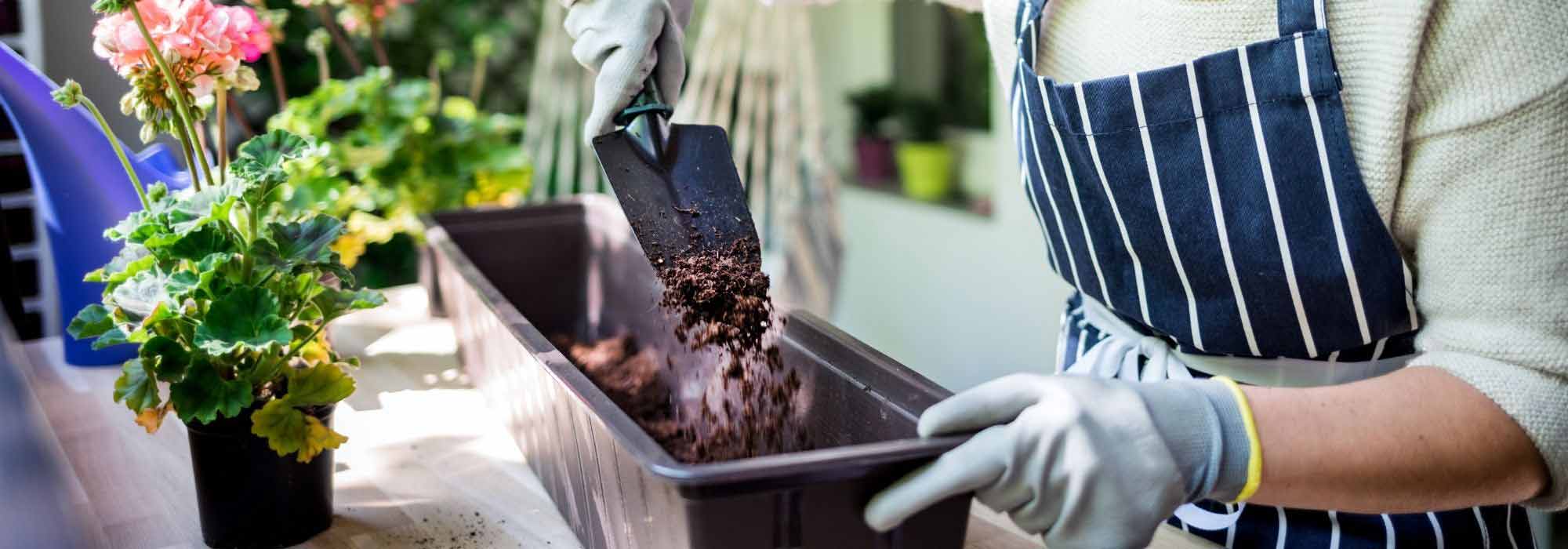
How to succeed with your window boxes?
To have a beautiful flowering balcony
Contents
For our greatest delight, window boxes bloom on balconies and terraces throughout the seasons and sometimes even all year round. While the joy of gardening plays a significant role in successfully creating window boxes, there are a few basic principles that are important to know, and certain questions may arise. How to choose the plants, the container, the substrate, and how to minimally maintain your plantings? Discover our tips for successfully creating your window boxes and enjoy the beauty of flowers for as long as possible.

Determine your balcony's exposure
Whether your balcony faces South, North, West, or East, exposure is, along with the climate of your region, one of the primary criteria for choosing the plants you grow in containers.
This will help you determine whether to favour shade or sun plants.
It is also important to know if your balcony is exposed to wind so you can take this into account when selecting the plants to prioritise.
Read also
Create a summer planter: 7 ideasChoosing the right plants for a container garden
Once you have determined the external growing conditions, ensure you choose compact plants that can be grown in pots. For the plant to adapt well, the root system should not be too developed.
And the chosen plants must of course be of good quality.
Group together in the same planter plants that have the same substrate and water requirements, otherwise some will thrive while others will decline. For example, it is advisable to plant together those that prefer acidic soil, or not to mix drought-tolerant plants with those that require a lot of water.
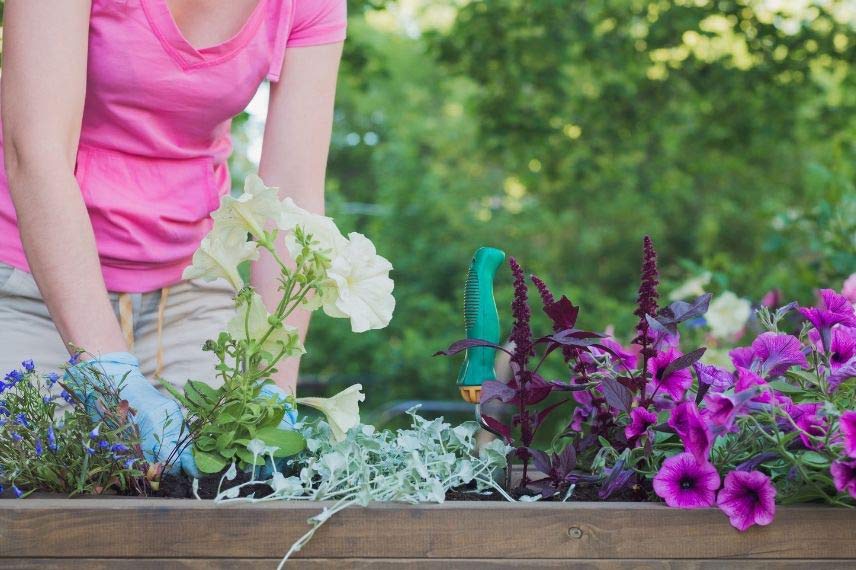
Choosing the right plants is crucial for the success of your planters
Vary heights, shapes, and combine colours
To achieve a beautiful effect, have fun varying the heights, shapes, and colours of your plants!
To add depth to your planter, you can play with different heights by placing the tallest young plant in the centre or at the back. You will then plant the other plants to create a gradient of height.
Also experiment with the shapes of the plants (rounded, spike, etc.) and with colour combinations, for example by choosing two complementary colours to create a contrasting effect (yellow and purple / orange and blue / green and red) or colours that are declinated in the same tones to create a monochrome display of blue, pink, or mauve. You might also opt for a monochrome all-white planter, for a very bright result.
Don’t forget to add plants with decorative foliage such as Heucheras or variegated ivy, which bring a unique touch.
Another option is to choose plants based on their flowering period and create planters that will bloom for a season or nearly all year round.
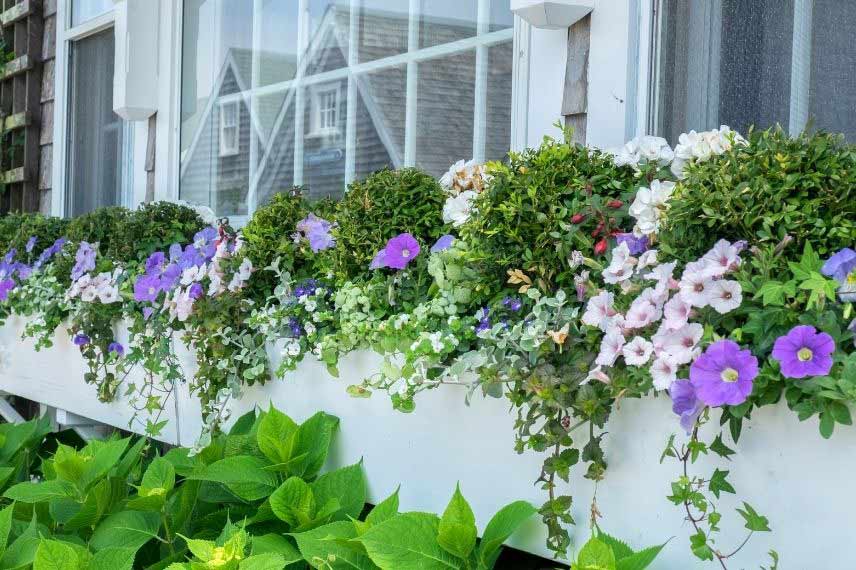
Playing with the shapes of the plants and colour combinations allows for successful displays
Read also
Summer bulbs for a potSelect the container
Whether you prefer a planter or a flower box, it is important to choose a container that is large and deep enough for the plants you will be planting to have enough space to grow.
There are different types of containers: plastic, terracotta, wood, composite materials, and zinc.
Each material has its advantages and disadvantages. Plastic is lighter, which is very practical for a balcony that can only support a maximum load. The terracotta planter promotes evaporation and aeration of the plant, but is heavier. Other materials such as wood, composite materials, or zinc exist, varying in weight and frost resistance.
Another criterion to consider is the aesthetic aspect. Indeed, choose the container based on the atmosphere you wish to create on your balcony (Mediterranean, contemporary, romantic, natural, etc.) or a predominant colour.
Be sure to clean the container thoroughly before using it.
Plant at the right time and in quality substrate
Prepare your planter once the frost periods have passed.
Choose a quality potting mix for flowering plants or geraniums rather than garden soil. It is more aerated, dries out less quickly, and often contains fertiliser, which will promote flowering. For acid-loving plants, use heather soil.
Take a planter that is deep enough to accommodate your plants and, importantly, has drainage holes at the bottom to ensure good drainage during watering and to prevent rot.
Spread a layer of 1 to a few centimetres of clay balls at the bottom of the planter to aid drainage and cover with potting mix up to two-thirds of the planter.
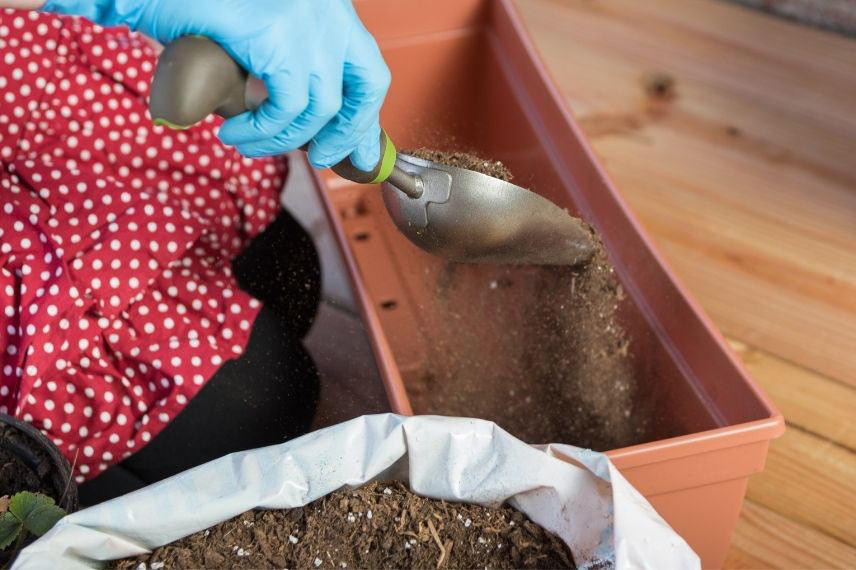 Using a quality substrate will ensure the proper development of the plants in your planter.
Installing your plants at the right distance
Remove the young plants from their pots, remove any root chignon if present, and soak the plants in water to thoroughly moisten them.
Next, make holes with a trowel or dibber and place each plant in the planter, starting with the one in the centre, which is often the tallest, then arrange the plants around it according to their height, ensuring there is enough space for them to grow.
Finish with the trailing plants, which will create small cascades of flowers in the foreground and along the edge of the planter.
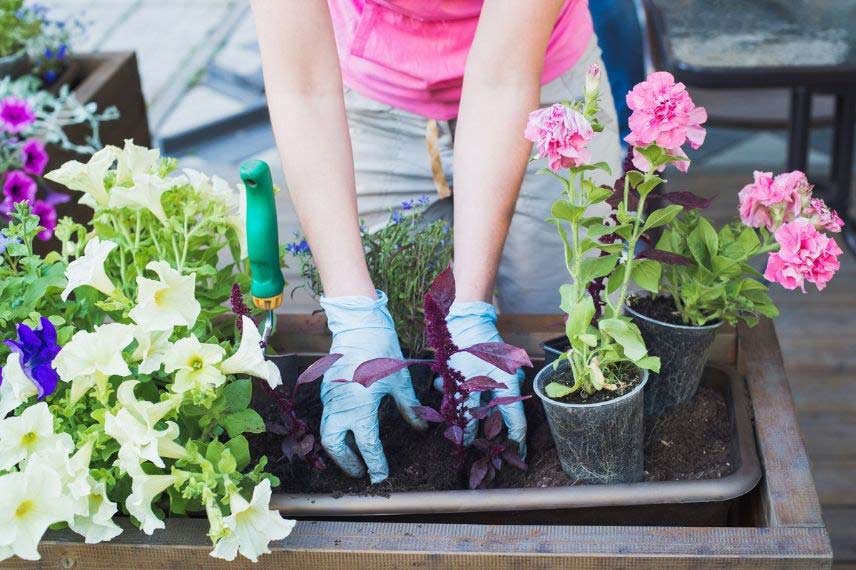
Position your plants at the appropriate distance, based on their future growth
Cover with compost and water
Push the young plants sufficiently into the compost and cover with compost all around, ensuring there are no gaps and compacting the substrate well.
Water well, avoiding wetting the leaves and flowers.
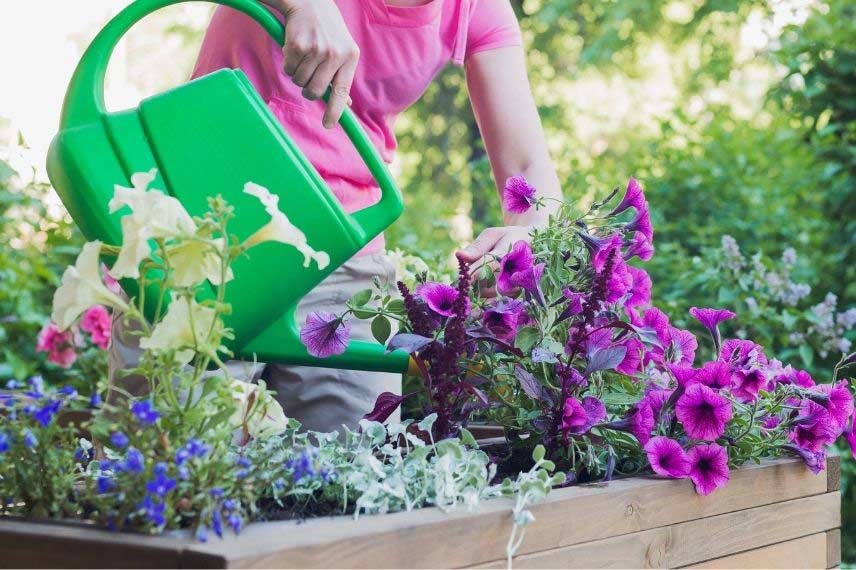
Remember to water your container plants well after planting
Maintaining your planter
Once your planter is in place, ensure you water it regularly, as potted plants dry out faster than those in the ground and require more watering. You can water once or twice a week, adjusting the watering to the needs of the plants and providing more in summer, preferably in the evening. Apply fertiliser regularly to sufficiently nourish your plants so they produce beautiful flowers. You can also opt for a compost addition.
To encourage new flowerings, regularly remove faded flowers.
Look and observe your plants to enjoy them, but also to ensure that diseases or pests do not damage them.
If the plants are frost-sensitive, protect them from the cold in winter.
Replace annual or biennial plants when they decline and keep perennials from one year to the next.
When a plant has become too invasive, you can resort to root division, if the plant allows it, to limit its growth.
Some ideas for planters
For inspiration, in spring, enjoy spring bulbs: hyacinths, daffodils, tulips, and pair them with primroses, wallflowers, pansies, forget-me-nots, daisies, lily of the valley, or silver baskets. Check out our spring planter ideas.
In summer, it’s the season for geraniums, verbenas, petunias, impatiens, lobelia, ornamental tobacco, anthemis, dwarf roses, gypsophila, gaura, and cosmos. Discover our summer planter ideas.
In autumn, you can plant colchicums, rudbeckias, dahlias, asters, sedum, heucheras, and cotoneaster. Discover our autumn planter ideas.
In winter, think of hellebores, cyclamen, skimmia, and ivy.
To help you choose your plants, don’t forget that you can download our Plantfit app!
Have fun and happy planting!
For further reading
Discover our tips on the cultivation of potted plants, as well as all our articles on planters and potted flowers and the essential equipment for gardening on your balcony.
- Subscribe!
- Contents
Comments