





























How to water a bonsai properly?
Specific techniques to master watering
Contents
Bonsai, a living art that involves growing miniature trees, fascinates as much by its beauty as by the meticulousness it demands. Watering is central to its care. Too much water or neglect can quickly compromise the health of this miniature tree.
This article aims to guide you through essential steps to water your bonsai properly, taking into account its specific water needs, common mistakes to avoid, and suitable watering techniques.
Understanding how and when to water your bonsai will help you maintain a vigorous, healthy plant, ready to reveal its splendour as the seasons go by.
One essential thing before proceeding: bonsai is also an art of meditation, consider watering a meditative step rather than a daily task, and make the most of this moment to observe your plant.

Understanding the bonsai's water needs
The distinctive nature of bonsai, a miniature plant grown in a restricted space, makes watering an essential element for it to thrive. Understanding its needs is the first step to watering a bonsai correctly and ensuring its longevity.
Bonsai are grown in containers that are often very small. This spatial constraint means that the amount of substrate available to retain water is limited. The pot’s reduced volume also means that water evaporates more quickly, especially in summer, making watering frequency particularly important.
Keep in mind that despite the various factors, the primary tool is observing the plant to properly meet its needs.
Bonsai variety, climate, exposure, and size
The water needs of a bonsai vary according to several interconnected factors:
- The bonsai variety: some species have higher water needs than others. Knowing the species of your bonsai will allow you to better adjust the watering. It is therefore essential to research the species of your bonsai to adjust your watering practices accordingly.
- The climate: humidity, temperature and season influence the amount of water your bonsai requires. In summer, with high temperatures and greater evaporation, you will need to water more frequently. Conversely, in winter, water needs decrease.
- Exposure: a bonsai placed in full sun will require more water than another placed in the shade, as direct exposure to the sun’s rays accelerates water evaporation. Likewise, an indoor bonsai may have different needs due to ambient humidity often being lower in a heated house.
- The pot and bonsai size: the smaller the pot, the faster the water is absorbed. The bigger the bonsai, the more water it needs.
The difference between indoor and outdoor bonsai
- Outdoor bonsai: Outdoor bonsai are accustomed to natural climate conditions and generally require more generous watering, especially during hot and dry periods. However, they can also tolerate a certain period of drought depending on the species.
- Indoor bonsai: Indoor bonsai are grown in more controlled conditions. They require slightly less water, as evaporation is slower indoors.
Read also
How to care for a bonsai?When should you water a bonsai?
Bonsai substrates, when well composed, are very well-drained. Bonsai, therefore, have more frequent water needs than plants grown in potting mix, because water does not stagnate in the aerated substrate.
It is essential not to rely on a fixed watering schedule for bonsai. Each plant is unique, and water needs can vary from day to day. It is therefore important to observe your bonsai closely for signs that it needs water.
- By touching the surface of the soil, you can feel whether it is still moist or starting to dry out. The bonsai should ideally keep a slightly damp substrate. But some species will need the substrate to dry between waterings.
- The bonsai’s leaves are another reliable indicator. If the leaves start to droop, lose their shine or become slightly dull, this may indicate that the plant is lacking water. Conversely, yellowing or dropping leaves can indicate over-watering (or sometimes chronic underwatering), which means you should adjust the amount of water supplied.
The time of day you water your bonsai also has an impact on outdoor-grown bonsai, particularly in spring and summer.
- The best time to water a bonsai is generally in the morning, before temperatures rise too high. Watering early in the day allows the water to soak into the substrate before the sun is too strong.
- It is best to avoid watering in the middle of the day, especially if the bonsai is exposed to direct sunlight. Water could evaporate too quickly before being absorbed by the soil, and droplets on the leaves could act like lenses, causing burns.
- Watering in the late afternoon is also an option, particularly during periods of intense heat. However, it is important to ensure that the foliage has time to dry before night to avoid fungal diseases, which thrive in moist conditions.
Variations between summer and winter
Bonsai water needs change with the seasons, due to variations in temperature, humidity and light.
- During summer, heat and evaporation increase, meaning your bonsai will need more frequent watering. Some bonsai may require daily watering, or even twice daily, depending on the intensity of heat and sun exposure. It is important to monitor the substrate’s condition closely, as excessive dryness can quickly damage the plant.
- In winter, bonsai often enter a rest phase, especially if they are outdoor species. During this period, water needs are reduced. Watering every 10 to 14 days may be sufficient, but this will depend on ambient temperature and humidity.
- During spring and autumn, as temperatures begin to change, it is important to gradually adjust watering. These transition periods can be delicate, as water needs fluctuate. Close attention should be paid to the substrate’s condition and weather conditions to adjust watering accordingly.
Indoor bonsai
Indoor bonsai, for their part, may require regular watering in winter, though less frequent than in summer, particularly if indoor air is dry due to heating.
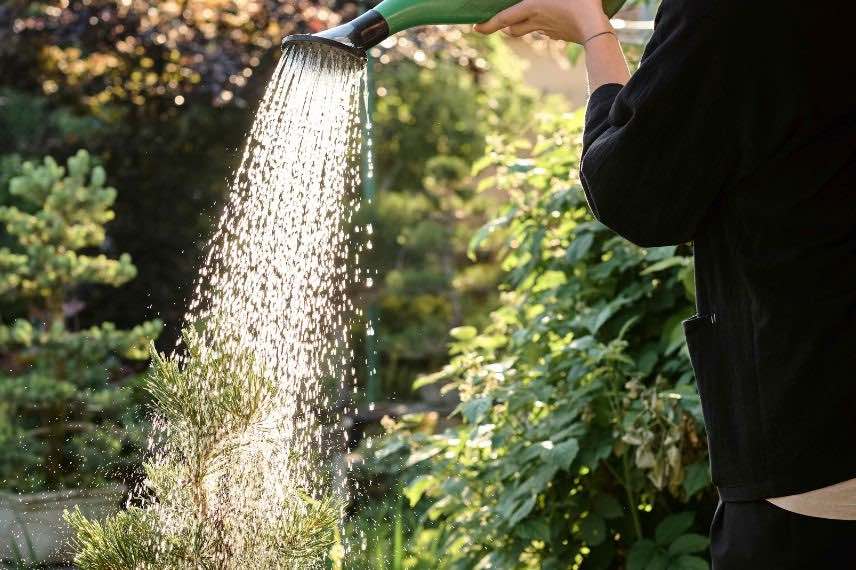
You can water outdoor bonsai with a hose or watering can fitted with a rose head, simulating rain
How to water a bonsai?
Water distribution in the substrate is essential to reach all roots, especially since the substrate is highly free-draining; watering must be done carefully to irrigate every part of the pot.
For outdoor bons, if you have a genuine collection, a garden-hose nozzle is ideal to mimic a shower of rain. Choose a nozzle or a fine spray pistol with not too much pressure.
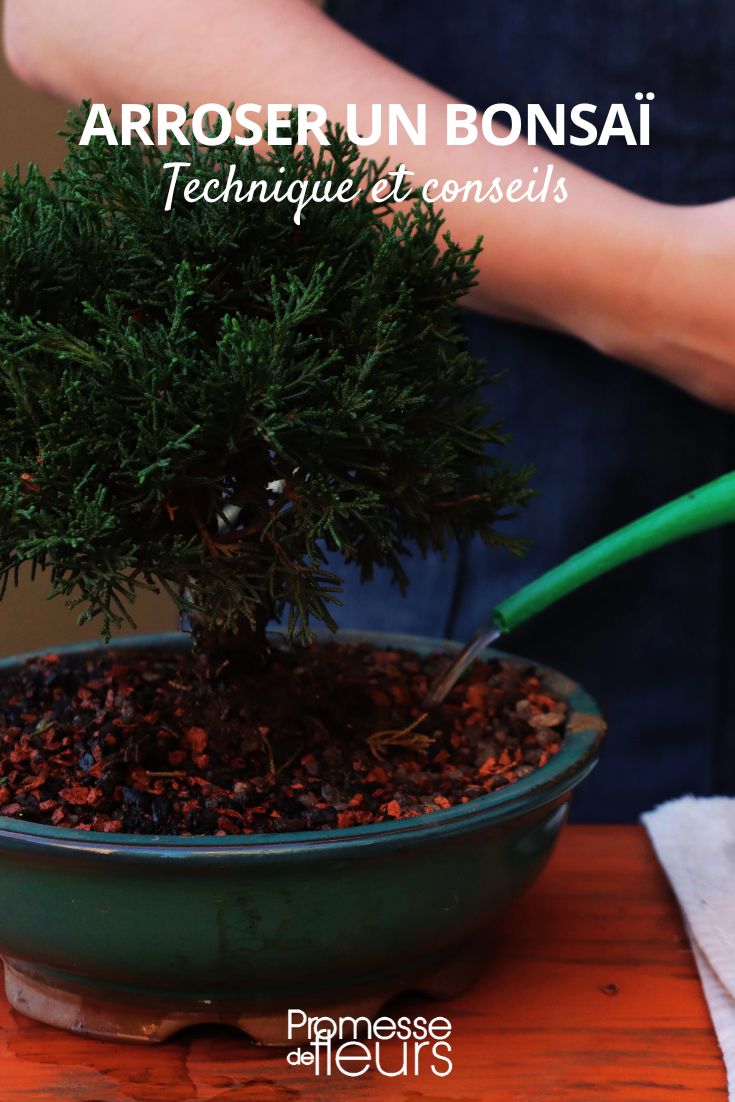
If you don’t have many bons or are growing indoors, a long-spout watering can is the best option as it controls the water flow, preventing disturbance to the substrate or dislodgement of roots. To water correctly, begin by wetting the substrate evenly until water starts to drain from the pot’s drainage holes. That indicates water has passed through the entire substrate and reached the roots.
Indoors, ideally perform watering over a sink to allow the water to drain away before placing the plant back on its tray.
– Rather than pouring all the water at once, water gradually. Pour a small amount of water, let the substrate absorb it, then water again until water drains from the drainage holes. This method ensures water reaches all roots, even those in the centre of the pot.
– A watering can specially designed for bons are with a fine, long spout allows you to direct water precisely where needed, without disturbing the substrate or the roots. It also helps to distribute water evenly across the surface of the substrate.
– To ensure the bonsai is well watered, make sure water flows freely from the drainage holes. Good drainage is essential to avoid water stagnation at the bottom of the pot, which could cause root rot.
A long-spouted watering can is preferable for good control of watering in a small indoor pot
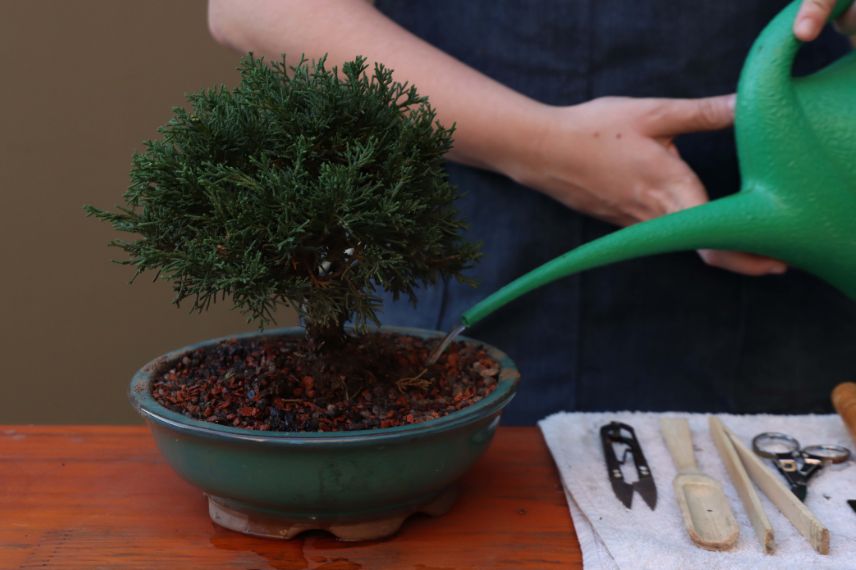
A long-spouted watering can is preferable for good control of watering in a small indoor pot
Read also
How to repot a bonsai: complete guideHow to water your bonsai when you're away?
If you need to be away for several days or weeks, it is essential to take steps to ensure that your bonsai continues to receive the water it needs. Here are a few strategies to achieve this:
- Before you leave, water your bonsai deeply to ensure the substrate is well saturated. This will help maintain a sufficiently high moisture level for a few days, especially if you have a substrate that retains water well.
- For a short absence of a few days, you can place the pot in a larger container filled with water (left below the substrate level). This capillary method is feasible occasionally without risk to the plant.
- For a longer absence, you can install a drip irrigation system, which releases small amounts of water at regular intervals. These systems are commercially available and are designed to provide continuous, controlled irrigation, which is particularly useful for bonsai.
- Another option is to use watering wicks, which are absorbent cords placed in the substrate and connected to a water reservoir. The wick draws water from the reservoir and slowly transfers it into the substrate, maintaining constant moisture. This is a simple and effective solution for a short absence of a few days to a week.
- If possible, move your bonsai to a place where evaporation is reduced, such as a cooler room or a spot shielded from direct sunlight. This will prolong the interval between waterings.
- Subscribe!
- Contents
Comments