





























How to water the greenhouse in winter?
Well managing watering for plants in the ground or in pots
Contents
Whether made of plastic or glass, greenhouses provide valuable shelters to protect plants from the cold and ensure their survival in winter. However, it is essential to remember to water them, even in winter, and to manage water supplies effectively. Unlike plants grown outdoors, those in greenhouses do not benefit from winter rains. Even when the weather is cool and damp, their substrate dries out, and it can sometimes be easy to forget to water them. Nevertheless, as temperatures are lower, the substrate dries out much more slowly than in the warmer season, and plants have less significant needs. Therefore, it is necessary to adapt watering management. We present all our tips for watering plants in greenhouses during winter, whether they are grown in the ground or in pots!
For plants grown in open ground
It can involve, for example, vegetables or herbs that the greenhouse allows you to grow out of season, either later or earlier in the year, but you can also cultivate exotic ornamental plants that are not hardy.
Watering should preferably be done in the morning, before 10 a.m. This indeed limits the risk of fungal diseases, as well as the risk of attracting slugs and snails. We recommend watering approximately once a week. However, this also depends on the nature of your soil: if it is clayey, it will retain moisture more effectively, allowing you to space out watering a bit more than if your soil is sandy and draining. In the latter case, watering will be more frequent but less abundant.
Before watering, scratch the top few centimetres of soil to see if it is still moist. If it is not, add water. Ensure that the water penetrates deeply, reaching the root zone. This encourages the development of roots deep down, strengthening the plant’s resistance to winter conditions. Always allow the substrate to dry out between waterings. Excessive watering could lead to root rot or the appearance of fungal diseases (caused by fungi). Be particularly cautious with early sowings made at the end of winter, as they are especially sensitive to fungi (damping off…).
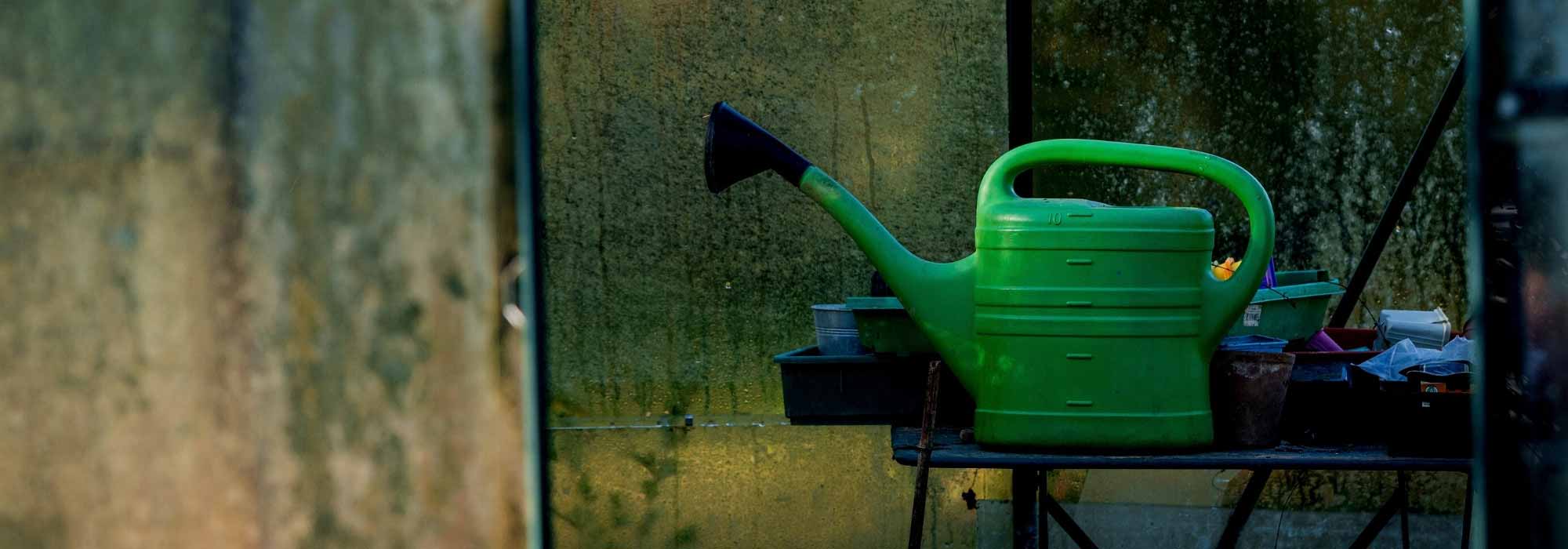
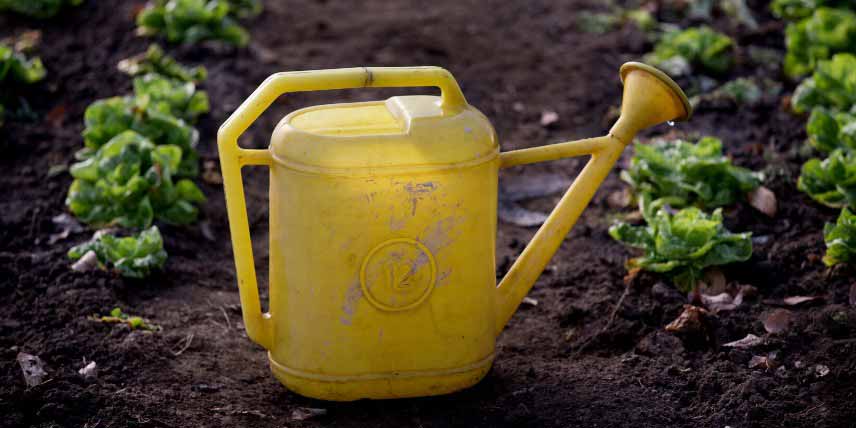
You can use a watering can or a water jet. Direct the jet at the base of the plants, avoiding the leaves to minimise the risk of frost. Also, ensure that the water is at room temperature to avoid thermal shock.
If you have an automatic watering system, it is best to turn it off in autumn, drain it, and not use it during winter as it could be damaged by frost. We invite you to consult our article: “Protecting irrigation systems from frost”.
However, if you have many plants to water and live in a region with a mild climate (such as the Mediterranean coast or the Atlantic coast) or if you protect it properly (for example, using bubble wrap or polystyrene to insulate the pipes), you can continue to use it in winter. Sprinkler or microporous hose watering are the most suitable for outdoor crops under a greenhouse.
Remember to ventilate regularly during the day to expel moisture and prevent the development of diseases.
Read also
How to manage watering in a greenhouse?For plants grown in pots
If you use your greenhouse to winter potted plants (citrus trees, palms, exotic plants…), you also need to think about watering them in winter. However, this does not apply to deciduous plants, whose foliage and aerial parts dry out in autumn to reappear in spring, as they are in a vegetative rest (they are better wintered in a garage or frost-free area than in a greenhouse). You can water using a watering can, a hose, or by installing a drip irrigation system.
This may also include early sowings, cuttings, or young plants waiting for the return of warmer days to be planted in the garden. For sowings, water gently with a fine spray, using a watering can with a rose or a misting bottle.
Compared to plants grown in the ground, those in pots have their substrate drying out more quickly. Therefore, you need to be particularly vigilant. You can water about once a week, preferably in the morning, but be sure to consider the needs and growing conditions of each of your plants. Monitor the substrate closely and water when the top layer of soil feels dry to the touch.
We recommend removing the saucers to avoid retaining moisture. If you keep them, be careful after each watering not to let water stagnate in them.
Prioritise uniform watering to ensure an even distribution of moisture in the pot. Using a watering can with a fine spout makes for precise watering, avoiding unwanted splashes. The water should be at room temperature to prevent thermal shock to the sensitive roots of potted plants.
We also advise regularly ventilating the greenhouse by opening it during the day when the weather is mild. 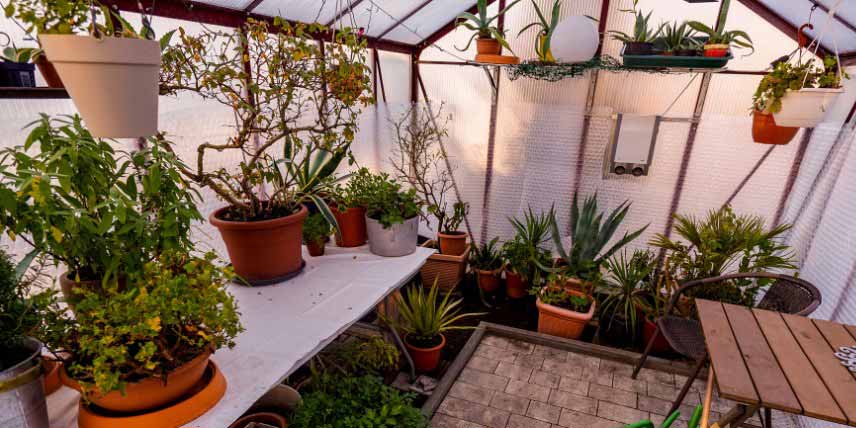
The different types of watering
It is essential to choose the most appropriate watering method. There are different options for taking care of your plants during the cold season.
Manual watering: this is done with a watering can if few plants are grown, or with a hose. This technique takes time but allows for direct control over the amount of water given to each plant, adapting it according to their needs. Direct the flow right at the base of the plants, into the substrate, avoiding wetting the foliage. Additionally, manual watering requires you to check each plant regularly, enabling you to monitor their condition and respond quickly in case of cultivation issues (diseases, pests…).
Watering systems can be damaged by frost during winter, so it is wise to turn them off in autumn, drain them, and only turn them back on in spring. However, if you have many plants to water and live in a region with a mild climate, or if you protect them properly (for example, wrapping the hoses in bubble wrap or polystyrene), you can continue to use them in winter. For watering plants in the ground under a greenhouse, prefer using sprinklers or a porous hose. For potted plants, a drip irrigation system is more suitable.
You may also optionally use oyas for certain plants that are more sensitive to lack of water. These are clay or ceramic containers, buried or planted next to the plants to be watered, which allow water to diffuse by capillarity as soon as the substrate is dry.
Finally, do not hesitate to use rainwater for watering, which you can collect from the gutters of your house or from gutters installed on the greenhouse. The rainwater collection tank should, however, be protected from frost: ideally, it should be buried, sheltered, or even placed directly in the greenhouse.
- Subscribe!
- Contents
Comments