



Invasive Sorbaria: how to limit its spread?
Keep it controlled naturally and manage its growth in the garden
Contents
Sorbaria is a deciduous shrub, whose type species is also known as ‘false spiraea with rowan leaves’. We value it for ornamental, finely divided foliage reminiscent of fern fronds, which rewards us with beautiful colours in spring. The white panicle inflorescence also provides a bright, airy note that is highly decorative during the summer.
Hardy, low-maintenance and fast-growing, it is an easy bush to cultivate, but it can be invasive when it thrives in the garden. However, a few simple steps will help control its spread so you can enjoy this lovely plant without it becoming too invasive.

Why does Sorbaria spread so easily?
Sorbaria tends to spread readily in the garden, thanks to three main advantages.
- Its rapid growth.
- Its well-developed root system, which rapidly colonises the soil.
- Its production of numerous suckers from the rootstock (lateral suckers). These underground shoots enable the formation of new shoots identical to the mother plant.
When it thrives and benefits from suitable growing conditions, this shrub tends to spread rapidly and colonise all available space. Additionally, it does not suffer from diseases or pests that could affect its cultivation.
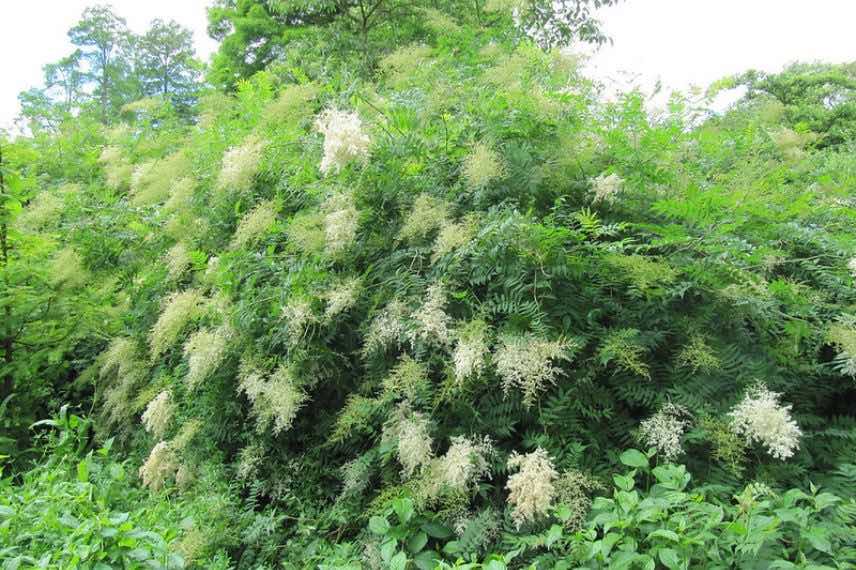
Sorbaria spreads quickly and widely
Choosing the right location to prevent expansion risks
As a precaution, we recommend that you give careful thought to the site for planting your Sorbaria in the garden. Once established, it will be difficult to move due to its powerful root system. Additionally, it may compete with less vigorous plants. To avoid this drawback, you can grow it as a standalone plant.
The shrub has the advantage of quickly colonising certain areas that can be difficult, such as banks, slopes, or wild areas of the garden. It will also quickly hide unsightly structures and stabilise soils. But conversely, avoid cultivating it in massifs or flower beds that are too small, from which it will quickly outgrow.
Sorbaria are native to Siberia and parts of East Asia. They naturally grow on forest margins and in woodlands, where they thrive in the rich, moist soil they prefer. In the garden, they will thrive in any ordinary soil that remains moist (does not dry out). But it is particularly in damp substrates, such as near water features and ponds, that their growth will be favoured and that they may prove to be invasive. If you do not wish your shrub to grow too much, avoid cultivating it in this type of location. A rich soil will also favour its expansion: limit additions of organic matter if you wish to control its growth.
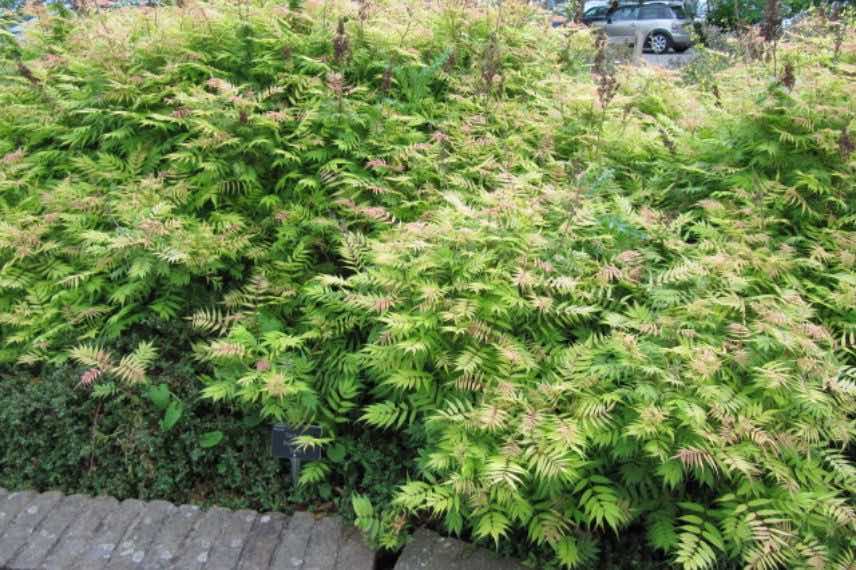
If you need to fill a space effectively, plant only Sorbaria
Install a physical barrier to limit spread.
To limit the spread of Sorbaria, you can install a root barrier in the soil at planting. It will help prevent root development and is used to control the growth of all plants deemed invasive, such as some running bamboos.
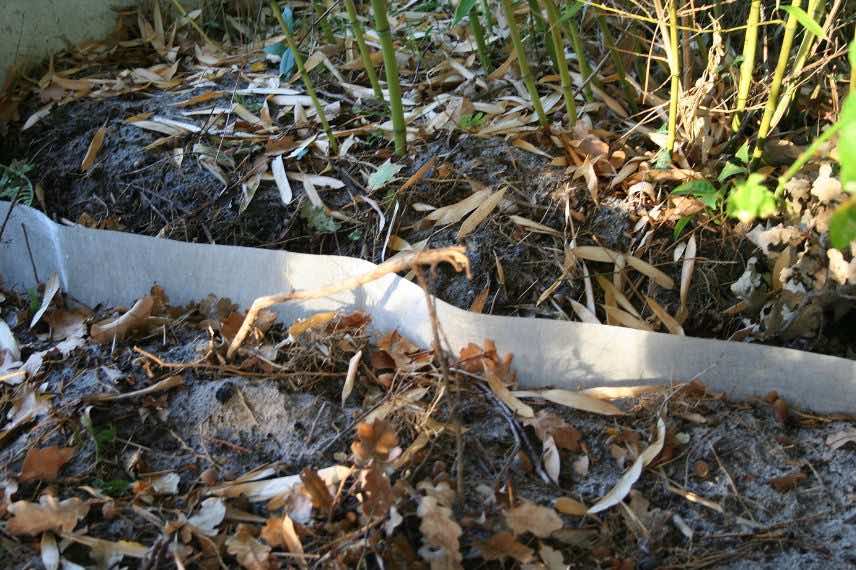
A rootstock barrier helps contain the proliferation of a plant that is too vigorous
Prioritise varieties that are more compact and less invasive.
Less vigorous than the type speciesSorbaria sorbifolia, some more compact varieties will be easy to master. For example, choose:
- ‘Matcha Ball’ (1 m tall by 1.2 m spread), a variety less prone to suckerING, which produces orange leaves in spring, then coloured bright green tinged with yellow in summer;
- ‘Sem’ (1.5 m tall by 2.2 m spread), a cultivar hardly invasive, with green foliage coloured pink-purple;
- ‘Pink Hopi’ (1.6 m tall by 1 m spread), a dwarf variety with spring foliage shaded pink, cream and purple-red;
- the Sorbaria tomentosa ‘Stick & Feathers’ (2.5 m tall by 2 m spread), which offers flamboyant autumn foliage and a broader silhouette, but which suckers very little.
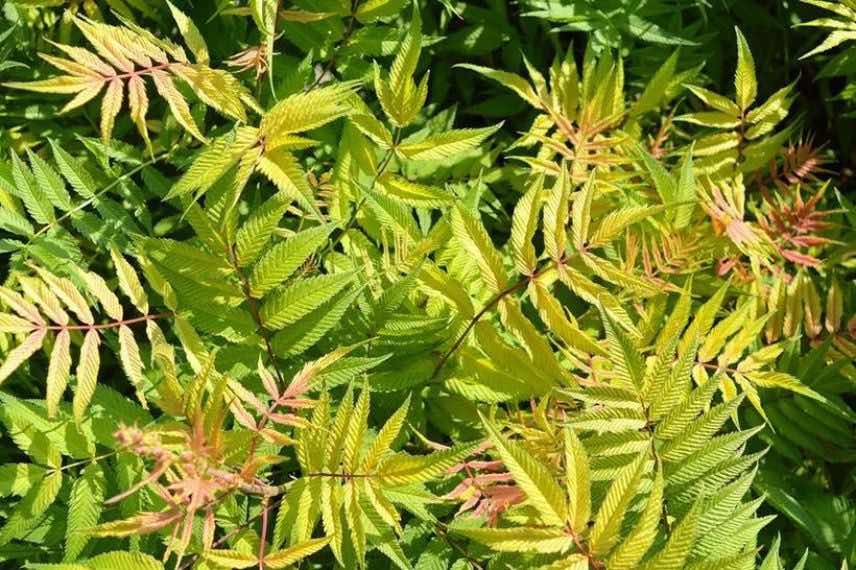
The Sorbaria ‘Matcha Ball’ is among the less suckering cultivars
Go for container gardening
Because of its fairly compact size, Sorbaria can easily be grown in a large pot or container, which will make it easy to control its spread. It can be planted in the garden, but also on a terrace or balcony. Choose a position with partial shade, bright but never scorching.
Choose a container deep enough for its root system, at least 60–80 cm in all directions. It must be perforated. Provide your shrub with a well-drained substrate (which does not retain excess water), adding a layer of gravel, clay balls or terracotta shards at the bottom of the container.
The soil should stay moist: regular watering is required to prevent the substrate from drying out. Install an organic mulch at the base of the Sorbaria to limit natural evaporation and keep the soil cooler for longer.
To support flowering, you can apply fertilisers (manure, household compost, crushed horn or dried blood) in spring and summer.
Repotting should be carried out every two to three years.
Harnessing plant competition to control Sorbaria.
If you cultivate Sorbaria alongside other plants, avoid placing it beside long-to-establish and unvigorous plants, which it will outcompete without batting an eyelid.
Plant it instead at the base of taller shrubs, which root competition will limit its spread. In an open hedge, an elder, a lilac, a sumac or vigorous Acanthus, all known for their spreading abilities, can also grow beside it.
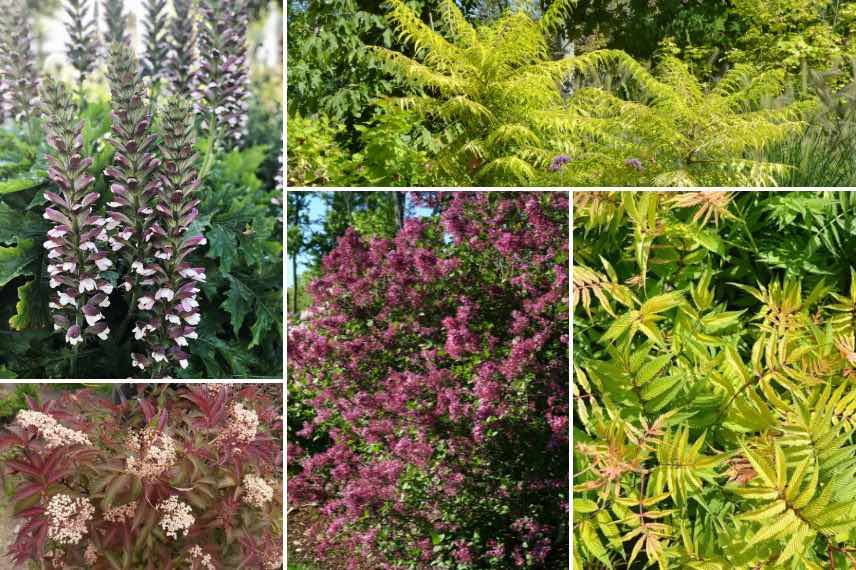
Plant Sorbaria alongside vigorous, already mature or taller species, such as Acanthus, sumacs, lilacs and elder
Managing Sorbaria proliferation
If you were unable to implement preventive measures, you can still control the development of your shrub.
Eliminate suckers to limit spread
To control the spread of Sorbaria, you need to remove suckers as they appear. For this, prune all new shoots that spring from the ground with apruning shear previously disinfected.
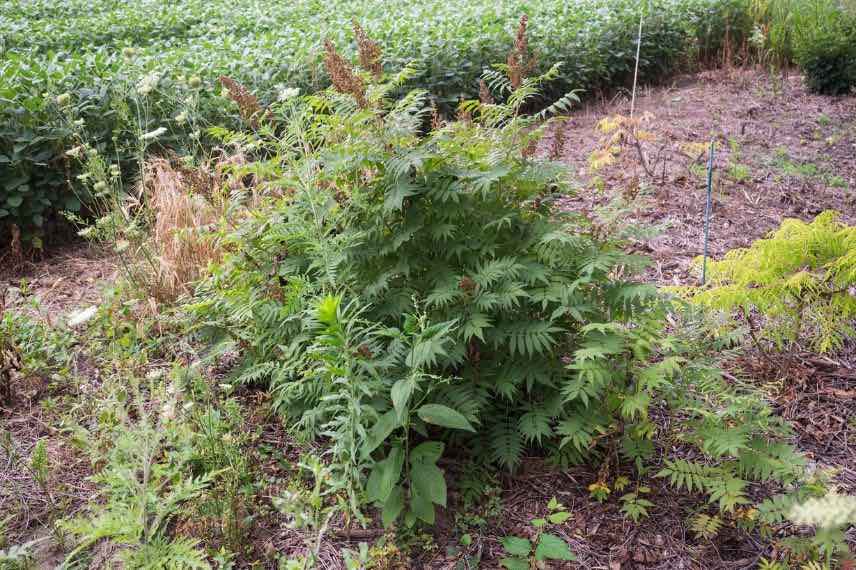
A Sorbaria surrounded by its suckers
Ideally act in spring or autumn.
Carry out a heavy pruning at the end of the season
Pruning helps Sorbaria to maintain a more compact silhouette and to stimulate the appearance of new coloured shoots. A drastic pruning also helps control the plant’s expansion, which will concentrate its energy on regrowth rather than spreading. For this, in late winter, prune back the branches to about ten centimetres above the soil. Note, however, that you will not be able to enjoy flowering in this case. Perform this heavy pruning occasionally.
The ultimate solution: remove your Sorbaria plant
If, despite everything, your Sorbaria remains too invasive, even threatening structures (for example, walls), you may need to consider removing it.
As always, we advise avoiding the use of chemical products, which, in addition to often being ineffective in the long term, pollute soils and biodiversity.
Proceed with a deep uprooting. For this, equip yourself with a spade to dig around the plant and extract the rootstock. Do this ideally when the soil is dry to facilitate removal (the day after rain, for example).
If the shrub has been in place for several years, the operation can be fairly long and difficult. Be meticulous: if fragments remain in the soil, they are likely to resprout.
To avoid any risk of regrowth, you can cover the area. Deprived of light and oxygen by this opaque material, any potential root fragments will not be able to grow. Sturdy cardboard boxes, regularly renewed, can also be suitable.
- Subscribe!
- Contents

Comments