


Lonicera: which variety to choose to cover a slope?
Selection of creeping varieties that tolerate harsh conditions
Contents
Shrubby honeysuckles (Lonicera) are appreciated for their evergreen foliage, remaining decorative all year round.
But they are also very adaptable plants, capable of withstanding harsh conditions, in soil that is occasionally dry and poor.
Easy to grow, they are fast-growing, which helps to dress up the tougher corners of the garden.
Trailing or groundcover-habit varieties are therefore ideal for greening a slope with ease. Here you will find our selection of different varieties to help you choose.
To learn everything about growing shrub honeysuckles, see our comprehensive guide: Shrubby honeysuckles, Lonicera: planting, pruning and maintaining

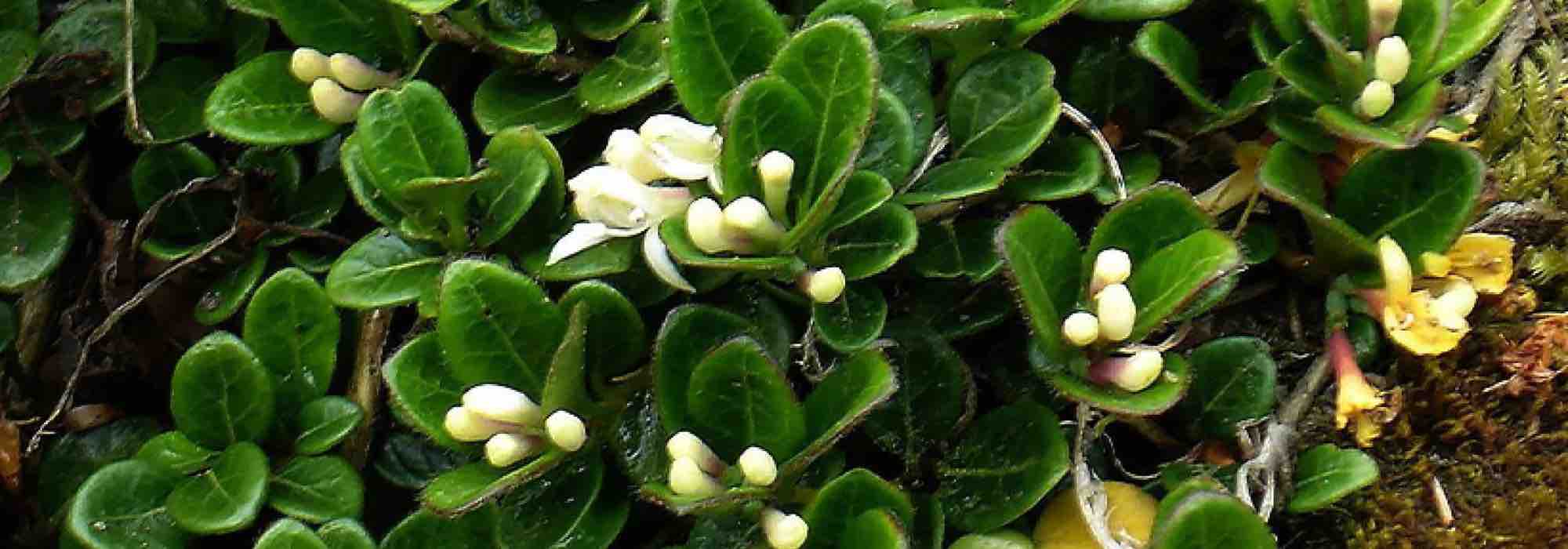
Cup-leaved honeysuckle Lonicera pileata 'Mossgreen': for a shady slope
This honeysuckle is particularly effective at stabilising a slope on poor soil. Indeed, it has a habit that is broader than it is tall, with a spreading growth that works very well as a groundcover. This honeysuckle will quickly form a true vegetative groundcover, hugging the soil and layering to spread.
The variety ‘Mossgreen’ has a more spreading habit than that of the type species, reaching over 1.5 m in spread and about 50 cm in height. Its evergreen foliage is also denser and more compact, allowing the space to be vegetated in a homogeneous and well-covering way. The small, tough, oval leaves display a handsome dark, glossy green. They are shiny and lustrous and stay on the plant even in winter, except in cases of intense and prolonged frosts.
The flowering, more discreet than that of climbing honeysuckles, occurs in spring. It consists of small pale cream flowers that attract pollinating insects. This flowering gives way to small decorative fruits. These are violet berries, like little beads, that will stay on the plant until autumn. They will delight the birds.
Install Mossgreen on a slope, but also in a rock garden or along a path edge. It tolerates both sunny exposures that are not too hot and more shaded exposures. It is a perfect choice for planting on a slope in woodland settings, even among the roots. Hardy to below -20°C and easy to grow, it poses no cultivation problems. Provide it with relatively cool soil (which never fully dries out), even on calcareous soils. Maintenance is limited to a balancing pruning at the end of the season.
Read also
Choosing a HoneysuckleCreeping honeysuckle Lonicera crassifolia: for its colourful winter foliage
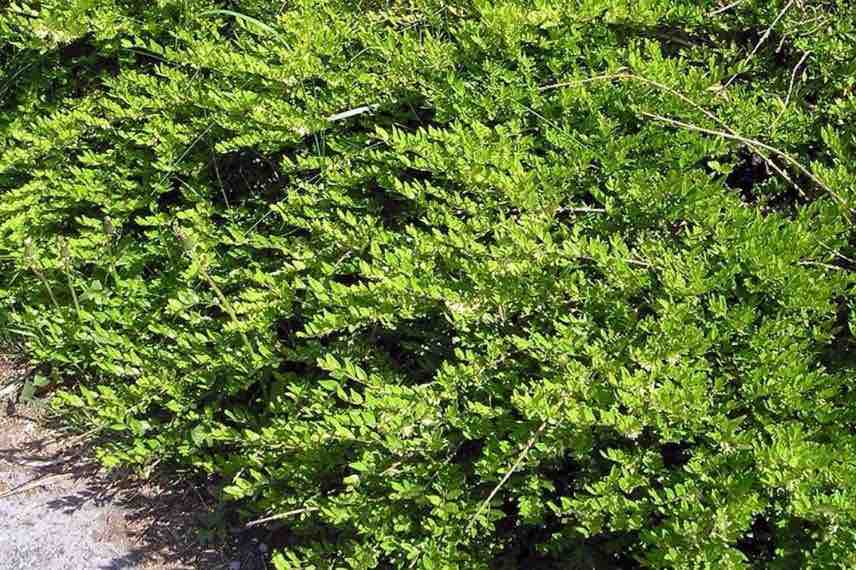
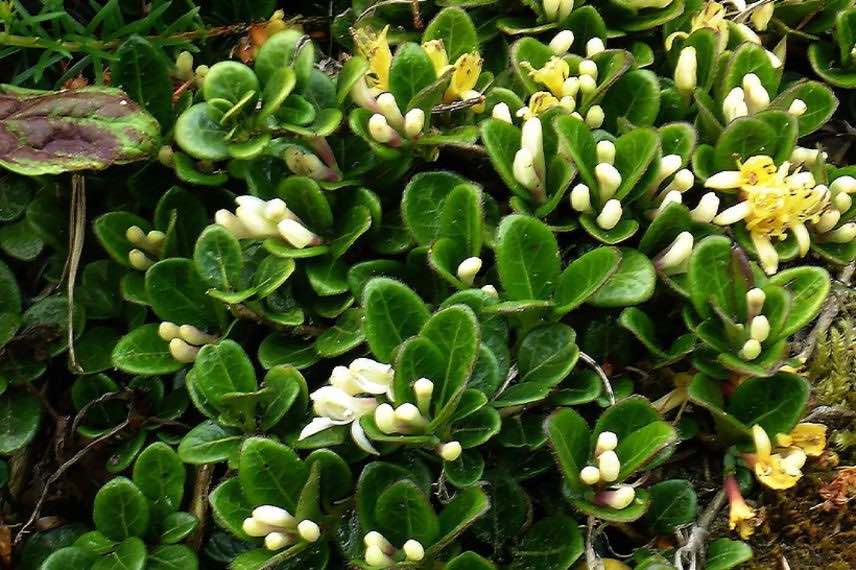
creeping honeysuckle loves well-drained soil (that does not retain moisture), even mediocre, poor and calcareous. It is therefore a perfect candidate for a slope not too dry in summer, since this species will prefer cool soils. It has a low, spreading habit, forming a groundcover with evergreen foliage all year round. Its spread reaches between 50 and 60 cm wide and only 10 cm tall. It slowly spreads thanks to long shoots.
Initially a bright, glossy green, the foliage has the advantage of turning bronze to red in winter, under cold conditions. This allows it to colour the garden at a time when few plants provide the spectacle.
Flowering occurs in summer, between June and August. It consists of small pale yellow flowers delicately shaded with pink, regularly visited by insects. The flowers then give way to decorative berries in a red-purple, almost black, with bluish or purplish reflections.
Hardy to -15°C and adaptable, this honeysuckle tolerates conditions that would deter other plants. Plant it in full sun or in partial shade.
Boxleaf honeysuckle Lonicera nitida 'Red Tips': for its colour-changing foliage
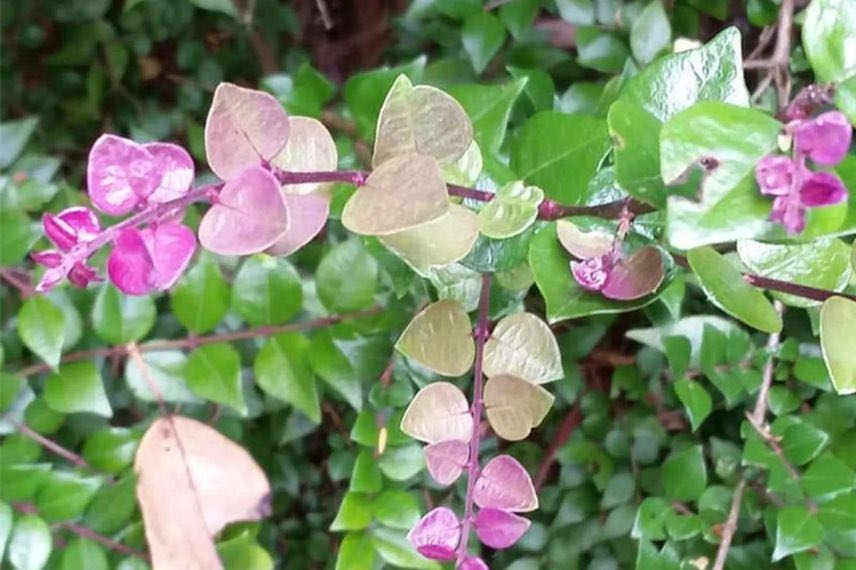
Bush honeysuckles Lonicera nitida are creeping shrubs with an excellent root system for stabilising a slope. ‘Red Tips’ is a recent boxleaf honeysuckle variety with dense, compact foliage. It offers a more spreading habit than the type species, reaching a spread of 1.5 metres and a height of 1.2 metres.
It is particularly noticeable for its young red-to-purple leaves at bud burst, bringing a splash of colour in spring. Over time, this colour gives way to a bright green, which will continue to brighten the soil effectively. In autumn, bronze tones appear and are intensified by the cold. This evergreen foliage will therefore evolve with the seasons.
Flowering, considered inconspicuous, takes place in spring and is by no means overlooked by insects. Purple berries may also appear afterwards, ornamental through winter (unless the shrub is pruned).
Easy to grow, tolerating pruning well and with rapid growth, this bush honeysuckle thrives in ordinary, well-drained soil, even calcareous. Plant it in light sun, not too drying, in partial shade or even in shade.
Box honeysuckle Lonicera nitida 'Maigrün': ideal for extensive groundcover
Another boxleaf honeysuckle bush, ideal for dressing slopes! ‘Maigrün’ is a versatile bush, whose bushy, compact and spreading habit suits a wide range of uses. It quickly reaches 1 metre in height, for at least 1.50 metres in spread, and often much more if allowed to grow freely and is not pruned. This is what makes it a great groundcover for greening the areas of the garden that can be difficult at times. But it also fits easily into a low hedge or border in a large garden.
This easy-to-grow bush tolerates any well-drained soil that remains reasonably moist (never completely dry), in full sun to partial shade. It is an ideal candidate for brightening the shadier areas of the garden.
This variety disposes en effet d’un feuillage evergreen d’un beau vert clair bien vif, décoratif tout au long de l’année. It is carried by pliant, arching shoots, which give it this elegant appearance and allow it to spread easily.
Its spring flowering also gives rise to small decorative berries, purple-violet in colour.
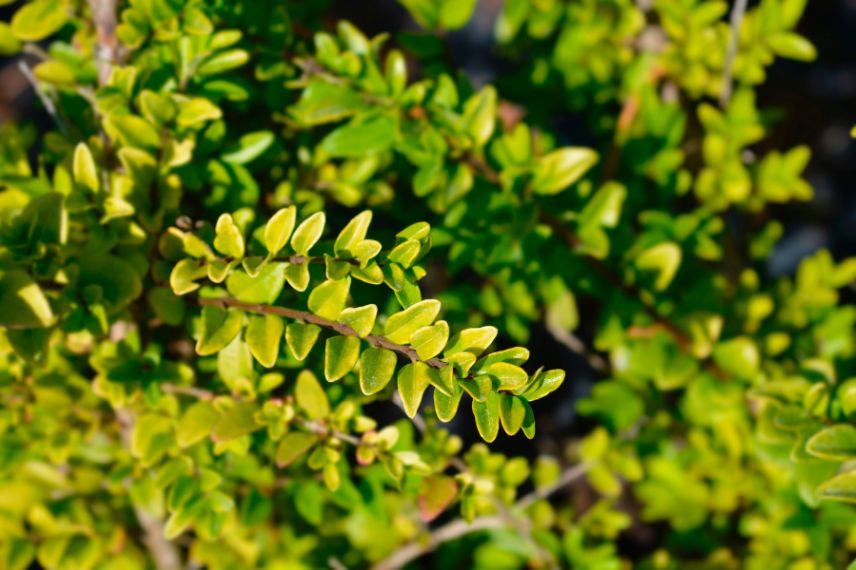
Boxleaf honeysuckle Lonicera nitida 'Lemon Beauty': for its bright variegated foliage.
The boxleaf honeysuckle ‘Lemon Beauty’ is a particularly bright variety, thanks to its glossy, variegated foliage margined with lemon-yellow. It remains decorative all year round. As with all Lonicera nitida, it is also an excellent choice for stabilising and dressing a bank, keeping the “weeds” at bay. In terms of size, expect about 1 metre in height and 1.2 metres in spread for this fast-growing bush.
This honeysuckle flowers early in spring, revealing discreet creamy-yellow flowers, appreciated by pollinators. The fruits that sometimes follow are small purple berries, quite decorative.
Easy to grow, this shrubby honeysuckle resists severe frosts down to -20°C, but is otherwise tolerant of soil type. Poor soils, not conducive to the growth of other plants and occasionally dry, do not faze it. Plant it in full sun (not scorching) or in partial shade.
- Subscribe!
- Contents
Comments