





























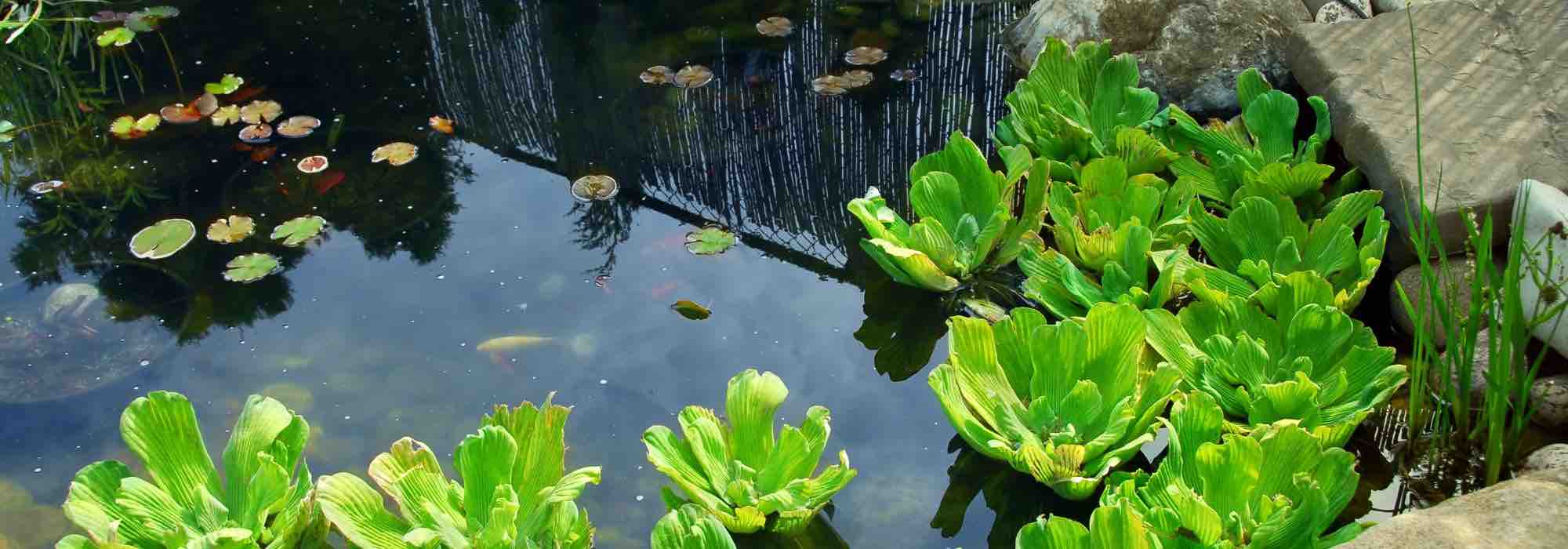
Maintaining a garden pond in winter
Our tips for a well-managed wintering and a healthy water feature
Contents
The days have certainly shortened, temperatures have dropped, most plants are in dormancy, and many have become naked: all signs that winter has begun.
To effectively manage this cold season, a few simple maintenance tasks will help keep your pond clean, ready to spring back into top shape as soon as the nice days return.
Whether you have a tiny pond or a large lake, maintaining the balance of this ecosystem will be crucial this season. Here are our tips for successfully winterising your water feature.

Clean and organise the movable items
If you haven’t already done so in autumn, it’s time to clean your water treatment equipment (pump, filters, UV clarifier…). Disassemble them to rinse with clear water. Drain and purge the system. This will also give you the opportunity to check that everything is in good condition, without leaks. Some equipment needs to be stopped and stored away from frost during winter, while others can remain in place. Rely on the instructions provided by the manufacturers.
Before the first frosts, waterfalls or fountains should be stopped to prevent water agitation (warmer water will thus remain deeper), as well as damage caused by freezing.
Take the opportunity to clean any decorations placed near your water feature: rocks, statues, figurines, wind chimes, etc. Store all these items in a frost-free location to prevent them from being damaged by the cold.
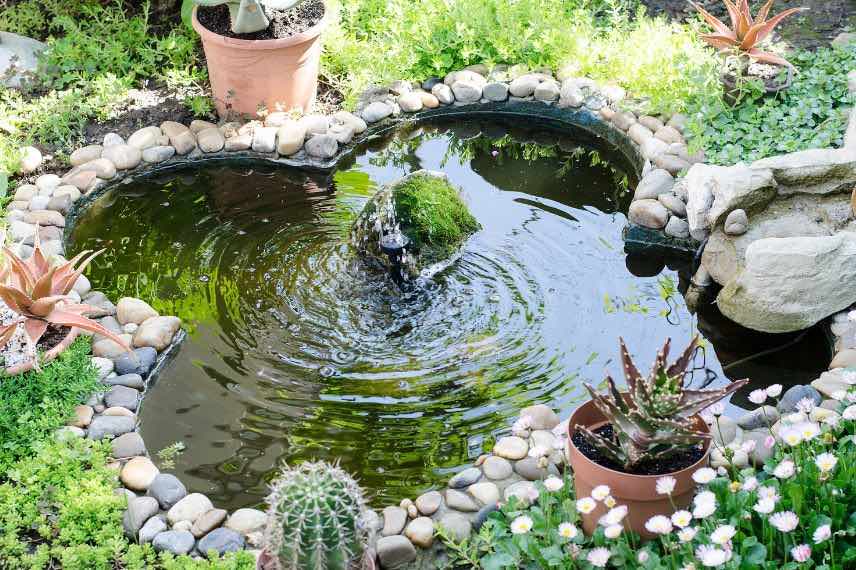
Clean the water treatment elements and decorations
Protect the pond from frost
In winter, it is imperative to prevent the formation of an ice layer on the surface of your water feature. This indeed halts the gas exchanges between air and water, which is detrimental to the ecosystem of the pond.
You have several solutions, depending on your budget and the severity of your winter.
- Install a pond heater, in the form of heating cables or floats. These help to limit stress caused by sudden temperature changes, both for the plants and the wildlife in the pond. This is an interesting solution in regions with harsh winters that experience strong and persistent frosts.
- Set up an anti-freeze dome, which allows the water not to freeze over a small area nearby, constantly leaving an opening for aeration.
- In regions that only experience occasional frosts, simply floating a balloon, a buoy, or a weighted plastic bottle may suffice to prevent ice from forming over the entire surface.
In the case of an above-ground pond, which might be installed on a terrace, it can also be beneficial to protect the edges of the structure. This will prevent any damaging pressure from frozen water.
If it is too late and the surface of your water feature has completely frozen, place a container filled with hot water to gradually melt the ice and recreate an opening. Do not break the ice with tools: the shock waves generated would be harmful to the fish and the life of the pond in general.
If necessary, you can add an aerator to promote the oxygenation of the water during this time of year.
Maintaining quality water
During winter, it is important to regularly remove leaves and debris that may still fall into your garden pond. This will limit the input of organic matter, which encourages the growth of algae when spring arrives and harms the pond’s oxygenation.
Use a net (the size of which should be chosen based on your water feature). You can also use a pond vacuum, specially designed to clean the bottom of your water feature. Place this green waste in the compost. To spare yourself this task if your water feature is not too large, you can place a protective net upstream, which will prevent plant debris from falling into the water.
During winter, temperatures can drop sharply but also show great variations. It is therefore important to test the water’s pH to ensure it remains balanced (around 7) and to avoid problems with your plants or fish. You can easily obtain kits to test pH, water hardness, nitrate, nitrite, and ammonia levels. If necessary, in case of imbalances, add specific corrective products.
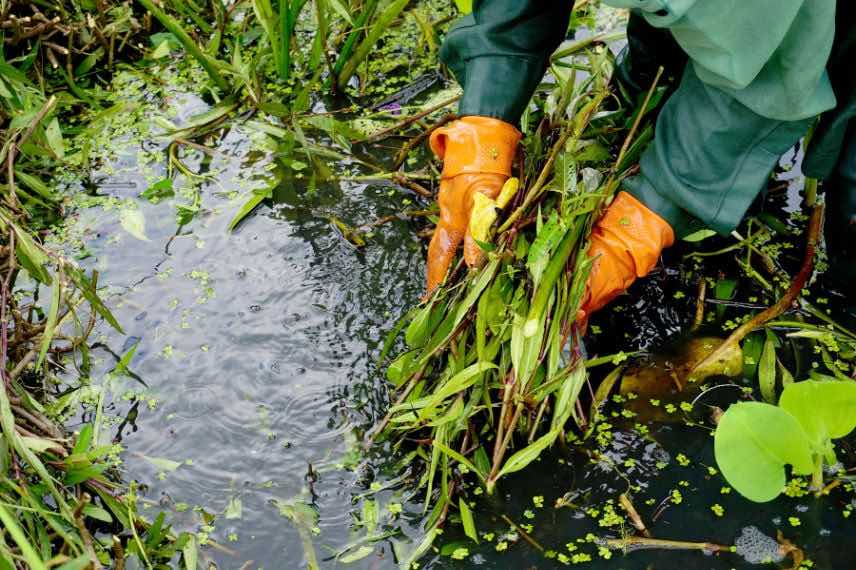
Wintering plants
If some aquatic plants are hardy and withstand negative temperatures in winter, this is not the case for all the plants in the pond. Before the first winter frosts, it is therefore important to protect them so they can thrive in good health the following season.
- The hardiest plants can remain in place, such as water buttercup, water clover, or arrowhead (hardiness > -25 °C). Note that if you live in a mild region where it rarely freezes, you can keep more aquatic plants in place during winter.
- Place moderately hardy and submerged plants deeper at the bottom of the pond. They will benefit from warmer water and be less sensitive to frost.
- Bring in the most tender plants to a non-heated but frost-free shelter. Create a bright dedicated space and place your plants in a submerged container (bucket, basin, etc.). They will be stored there until the last frost risks have passed, which is typically between March and mid-May, depending on the region. This includes Papyrus or water hyacinth (hardiness -4 °C). Their care during winter will be limited to adding water in case of evaporation.
- Plants placed near the pond can be mulched to protect their stumps from the cold.
All fertiliser applications should be stopped during the cold season. They can resume in spring.
To learn more: Wintering of pond plants.
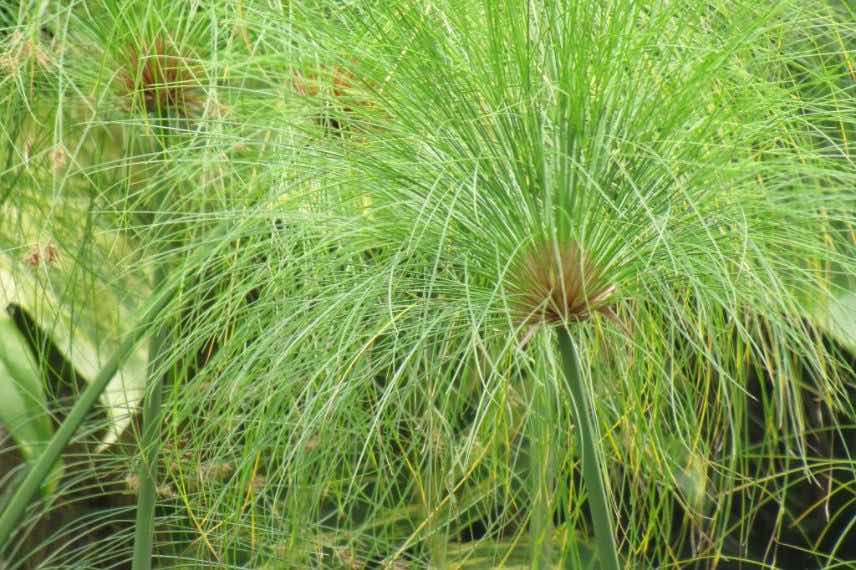
Papyrus is sensitive to frost and must be wintered
Protecting fish and surrounding wildlife
The metabolism of fish will adapt during winter by slowing down. We recommend opting for food specific to this season to support them during this change in rhythm. This food will generally be more digestible, and some ranges even offer food that sinks to the bottom of the pond: the water there is warmer, and fish find refuge in winter.
Feeding will however be stopped as soon as temperatures drop below approximately 6 °C: fish then enter a fasting phase and will no longer need to feed. Ideally, proceed gradually by reducing food amounts from mid-autumn. As temperatures rise, resume feeding gradually.
For other animals that frequent your water feature (frogs, newts, insects…), you can help them by providing multiple small shelters nearby: logs, piles of stones, etc.
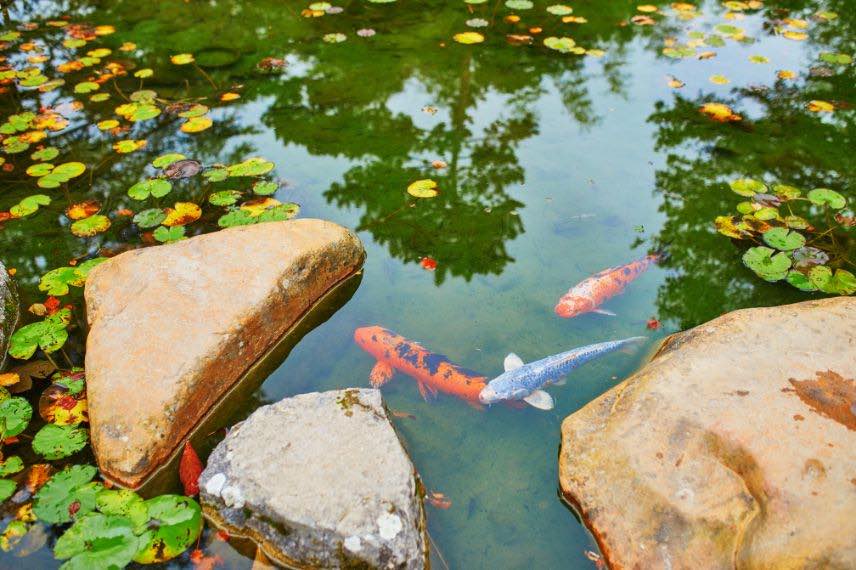
Adapt the food for fish in winter
- Subscribe!
- Contents
Comments