





























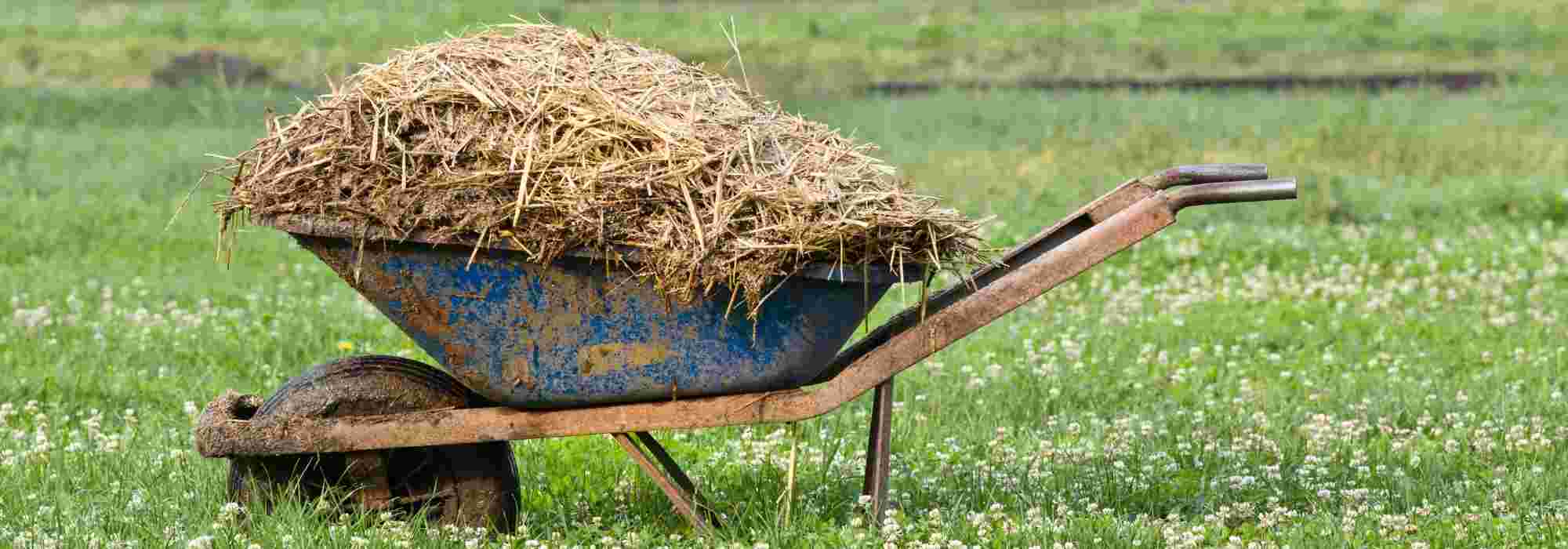
Manure: 10 mistakes to avoid
Our tips to make good use of it in the garden
Contents
Manure is an organic material of animal origin made up of animal excrement and their litter layer, useful in both vegetable gardens and flower gardens to improve soil quality and promote plant growth. Whether it comes from horses, cows, pigs, sheep, or chickens, manure requires some precautions before use.
Here are the 10 mistakes to avoid when it comes to manure!

Spread at any time
Before you start spreading manure, you need to know that it cannot be applied at just any time of the year. Just as there are times for pruning plants, there are times for burying manure. First, you must distinguish between fresh manure, mature manure, or composted manure, which is perfectly decomposed. Only pelleted manure can be used almost all year round, from February to June and from September to December, as well as at planting time. I also explain in a sheet the use of this pelleted manure in the garden.
- Fresh manure should be spread well before planting, in autumn. It must never be added directly to potting soil (it can be added to compost), nor should it be introduced directly at the base of already established vegetable plants, as it risks burning their roots during decomposition and transmitting diseases. It should be left to compost for a minimum of 90 to 120 days before proceeding with sowing or planting.
- Mature or composted manure can be spread in spring, around the end of March, at the time of digging. It can also be spread directly at the base of tomatoes, squashes, and other greedy vegetables.
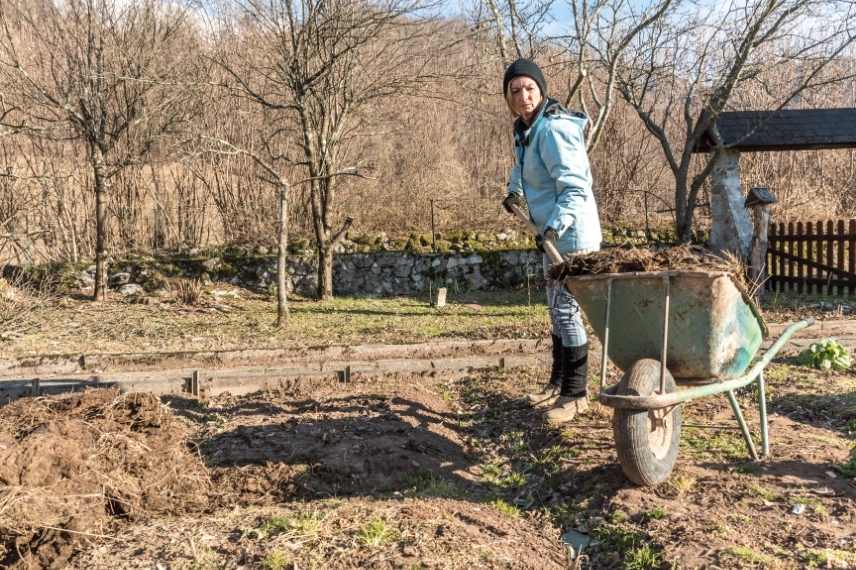
Spreading manure at the end of autumn
Burying it too deeply
Too buried, manure may struggle to decompose and ferment.
- Fresh manure is simply spread in a thin, regular layer on the surface of the bare, well-worked soil. It will have all winter to compost quietly. This fermentation process is necessary to eliminate most pathogenous agents and release the toxic substances contained in fresh manures. You can then bury it a few centimetres deep with a rake.
- Decomposed manure can be incorporated into the soil by lightly raking it to a depth of about 6 cm across the entire vegetable garden or at the base of the crops.
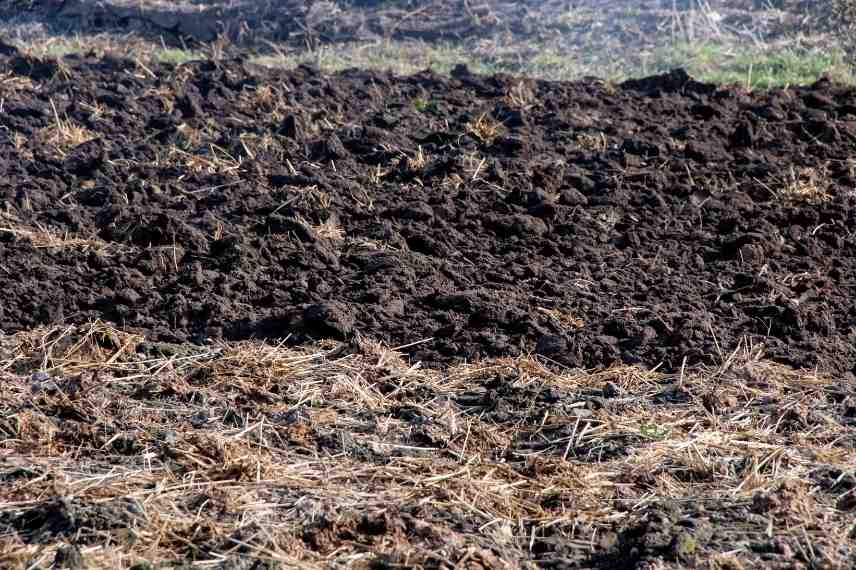 Layer of manure</caption]
Putting too much in
No, quantity does not necessarily rhyme with efficiency! When it comes to manure, one must adopt the policy of “neither too much nor too little.” The right dose is essential, or you risk saturating the soil with organic matter.
- For fresh manure, count on 1 to 5 kg per m² (approximately 1 wheelbarrow), which amounts to 100 to 500 kg for a 100 m² vegetable garden.
- For composted manure, count on 1 kg for 1 m², or 100 kg for 100 m².
- For pelleted manure, count on 1 kg/m².
Read also
Manure in 10 Questions / AnswersConfusing it with fertiliser
Manure is an amendment containing micro-organisms and nutrients that modify the structure of the soil in depth. Fertiliser maintains soil fertility and promotes plant growth, but its effects are less long-lasting. Manure also acts as a fertiliser, but to a lesser extent.
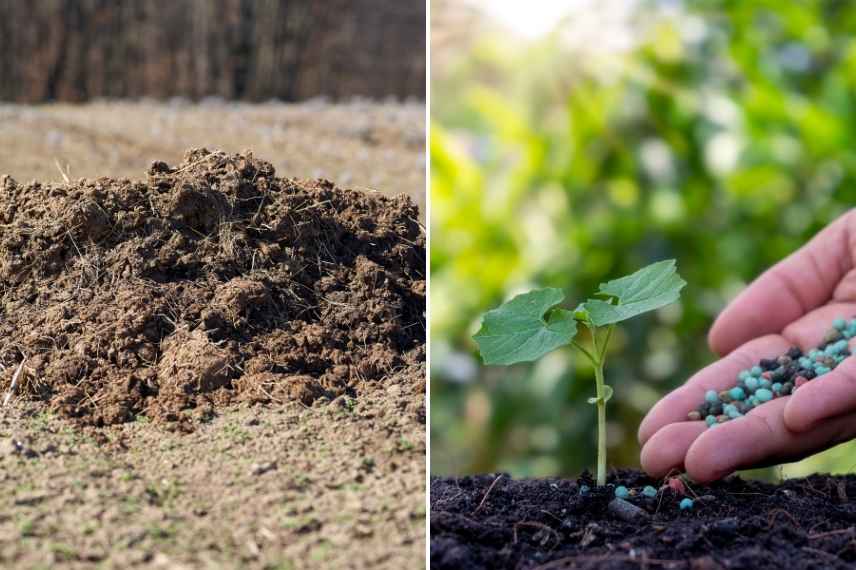
Manure and fertiliser
Spread it everywhere
No, you do not fertilise your plot entirely every year, or as with crops, you proceed with rotations. To avoid burning your vegetables, the application of organic matter should be spaced out, but regular. Spread it every 2 or 3 years, or even every 4 years for cattle and horse manures, which are very potent.
Spread once every 10 years
Thinking that once your manure is buried, you will be free for a decade is a mistake. Manures have a very slow action in soils. They are effective in the long term by gradually and sustainably diffusing their nutrients. Regular applications over several years are necessary to see a visible change in the nature of your soil.
Spread it on any vegetables
Certainly, manure contributes to the quality of harvests and enhances crop yields. If you must use manure in the vegetable garden, however, widespread applications should be avoided. The use of manure is not recommended for certain vegetable crops that do not thrive in manured soils. Conversely, all nutrient-hungry vegetables with a long growing cycle appreciate good fertilisation. Therefore, it should not be spread indiscriminately.
- Vegetables that do not appreciate manure: onions, garlic, shallots, watercress, endive, broad beans, lamb’s lettuce, turnips, radishes, and carrots. They prefer light soils.
- Vegetables that enjoy manure: pumpkins and squashes in general, artichokes, cucumbers, celery, courgettes, melons, tomatoes, and other solanaceae (peppers, bell peppers, aubergines, potatoes), cabbages, spinach, and strawberries.
Getting the wrong manure
Not all manures are created equal; there are different types: horse, cow, chicken, pig, sheep, goat, and even rabbit. Each serves a specific purpose and should be chosen based on the soil type.
- Horse manure, made up of dry matter, is known as “hot” manure, ideal for improving heavy, cold, and clay soils.
- The cow manure and other bovine manures are considered “cold” manures. Very compact and rich in humus, it decomposes quite slowly and is perfect for enriching and adding density to light, sandy soils.
- Poultry manure, which is very high in nitrogen and potash, is a good hot manure to mix with compost for leafy vegetables, such as leeks, green cabbages, and salads. Discover how to use chicken droppings as fertiliser for your vegetable garden.
- Rabbit manure is a fairly heavy hot manure that can improve light soils.
You will find their specific characteristics in our sheet “Manure in 10 Questions/Answers”
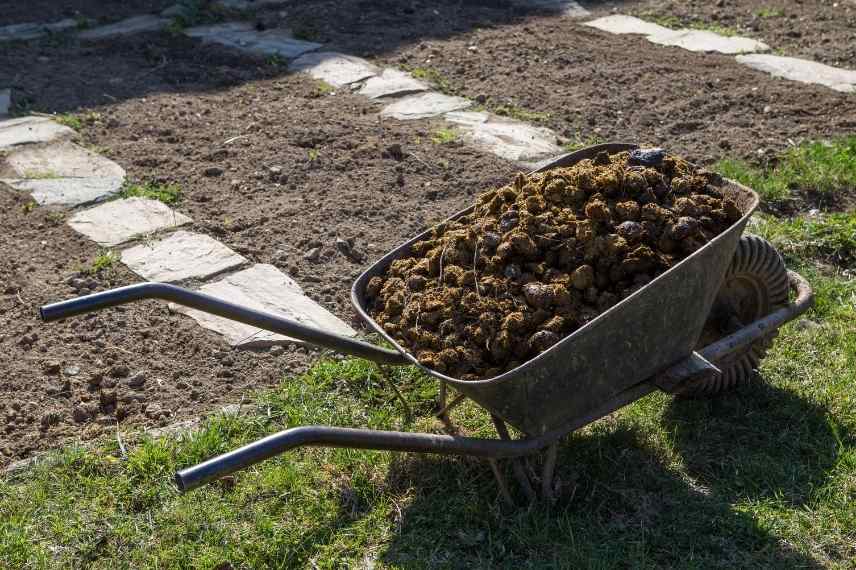 Horse manure</caption]
Do not let it decompose
Fresh manure is like fine wine: it improves with age! Unlike already composted manure, it is essential to compost fresh manure before any use. Place the manure pile on wooden pallets, for example, to allow air circulation. During this fermentation process, a significant heat is generated inside the manure, which helps destroy bacteria, viruses, and sometimes pathogenous germs (salmonella, listeria, E. coli), and parasites that could contaminate your crops. It is important to remember that manure results from animal waste… This composting period should last a minimum of 3 to 6 months in spring/summer or 6 to 9 months in autumn/winter. The pile should be turned to aerate it at least twice during this period, using a fork to circulate the air and distribute the heat evenly.
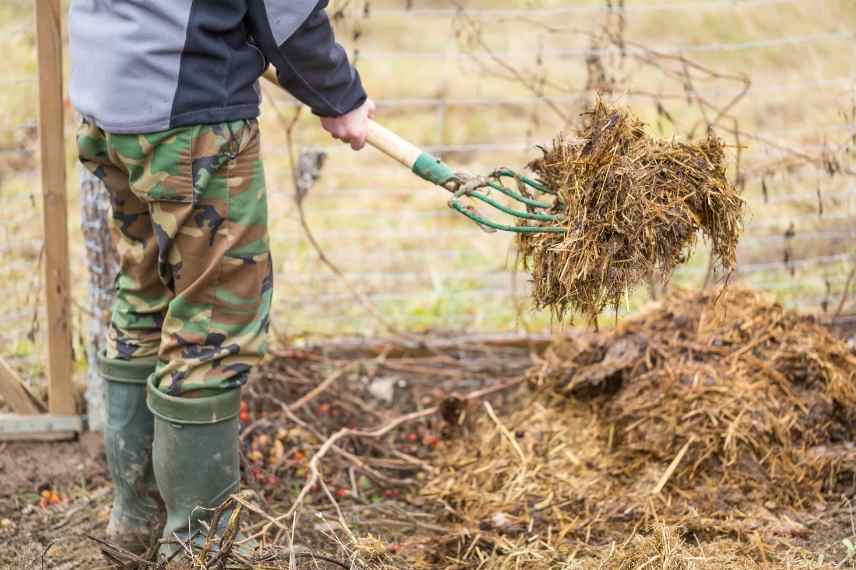
Aeration is essential for the decomposition of manure
Do not check the source of the manure.
Better to know where the manure comes from! It is not uncommon for manure to contain residues of medications. If you have the opportunity to obtain fresh manure from a farm or an equestrian centre, we strongly advise you to inquire about the veterinary practices of the operator, the medical treatments received by the animals (antibiotics, dewormers), as well as the composting time of the manure which should have been long enough to sanitise it.
Prefer farms that operate under organic practices.
- Subscribe!
- Contents
Comments