





























My shrub is losing its leaves in summer: why?
better understand this phenomenon, its consequences, and the solutions
Contents
In the height of summer, you may notice that some of your shrubs are losing their leaves abnormally, or that the foliage is turning yellow and dry? While this phenomenon is quite normal in autumn, especially among deciduous bushes, it can indeed seem concerning at this time of year. Some tree tops and climbers also appear to be affected. The heat, drought, and repeated heatwaves are the main causes. We explain why your bush is losing its leaves in summer and what can be done to help it.
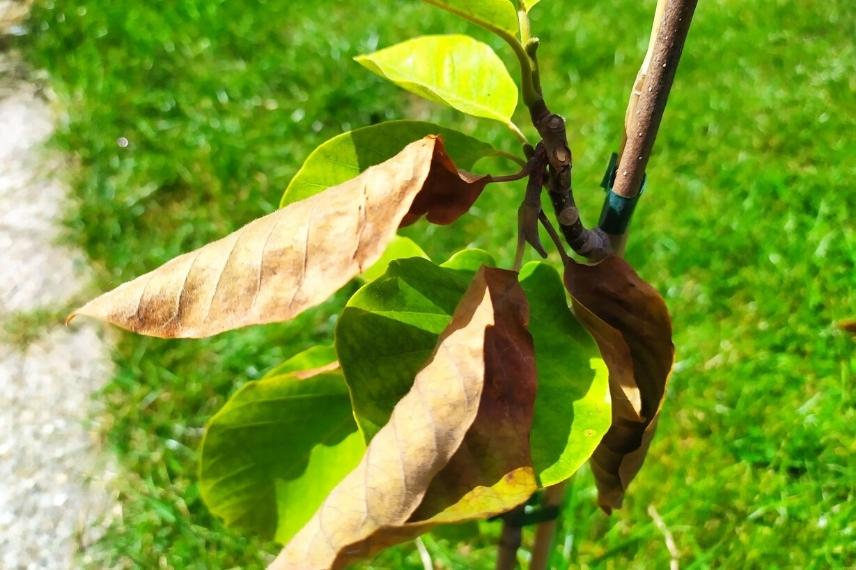
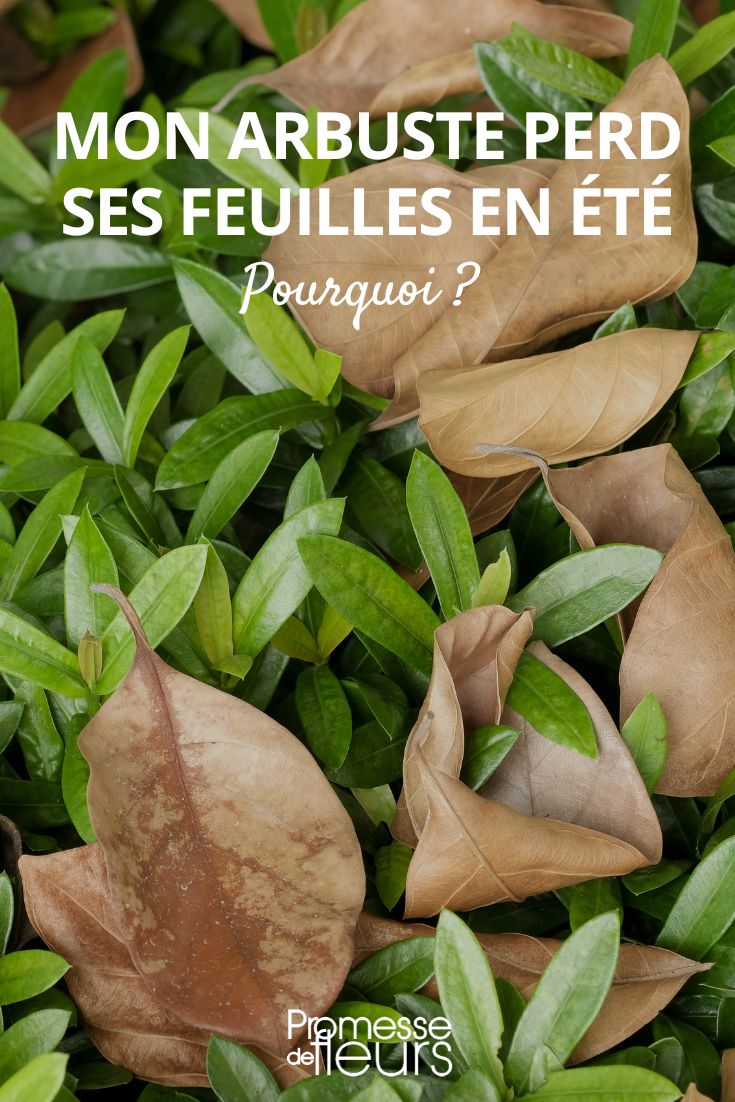
Some leaves of this young magnolia have dried out in the height of summer due to lack of water and the heatwave

Drought, the main cause
Since recent years, drought and heatwaves have become increasingly frequent. While a gardener’s instinct is to seek shade and coolness during intense heat, the shrub has no choice but to remain in the ground, suffering greatly, especially from lack of water. However, plants have developed strategies to try to survive.
A survival reflex
Did you know that shrubs transpire through their leaves? Therefore, when shrubs lack water, they try to transpire less to conserve their reserves. They then close their stomata, those microscopic pores on the leaves that allow for the plant’s evapotranspiration and gas exchanges (such as CO2 uptake, etc.). However, the leaf can no longer transpire to lower its temperature in the heat and may then scorch in the sun. The pigments in the leaf will degrade and change colour, much like in autumn.
The shrub may also decide to stop supplying sap to the tips of its branches and thus its leaves. This results in a rapid loss of foliage. This phenomenon allows the shrub to slow down its functioning and halt its growth to conserve its water reserves and energy. The plant voluntarily sacrifices its leaves to ensure its survival, waiting for rain or watering. This “defoliation” is particularly noticeable in the cymes of large specimens or trees in summer.
Read also
Plant dead or still dormant?The consequences on the shrub
This water stress, caused by drought, will have varying consequences on the shrub depending on its duration and intensity.
- Firstly, the shrub may stop its growth for this season and will only resume growth the following spring.
- If the drought is prolonged, it will have to draw on its water and energy reserves, normally intended for winter. It may therefore be less resistant to cold in winter and more susceptible to diseases.
- The shrub may lose only a few leaves to several branches depending on the duration of the drought in mid-summer. It will sacrifice its leaves and branches in an attempt to protect its buds and root system. If its buds and roots are affected, the shrub is very likely to decline.
- If it is a deciduous shrub, it often loses its leaves earlier than usual in autumn to conserve its already depleted reserves from summer.
What can I do to help my shrub?
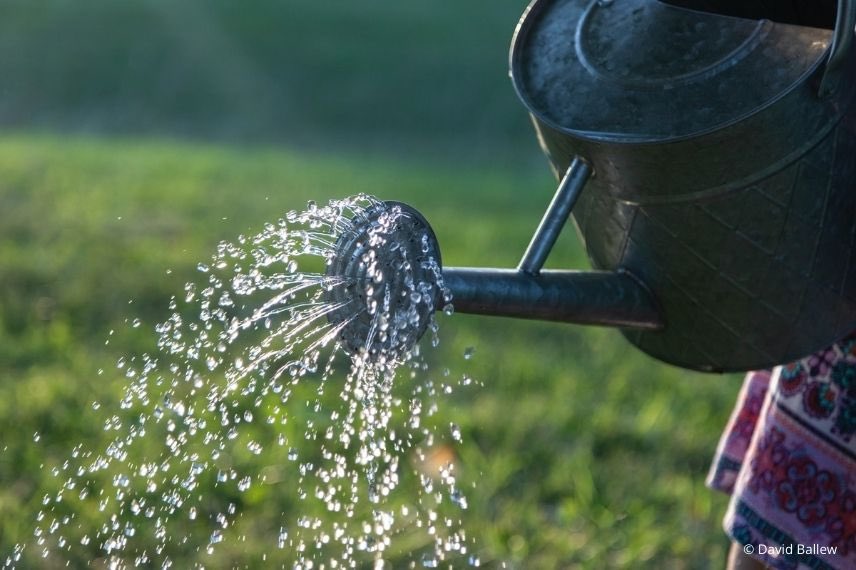
- Firstly, water your shrubs regularly and abundantly with rainwater, late in the evening or early in the morning, during heatwaves and prolonged droughts. Avoid watering between 8am and 8pm and do not wet the foliage.
- If your shrub is young, be especially vigilant during the first two summers!
- Apply an organic mulch at the base of your shrub to keep its roots cool and limit water evaporation.
- Remove partially damaged leaves to further reduce transpiration, then also remove dead leaves and prune the dry branches.
Other possible causes
A young shrub
A young shrub, which root system is still underdeveloped, will be more sensitive to drought than an older specimen. Generally, it is said that it takes 2 years for a plant to be sufficiently well-rooted. Once again, lack of water is often to blame.
Planting against a white wall
Planting shrubs or perennials against a building facade or a white wall can lead to burns on the leaves. Indeed, the reflection of sunlight on this surface causes what resembles “sunburn” on the leaves. Again, soil dryness can be an aggravating factor.
For further reading
- Discover our article on the heatwave: 10 tips to protect your plants
- Check out our tips for watering a garden during a heatwave
- Find all our shrubs available
- Subscribe!
- Contents
Comments