


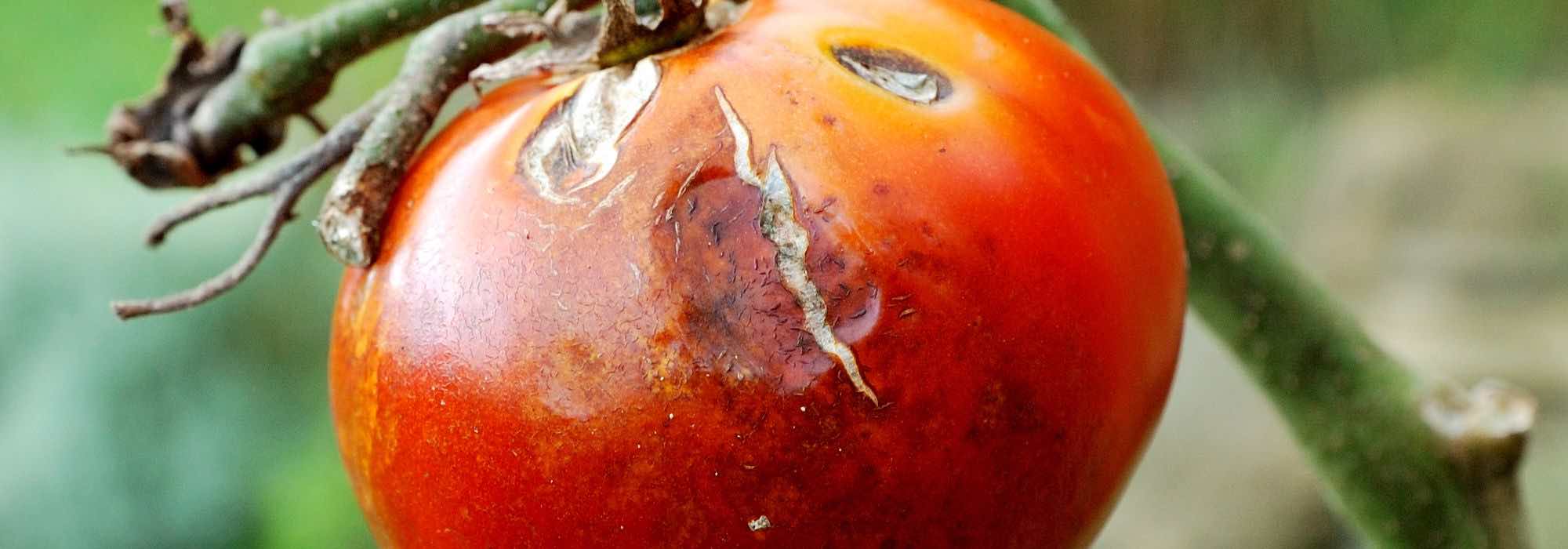
My tomatoes are misshapen: causes and natural remedies
Spots, rot, cracks… Common problems when growing tomatoes, prevention measures and possible treatments
Contents
Beautiful fleshy tomatoes, with smooth skin and well-coloured… That’s what every gardener dreams of! Tomatoes are among the easiest fruits to grow, eaten as vegetables, and accessible even to beginners. But they can still encounter certain cultivation problems.
Tomatoes can be damaged by certain diseases or poor watering practices. Stained, cracked or rotting fruits… Let’s see how to prevent risks, identify common problems and treat them in as natural a way as possible to obtain a harvest of tomatoes.
And to learn all about growing tomatoes, discover our comprehensive guide: Tomatoes: sowing, planting, care and harvest

The foliage on my tomato plants is stained
The culprit is usually one of the most widespread fungal diseases in the garden: late blight. It is caused by a fungus (Phytophthora infestans), which thrives in warm, humid conditions. Depending on the region, it may therefore sometimes appear as early as the end of spring.
Late blight first causes brown, oil-like spots on the leaves. They will gradually spread and turn black. Then the disease will attack the stems and the fruit, causing the tomatoes to rot and the plant to die. It also has the drawback of spreading very quickly to nearby plants.
To help prevent this common disease, a few measures can be taken.
- Choose blight-resistant varieties, such as the ‘Honey Moon F1’ or the ‘Rose de Berne’, reputedly fairly tolerant.
- Avoid growing tomatoes in a site that has been contaminated before (spores can remain in soil for several years). Practice crop rotation.
- Avoid watering the foliage of your tomatoes. Prefer watering at the base, at the spout of the watering can. If possible, install drip irrigation or ollas for gentle irrigation.
- If you can, protect your tomatoes by growing them under a greenhouse, tunnel or makeshift shelter. Remember to ventilate regularly.
- Maintain a good planting distance between your tomato plants (at least 50–60 cm), to allow natural air circulation. Pruning of tomatoes is sometimes recommended as a precaution against cryptogamic diseases to promote aeration. But any pruning will create wounds, which can indeed create entry points for diseases…
- Alternatively, stake your tomatoes to prevent the foliage from touching the damp soil.
- Regularly monitor your tomatoes so you can act quickly at the first signs of the disease.
- Some gardeners favour plant manures, such as horsetail or nettle manures (even though their effectiveness has not been scientifically proven), which may have antifungal properties in prevention.
- Bordeaux mixture is a treatment used against fungal diseases, both preventive and curative. This powder based on copper sulphate and lime is usable in organic farming, although its use is controversial (large quantities can ultimately disrupt soils and cause pollution).
As soon as you notice the first symptoms, remove the affected parts using a clean and pre-sterilised cutting tool. Dispose of plant waste at a waste disposal site (do not leave it on site or add it to the compost).
There is no effective curative treatment once the disease is established, only ways to slow its spread.
In addition, feel free to consult our articles “Tomato: blight, other diseases and pests” and “7 tomato varieties naturally resistant to blight”.
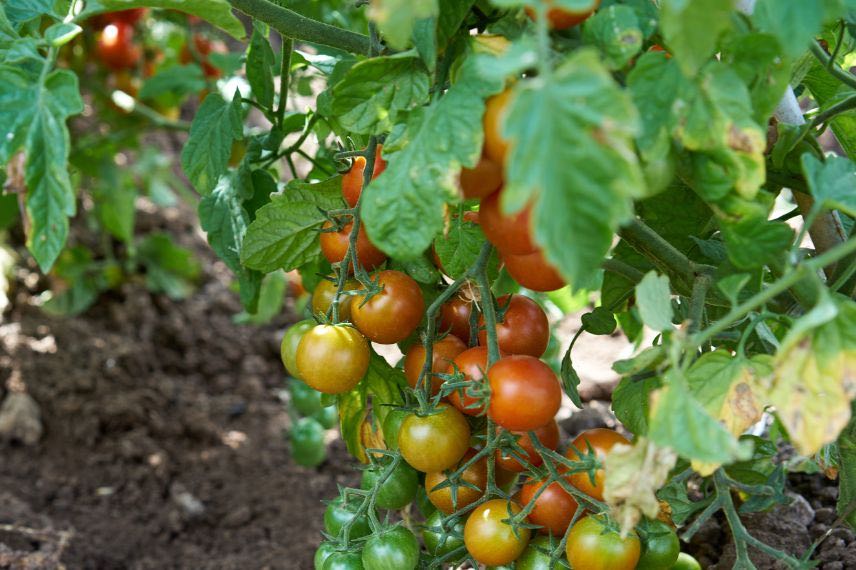
Late blight is first visible on the leaves of tomato plants
Read also
To grow tomatoes in potsMy tomatoes are cracking or splitting
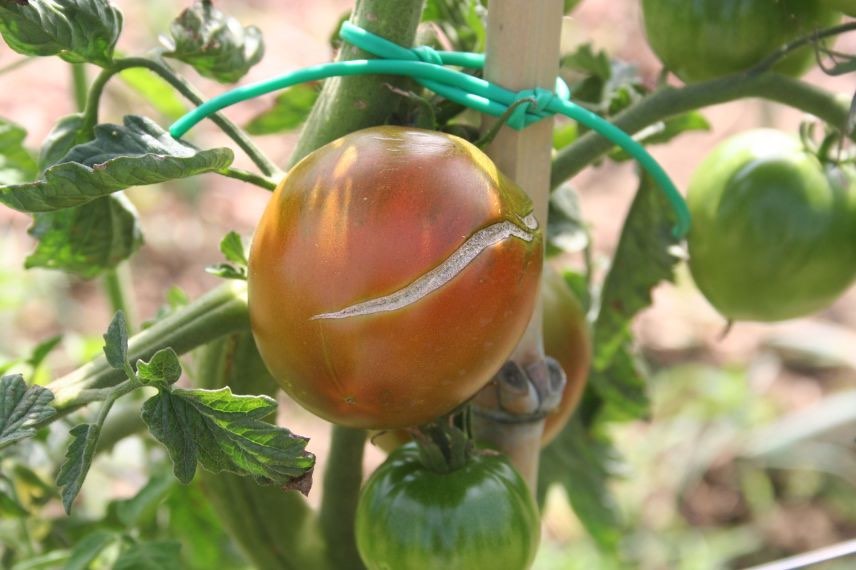
Cracks can appear on tomatoes, often starting at the peduncle’s attachment point. Ultimately, these cracks can cause the fruit to burst, revealing the seeds. This defect is called growth crack. It is caused by poorly managed watering, too abundant, which will make the fruits swell more than necessary. The skin can no longer withstand this pressure, which will cause it to crack. This affects the shelf life of the fruit, making them more prone to disease and pests.
Excess rainfall (for example during a storm), as well as overly zealous watering by the gardener can cause these cracks and bursting. To avoid this situation, you can improve cultivation conditions with a few simple steps.
- We recommend watering moderately and at spaced intervals, rather than small, very regular waterings. This helps to reduce the risk of water stress. Moreover, this way of watering will encourage tomato plants to develop deeper roots to reach water deeper in the soil.
- Watering should be adapted to the plant’s development stage, and to its cultivation conditions (in soil or in a pot, under cover or outdoors, depending on soil type and weather…). For more information, see our article “Watering tomatoes: how to do it?”.
- Don’t hesitate to check the soil with your fingers before watering again: if it’s still damp deep down, you can wait.
- For a gradual, gentle watering, you can also install ollas. It consists of irrigation pottery made from a porous material, which gradually allows water to seep into the soil by capillary action when it is dry. Tomato plants will therefore be irrigated slowly and steadily. For more information, see our article Ollas or oyas: a high-performing and economical irrigation system and our tutorial Making a homemade olla to water the garden.
- Sometimes, excess water can be due to soil being too heavy. If that is the case in your garden, lighten it by adding drainage elements (river sand, clay balls, gravel, etc.) so that rainwater or watering drains more easily.
- If excessive watering is due to the weather, it will be harder to manage. You could however try sheltering your tomatoes (for example under a tunnel) or opt for container growing if summers are known to be particularly wet.
- Opt for varieties with good cracking resistance, such as the tomato ‘Fandango F1’.
- Don’t wait too long before harvesting your tomatoes.
My tomatoes are developing black patches at their base
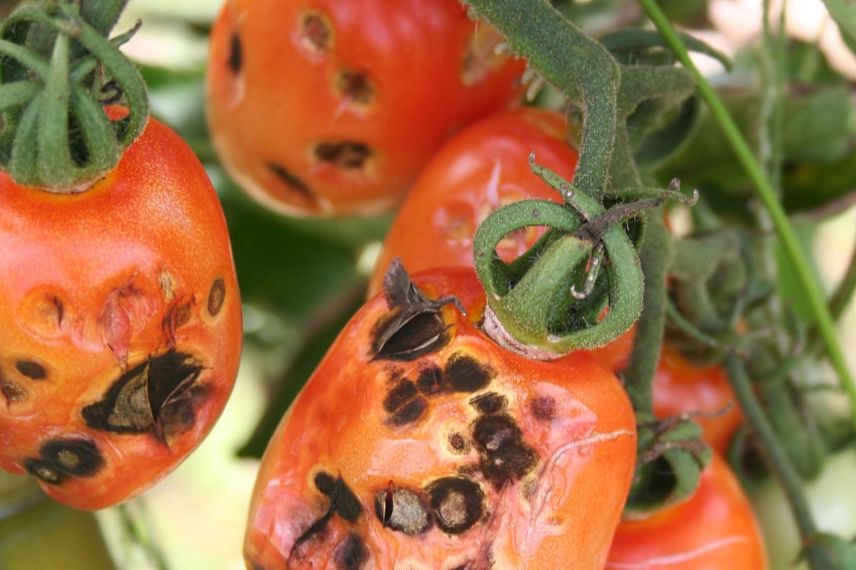
It is one of the more common symptoms seen on tomatoes, which can be mistaken for a disease caused by a fungus. Brown or black marks appear at the blossom end of the fruit (the side opposite the stem), which gives this necrosis the name blossom-end rot. They first appear on green tomatoes, before spreading as the fruit ripens.
Blossom-end rot (its other name) is caused by issues with growing conditions. It is a calcium deficiency or poor calcium uptake by the plant. This can be caused by poorly managed watering (alternating periods of drought with periods of plenty of water), by an underdeveloped root system (containers or soil not well suited or soil too heavy to allow it to develop) or by too rapid growth.
Prevention, ensure proper growing conditions.
- Mulch your tomatoes, to help maintain moisture at the base for longer and to space out watering.
- In the case of container growing, watering should be more regular, as the growing medium dries out more quickly.
- If you are using fertilisers, follow the dosages indicated by manufacturers on the packaging. Excessive fertilisation can cause blossom-end rot.
- Soils that are too acidic can also hinder calcium uptake. As a preventive measure, you can try to correct the pH by applying calcareous amendments (dolomite, wood ash, agricultural lime, eggshells…).
- Avoid varieties known to be sensitive, such as the Cornue des Andes or the ‘Roma’. Long tomatoes would indeed be more susceptible to this physiological disorder.
→ For more information, read our article: “Blossom-end rot in tomatoes: how to effectively combat it?“.
My tomatoes are rotten
Alternaria leaf spot, also known as black rot, causes circular black spots on the foliage, before spreading to the stems. This causes defoliation of the plant, before the disease attacks the fruits, which eventually rot on the plant.
It is once again a cryptogamic disease caused by a fungus (Alternaria tomatophila). Mild temperatures and high humidity are conducive to its development.
Natural methods of prevention and treatment are the same as for late blight (see the first paragraph).
My tomatoes have white spots
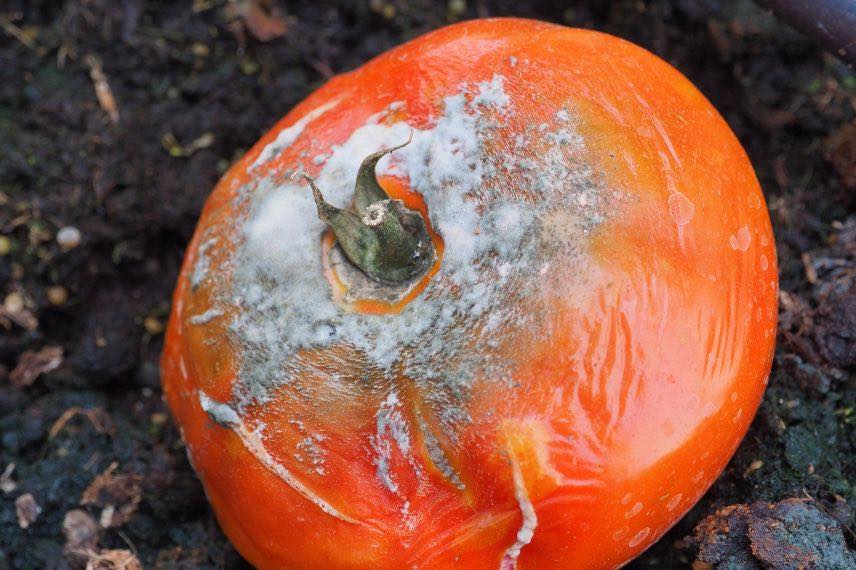
Still within the realm of cryptogamic diseases, let us discuss powdery mildew. This fungus will first cause white woolly patches to form on the foliage. The disease will then spread to the stems and fruits. Ultimately, the leaves may yellow and wither, potentially leading to the death of the young plant.
Here too, prevention and control measures are similar to those for late blight.
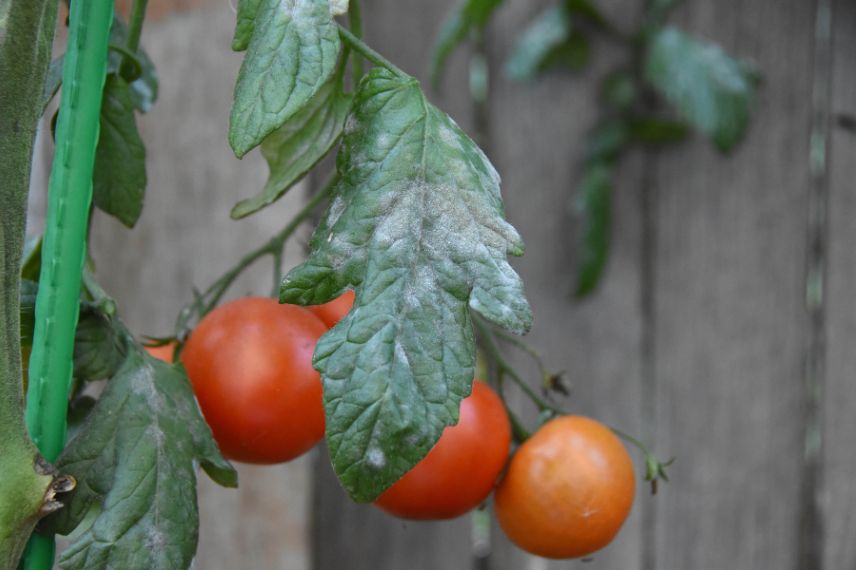
Powdery mildew first causes a grey-white woolly coating on the foliage before spreading to the tomatoes.
What should you do with damaged tomatoes?
Sometimes, even if your tomatoes are unsightly, they can still be eaten and used. This applies to cracked, split, or blossom-end-rot-prone tomatoes. First, remove the damaged parts. Then, use them to make gazpacho, a tomato and mustard tart, or a classic (but always delicious) tomato sauce.
As for them, tomatoes affected by a fungal disease are generally not edible.
- Subscribe!
- Contents
Comments