





























Natural compost activators: when and how to use them?
Useful when your compost's organic waste is slow to decompose
Contents
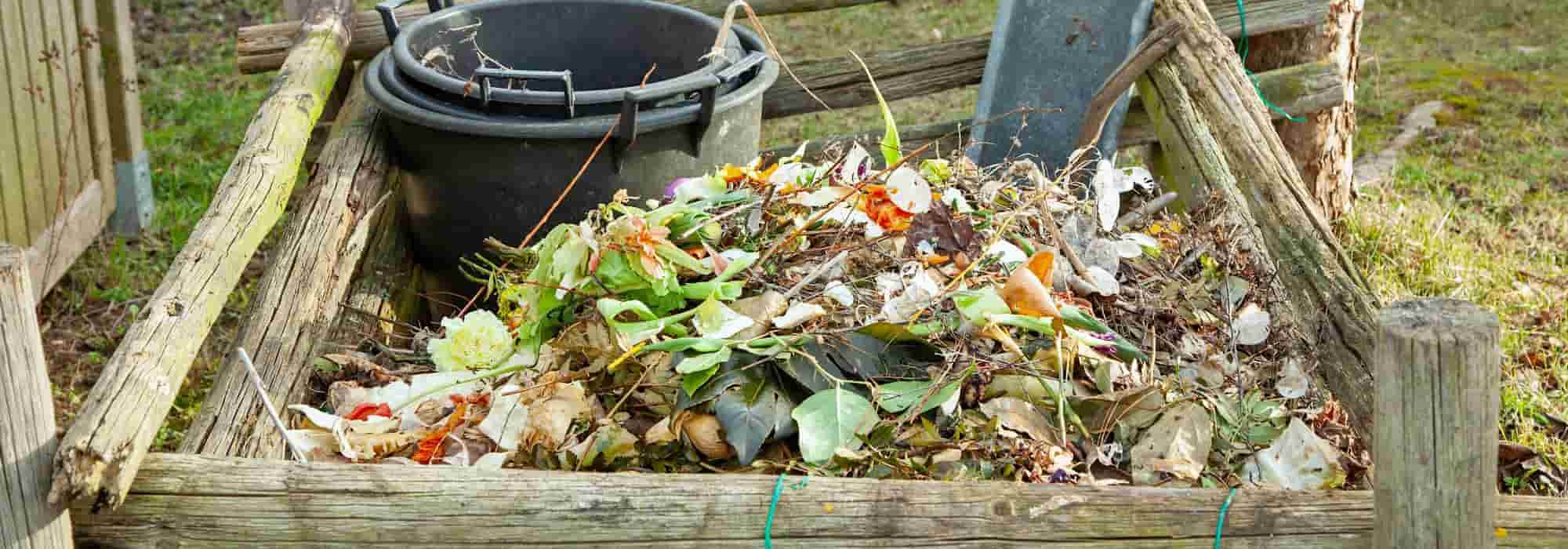
What better way to enrich, aerate and structure soil than a good, well-decomposed compost? Not to mention that composting offers the double benefit of lightening bins and naturally disposing of organic waste from kitchen scraps and crop residues (obligatory from 1 January 2024!). As a reminder, composting is a process of transformation and decomposition of organic waste of plant and/or animal origin, thanks to the action of bacteria and fungi. Chemically, composting is an oxidation of organic matter: in the presence of oxygen, the waste degrades into carbon dioxide and water. From there, bacteria begin their work by consuming cellulose. The temperature rises. Then fungi tackle lignin, the second component of plants. Exactly the same phenomenon as in the top few centimetres of soil, for example under a layer of fallen leaves. Finally, the small creatures (earthworms, larvae, fragmenting insects…) come in to finish the job by feeding on these wastes and aerating the pile.
Nevertheless, even if moisture and air conditions are met, compost sometimes has trouble decomposing properly. Why not call on compost activators whose sole aim is to speed up the decomposition process? I will explain which natural materials can be introduced into the compost, and, above all, when and how to incorporate them.

What is a compost activator?
A good compost should consist of an alternating mix of dry matter that provides carbon, and green and moist waste that supply nitrogen. All these organic wastes will break down thanks to the action of microorganisms, namely bacteria, fungi, earthworms, the larvae, and woodlice… The essential thing is to find the right balance. Then time does its work. Indeed, it takes a few months for all these organic materials to transform into a product rich in humus and fertilising elements.
To speed up the decomposition process, sometimes a few simple steps are enough:
-
- Adding a little water to moisten the compost, especially if it is covered. Half a watering can of rainwater after laying a layer of plant waste is enough
- Regular turning of the compost heap is essential to bring in air, promote oxygenation and ensure a more homogeneous fermentation of the waste. You should therefore regularly turn the compost heap. This turning is done with a fork or, more easily, with a compost aerator
- Incorporating small-sized organic matter allows its decomposition to be facilitated. It is therefore recommended to cut the larger waste into small pieces.
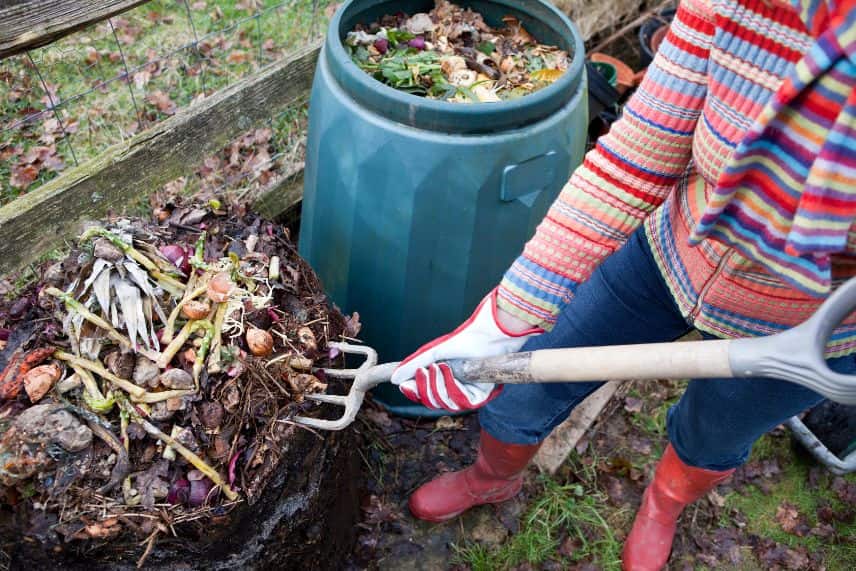
Turning and moistening your compost heap already helps to speed up decomposition
You can further speed up this process by using compost activators. As their name suggests, they enable and facilitate the decomposition process. Simply by making the microorganisms that interact within this heap more efficient. Compost activators stimulate the microorganisms.
Read also
Hot composting: simple and quickCommercial compost activators
To keep things simple, you can simply obtain compost activators, already ready to use and precisely dosed to deliver what the compost needs. Commercial compost activators contain both organic and/or animal matter and mineral matter. They are precisely balanced for nitrogen (N), and, where applicable, for phosphorus (P) and potassium. These activators come in various forms (granules, powder, liquid form…). Suitable for organic farming, they are environmentally friendly.
Some of these compost activators contain ammonium sulfate, a compound formed by reacting ammonia with sulfuric acid. Often used as a fertiliser in highly alkaline soils, rich in nitrogen and sulfur, ammonium sulfate poses no risk, but it remains a chemical product. It must therefore be used strictly in accordance with the dosage instructions. Ammonium sulfate seeps into groundwater, polluting it. These compost activators containing ammonium sulfate should therefore be avoided to protect groundwater and the living organisms in aquatic environments.
What are natural compost activators?
If store-bought compost activators seem like an unnecessary expense, or if you prefer to master the process from start to finish, You can also add elements recognised for their qualities as compost boosters. These are 100% natural compost activators that speed up fermentation, mainly thanks to their nitrogen and trace-element content:
- Nettle shoots : gardeners already know nettle for its fertilising and insect-repelling properties, but it is also a powerful activator of compost decomposition. It can be used in the form of manure to water the compost. Leaf residues can also be incorporated after filtering the manure. Finally, you can simply incorporate young shoots, harvested before flowering, which will be roughly chopped into pieces
- Comfrey leaves are also very rich in nitrogen. They can be incorporated into the compost in the same way as nettle, for example in the form of manure
- Fern leaves have a notable nitrogen and potassium content. Same method as for nettle and comfrey
- Burdock leaves, a plant known for its medicinal virtues, and recognisable by its blue-violet flower heads (which tend to cling to clothing and to the fur of our animals!). Its leaves are effective against blight, but they can also be incorporated, roughly chopped, into the compost, as they are rich in potash and minerals
- Dandelion flower manure, rich in nutrients, including potassium and phosphorus
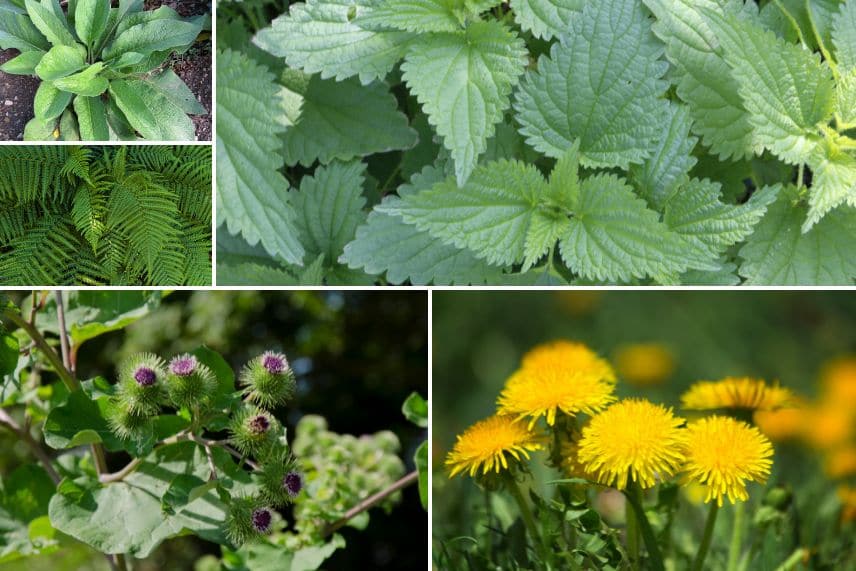
Nettle, comfrey, fern, burdock and dandelion flowers are natural compost activators
- Horse manure or dried chicken droppings: these manures are very rich in nitrogen, but must be incorporated with moderation. It is recommended to let horse manure age for at least 3–6 months before incorporating it into the compost
- Coffee grounds also play the role of a compost activator thanks to their richness in nitrogen, phosphorus and potassium
- Wood ash from the fireplace can be regarded as a compost activator provided it is added in very small handfuls from time to time. It is rich in calcium, thus helping to adjust the compost pH
- Urine: it’s an excellent fertiliser for the vegetable garden, but also a good compost accelerator thanks to its wealth of potassium and phosphorus, and nitrogen as well. It is used neat as a spray on the compost
- Dead leaves are considered brown waste, rich in carbon. They can be added to the compost to activate fermentation, but in small quantities. Again, it’s best to shred them
You can also simply incorporate a little fully decomposed compost from another heap or a good spadeful of garden soil.
When and how to integrate them?
Natural compost activators, whether nitrogenous or carbonaceous, should always be added sparingly in small, discrete quantities. Excess can upset the balance!
Similarly, it is essential to incorporate plant waste by coarsely chopping it into small pieces. They will break down more readily and their role as a compost activator will be strengthened.
As for the period of application of these activators, it runs from March to November. Indeed, in winter, microbial activity is largely slowed by the cold and frost.
- Subscribe!
- Contents
Comments