





























Olive tree canker: identification and treatment
Outgrowths on the shoots of your olive tree? Here's everything you need to know about this disease, and how to treat it.
Contents
The olive tree (Olea europea) is a symbol of longevity, vigour and resilience… We all have in mind a gnarled olive tree that endures winds, life’s blows and sometimes the weather. However, like all fruit trees, the olive tree can be struck by a disease that will affect its vigour. Rarely deadly, these diseases weaken the tree to varying degrees. They can also have negative consequences for olive production. Nevertheless, most of these diseases are fairly easy to treat, provided they are correctly identified and treated promptly.
Among these diseases fairly common in olive trees, canker is easy to identify. Moderately impactful, olive canker remains relatively easy to eradicate. Our tips for recognising olive canker, and above all, how to treat it.
Further reading: Olive tree, Olea europea: planting and pruning.

What exactly is olive canker?
Olive canker is a disease, and more specifically a bacteriosis. The culprit bacterium is Pseudomonas savastanoï. Sometimes called “witch’s broom”, this disease initially affects the tree’s ornamental appearance. Then, the tree tends to become less vigorous. Finally, olive canker can impact olive production, and even the olives’ organoleptic qualities. Nevertheless, olive trees are only endangered in extreme cases.
This bacterium Pseudomonas savastanoï is capable of surviving on the bark and leaves, less commonly in the soil. Especially if climatic conditions sustain a level of humidity, followed by periods of warmth. That is why the contamination period extends from autumn to late spring, a long spell during which rainfall is more frequent.
If the bacterium can also spread by wind, hundreds of metres from the source of contamination, it is mainly through uncleaned and non-disinfected pruning tools that it passes from one tree to another. Notably if these prunings are carried out during humid and warm periods.
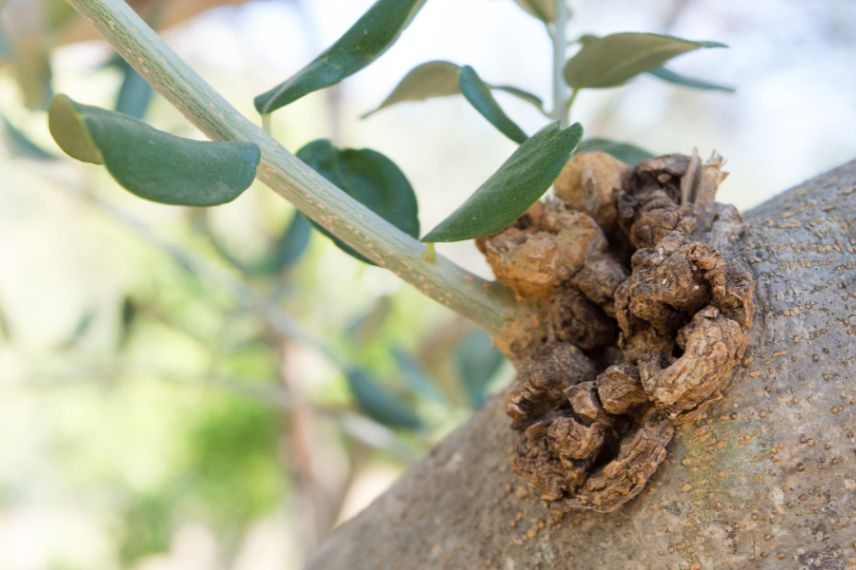 Olive canker uses wounds as entry points
Read also
Diseases and pests of the olive treeWhat are the signs and symptoms of olive canker?
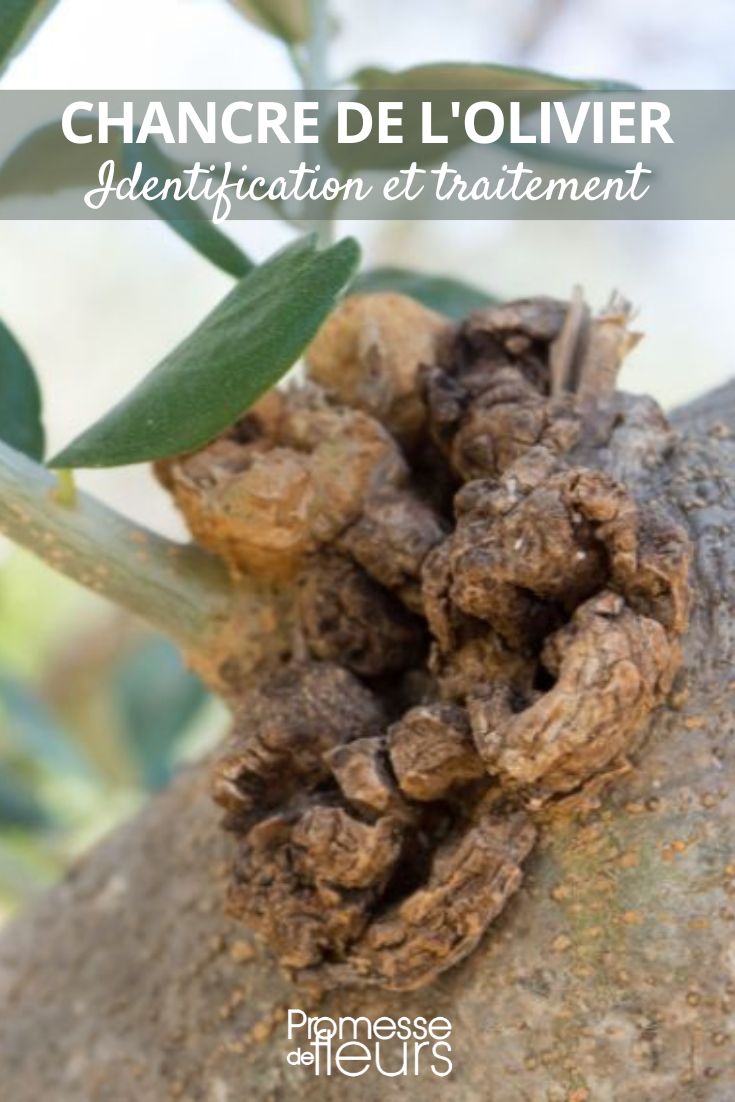
Warts, galls, ridges, tumours, swellings… No matter what they are called, the key is to be able to identify them. Indeed, the olive tree canker manifests itself by the development of outgrowths on secondary branches, or even on scaffold branches and the trunk when the olive tree is severely affected. But first symptoms appear mainly on the branches.
Brown at first, these cankers darken with time. They are triggered by a secretion of bacterial auxin that causes an abnormal multiplication of wood cells. An exudate, rich in bacteria, is secreted on the surface of the canker. By wind, by rain, and by pruning tools, these bacteria are disseminated elsewhere, onto neighbouring olive trees.
When established on the tree, Pseudomonas savastanoï can cause the wilting of branches and leaves, or even their deformation. The affected parts turn black, as the bacterium penetrates the tree’s tissues. If nothing is done, the tree’s vigour itself is at stake. This can have a substantial impact on olive production and the quality of the olives.
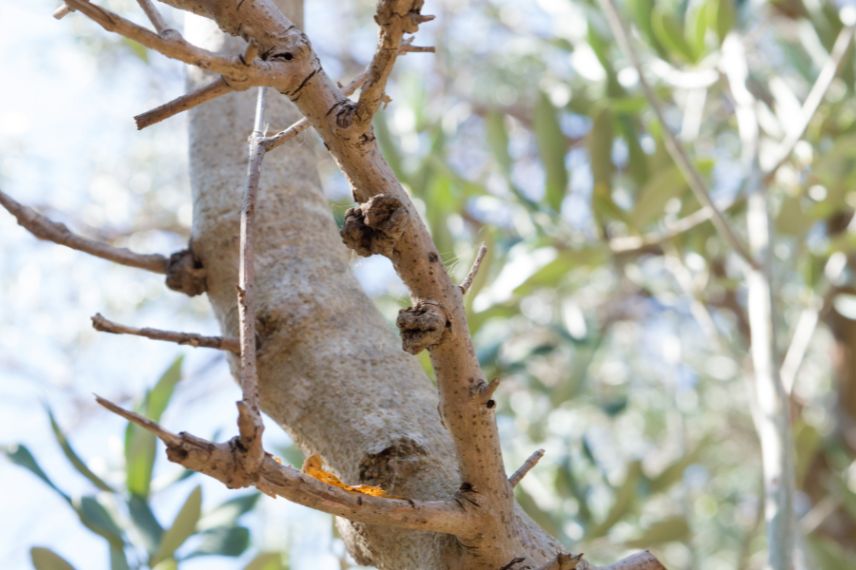
Olive tree canker is detectable thanks to the outgrowths on secondary branches, or even on scaffold branches
This bacterium is extremely difficult to eradicate completely. That is why it is essential to check olive trees carefully when buying. The slightest sign of outgrowths, however small, should prompt discarding the tree. It is, moreover, through the introduction of trees imported from Italy and Spain that bacteriosis spread in France, particularly in the southern départements.
How to treat?
There is only one real solution to treat bacteriosis: cut the affected branch or branches just above the canker.
As burning of green garden waste is prohibited, the best option is to take the waste to the nearest recycling centre.
They will be composted on a composting facility where the temperature is high enough to kill the bacterium. Obviously, it is essential to clean all cutting tools, pruning shears, loppers or mechanical tools, and then disinfect them with white vinegar or denatured alcohol, before and after the operation.
If the structural branches are affected, it is best to pare back. This involves removing the damaged bark back to healthy wood, provided that the cankers are detected early enough. This operation is carried out with a canker scraper. Again, it is essential to protect the other olive trees. That is why you must carefully collect the chips that have fallen to the ground, disinfect the wound with denatured alcohol, then apply a putty or a healing paste.
Read also
Planting olive treesIs prevention possible?
As treatment for olive tree canker is fairly drastic, it is best to prioritise preventive measures. Although not 100% effective, they greatly reduce the risk of infection and the spread of olive tree canker:
- Different pruning on olive trees should be carried out in dry and warm periods. It is therefore essential to keep an eye on the weather forecasts to choose the best day to carry out maintenance pruning or fruiting pruning.
- Before and after any pruning of an olive tree, it is absolutely essential to thoroughly clean and disinfect all pruning tools, pruning shear, branch cutter or lopper, or even the hacksaw or chainsaw. Remember gloves and boots if you need to climb the tree. Burning alcohol or white vinegar can be used.
- After pruning, each cut should be coated with a sealant to avoid open wounds.
- Carefully collect the pruned shoots and chips after each pruning operation. Ideally, take them to the recycling centre if in doubt.
- Soil work around the trees must be done in dry weather, as far from the trunk.
- Soil fertilisation should be normal, not excessive. Indeed, excess nitrogen can promote the establishment of the bacterium.
- Copper-based products such as the Bordeaux mixture can be effective in prevention. They should be applied fairly systematically after any hail or frost events, or after pruning or harvest.
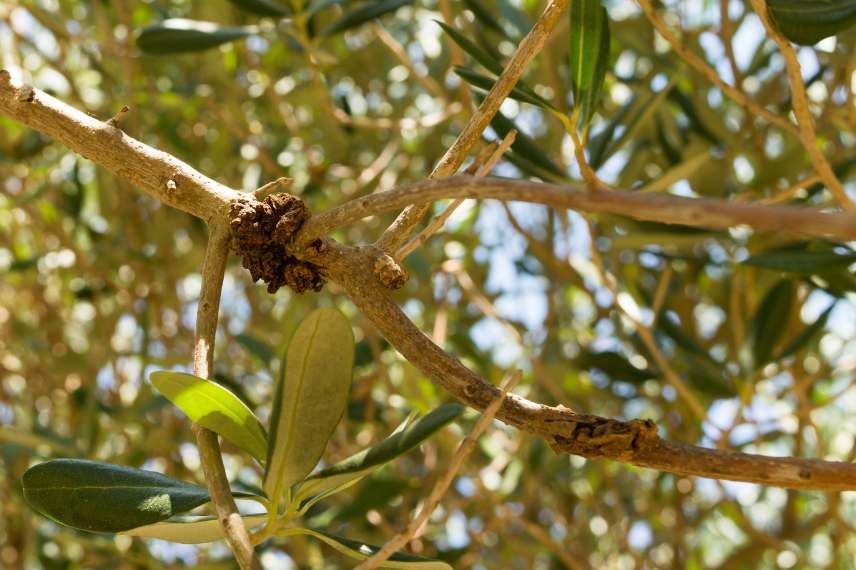
Pruning diseased branches is the only solution for treating olive tree canker
- Subscribe!
- Contents
Comments