





























Ornamental brambles
Our favourite species and varieties
Contents
Vigorous and hardy, ornamental brambles (Rubus) have much to offer. Belonging to the rose family, just like fruiting brambles, they are primarily grown for their decorative qualities. Each species or variety has an interesting characteristic: plant habit, flowering, foliage, or fruiting. For example, Rubus thibetanus ‘Silver Fern’ features white stems and silver-green fern-like foliage. The Rubus odoratus is known for its excellent floribundity. The very vigorous Rubus henryi var. bambusarum displays beautiful palmate foliage. Others develop creeping stems, such as the evergreen Rubus tricolor ‘Betty Ashburner’ or stunning bramble flowers like Rubus spectabilis ‘Olympic Double’.
Very easy to grow, ornamental rubus can be used in a free hedge, as groundcover to prevent the growth of weeds or as standalone plants. Melliferous and nectariferous, they attract beneficial insects as well as birds that enjoy their fruits. Note that most of these ornamental plants are thornless. Discover more about our selection of ornamental brambles for a garden that promotes biodiversity!
⇒ To learn more, check out our guide Rubus or Ornamental Bramble: Choosing and Caring for It

Rubus odoratus
For abundant flowering, focus on Rubus odoratus, also known as Canadian raspberry or fragrant bramble. This wild bush is particularly floriferous. From June to August, its fragrant and nectariferous flowers bloom in bouquets of flowers in colours ranging from dark pink to purplish pink or even white to rosy white. Its deciduous foliage resembles that of the vine: its large lobed, dentate, crinkled, and downy leaves release a liquorice scent when rubbed. A beautiful emerald green for much of the year, they turn yellow in autumn. Its flattened fruits, a raspberry red, are edible but not very juicy or flavoursome. It is best to consume them as jam, but be aware that they contain many pips. You can also leave them on the bushes: birds love them! Erect then trailing, the fragrant bramble grows up to 1.5 m high and spreads just as much in width through its rootstock. Note that the stems of the Canadian raspberry are not thorny. They are also decorative in winter when the bush is devoid of foliage: from a mahogany to orange brown, they exfoliate with age. Very hardy, Rubus odoratus prefers to be grown in partial shade in non-calcareous soil. Vigorous, it fits perfectly into a free hedge in country-style gardens.
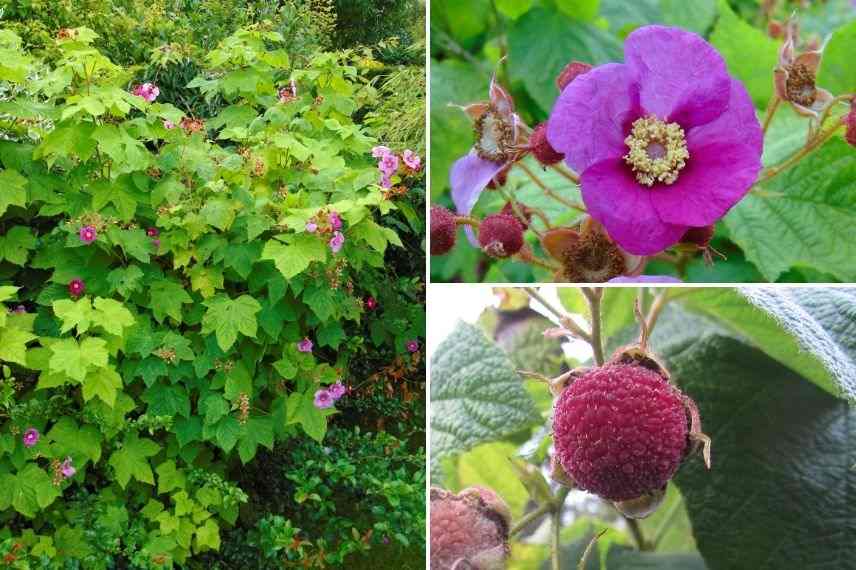
Rubus odoratus: foliage, flower, and fruit (photo Wikipedia)
Rubus tricolor
The Rubus tricolor (or tricolour bramble) is renowned for its creeping habit. This excellent groundcover, approximately 60 cm high, can spread up to 4 metres wide thanks to its running vegetation. It is ideal for covering large areas. From June to July, it produces white flowers gathered in clusters, which are unscented and rather discreet. This is followed by some orange-red fruits appearing in August-September. The creeping tricolour bramble is evergreen. Its dark green foliage, glossy and pilous on the veins, shows a white and downy underside. In autumn, the leaves turn a purplish red and remain in place during winter. Just like Rubus odoratus, the shoots (suckers from the stump) are thornless. They are simply covered in reddish hairs. The Rubus tricolor prefers well-drained soils rich in humus that do not dry out too much. You can use it in partial shade, in a woodland setting, or to stabilise a bank, for example. Also worth mentioning is the cultivar Rubus tricolor ‘Betty Ashburner’, which is very spreading, dense, smaller than the typical species, and therefore less invasive.
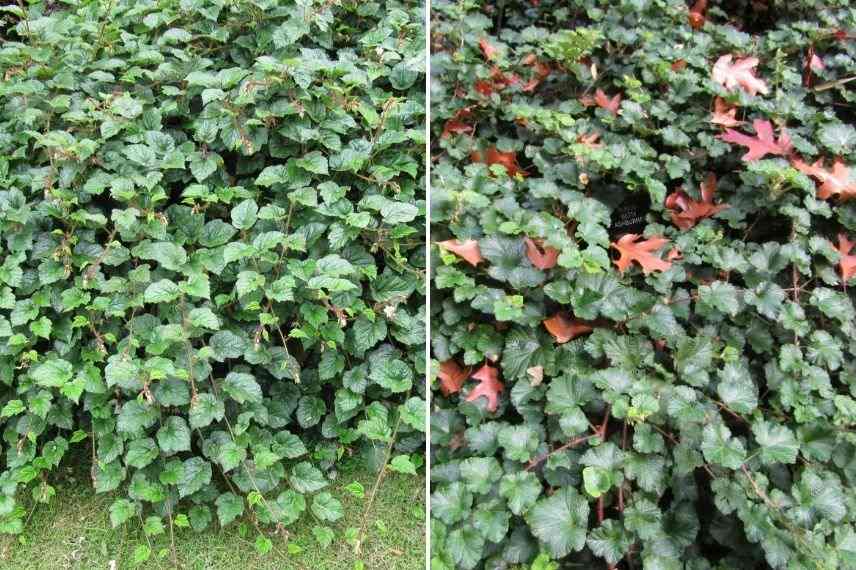
Rubus tricolor and Rubus tricolor ‘Betty Ashburner’ (photos Leonara Enking – Flickr)
Rubus tridel ‘Benenden’
Endowed with excellent hardiness, the Rubus (x) tridel ‘Benenden’ is part of the ornamental brambles with large flowers. In May-June, its eglantine flowers, single, can measure between 5 and 7 cm in diameter! Displaying pure white with a heart of golden stamens, they are beautifully set off against dark green, finely cut, and crinkled deciduous foliage. The ‘Benenden’ bramble forms a bushy silhouette of 2.50 metres in all directions at maturity, with erect then arching stems. Flowering occurs on the inermous (thornless) branches of the previous year. We recommend pruning this ornamental bramble immediately after the first flowering to encourage the development of young shoots that will flower the following year. Unlike the previously mentioned brambles, this variety of ornamental bramble does not bear fruit after flowering. A British horticultural selection from the 1950s awarded an Award of Garden Merit, Rubus tridel ‘Benenden’ can be paired with pastel-flowering plants or those with silver foliage, for example, in a romantic garden.
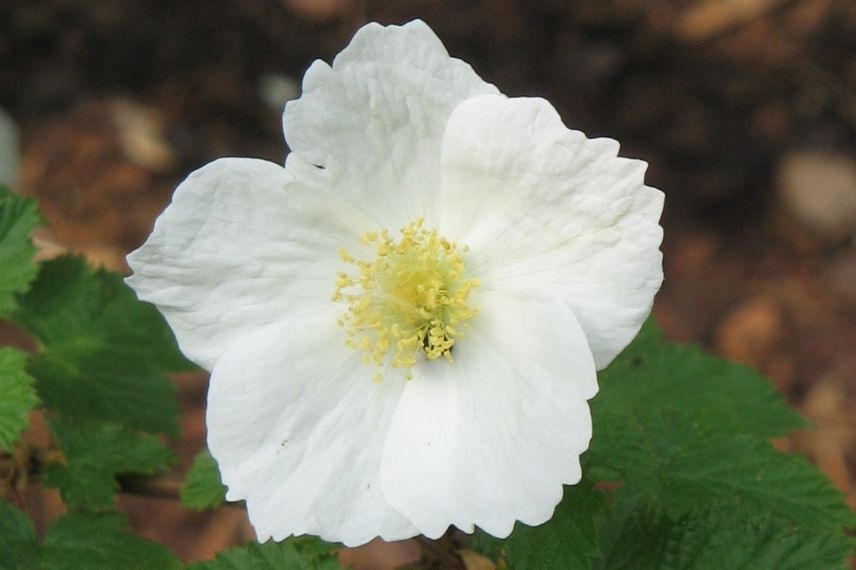
Flower of Rubus tridel ‘Benenden’ (photo Wikipedia)
Read also
How to clear an area of brambles?Rubus thibetanus ‘Silver Fern’
The Rubus thibetanus ‘Silver Fern’ is one of the most original ornamental brambles. Firstly, this bush astonishes us with its long silver-green fern-like leaves, with a white pubescent underside and finely marginate purple edges. Then, from June to July, its summer flowering delights us with its deep pink blooms. After the flowers, edible black fruits appear in September. Finally, as winter arrives and this ‘Silver Fern’ bramble has shed all its leaves, the highly decorative stems put on a show. This large bush has a slightly weeping habit and reveals whitish, downy stems with red thorns. Perfect for a winter garden! This bushy bramble quickly reaches 2 metres in all directions at maturity. The Rubus thibetanus ‘Silver Fern’ is native to Tibet, hence the species name “thibetanus”. Very hardy, plant it in deep, loose soil, in a non-scorching position. This species suckers profusely, so reserve it for larger spaces, or carry out regular pruning to contain this bramble year after year.
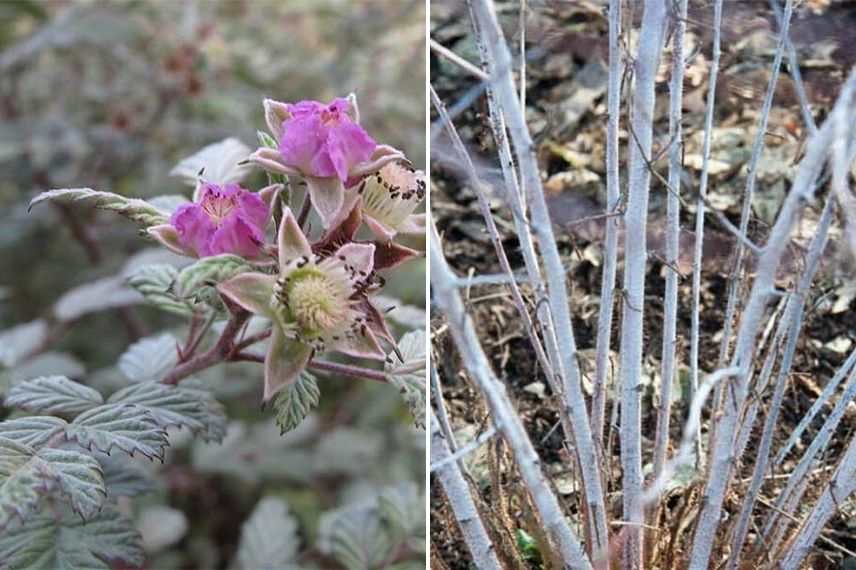
Leaves, flowers, and stems of the Rubus thibetanus ‘Silver Fern’
Rubus henryi bambusarum
Henry’s bramble (Rubus henryi var. bambusarum) stands out with its foliage that is completely different from typical brambles, resembling that of certain bamboos. Indeed, its leaves have a regularly palmate shape that adds to the charm of this plant. The lobes measure 6 to 12 cm and are particularly elongated and narrow. Flowering occurs in late spring and early summer: the small star-shaped pink-red flowers are gathered in long clusters. These then give rise to edible black fruits that ripen in July-August. The Rubus henryi bambusarum is a thorny bramble with significant growth, reaching up to 6 m in height and 2 m in spread. Its lush and evergreen growth works well on a support as a climbing plant (trellis, pergola, tree, fencing), but also as a groundcover on sloped terrain. Fast-growing, this ornamental bramble can, however, be invasive. It is therefore important to manage it with regular pruning.
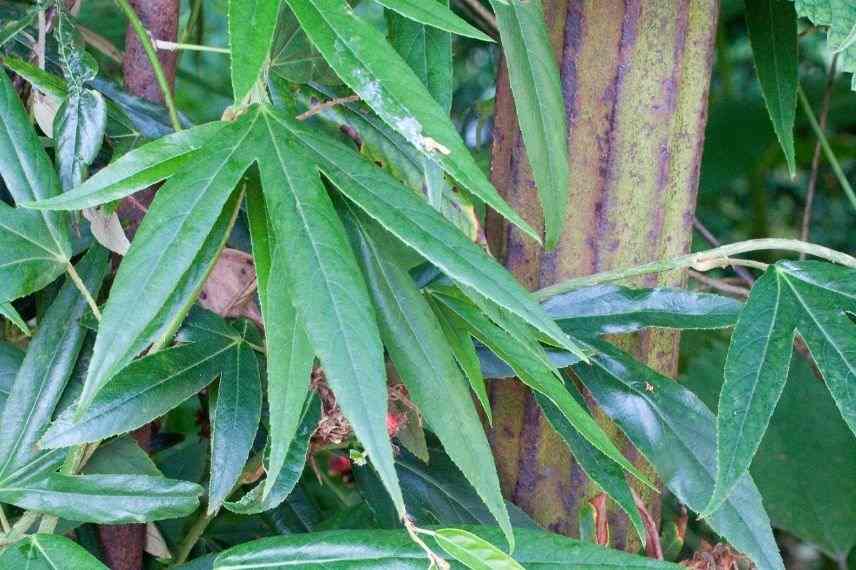
Rubus henryi bambusarum (photo Wikipedia)
Rubus spectabilis ‘Olympic Double’
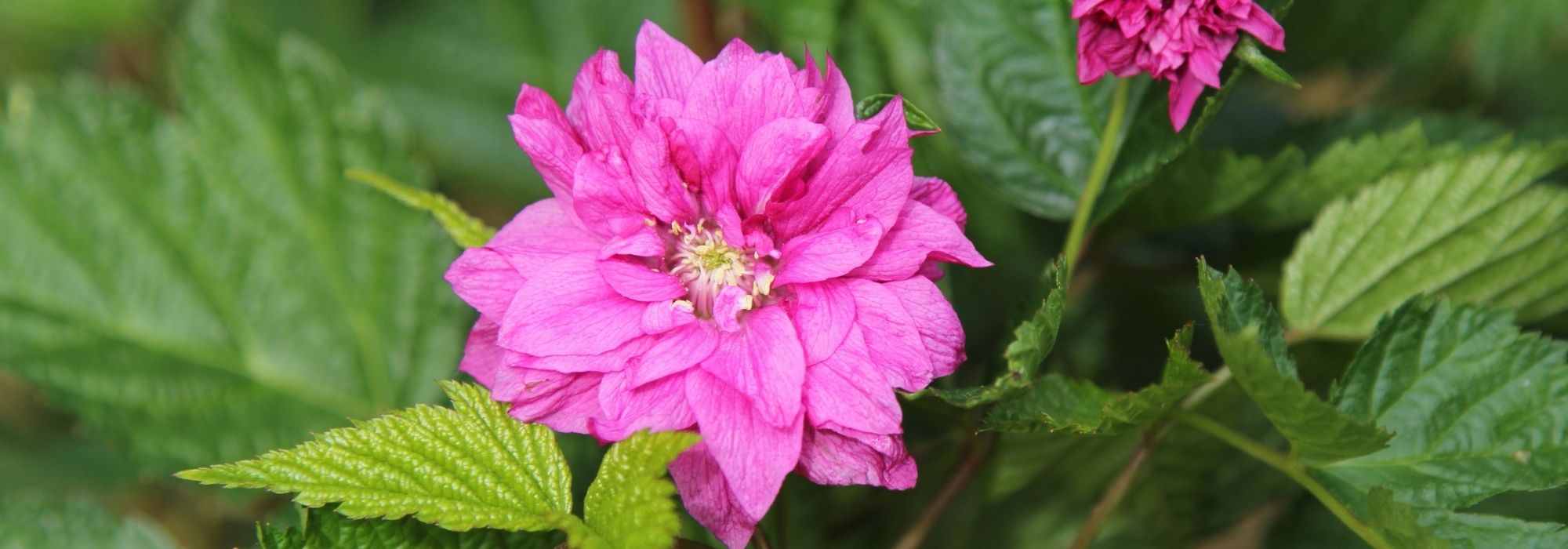
The Rubus spectabilis ‘Olympic Double’ boasts a magnificent flowering! The flowers of this ornamental bramble are of rare beauty. In early spring (April-May), this bush produces stunning double flowers measuring 3 to 5 cm in diameter, tinged with a bright violet pink! These remarkable inflorescences, resembling roses, pair beautifully with the soft green, dentate, and wrinkled foliage. They are only missing a pleasant fragrance. Juicy fruits emerge after flowering in the form of large, edible yellow-orange raspberries. Before the winter period, this ornamental bramble adorns itself with yellow foliage that will later disappear. Very hardy and suckering, the Rubus spectabilis ‘Olympic Double’ has a rapid growth rate and reaches 1.50 m in all directions at maturity. Feel free to remove thorny stems if this variety becomes invasive.
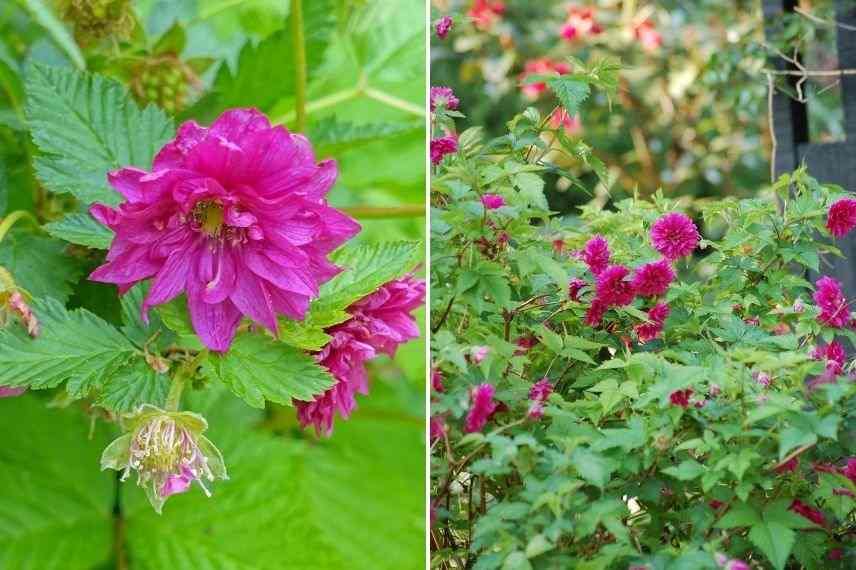
Rubus spectabilis ‘Olympic Double’ (photo by Daderot – Wikimedia)
- Subscribe!
- Contents
Comments