





























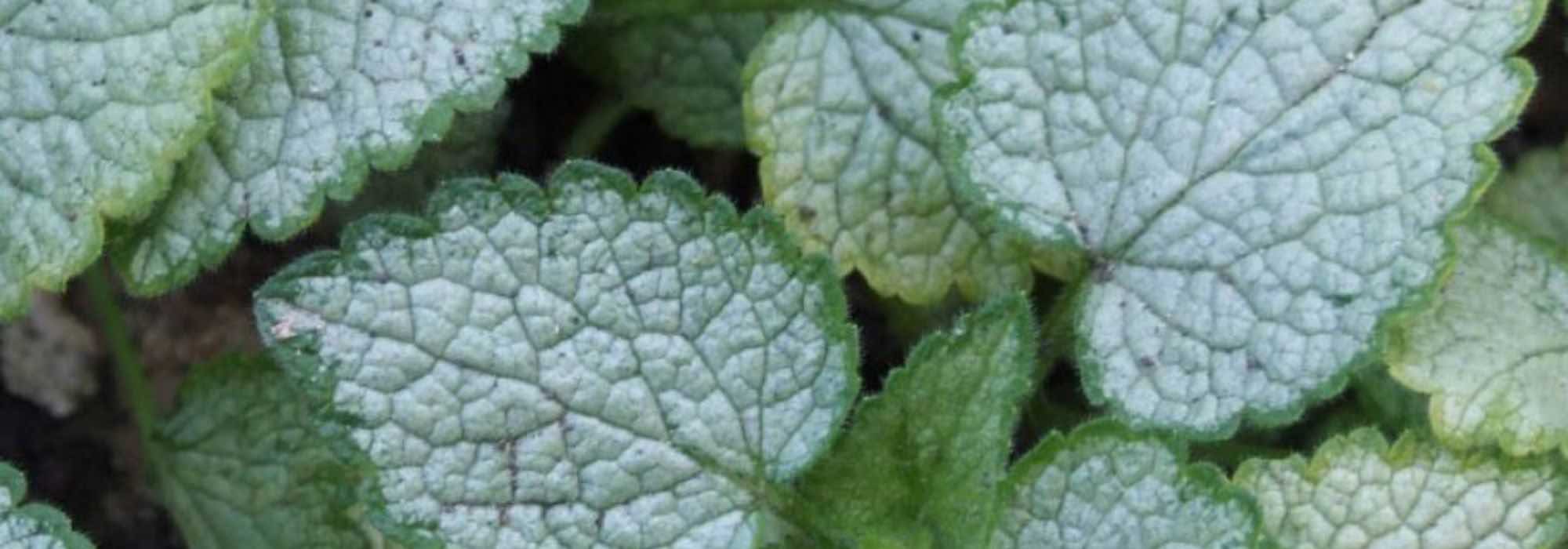
Pairing silvery foliage in the garden: our tips
How to use silvery foliage to create a unique garden
Contents
Silvery foliage, with its subtle sheen and natural clarity, offers a unique visual dimension to any garden. From the majestic bush to the discreet perennial, these plants are essential assets for creating captivating outdoor spaces. In this article, we will explore the various ways to incorporate these gems with metallic reflections into your garden, providing you with examples of plants and ideas for combinations to create captivating themed displays.

Silvery, with subtle nuances
Subtle shades
Silvery foliage is not limited to a single hue; it offers a spectrum of nuances, each with its own character and visual impact in the garden.
- Bright silvery-grey: this shade, almost metallic, is beautifully represented by plants such as the Artemisia ludoviciana ‘Silver Queen’. Its leaves of a bright grey capture and reflect the light.
- Subtle blue-silver: this is a shade that can be found in Festuca glauca, which forms clumps of fine blue-silver leaves bringing visual and graphic freshness, ideal for modern gardens or minimalist-style planting schemes. Evergreen, this grass plays its part throughout the year.
- Original silvery-green: plants such as Lavandula angustifolia ‘Silbermöwe’ combine the warmth of green with the subtle gleam of silver, creating a soothing visual harmony. This shade is perfect for gardeners looking to complement the vibrancy of traditional greens with a touch of originality. Its summer flowering white adds to the scene’s brightness.
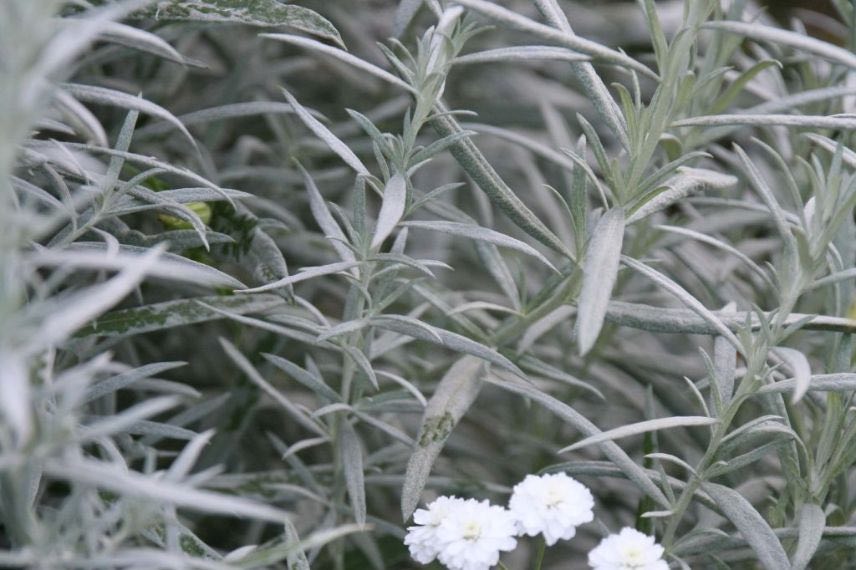
Artemisia ludoviciana ‘Silver Queen’
Read also
5 trees with grey or silvery foliageVisual appearance and its role in the garden
Each nuance of silver foliage adds a visual touch, shaping the mood and style of the garden:
- Light and brightness: plants such as the Brunnera macrophylla ‘Looking Glass’, with their large heart-shaped leaves in a luminous silvery-grey that makes the plant look as if frosted, are perfect for adding vitality and interest where natural light is in short supply.
- Contrast and depth: silver foliage, such as that of the Elaeagnus ebbingei, offers a striking contrast when placed beside plants with vibrant colours or with colourful foliage, especially if the latter are dark. They are ideal for creating focal points or adding depth to a border bed while making it appear visually larger.
- Subtlety and softness: the shades of silvery blue and silvery green, such as those of the Perovskia ‘Blue Spire’ or the Eucalyptus gunnii ‘Blaue Liebe’, bring a touch of gentleness and subtlety, even in a small space. Such plants are ideal for gardeners seeking to create a serene and relaxing atmosphere.
- Guiding the eye: silver foliage plants can guide the eye through the garden. Used along paths or borders, they accompany the walker and impart a sense of unity to the whole.
Additionally, silver foliage can play a crucial role in creating focal points in the garden, catching the eye and structuring the space. Plants such as the ornamental pear or an Eucalyptus provide verticality and structure. Their silvery foliage naturally draws the eye, serving as a central point around which a border bed is organised or as a backdrop for other colourful plants.
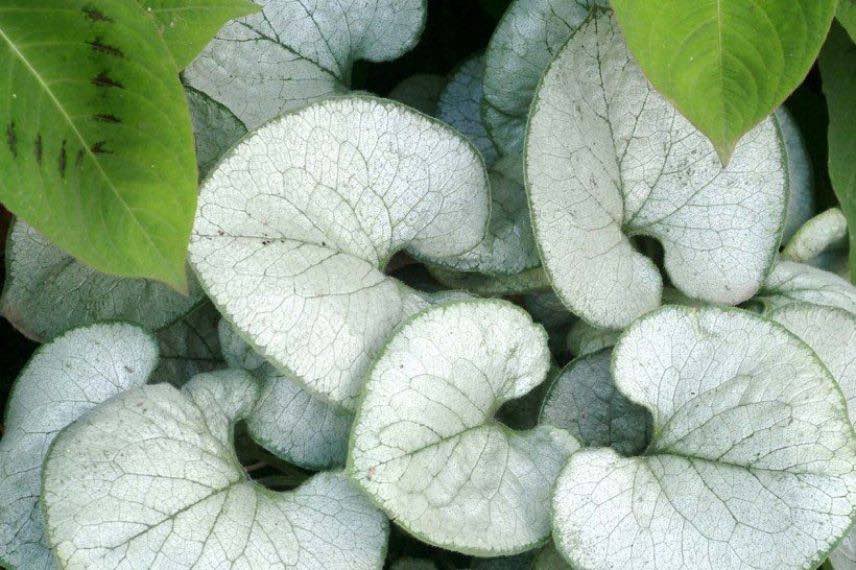
Brunnera macrophylla ‘Looking Glass’: the most silvery of the brunneras
Pairing silvery foliage
Colour associations
The pairing of silvery foliage with other foliage colours or flowering can transform an ordinary garden into a living tableau of contrasts and harmonies. Here are a few examples of successful combinations:
- With green: The pairing of Dryopteris filix-mas with foliage that is initially orange and then green, and with Pulmonaria ‘Margery Fish’, creates a textural and colour contrast that relies as much on the texture of the leaves as on their hues. Each plant then acts as a foil to its neighbour, and they complement each other elegantly.
- With purple: The mix of a Heuchera ‘Silver Gumdrop’ and another with purple foliage such as Heuchera ‘Plum Pudding’ creates a dramatic effect, especially if plants with vivid green foliage are interspersed in the scene. Each plant stands out even more thanks to this contrast. This combination is ideal for creating a vibrant display.
- With the golden: A carpet of Cerastium biebersteinii from which tufts of Deschampsia ‘Tatra Gold’ emerge, creates a captivating play of light, bringing simplicity and refinement.
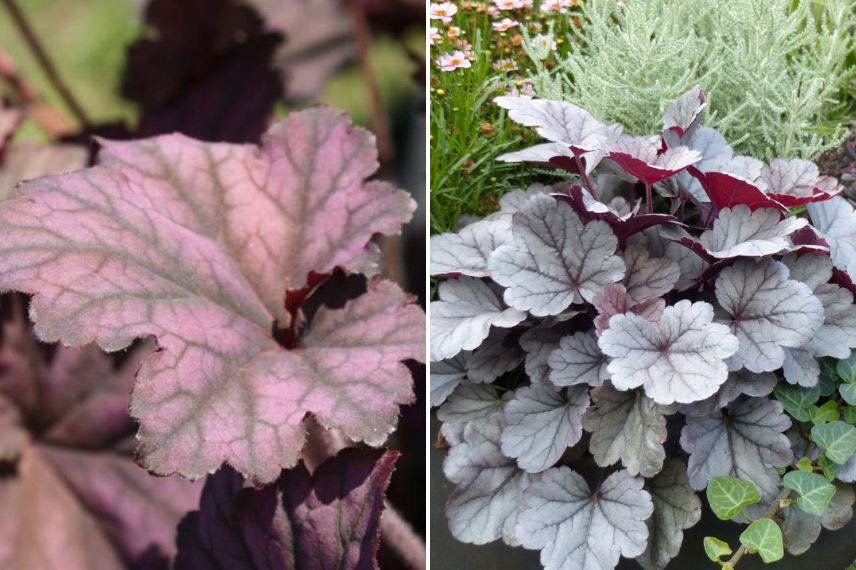
Colour pairing between two Heucheras: ‘Plum Pudding’ and ‘Silver Gumdrop’
Silvery as a creative tool
Silvery colour can, depending on the selected plants and the chosen combinations, create an atmosphere or reinforce a theme.
- Mediterranean scene: In full sun, pair the olive tree with lavender and agave for a garden with a Mediterranean feel. The olive tree provides structure and height, lavender offers colour and scent, while the agave imposes its distinctive graphic form, creating a space that evokes the sun-drenched landscapes of the south.
- Hedge in contrasts: Among the Elaeagnus, Buddleias, Sea buckthorns or Willows, for example, select those with the silkiest foliage and intersperse them among other hedge shrubs with foliage of another colour or with delightful flowering. The colour play thus offered through foliage and flowers adds dynamism to the whole. However, limit the number of species to avoid saturating the eye. It is better sometimes to create repetitions that appear random rather than multiply very disparate combinations.
- Silvery Zen Garden: For a calming garden, pair silvery-groundcover with metallic reflected tones such as Lamium ‘Pink Pewter’ with Heucheras, ferns and Hakonechloa, emerging alongside mineral elements (rocks, lanterns…). If there are water features completing the scene (tsukubai, basin, fountain…), your landscaping will evoke the tranquillity and serenity of the sun-drenched gardens of the land of the rising sun.
- Cottage garden: Create a cottage-garden-style perennial bed by planting silvery-leaved perennials such as Stachys byzantina, which then serve as a backdrop for roses (English, of course!), peonies, delphiniums and other perennials in this spirit. This combination offers a charming blend of textures and colours, evoking the abundance and diversity of traditional English gardens, with a natural and romantic feel.
Harmonising silvery foliage and flowering
Floral combinations
Incorporating silvery foliage with flowering in different colours can create gardens of exceptional beauty and visual interest. Here are some ideas for harmoniously pairing these elements:
- With flowers in vibrant colours: plants with silvery foliage pair perfectly with bright-coloured flowers, tempering them and tying them together, preventing saturation. They can also help to complete a shade family to give it extra depth and to highlight each hue. A pairing of silvery foliage with blue delphiniums and pink roses, for example, takes on a whole new dimension and also conveys an atmosphere of softness and romance.
- To enhance brilliance in a white garden: a successful monochrome garden requires a certain amount of expertise. If this theme is well utilised, it can create a tranquil and refined space, where the silvery colour highlights the purity of the white flowering. Artemisia ‘Powis Castle’, paired with white flowers such as Japanese Anemones ‘Honorine Jobert’ and Agapanthus ‘Glacier Stream’, can help you take your first steps in this style.
→ It is important to choose plants whose flowering periods complement one another. For example, pair silvery foliage plants with spring bulbs, whose succession will be carried by summer perennials, then autumn, and even later by some that bloom in winter.
Tips for successful combinations
- Colour balance: ensure you balance bright colours of flowers and foliage with marked hues against the calm of silvery foliage to avoid visual overload, unless it is a deliberate design choice.
- Texture play: combine silvery-leaved plants with fine texture, such as Perovskia, with plants having broader leaves or flowers for an interesting texture contrast. When placed together, two silvery-leaved plants can sit beside each other without creating a sense of monotony.
- Harmony of shapes: play with shapes and growth habits to create a visually harmonious garden. For example, the rounded shapes of lavender bushes can be complemented by tall vertical flowering perennials.
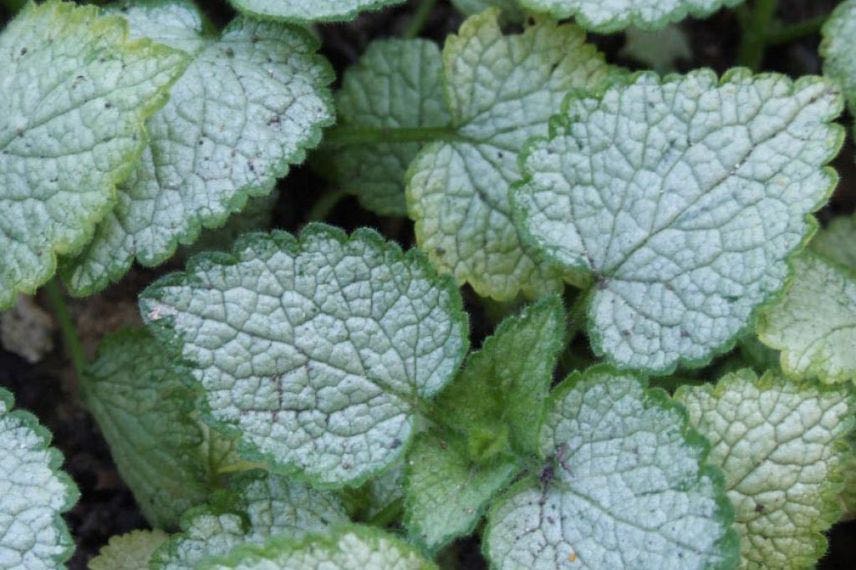
Lamium ‘Pink Pewter’
Read also
6 silver-leaved heucherasAdvantages and limitations of silvery foliage
Advantages of silver foliage
Silver foliage offers numerous advantages to the garden, both aesthetically and practically.
- Drought tolerance: many silver-foliaged plants, such as lavender, are well-suited to dry conditions. Their ability to thrive with little water makes them ideal for water-wise gardens or drought-prone regions. Others, however, are better suited to cool, moist soils.
- Visual appeal: evergreen silver foliage provides year-round visual interest. Unlike short-lived flowering, they maintain visual interest throughout the seasons, bringing light and brightness even in winter.
- Diversity of species: there is a wide variety of silver-foliaged plants among trees, shrubs, perennials and grasses. This diversity allows for great creativity in garden design.
Limitations of silver foliage
Despite their many advantages, silver foliage also presents certain limitations.
- Climate adaptability: while many silver-foliaged plants are drought-tolerant, they may not be suited to all climates. It is important to choose species that can thrive in your area.
- Risk of dominance: if not balanced with other types of plants, silver-foliaged species can visually dominate the garden. It is therefore crucial to pair them wisely with other colours and textures.
Silver foliage is a versatile gem in the gardening world, offering a multitude of options to enhance and energise your garden. Whether you wish to create a themed garden, a contrasting space or simply add a splash of brightness, these plants offer a limitless palette of possibilities. Do not hesitate to explore their potential to create a garden that reflects your personal style.
- Subscribe!
- Contents
Comments