





























Parsnips: How to choose the best variety?
Our criteria-based tips to choose parsnips to sow
Contents
Highly prized in England, parsnip (Pastinaca sativa) has long been considered a forgotten vegetable. The rise of top chefs has brought it back into fashion, both on plates and in the garden. Its flavour is quite distinctive, with a hint of hazelnut. It is a root vegetable, known since the Middle Ages, which cooks faster than carrots and potatoes, and can be prepared as chips, mashed, in soup, pan-fried, steamed, or roasted in the oven…
In the vegetable garden, parsnips are relatively easy to grow once sowing is past. Indeed, seed germination can be capricious, especially in regions where the climate is dry, as parsnips prefer cool, slightly heavy, deep soils and fairly mild, damp climates.
Before you start growing it, you will need to choose the parsnip variety or varieties to sow. Discover our selection of the best parsnip varieties based on criteria related to flavour quality, productivity or disease resistance.
For more information:Parsnips: sowing, growing, harvest, storage.

According to the flavour of the roots
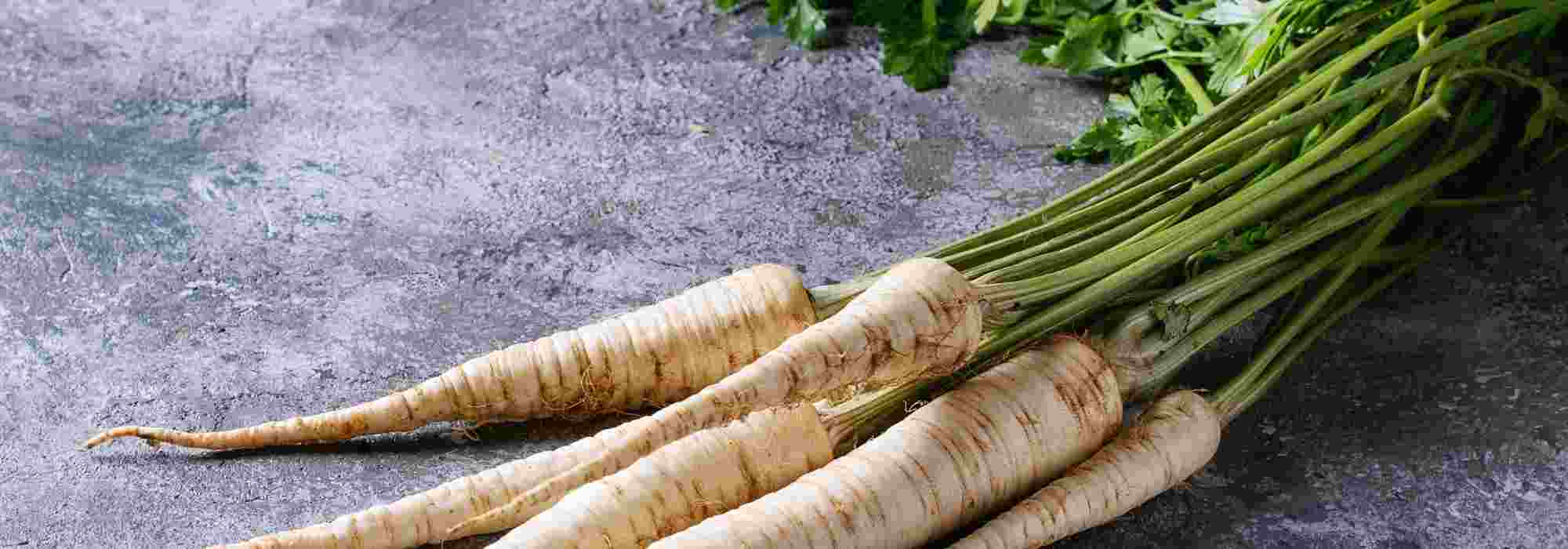
Parsnip is a winter root vegetable, in the same family as carrot, but with a cream-coloured skin and a longer, more irregular shape. As for its flavour, very subtle, it lies somewhere between carrot, turnip and Jerusalem artichoke, with a slight hazelnut note. Parsnip roots are also mildly sweet, sometimes a touch spicy.
Depending on the varieties, the flavour of this vegetable, long regarded as old-fashioned and forgotten, is more or less distinctive, more or less pronounced.
Thus, to avoid being totally bewildered, and to appreciate parsnip for what it is, it is best to start by sowing a variety with a mild, fragrant flavour. And in this regard, the parsnip Tender and True is the most suitable variety. This is an old, traditional nineteenth-century variety, of English origin, with long conical, white and fairly regular roots, rather tapering, renowned for its excellent flavour and its exquisitely delicate taste. With a smooth skin, these roots, 25–30 cm long, conceal a very subtle flavour. The aromatic flesh of this parsnip is delicious when prepared in stews or soups.
If you have already tasted parsnip, you could opt for a variety with a slightly more pronounced flavour. We recommend the Guernsey Half-long Parsnip, a must-have variety for parsnip lovers. This old variety, which yields large white, very fleshy roots that swell at the crown, benefits from a highly fragrant flavour, reminiscent of carrot and sweet potato. It is excellent mashed, fried as chips, in soups, or simply steamed.
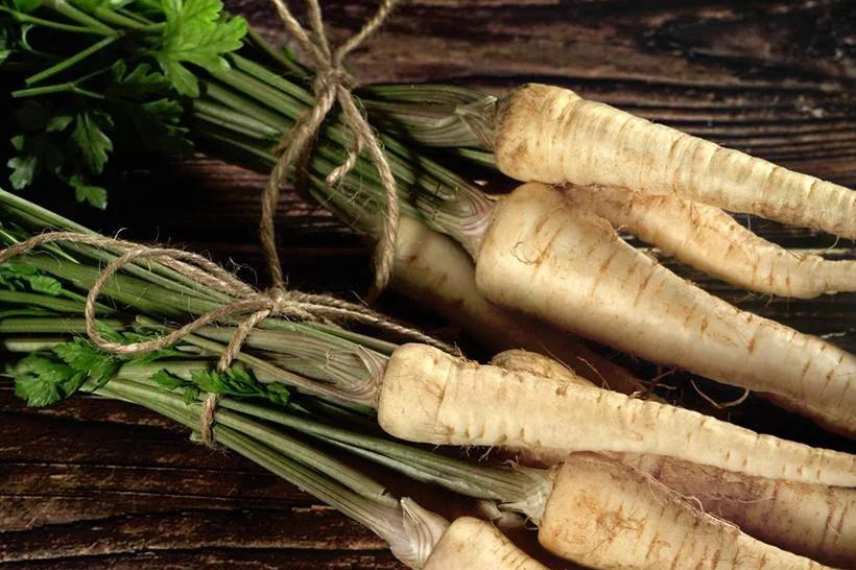
The Guernsey Half-long Parsnip is a reliable flavour choice
Those who truly appreciate the distinct character of parsnip may be tempted by the variety Turga. Indeed, the white and smooth roots, 25–30 cm long, are rich in a sweet flavour with a small anise aroma! Even the foliage can be eaten raw in salads when young, and in soup when older. This Hungarian-origin variety is also very productive.
According to yield
We can also choose a variety of parsnips for productivity. In terms of profitability, the Guernsey Half-Long Parsnip remains a safe bet. But it is quite possible to select another variety, notably among hybrids. Thus, the Gladiator F1 variety Gladiator F1 also proves highly productive. Its roots, averaging 27 cm in length, are regular and well-shaped. The roots of this vigorous half-long variety are also white, very regular and aesthetically pleasing, making it a variety much favoured by professional market gardeners.
When it comes to productivity, another variety stands out. It is the White Gem, which has the characteristic of producing roots that are well-formed, slender, with smooth skin, of a very bright and pure white. Overall, its roots are of better appearance than those of the Guernsey Half-Long Parsnip variety. The yield of this variety is high and it is also capable of supplying half-long roots of substantial and homogeneous calibre. Ranging from 20 to 30 cm, these parsnips have a fine flavour and good eating quality. This variety also offers vigorous foliage, with a lovely bright green colour. It is particularly suited to heavy soils, and it is recognised for being resistant to bolting.
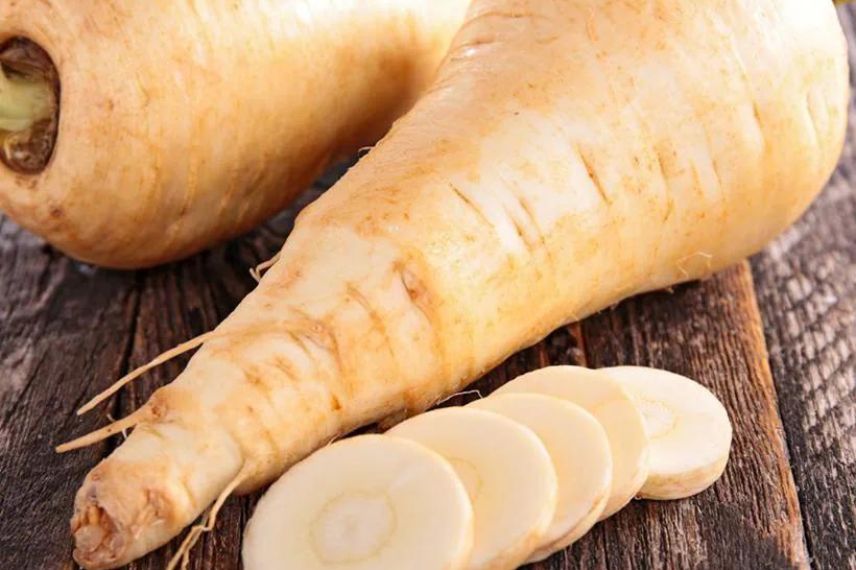
The White Gem variety offers roots of a very good calibre
According to the harvest period
Overall, between sowing and the first parsnip harvests, it takes between 4 and 5 months. It must be said that parsnip seeds take quite a long time to germinate. It’s not unusual to wait two to three, or even four weeks before seeing the first signs of growth! Provided the soil remains consistently moist, as parsnips will not tolerate dry soils at all. Then, if the soil is cool enough, the roots will develop quite readily. For reference, parsnip sowing is done directly into open ground from early March to the end of May. And in regions with a mild climate, you can also try another sowing in September.
If you want to speed things up a little, you’ll need to select an early variety. If the parsnip variety ‘Rond hâtif’, a precocious variety that offers short, spindle-shaped roots, does not hide its qualities, the variety ‘Demi-Long de Guernesey’ can also hold its own very well at this level. Indeed, its roots can be harvested 90 days after sowing.
Depending on its disease resistance
Parsnips are susceptible to the same diseases as carrots, to varying degrees. There are first diseases that affect the foliage (Alternaria leaf spot, powdery mildew…) then those that mainly affect the roots (Fusarium root rot, collar rot, root rot, black canker…).
Thus, beyond preventive measures, it is best to choose varieties known for their disease resistance. Thus, the variety Hablange Weisse shows particular resistance to collar rot, as does the hybrid variety ‘Gladiator’.
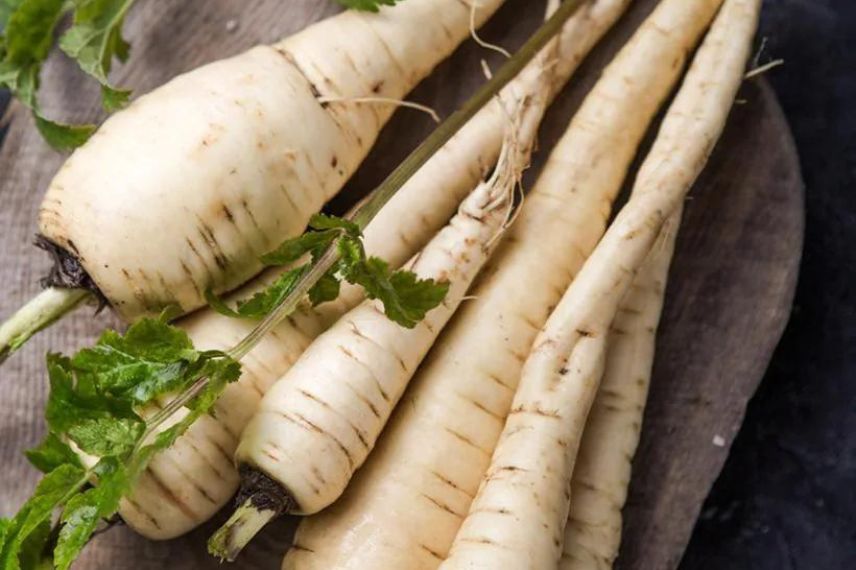
The parsnip variety ‘Tender and True’ shows little susceptibility to Phoma canker
Parsnips are also highly susceptible to Phoma canker, which manifests as a black, firm rot in the upper part of the roots. The leaves and the petiole are also stained beige to pale brown. Two varieties are recognised as being little prone to parsnip canker: these are ‘Tender and True’ and ‘White Gem’.
- Subscribe!
- Contents

Comments