


Phormium diseases and parasites
Identification, prevention and natural remedies to treat New Zealand flax
Contents
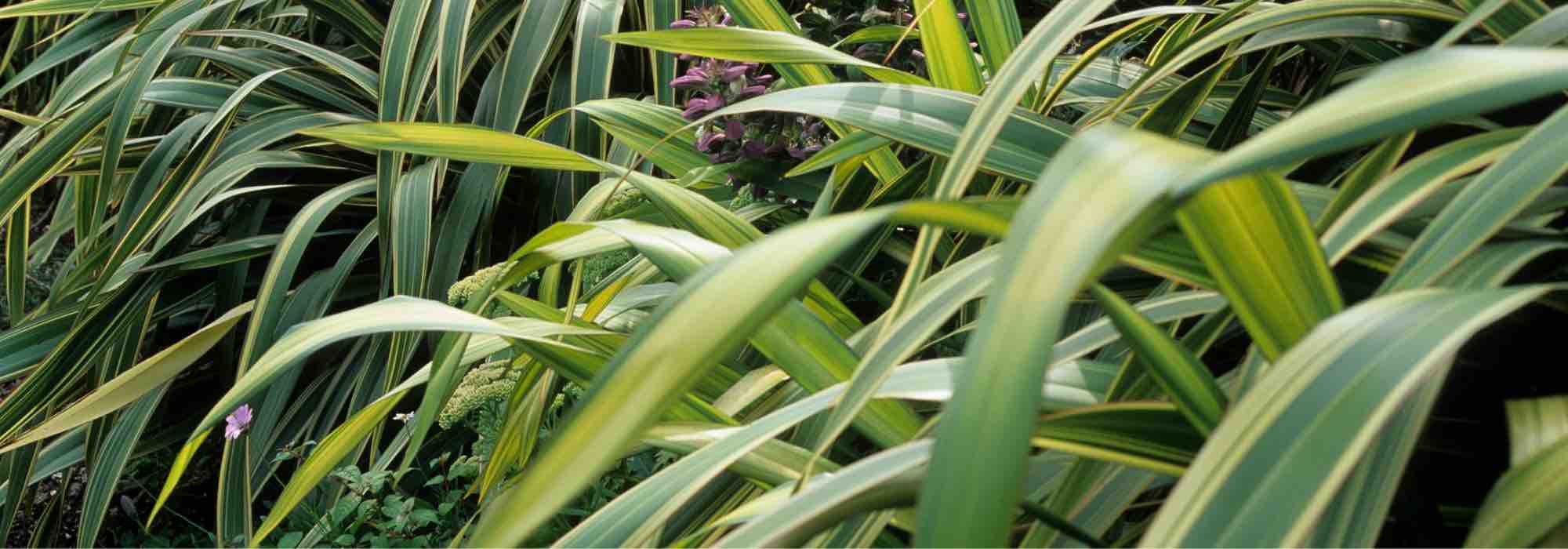
Phormium or New Zealand flax is a perennial plant valued for its evergreen, architectural foliage and sometimes very colourful appearance. A sun-loving plant for mild climates (hardiness to -8°C), it is an ideal candidate for coastal gardens, but it can also be grown in pots in cooler regions.
This easy-care plant requires little maintenance. Quite hardy, it is not among the plants most susceptible to parasitic pests and diseases, but it can still experience a few cultivation issues. Let’s see how to prevent risks and choose effective, yet natural, treatments to keep Phormiums healthy.
For everything you need to know about Phormium cultivation, discover our complete dossier: Phormium, New Zealand flax: planting, pruning and maintenance.

Mealybugs
Description and symptoms
Mealybugs are among the most widespread parasites in the garden and indoors. They are small piercing-sucking insects, like aphids, that feed on plant sap. They are oval in shape, with a cottony or waxy appearance and covered in white filaments.
Their presence is easy to recognise: the plant becomes coated with a white cottony mass, especially at the base of the leaves. The crown is in fact quite tight there, which provides a confined environment preferred by mealybugs. The presence of ants can also alert you: like with aphids, they like to rear mealybugs to harvest their honeydew to feed on. In return, they will protect them from potential predators, in a perfect example of mutualism.
Mealybugs contribute to weakening the plant: they slow its growth and discolour the lovely ornamental foliage of these plants. Most notably, they produce honeydew which can promote the development of diseases, such as sooty mould. It is a fungal disease identifiable by the sticky black deposit it generates, reminiscent of soot. This cryptogamic disease impacts the plant’s photosynthesis and can even cause its decline.
The young Phormium plants are most vulnerable to mealybug attacks.
Prevention
Prevention starts with regular monitoring of plants. The sooner pests and diseases are detected, the easier it will be to eliminate them before an infestation.
Also provide cultivation conditions suitable for your Phormium, so that it is naturally more resistant to pests and diseases. For reference, this perennial enjoys sunny exposures, light soils, and must be well-drained to avoid any excess water. New Zealand flax likes soils fairly rich in organic matter, but beware of nitrogen excesses. They tend to make the foliage more fragile and more appetising to piercing-sucking insects.
Mealybugs prefer confined, fairly warm and humid atmospheres. If you grow your Phormium in a pot, in a greenhouse or conservatory, remember to ventilate regularly and move it outdoors on fine days.
In the garden, foster natural balance and the presence of predators (lacewing larvae, ladybirds…). To do so, ban the use of chemical products, grow melliferous flowers, leave a few fallow areas, install insect hotels, etc.
Natural treatments
If the presence of mealybugs is spotted early enough, it is possible to simply remove them with a jet of water. You can also use a piece of cotton, tissue or cloth dampened with soapy water and remove the pests manually. Then rinse the foliage.
In case of mealybug infestation, you can use a homemade natural insecticide based on black soap. Always choose a product containing 100% pure black soap.
- Dissolve one tablespoon of black soap in 1 L of warm water.
- Pour into a spray bottle.
- Once the mixture is at room temperature, shake, then spray onto affected areas, away from sunlight (early or late in the day).
- Reapply if necessary after about ten days.
Note that this insecticide, even natural, can impact biodiversity since it is not selective. Other insects, including beneficial ones, can indeed be affected. So do not hesitate to check their absence before treating.
As always, we advise against using chemical insecticides. They tend to make pests more resistant and contribute to pollution and the imbalance of soils.
For more information, read our article: “Mealybug: identification and treatment”.
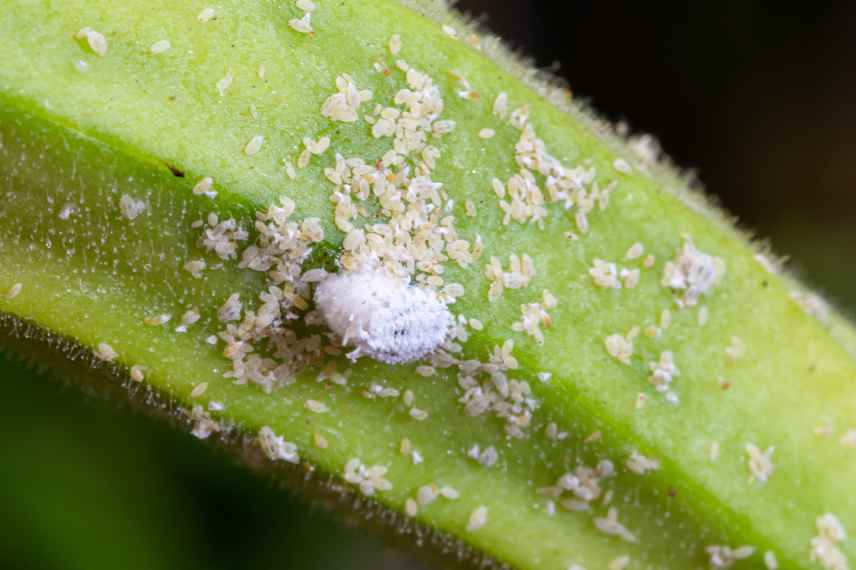
Mealybugs form small white clusters.
Read also
How to grow a Phormium in a pot?Downy mildew or black spot disease
Description and symptoms
Marsonia, or black spot disease, is a cryptogamic disease caused by a fungus. It is one of the more common garden diseases, for example on roses.
It is easily identifiable by black or dark brown spots, often ringed with yellow, left on the foliage. This disease causes them to yellow, then wither.
Prevention
A combination of heat and humidity is favourable to the development of marsonia, which generally appears in spring or autumn.
A few steps can limit its development.
- Ensure the cultivation conditions of your Phormiums, ensuring the soil drains well. Also respect planting distances between your plants to allow for good natural air circulation. Avoid planting a Phormium in an area that has already been infected with marsonia.
- Avoid wetting the foliage; water at the base instead.
- During pruning, always use cutting tools (pruning shear,) pre-disinfected with alcohol, to limit the risk of disease transmission.
Nettle manure or horsetail decoctions are also used by many gardeners to bolster the plants’ natural defences. Their action would also be antifungal, even if this is not scientifically proven. They are used in dilution, sprayed in spring on the foliage (out of direct sunlight) and regularly renewed.
Find our recipes and complete articles: How to make horsetail manure? and How to make nettle manure.
Natural treatments
As soon as symptoms appear, promptly remove the affected parts and take them to the tip (do not leave them on site or put them on the compost to avoid contamination risks).
The Bordeaux mixture, copper-based, is considered an effective antifungal treatment. If this product is permitted in organic farming, it is not without consequences. Used too often and in large quantities, it can indeed lead to soil imbalance by targeting all fungi and other microorganisms indiscriminately.
To learn more, read our articles: Bordeaux mixture and other copper-based treatments in the garden and All you need to know about fungal diseases.
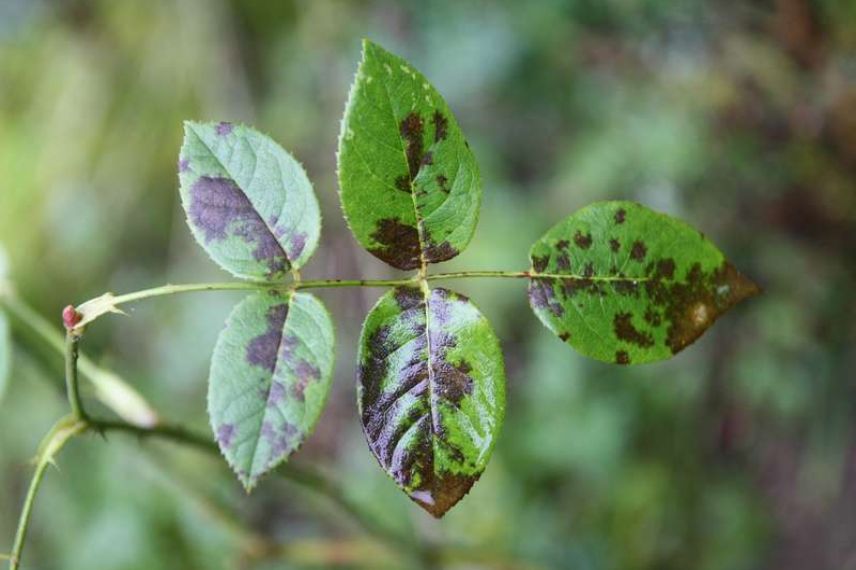
Symptoms of Marsonia on a rose
Snails and Slugs
Description and symptoms
Other well-known pests among gardeners: snails and slugs may feast on young foliage in spring. However, they rarely cause the plant to wilt.
Prevention
There are almost as many preventive solutions against gastropods as there are gardeners: beer traps, natural barriers made from ash, crushed eggshells or diatomaceous earth, repellent plants, manual harvesting at night, etc.
Natural treatments
If you wish to combat snails and slugs, there are ferramol-based ferramol-based products, suitable for organic farming. These granules act as an appetite suppressant, killing the gastropods.
For more information, read our article Slugs: 7 ways to fight effectively and naturally.
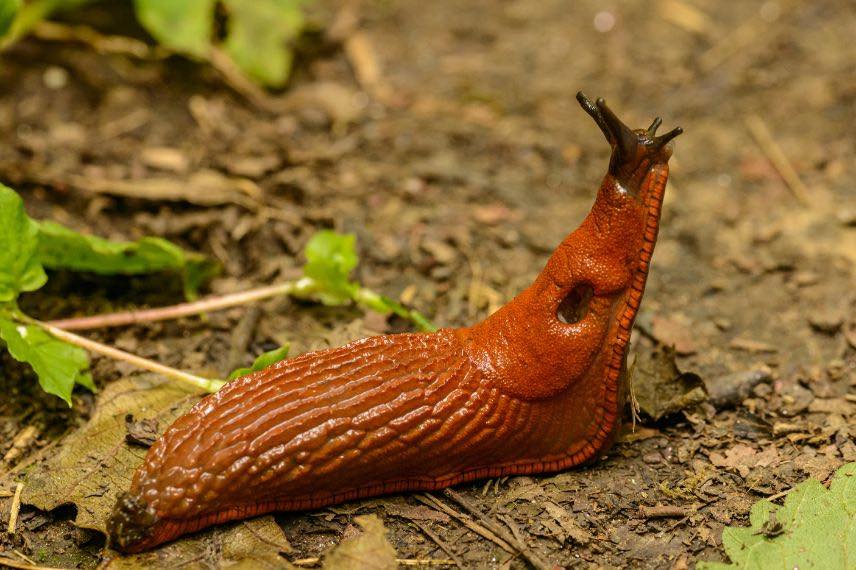
Slugs and snails cause cosmetic damage to ornamentals, but not serious.
- Subscribe!
- Contents
Comments