






























Phormium: how to protect it from the cold and winter it?
Tips against frost and cold
Contents
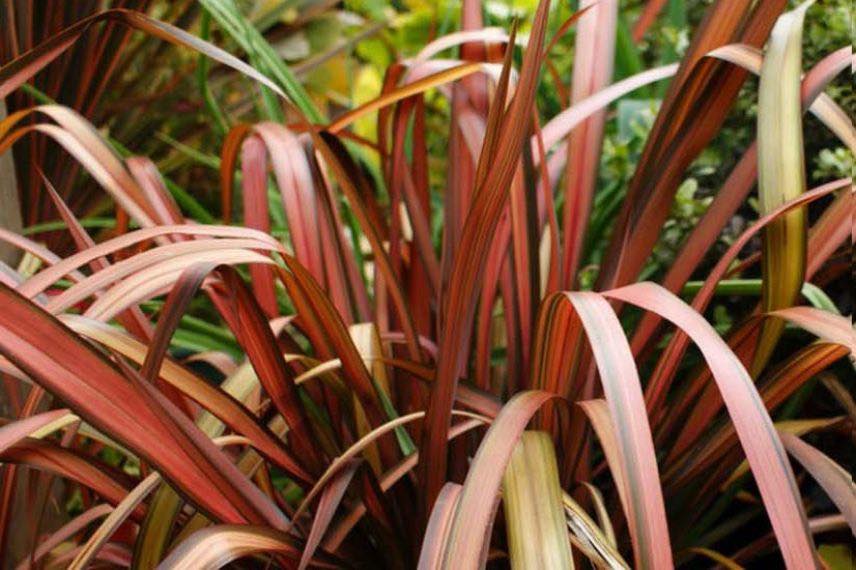
Phormium, also known as New Zealand flax, is a highly valued ornamental perennial for its graphic and evergreen foliage as well as its resilience. It features large, elongated leaves with an exotic and otherworldly appearance, in colours ranging from yellow-green to black, including variegated and purple. Although it is robust, Phormium is sensitive to cold in certain regions, as it generally only tolerates temperatures down to -7 to -8 degrees Celsius, or even -10 degrees. In open ground, it thrives in maritime climate regions. In areas with cold winters, it is best grown in pots for easier relocation and protection from the cold. Winter poses a challenge for gardeners wishing to protect their Phormium from frost. Discover our tips for protecting Phormium from the cold and properly winterising it.

Which Phormiums should be protected from the cold?
There are two main species of Phormium: Phormium tenax and Phormium cookianum, each with its own characteristics. The Phormium tenax, which is larger, is generally more resistant to cold and moderate frosts, tolerating temperatures down to -7 to -10 °C. The Phormium cookianum, being smaller, is slightly more sensitive to frost.
However, it is important to note that cold resistance can also vary depending on the varieties and growing conditions. Young or recently planted Phormiums are more vulnerable to cold, as are specimens grown in pots. If you live in an area where winters are harsh or prolonged frosts are common, it is essential to take measures to protect your Phormium.
Mulching: a natural protection for Phormium
Mulching is a simple and effective method to protect the roots of your Phormium from frost. In winter, temperatures can drop rapidly, and it is often at the root level that the cold causes the most damage. Mulching helps to insulate the soil and maintain some warmth around the plant.
To properly mulch your Phormium, it is advisable to use natural materials such as straw, fallen leaves, compost, or pine bark. These elements create an insulating barrier that prevents frost from penetrating too deeply into the soil. Spread a thick layer of mulch around the base of the plant, ensuring not to smother the collar (the part between the root and the stem), which should remain clear to avoid excessive moisture and rot.
Mulch your Phormium in late autumn before the arrival of frost and cold. In spring, you can remove the mulch and add it to the compost or leave it in place.
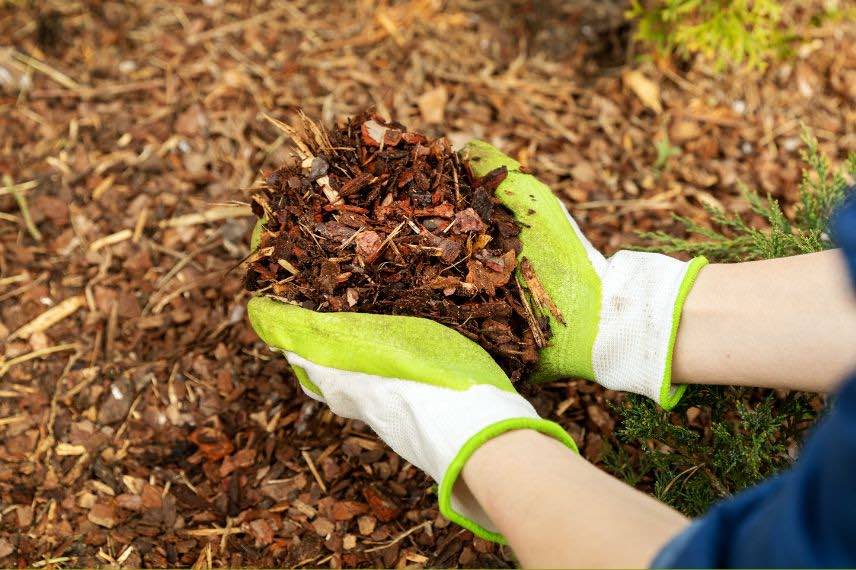
Mulching is the first protection to apply against frost
Use fleece to protect against the cold
In addition to mulching, fleece provides an effective additional protection for Phormiums grown in large pots. This fleece, made from lightweight non-woven material, creates a protective environment for the foliage without suffocating it. It acts as a blanket that limits the effects of frost while allowing air and light to pass through. There are different thicknesses of fleece available, allowing you to tailor the protection to your climate. The standard weight is P17, which represents 17 grams per m².
Completely cover the Phormium with the fleece, ensuring that the foliage is well wrapped. If the plant is particularly tall, you can install a stake to prevent the fleece from crushing the leaves. Then secure the fleece so it doesn’t blow away in the wind.
Using fleece is particularly recommended in cases of intense or prolonged frosts. Remember to regularly check the condition of the plant under the fleece, especially during milder periods, to prevent moisture from accumulating and promoting the development of diseases. You can even ventilate your Phormium by opening the fleece during warmer spells. The fleece can be removed as soon as the frosts have passed, at the beginning of spring.
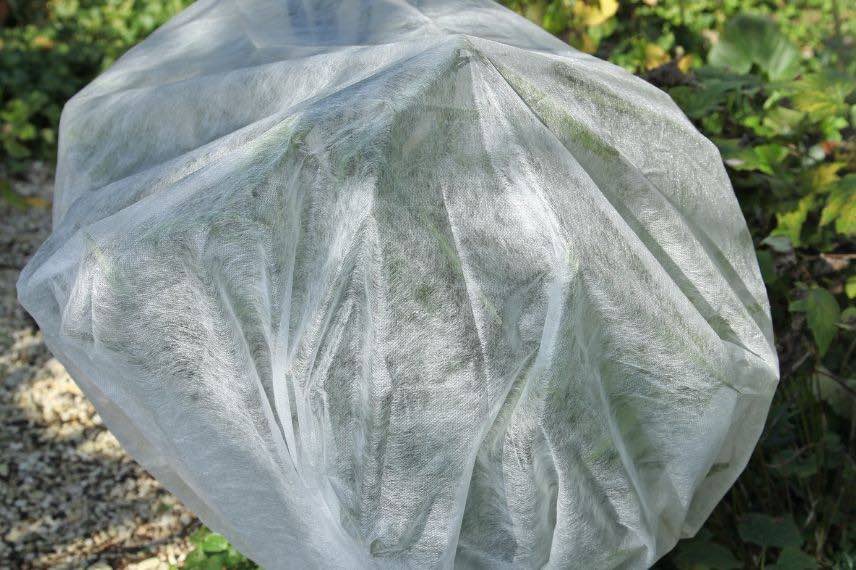
The fleece complements the mulching if necessary
Bringing the pot indoors: a solution for a potted Phormium
If you are growing your Phormium in a pot, moving it to a sheltered location is undoubtedly the simplest and most effective way to protect it from the cold. Indeed, potted plants are more exposed to temperature fluctuations, as their roots are less insulated than those of plants in the ground. A potted plant therefore suffers from frost more quickly.
Before the first frosts arrive, bring your Phormium indoors to a cool, bright place that is sheltered from frost, such as a cold greenhouse or an unheated conservatory.
When placing your Phormium in a sheltered spot, ensure it is not in an environment that is too warm or poorly ventilated, as this could weaken the plant. During this wintering period, limit watering. Excess water can lead to root rot, especially if the plant is in a poorly ventilated area. Wait until the substrate is thoroughly dry before watering again.
Once the risk of frost has passed, usually in early spring, you can take your Phormium back outside. Be sure to gradually acclimatise it to the open air.
For further reading, check our advice sheet on: “Protecting plants from cold and frost in winter”, as well as our comprehensive sheet: “Phormium, New Zealand flax: planting, pruning, maintenance”.
- Subscribe!
- Contents
Comments