





























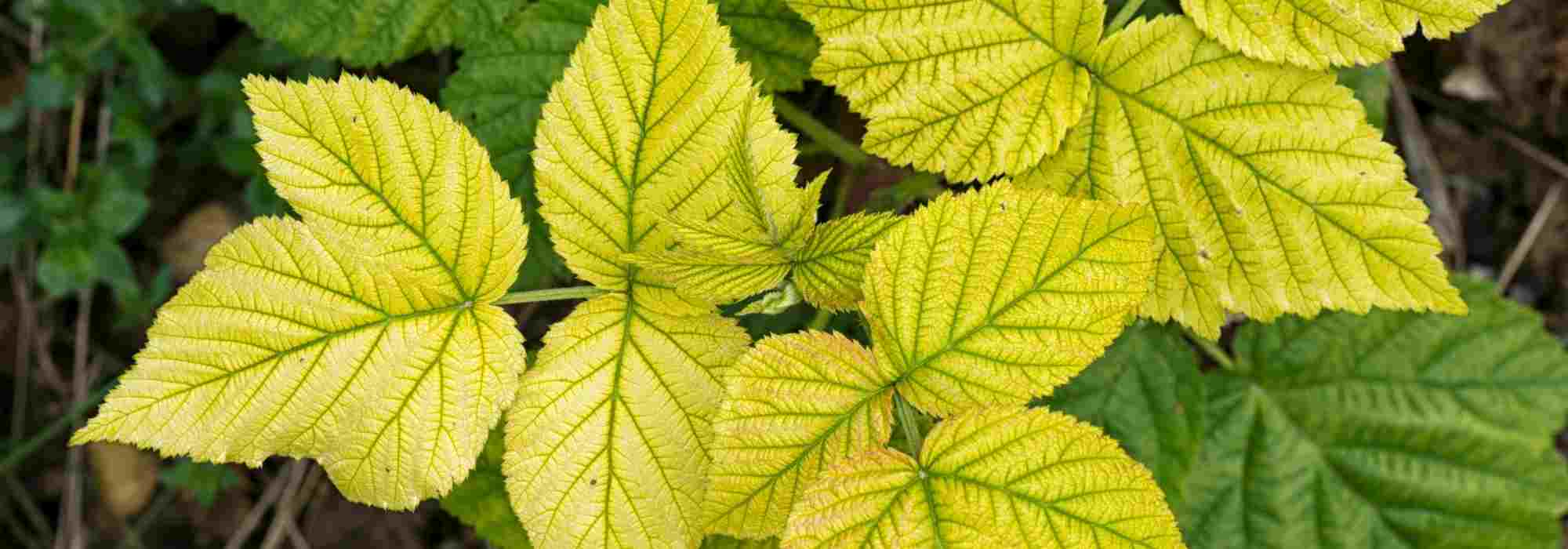
Plant deficiencies: how to identify them to correct them?
Nitrogen, potassium, iron, calcium... Let’s learn to recognise them, to correct them and to prevent them
Contents
Foliage yellowing, leaf necrosis, slowed growth, or even stoppage, rigid habit, absence of flowers, fruit drop… As with other plants, there are signs that don’t lie! These signs of distress or decline are sometimes inherent to a disease or to the presence of parasites, to unsuitable cultivation conditions or unfavourable weather. But once these avenues are ruled out, we must turn to deficiencies.
Indeed, plants need nutrients to grow, flower and bear fruit. If any of these nutrients, primary or secondary, minerals or trace elements, is missing, it’s the deficiency for sure.
Let us learn to understand and identify the different deficiencies that plants may experience, but above all, let us discover how to treat and prevent them.

What exactly is a deficiency?
Men can be deficient in vitamin D, iron and magnesium… This means they have a deficit of certain vitamins, minerals or trace elements. In the plant world, it is the same. A young plant can suffer from deficiencies—that is, for various reasons, it does not receive the essential nutrients required for its growth, flowering or fruiting. Taken up from the soil.
But what do we really mean by nutrients? Which nutrients do plants need for their development? Firstly, there are the primary elements, the macronutrients, which are nitrogen (N), phosphorus (P) and potassium (K). Nitrogen plays a pivotal role in the growth of plants, phosphorus is essential for the health of the root system, flowering, fruit production, but also photosynthesis and the general development of the young plants. Finally, potassium contributes to the plants’ resistance to adverse weather, to diseases and pests, and also to fruiting.
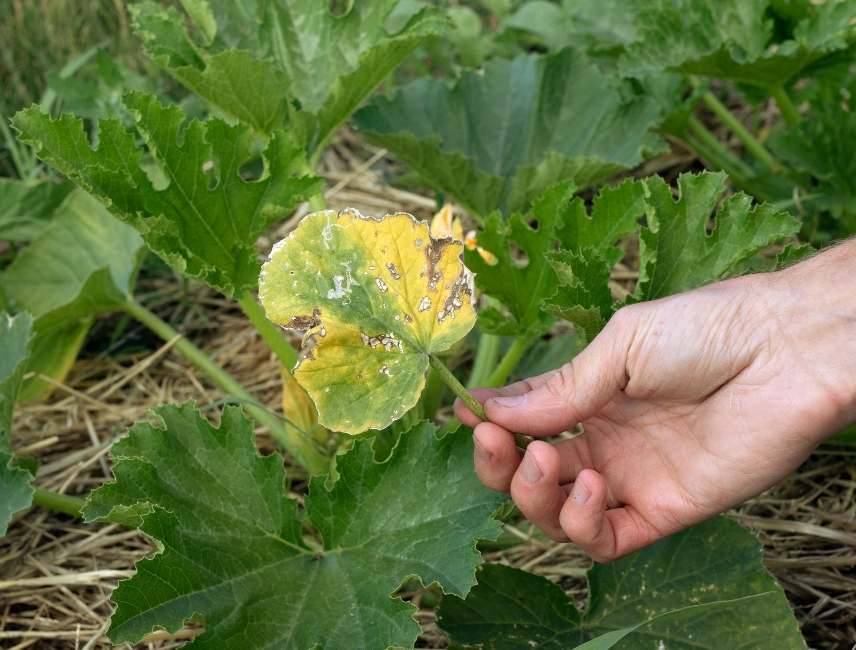
A deficiency is often manifested by discoloured foliage.
Next, the secondary nutrients, less important but still vital : calcium (Ca) which plays a role in the structure of the plants, magnesium (Mg) which promotes the uptake of the primary elements and gives the foliage a healthy green colour, and sulphur (S) which participates in the formation of chlorophyll.
Finally, trace elements remain : iron (Fe), essential for chlorophyll formation, boron (B) useful for the functioning of the plant and for fruit formation, manganese (Mn) necessary for seed germination and plant maturation, but also for chlorophyll synthesis, copper (Cu), zinc (Zn), useful for the flavour of the fruits and for photosynthesis, and molybdenum (Mo), essential for the assimilation of nitrate from the soil by plants, and the metabolism of iron and phosphorus. There are, moreover, anti-deficiency trace-element supplements.
Even the slightest deficiency in any of these elements can plunge the plant into a state of weakness that can lead to its demise.
Read also
Iron chlorosisWhat are the causes of the various plant deficiencies?
Just as plants draw nutrients from the soil, that’s where you should look for the causes of deficiencies. Regarding these soil-related deficiencies, there are two kinds: those termed induced and the others, the so-called true ones. In the case of a true deficiency, the nutrients present in the soil in insufficient quantities fail to meet the needs of the plants. These deficiencies occur in soils worn out by intensive agricultural practices, in monoculture. In the vegetable plot, vegetables grown year after year in the same spot, without crop rotation, can suffer from these true deficiencies. Adverse weather conditions can also induce these deficiencies. For example, heavy weather that leaches the soil, resulting in nutrient loss. These climatic hazards disrupt the soil balance over a given period.

Plants draw the nutrients they need for growth from the soil.
Induced deficiencies are more closely related to the very nature of the soil. An unsuitable soil for the plant’s needs inevitably leads to deficiencies. Thus, soil that is too acidic or too calcareous can cause deficiencies. A plant can also be deficient if it is planted in soil that contains an excess of an element. And an excessive presence of one element inhibits the absorption of another. For example, soil that is too nitrogen-rich will inevitably create deficiencies.
Finally, repeated pest attacks, or recurring diseases can also provoke deficiencies in certain plants.
Main plant deficiencies and their symptoms
Let us now discuss the nutrient deficiencies most commonly observed in plants, with a view to identifying the symptoms, causes and finding solutions to remedy the problem.
Nitrogen deficiency
Symptoms : Slowed growth, lack of vigor, young shoots failing to develop, yellowing foliage (especially the oldest leaves), premature leaf drop, leaves’ veins turning reddish to purplish, flowering and fruiting disrupted. This nitrogen deficiency mainly affects leafy vegetables, fruit trees and trees.
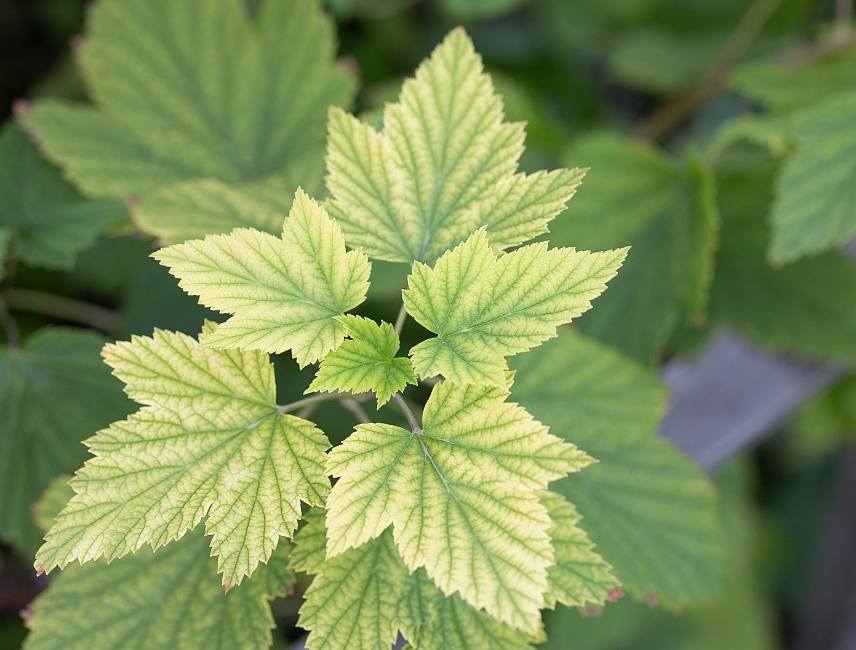
Potential symptoms of nitrogen deficiency.
Causes : soil that is too sandy or too acidic, poor in organic matter, too much or too little watering.
Solutions : nitrogen is often absent from the soil, so it must be supplied by organic mulch such as lawn clippings, compost or well-decomposed manure, but also fertilisers such as crushed horn and dried blood. Nettle manure is also very effective for providing nitrogen. Finally, cultivating plants in the legume family is useful: their roots can fix atmospheric nitrogen and return it to the soil.
Watch out for organic mulches such as straw, fallen leaves, RCW… which can lead to nitrogen deficiency.
Phosphorus deficiency
Symptoms : stunted plant, terminal leaflets coloured reddish-purple, leaflets tinged purple, stiffness of the stems, reduced and small-sized fruiting, absence of flowering. This deficiency is mainly seen in the vegetable garden, on cabbages, potatoes, fruit vegetables such as tomatoes, beans, beets, strawberries and fruit trees. Flowering plants can also be affected.
Causes : soil too acidic or too calcareous with a high pH, too high soil moisture, abnormally low temperatures,
Solutions : the application of poultry manure, or bone meal fertilisers or fish meal, crop residues or compost-type amendments is recommended to offset this phosphorus deficiency.
Potassium deficiency
Symptoms : poorly developed plants with soft foliage, margins browning and necrotising, poor-quality flowering and fruiting. This potassium deficiency occurs in potatoes, tomatoes, celery, legumes, small fruit crops and fruit trees, as well as many flowering plants.
Causes : this deficiency is common in clay, sandy or waterlogged soils.
Solutions : apply compost, comfrey manure or ash (in moderation).
For further reading: How to correct a potassium deficiency?
Magnesium deficiency
Symptoms : yellowing foliage with green veins (chlorosis), occasional yellow, orange and purple spotting, premature leaf drop. This deficiency mainly affects tomatoes, potatoes, beans, small fruit shrubs such as raspberries, apple and pear trees, roses or rhododendrons.
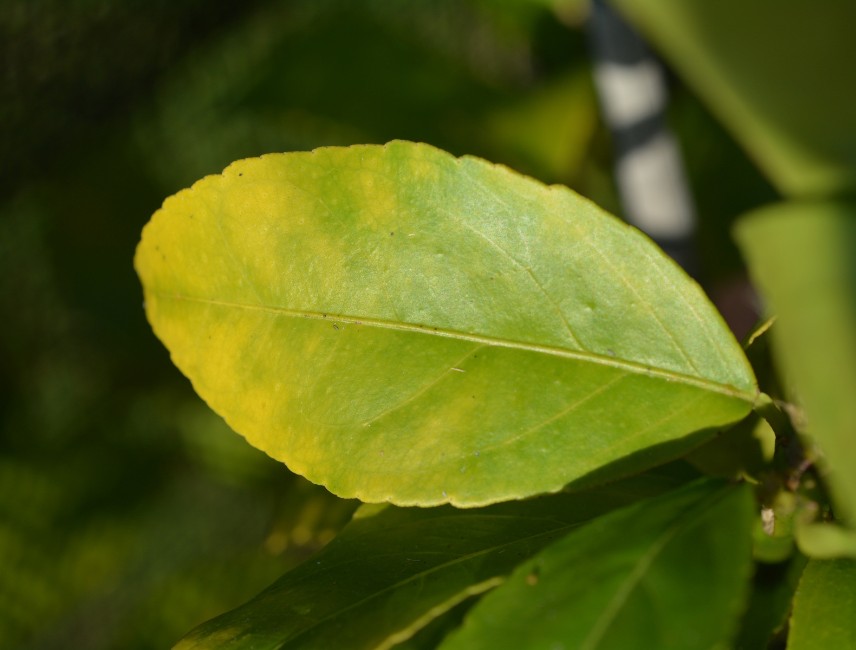
Feijoa leaf possibly suffering from magnesium deficiency.
Causes : soil too calcareous.
Solutions : add Epsom salts to the watering water, apply cattle manure, sow and bury green manures.
Calcium deficiency
Symptoms : desiccation of tips, curling and wilting of young shoots, browning and necrosis of buds, fruit drop, necrosis of flowers and leaves. This deficiency mainly affects tomatoes and all plants grown in pots.
Causes : calcium deficiency is generally due to an excess of potassium or magnesium in the soil.
Solutions : check and correct soil acidity.
Sulphur deficiency
Symptoms : purple colouring of peduncles and petioles, reduced plant growth, slight yellowing of leaves, curling of the upper leaves. This deficiency is more common in legumes, alliums and crucifers.
Causes : overwatering which leaches the soil and removes sulphur, excessive calcareous content, high soil moisture.
Solutions : add organic matter or seaweed, use sulphur fertilisers.
Manganese deficiency
Symptoms : pale yellow to whitish plant colour, curling, browning and leaf drop. Maize (corn), potatoes and beans are most affected.
Causes : overly calcareous soil, excess iron, prolonged drought, excess potassium-based fertilisers.
Solutions : add cattle manure, spray manganese sulphate on the foliage, sow and incorporate green manures.
Iron deficiency
Symptoms : discolouration, necrosis and leaf drop. Ericaceous plants (azaleas and rhododendrons, camellias, Japanese maples, magnolias, hydrangeas, heathers…), but also roses, grapevines, pear trees and peach trees are susceptible to this deficiency. Wisteria and cherry laurel are also affected.
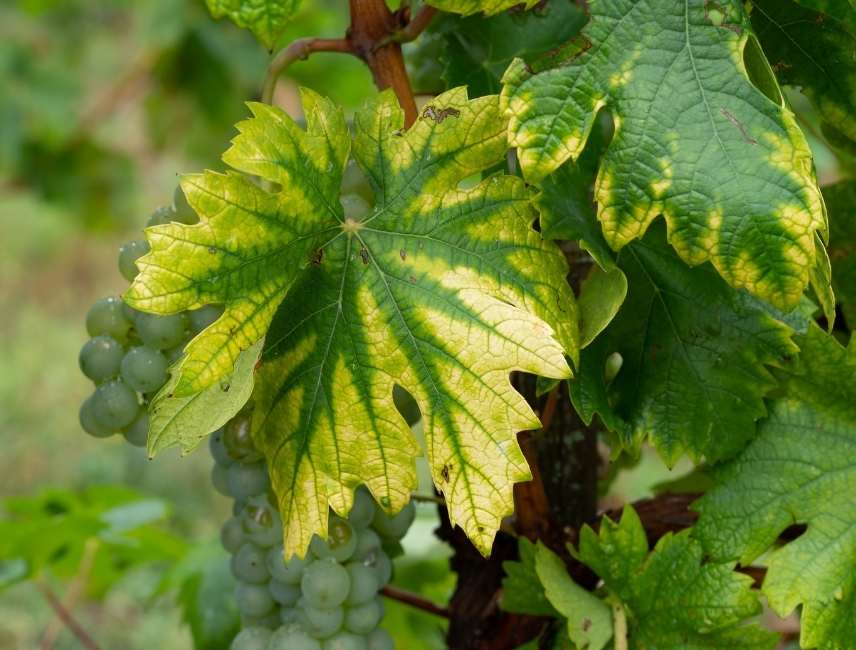
Vine leaf showing symptoms of iron deficiency.
Causes : high lime content in the soil that blocks iron uptake, watering with hard water.
Solutions : water with rainwater, use a long-lasting fertiliser, mulch with pine bark.
Boron deficiency
Symptoms : chlorosis and curling of lower and middle leaves, necrosis at the tip of shoots, malformation of new growth, stiffening of older leaves. Rare deficiency affecting apple and pear trees, grapevines, spinach, carrots, celery and beets. Carnations are also susceptible.
Causes : acidic or alkaline soils, sandy or humus-rich soils.
Solutions : spray nettle or comfrey purin, add a boron-rich fertiliser.
Copper deficiency
Symptoms : chlorosis of young leaves with small necroses, poor flowering.
Causes : excess potassium and phosphorus in the soil, high soil pH.
Solutions : copper sprays on the soil.
Zinc deficiency
Symptoms : necrotic spots along the edges of young leaves, reduced size and distorted new leaves, shortened internodes, poor growth of buds.
Causes : sandy or loamy soils, cool and damp spring.
Solutions : add a soluble fertiliser or copper sulphate.
Molybdenum deficiency
Symptoms : pale green leaves, reduced growth, spoon-shaped young leaves. Very rare deficiency that can affect cabbage, legumes and poinsettias.
Causes : very peat-rich soil with acidic pH.
Solutions : add a soluble fertiliser.
How to prevent nutrient deficiencies?
Logically, to prevent induced deficiencies, a balanced soil is essential. Nourishing it by amending with compost or manure is the first preventative measure. Mulching the soil also helps to supply important nutrients such as nitrogen. As for applying nettle or comfrey manures, or horsetail decoction, it also helps balance the soil by smoothing out nutrient deficiencies.
You should mainly observe your plants, as deficiencies tend to show up as foliage discolouration. It’s a warning sign sent by your plants—be vigilant for it! Likewise, it is essential to know your soil well. Finally, properly managed watering can also prevent deficiencies.
- Subscribe!
- Contents
Comments