





























Plants not to prune in winter
Reminder of plants not to prune in winter
Contents
On beautiful winter days with positive temperatures, one might be tempted to take a stroll around the garden, pruning shear in hand, to tidy it up. After all, if the trees have entered dormancy and the fruit trees need this winter pruning, why not extend the benefits to other plants? Overall, and we thank Mother Nature for this, we refrain from pruning all ornamental plants during the cold season: flowering bushes, evergreens, and conifers. Most often, winter pruning will take place at the end of the season, in early March.
The cold and humidity are also detrimental to certain types of plants, which would suffer from pruning at this time. To clarify, let’s take a look at the plants that should not be pruned in winter!
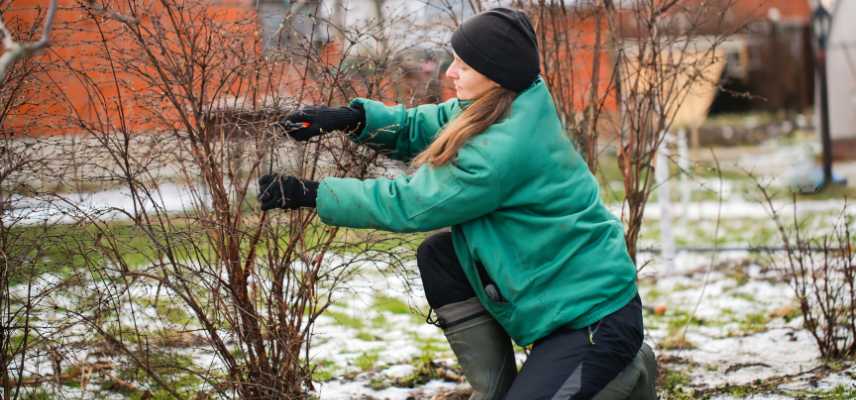
Be careful not to want to prune everything in winter!
→ See also: What to prune in winter?

Evergreens
With their evergreen foliage all year round, evergreens structure the garden in terms of volume and colour. Growing more slowly, they require less frequent pruning, or even none at all. When pruning is necessary, primarily for sizing or rebalancing, it is recommended to prune in spring or autumn for summer-flowering shrubs. Let’s not forget that evergreen foliage means that sap continues to circulate within their tissues, unlike deciduous trees and shrubs. These plants experience less winter dormancy.
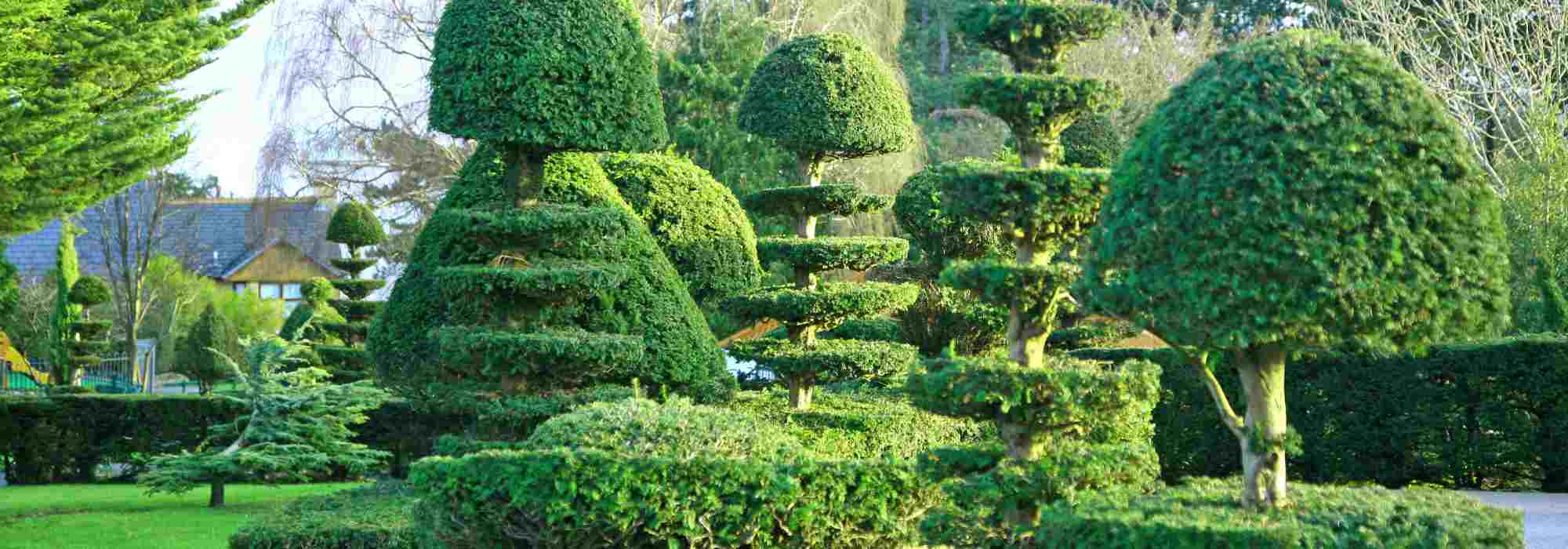
Among them are numerous ornamental shrubs such as abelias, laurel, aucuba, privet, Daphne, Choisya, Eleagnus, and all shrubs suitable for topiary pruning (osmanthus, boxwood, Ilex, Lonicera nitida…).
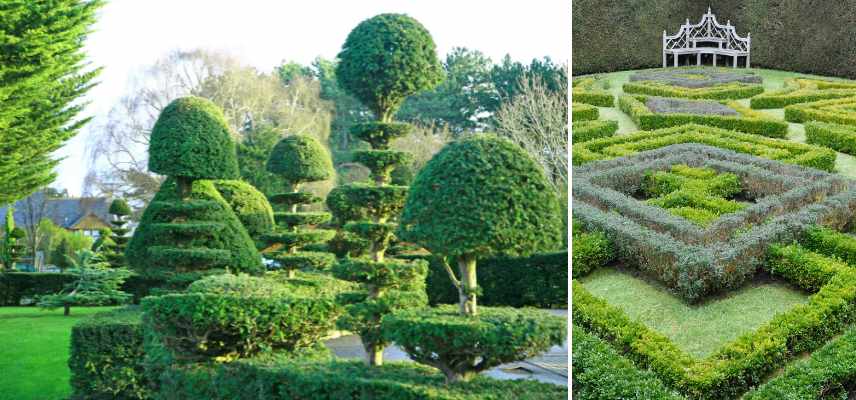
Topiary-shaped shrubs and boxwood
Read also
What to prune in winter?Spring-flowering shrubs
The first shrubs to bloom in the year do so as early as March, or even in February. Observe them; you can spot their buds early in winter, which will gradually swell. To enjoy their early flowering, it’s important to identify the shrubs that have already started producing buds, especially if you arrive in a garden during winter without yet knowing how to identify the plants: Cercis, Forsythia, lilac, Deutzia, Mock Orange, spireas, viburnums, Weigela, Kolkwitzia, etc. All these spring-flowering shrubs should be pruned once their flowering is finished.
N.B: Of course, regarding winter-flowering shrubs like Daphne, Mahonia, Hamamelis, or Viburnum bodnantense for the most well-known, they should also be protected from any pruning: they bloom as early as January, or even in November-December for Daphne and Mahonia.
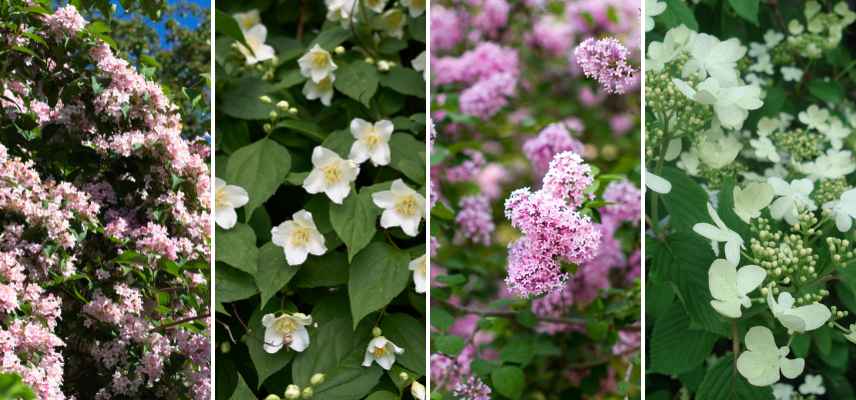
Kolkwitzia amabilis, Philadelphus, Syringa vulgaris, and Viburnum plicatum ‘Watanabe’
Conifers
One is specifically talking about conifers planted as hedges or shaped into topiaries, such as thujas, false cypresses, or cupressus, as these are the ones we will want to prune to maintain their shape. As with all conifers, avoid pruning in winter, even if their impeccable appearance might suggest otherwise. The same applies to pines from which we might want to remove some lower branches to raise the crown.
Resinous plants can withstand annual pruning at the end of spring (ideally June) and/or at the end of summer (late August to September), when healing will not pose any issues for the trees and shrubs (sap flow begins in autumn).
Only the formative pruning for niwaki occurs in winter: generally, this is done from late autumn to the end of winter.
→ See also Cloud pruning or niwaki and Topiaries: when and how to prune them?
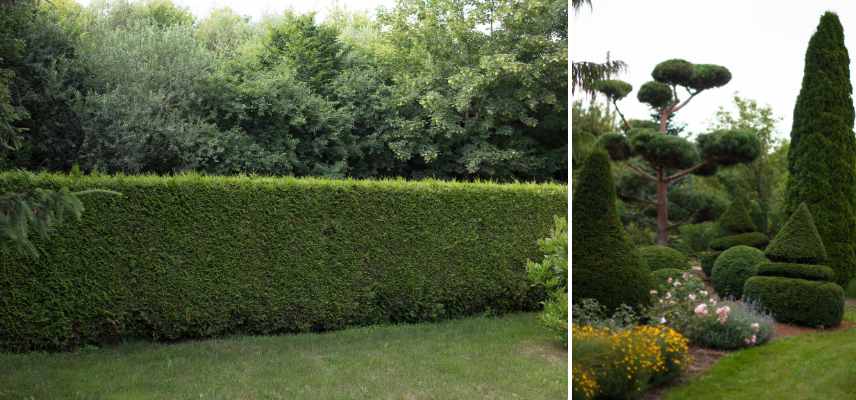
Hedges of conifers and shrubs shaped into topiaries will wait until the end of spring
Read also
What to prune in autumn?Softwood trees and shrubs
In this category, we find species whose woody part is more spongy (referred to as pith in the centre of the branches or stems). Among the trees and shrubs with soft wood, we note the elder, the willow, as well as the walnut and the poplar. Some shrubs, such as Hydrangeas, have hollow stems, which are also more fragile during winter pruning, especially in regions with high rainfall.
Wait until the end of winter if you need to undertake pruning on these subjects.
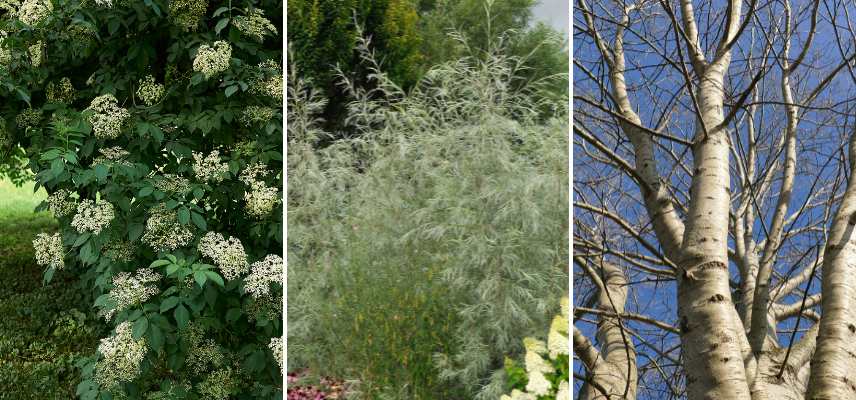
Sambucus nigra, Salix exigua and Populus alba
Decorative bark and branch shrubs
There are many shrubs at the height of their beauty in the middle of winter: these are decoratively wooded shrubs, deciduous ones that change colour in the cold, their now bare branches becoming magical, displaying shades of yellow, orange, or red, even bluish hues.
The most well-known are the coloured wood dogwoods (Cornus sanguinea, Cornus alba, and their stunning varieties), but this category also includes beautiful bushes like Salix (Salix viminalis, red osier) or ornamental brambles (Rubus cockburnianus and Rubus thibetanus)…
In fact, it is the late winter pruning (late February-March) that allows these shrubs to produce new, brightly coloured shoots in winter.
Some other shrubs, like maples, have bark that takes on stunning fiery hues, such as Acer palmatum ‘Sango-kaku’, or an almost fluorescent acid yellow like that of Acer negundo ‘Winter Lightning’. Finally, the gnarled branches of certain shrubs deserve to be highlighted in the garden, so it is advisable not to touch them, such as willows and contorted hazels or ornamental dwarf cherries.
→ Also read Michael’s selection of 5 trees and shrubs with colourful wood that you should have in your winter garden, and the Winter garden
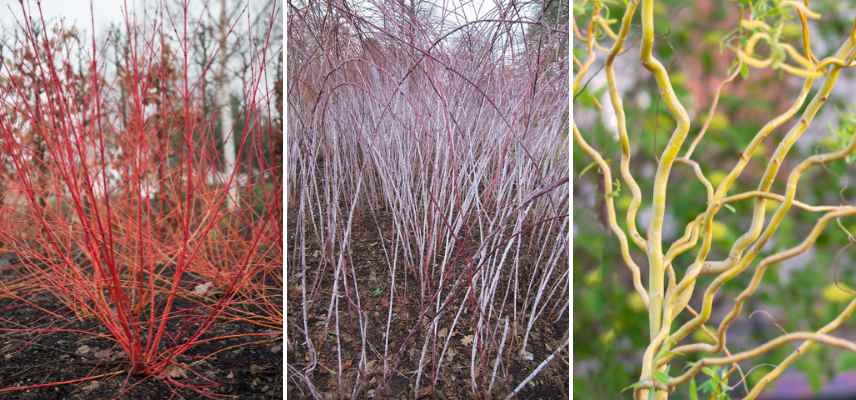
Cornus sanguinea, Rubus cockburnianus (© Leonora Enking) and Salix erythroflexuosa
Winter-fruiting shrubs and bushes
Lest we forget, beware of pruning shears on shrubs bearing their colourful fruits and berries in the winter cold, especially since the birds would no longer benefit from them either: ornamental crabapple, holly, Cotoneaster, dog rose, Aucuba (female), Nandina domestica (heavenly bamboo), Symphoricarpos and wintergreen, as well as ivy and Skimmia japonica to name a few of the most popular. Among trees, the persimmon will display its orange kakis until Christmas sometimes, and the Idesia polycarpa will keep its scarlet berries for a long time!
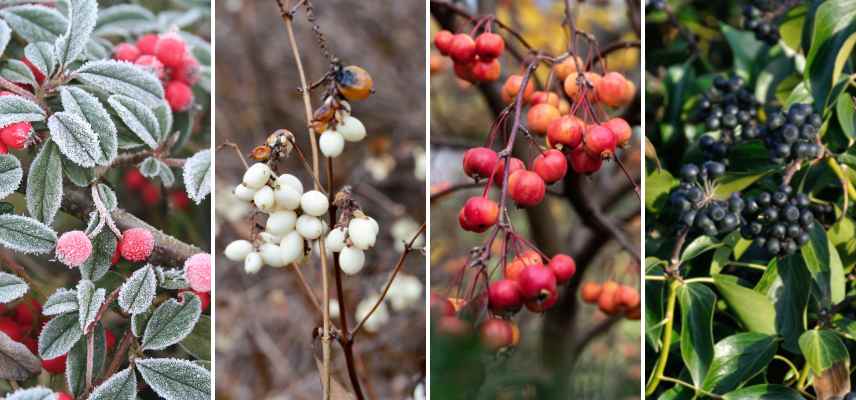
Cotoneaster, Snowberry, ornamental crabapple and ivy
Decorative plants under frost
They also provide an incomparable charm to the garden when they are covered with a fine layer of frost or a dusting of pristine snow. This includes Sedums, hydrangeas, Phlomis, and ornamental grasses, among others. Do not alter the winter beauty of these perennials and shrubs! They often have hollow stems, which, if pruned, would quickly become damaged by absorbing water. Furthermore, all these plants protect each other and allow small wildlife to find refuge. Their stumps also gain protective benefits. Regarding macrophylla hydrangeas, the heads of the inflorescences effectively protect the buds below.
You can cut back grasses and perennials between late February and early March.
→ Also read: Dried flowers that look beautiful in winter and cleaning flower beds before winter.
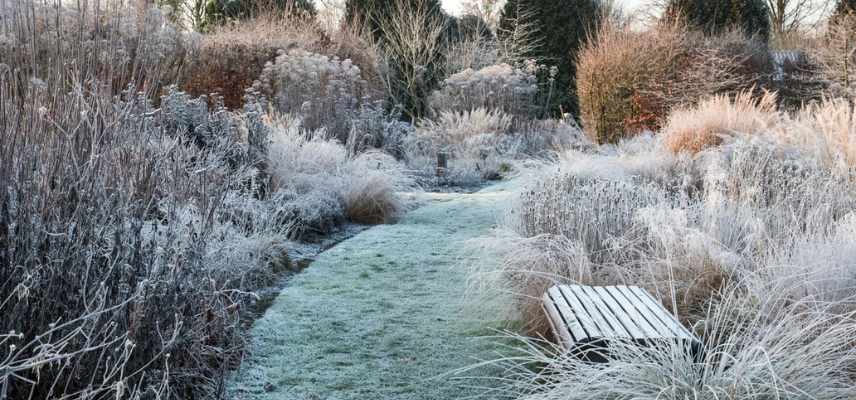
Piet Oudolf’s garden in winter… the incomparable grace of grasses and perennials under frost
- Subscribe!
- Contents
Comments