





























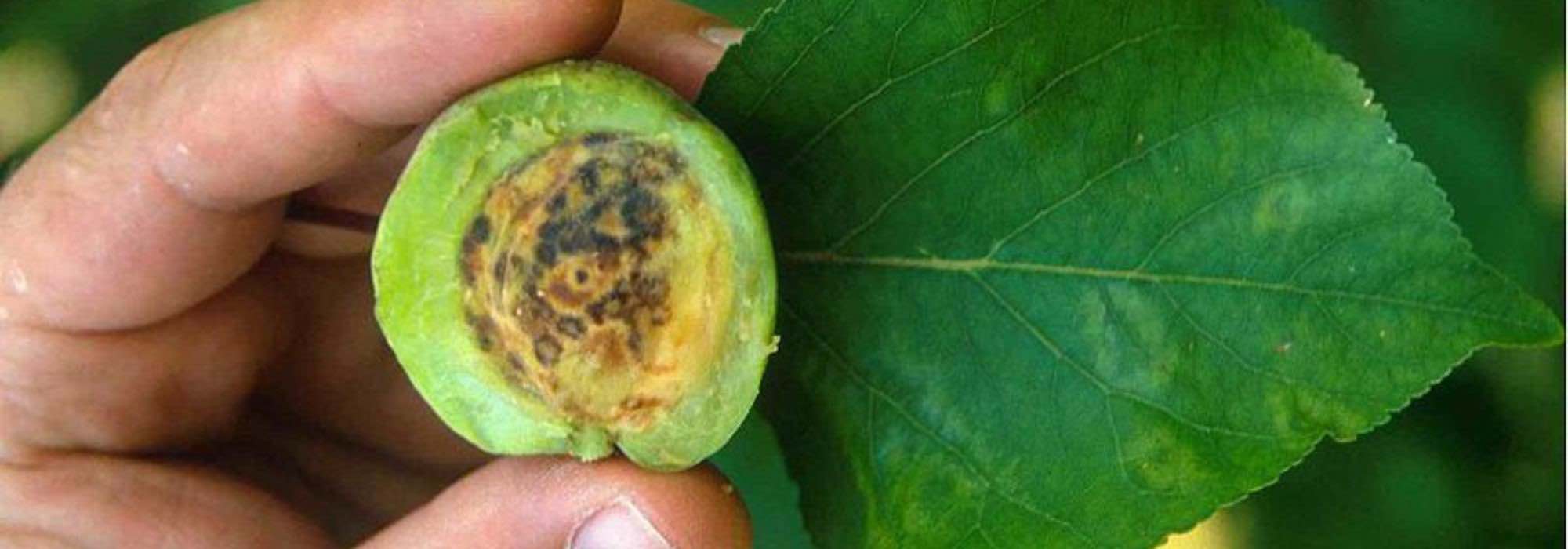
Plum pox virus (PPV) or sharka: a devastating disease of stone fruit trees
Sharka in stone fruit trees: symptoms and control
Contents
If you grow peaches, plums or apricots, you may have heard of sharka disease? This disease, caused by Plum pox virus, affects the fruits, which are no longer edible and can cause serious damage to the harvest. Appeared in France around 1970, it is regulated, and in orchards, monitoring and control of sharka are obligatory. How to recognise the signs of infection and what to do if your tree is infected? Discover our tips to identify and combat sharka.

What is Sharka, or Plum pox virus?
Sharka is a disease caused by Plum Pox Virus (also called PPV).
It affects stone-fruit trees belonging to the genus Prunus, such as peach trees, nectarines or apricot trees.
Almond trees can also contract the disease, but they do not always show symptoms.
Sharka can also affect wild or ornamental species of the genus Prunus, such as cherry plums (myrobalan plums), sloes, and Manchurian cherries.
The virus does not kill the trees, but the fruits become unfit for consumption, even if they pose no danger to human health. Highly destructive to fruit production, the disease is regulated and infected trees must be reported to the Regional Directorate for Food, Agriculture and Forestry, and then destroyed.
In orchards, monitoring for symptoms and control of Sharka are obligatory.
For more information on regulations in France, you can consult the orders of 9 July 2021, 17 March 2011 and 15 December 2014.
Sharka is present in Europe and worldwide. In France, it is particularly observed in the Mediterranean region. It was detected in 1916 in Bulgaria and named Sharka, which means smallpox. It spread in France in the early 1970s. There are ten virus strains, of which three are present in France: PPV Markus, PPV Dideron and PPV-Rec. PPV Markus mainly affects peaches; the other two strains develop on apricots and plums.
Read also
Diseases and Pests of the Apricot TreeWhat are the symptoms?
Symptoms may appear on fruits, leaves, fruit stones, flowers and shoots of trees. They vary by species, but share common features.
- On the leaves, deformities as well as chlorotic spots or rings, pale or discoloured along the veins.
- On the fruits, there is a reduction in sugar content, spots, deformities, necrosis and premature fruit drop before ripening.
- On apricot stones, one can see yellowish rings or spots.
- On peach blossoms, streaks and discolouration may appear, as well as on the current year’s wood.
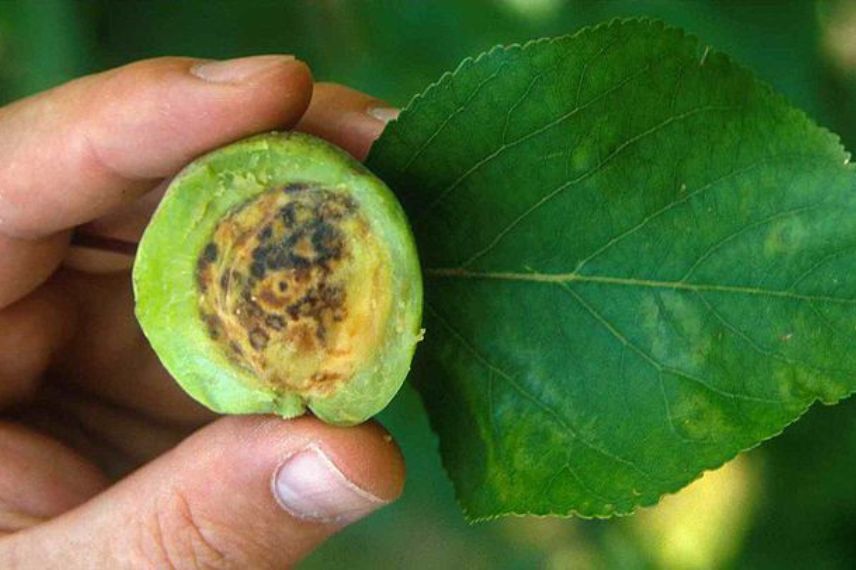
An infected apricot stone
How does Sharka spread?
Sharka is spread by two means:
- either when multiplying plants with infected material during grafting or propagation by cuttings,
- or by aphids. Around twenty aphids have been identified as capable of spreading the virus. The mode of transmission by aphids is non-persistent. The aphid acquires the disease when it feeds on the plant and then transmits it to nearby trees. Acquisition and transmission of the virus last only a few minutes, and aphid control measures are not recognised as effective in containing the disease.
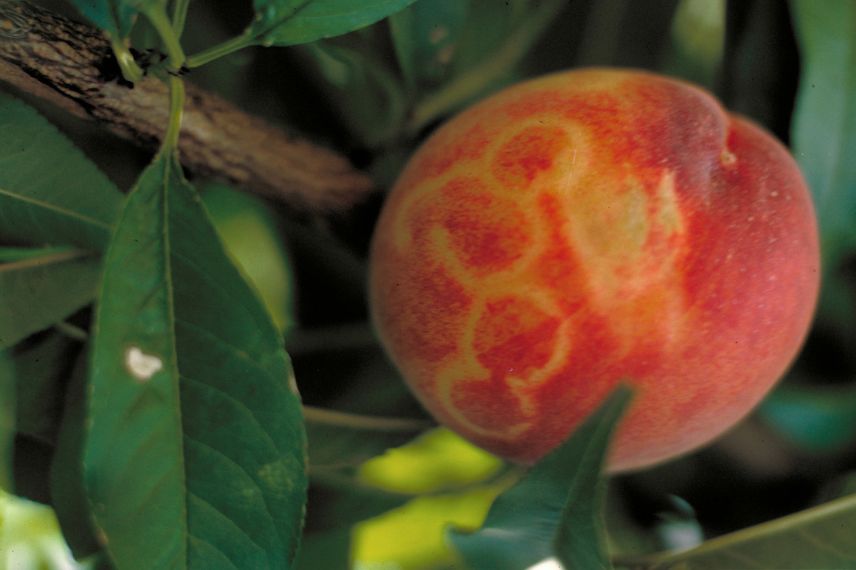
An affected peach tree © US Department of Agriculture
Read also
Peach diseases and pestsHow can Sharka be controlled?
As there is no curative treatment for Plum pox virus, the best method of control against this disease is monitoring the appearance of symptoms and destroying infected plants.
As a precaution, it is recommended to plant healthy plants, one of the modes of spread of Plum pox virus is contamination from infected material during grafting.
This disease can also be transmitted by aphids, which feed on plants from late spring to late summer, a period when vigilance is important. One of about twenty species of aphids, notably the green peach aphid, can transmit the disease. Aphid control has not demonstrated real effectiveness in controlling Plum pox virus. To learn more about aphids and how to prevent their infestation, you can consult our advice sheet: “Aphid: identification and treatment“.
When trees are infected with Plum pox virus, they must be uprooted and the plants destroyed in their entirety, including the roots.
- Subscribe!
- Contents
Comments