





























Properly cleaning your chicken coop
All our tips for maintaining your chicken coop throughout the year
Contents
Every morning, you air out your home and do a bit of cleaning. Similarly, you tackle deep cleaning from time to time. The same goes for the chicken coop! Because, the good hygiene of your chicken coop not only depends on the absence of unpleasant odours but also on the good health of your hens. Indeed, poor maintenance of your chickens’ living space can quickly lead to the emergence of a whole variety of bacteria, parasites, and other diseases that can be difficult to eradicate. Therefore, if there is one saying that applies to the chicken coop, it is “prevention is better than cure!”.
As a “keeper” of five hens who are entering their second year of ideal life with me, I share some tips for properly cleaning your chicken coop, daily, monthly, and annually.

If you neglect the hygiene of your chicken coop...
Owning chickens and collecting eggs (almost) every day is a great joy! Until the day when, suddenly, your little flock is struck by some illness or infested with parasites, which can lead to the death of one or all of your beloved hens. Because these diseases are often extremely contagious, especially in the relatively confined space of a chicken coop.
Thus, a hen can be affected by:
- coccidiosis, a parasitic intestinal disease that causes anaemia, loss of appetite, diarrhoea, and reduced egg production, and, without treatment, the death of the hen.
- coryza, a respiratory disease, known as “chicken cold,” which causes difficulty in breathing, sneezing, and nasal discharge, not to mention diarrhoea and weight loss.
Similarly, the parade of lice, fleas, worms, and mites can invade your chicken coop. Starting with the terrible and dangerous red mites (which are actually mites) that can decimate your flock in just a few days. Insidiously, they settle in the tiniest corners of the coop (most often wooden coops) and, at night, suck the blood of their prey, causing them to die a slow death. These mites can also cause feather-pecking scabs or leg mites. In short, so much suffering endured by your hens…
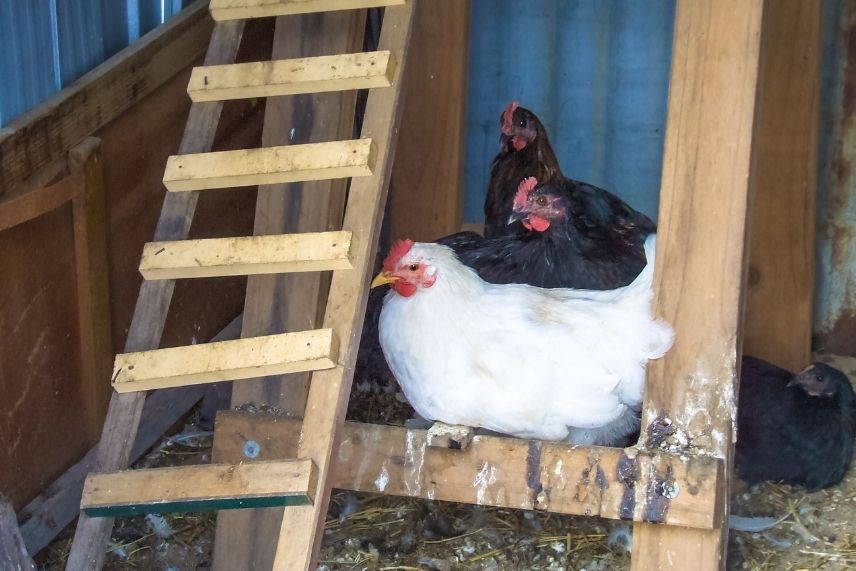
Lack of hygiene in a chicken coop increases the risk of diseases and parasite infestations.
Often the cause of these diseases or parasitic infestations, hygiene is to blame. Or more precisely, poor hygiene and dirt. While regular maintenance is enough to avoid all these inconveniences…
Daily Chicken Coop Maintenance
Five minutes, no more, stopwatch in hand. That’s the time you need to dedicate to the daily maintenance of your chicken coop. Admittedly, it’s a small amount compared to the invasions of red mites and other such delights!
So, what do we do during these five minutes in the coop? First, we let the hens out after a good night’s sleep. And we leave the coop door open to facilitate aeration and ventilation, helping to eliminate the smells from chicken droppings and any ammonia vapours or dust.
Next, it is recommended to remove the droppings from the night. The more regularly you do this, the less there will be, and the easier and quicker it will be! For hens that sleep on a perch, simply place a removable board underneath. Each day, you will only need to remove it to clean it with a water jet and put it back in the evening once it’s dry. Take the opportunity to keep the droppings, which you can incorporate into compost or dry for use as fertiliser. In another article, I explain how to use your hens’ droppings in the vegetable garden.
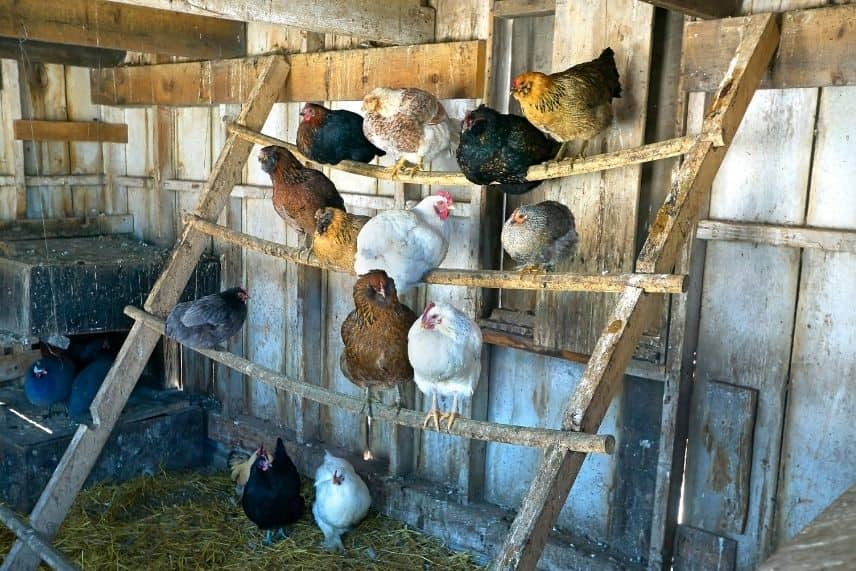
It is essential to clean the droppings under the perches daily
As for my hens, they do as they please and have always refused to sleep perched. They prefer the comfort of a good straw litter. So, to make cleaning easier, I placed this litter on pallets. Each day, I shake their litter with a fork, allowing the droppings to fall below onto a board that I remove for cleaning.
Finally, the last daily tasks in the coop consist of cleaning the drinkers (before refilling them with fresh water) and the feed bowls if you provide them. Also, take out the food dispensers, which should preferably be brought in at night to avoid attracting rodents, often carriers of diseases.
There you go, it’s done. When I say five minutes, I obviously don’t count the conversations you might have with your hens…
A deeper clean once a month
At the weekend, you have a bit more time to dedicate to your hens and their coop. It’s the perfect moment to completely renew their litter made of straw or wood shavings. Indeed, this litter is often impregnated with some droppings and urine, not to mention the soil that your hens have carried in on their feet.
Of course, depending on the seasons and especially the weather conditions, you will need to change it more frequently. Hens scratching in muddy soil due to rain will dirty their litter more quickly.
You can take advantage of this litter change to spray a bit of diatomaceous earth on the ground. What’s that, you may ask? It’s a perfectly natural product that resembles a powder. It is actually a deposit of fossilised skeletons of algae and other marine organisms that have been crushed to form microscopic crystals. This diatomaceous earth has excellent antiparasitic and vermifuge properties. It also strengthens the immune system.
In practice, there are two types of diatomaceous earth:
- calcined diatomaceous earth, which is toxic to the lungs and not for food use. Absolutely to be avoided in the coop.
- amorphous or non-calcined diatomaceous earth, which comes in two forms. One is grey and is simply insect-repellent, while the other is white, with food grade E551. This means it is both insect-repellent and vermifuge, and can be used as a utility supplement.
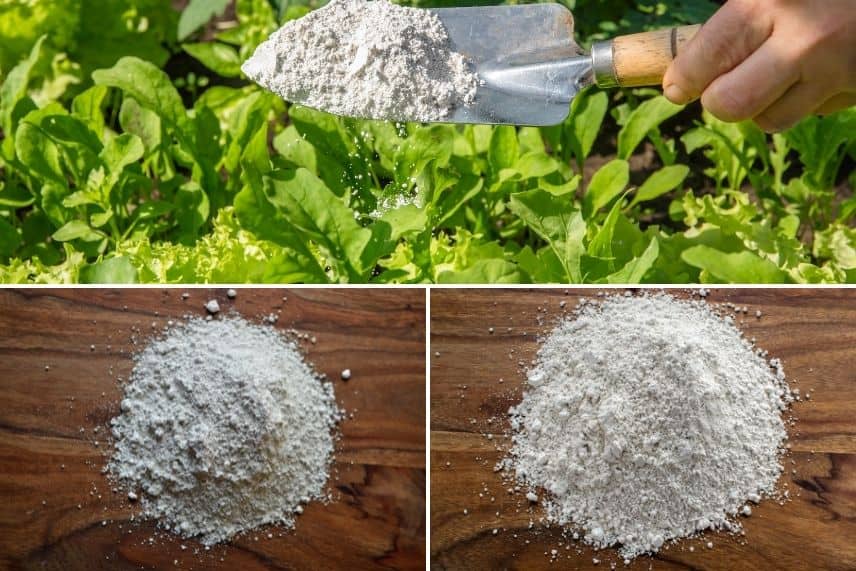
Amorphous diatomaceous earth, whether grey or white, can also be used in the vegetable garden for its antiparasitic properties.
To prevent the appearance of red mites, especially if you have a wooden coop, spraying diatomaceous earth on the coop floor is highly recommended. Use 20 grams per square metre. You can also add a small spoonful to your hens’ dust bath.
Did you know that this diatomaceous earth can also be used in the vegetable garden? Olivier explains everything in his article on organic and natural insecticidal products.
If you have a fireplace or wood stove, don’t hesitate to save the ash. Once sifted, you can mix it with the diatomaceous earth. Similarly, a small layer under the perch helps to dry out the droppings and reduce odours. Finally, the hens will appreciate this ash in their dust bath, mixed with a bit of sand.
Read also
Forbidden foods for chickensAnd when is the big commotion at the chicken coop?
Spring cleaning, does that ring a bell? At the end of winter, during the first days of spring, (and if possible in autumn), you can apply this concept to the chicken coop. So grab your bucket, broom, and brush, and we’ll explain how to carry out a thorough cleaning of the chicken coop.
- Invite your hens to go look elsewhere for some worms to gobble up
- Remove the nesting boxes, perch, bowls, and drinkers
- Eliminate the litter and give it a good sweep
- Scrub the walls of the chicken coop with black soap or white vinegar diluted in hot water using a stiff brush. Do the same for the soil
- Spray the entire chicken coop with white vinegar.
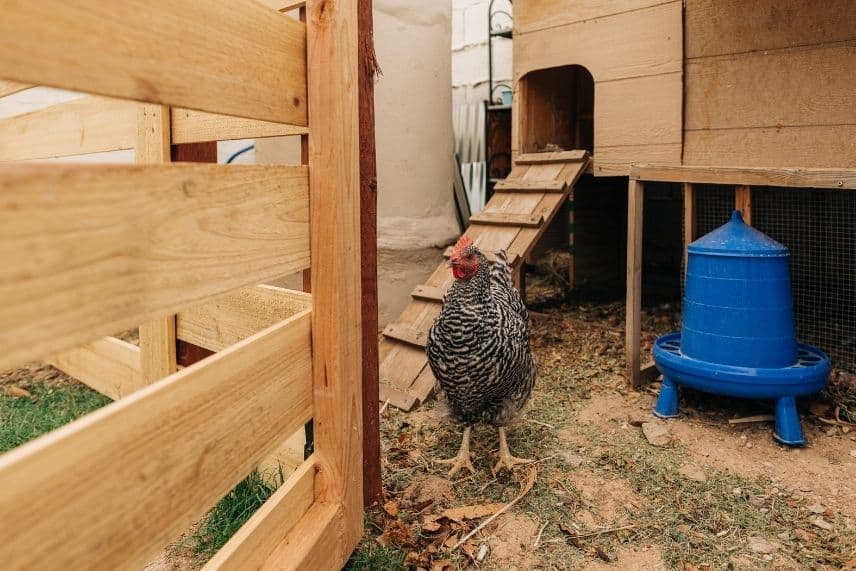 A clean chicken coop is a healthy and comfortable home for your hens
You can also coat the perches with cade oil, a disinfectant derived from cade juniper, effective against scaly leg.
While the chicken coop dries, clean all the accessories in the same way. You can then add some diatomaceous earth and provide your hens with a fresh litter layer. Leave the chicken coop open until evening.
How to prevent bad smells in the chicken coop?
A well-maintained chicken coop typically does not smell bad. It is the accumulation of droppings, often combined with excessive moisture, that produces unpleasant ammonia odours. By regularly cleaning your chicken coop and removing droppings daily using a wooden board slid under the perch, the smells will dissipate. This is especially true if the coop remains open during the day, which is recommended to ensure good ventilation.
However, you may be particularly sensitive to the lingering odours. Spraying household deodorant would be ineffective and could even be unpleasant or dangerous for your hens. It is better to turn to natural solutions that will not negatively impact your chickens:
- Charcoal has the ability to absorb odours, so scatter a few pieces around your coop. Similarly, fireplace ash also has this odour-absorbing power. Sprinkle it on the coop floor to limit the spread of smells. Additionally, chickens love to rub against it to eliminate parasites from their feathers. Diatomaceous earth also absorbs bad odours.
- Certain plants, such as mint or rosemary, emit pleasant scents. Hang a few fresh branches in the coop; the chickens should not touch them.
Alternatively, you can replace the straw in the coop with a plant-based litter made from pellets that can absorb more urea than straw, as well as ammonia vapours. Some litters are even scented with eucalyptus!
Also consider the maintenance of the enclosure.
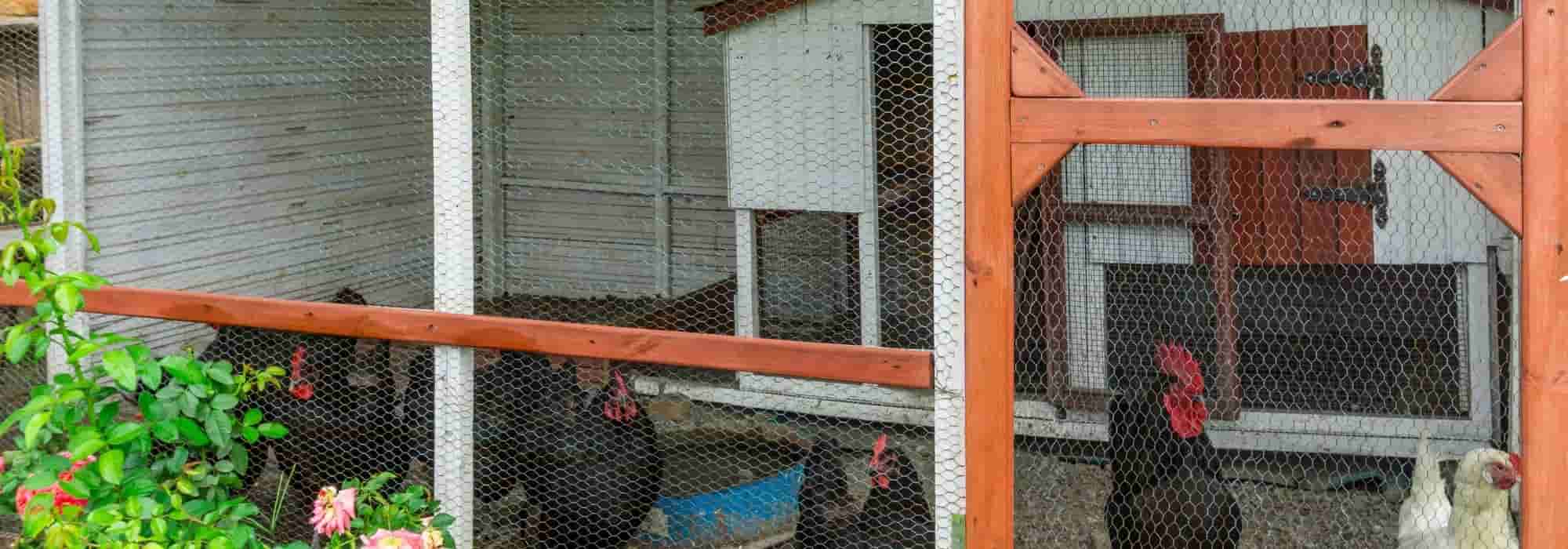
A tidy chicken coop is great. A clean run or pen is also important for the happiness of your hens. So, regularly, remember to remove the dry droppings or the scraps of peelings that your hens have ignored.

The run should also be cleaned
- Subscribe!
- Contents
Comments