





























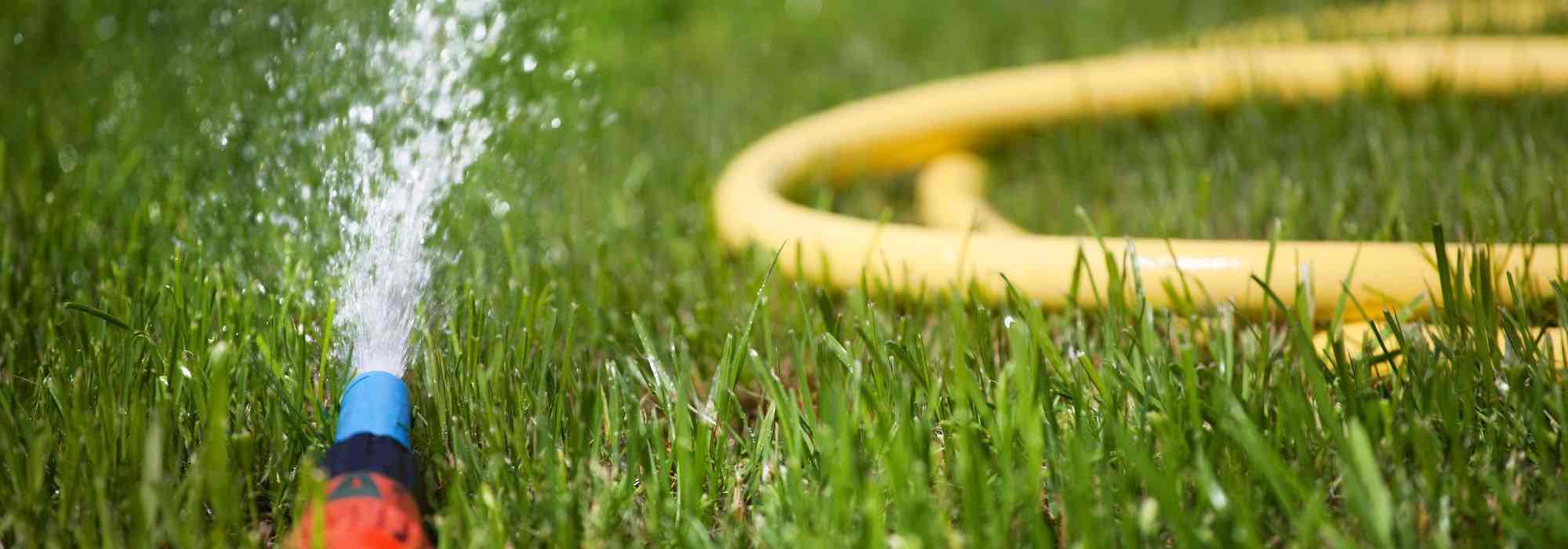
Protecting irrigation systems from frost
Properly winter them and maintain them so they are ready for the following season
Contents
Whether you use an automatic watering system, a manual hose, or even a simple watering can, it is important to protect your equipment from negative temperatures in winter. Ice takes up more volume than water, exerting pressure that can indeed deform, crack, or even burst materials.
During this season, most plants enter dormancy. Their water needs are therefore reduced to a bare minimum and are often simply met by natural rainfall. Except in Mediterranean regions where it rarely freezes, or in heated greenhouses, we recommend putting your irrigation systems away from frost as early as autumn, taking advantage of a dry, sunny day.
Let’s see how to protect and also maintain your watering system to improve its lifespan.
What to do with your hose in winter?

Cut off the water supply
The first step is logically to turn off your entire irrigation circuit and cut off the water supply.
Most homes have stop valves that allow you to cut off the water upstream of the outdoor taps used for watering the garden and plants. It is possible to add a stop valve to your system, either by installing it yourself or by hiring a professional. Once the stop valve on the duct is closed, simply open the taps to let any remaining water drain out before closing them again.
This is also the time to switch the irrigation timer or programmer to “off” mode. Unplug them, and make sure to remove any batteries or removable battery packs to prevent corrosion. Don’t forget to empty any stagnant water left in the programmer and allow it to dry. Then store all the equipment in a dry, frost-free place. We recommend leaving only the timers installed indoors in place during winter.
Pumps that may be connected to the programmer should also be unplugged and winterised. The same goes for pressure reducers or spray diffusers, which should be disassembled, emptied, and dried before storage.
Purge the hoses and taps
Draining pipes and taps eliminates residual water, which could stagnate throughout winter. There are different purging methods, depending on your irrigation system.
Manual drainage
If you have already turned off the water supply as mentioned earlier, simply open the valves or drain plugs of the taps to let the water escape. Once there is no more liquid, close them.
The same principle applies to your watering hoses. Just open all the sprinklers and drippers of your drip hoses, remove the drain plugs or open the mini stop valves so that any remaining water can flow out naturally. Then allow the hoses to dry thoroughly, preferably in the sun.
Automatic drainage
Some systems have an automatic purge that activates independently when the pressure is low. Once the water supply is cut off, the valves will open by themselves to let the water drain away. Close them when there is no more liquid.
Blowout drainage
More technical but very effective, this solution involves purging the pipes and ducts by injecting compressed air to force the residual water out. This requires a compressor.
Some safety precautions will be necessary for this purge, such as wearing protective goggles and gloves. Choosing the appropriate pressure is also crucial to avoid damaging the equipment. You may wish to hire a professional to carry out this task.
Inspect and clean the irrigation system
Winterising your irrigation system is also the time to clean it and check its proper functioning
Start by unscrewing the nozzles from your drip systems and soaking them in warm water mixed with white vinegar to eliminate limescale residues. Then, let them dry in the sun or on a clean cloth. Do the same for the porous hoses, which should be cleaned to remove residues that could hinder their proper functioning. You can soak them in a basin or clean them with a sponge. Allow them to dry before storing.
Next, inspect all components (hoses, sprinklers, nozzles…) by checking:
- that they are not blocked;
- that there are no signs of leaks or cracks;
- that the sealing is still effective and that the seals are in good condition;
- that no moss or algae have developed.
Your irrigation system will thus be operational by spring.
Read also
Watering the garden: how to do it?Store the irrigation system
Then store your hoses in a sheltered and frost-free place: garden shed, garage, cellar, etc. Never bend the hoses to avoid damaging them, but coil them. There are specific hose reels available, but you can also use makeshift solutions (note: at my place, it’s an old stump with a perfect natural “hook” for coiling my winter-protected hose).
To make reinstallation of the irrigation system easier the following spring, you can also take the opportunity to label its different parts, to differentiate the hoses according to their future destination: vegetable garden, flower bed, planters, and pots, etc.
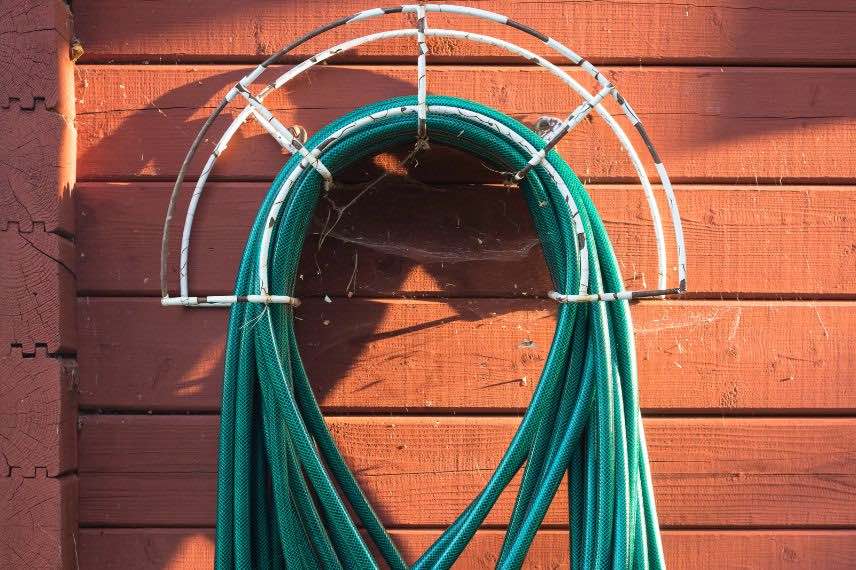
Store your hose in a sheltered place without bending it
Protect outdoor equipment from frost
Elements remaining outside, such as unburied pipes or fixed taps, will need to be protected from frost. To do this, you can use various materials, either purchased or reclaimed:
- bubble wrap;
- insulating tape or foam;
- polystyrene;
- polyethylene or rubber sleeves;
- plastic bags.
Simply secure them using string, an elastic band, or waterproof tape around the equipment to be protected.
Do not use simple cardboard or pieces of fabric if they are not protected from rain. Once soaked with water, they will no longer provide adequate protection.
Don't forget the supplementary watering systems.
Other watering systems will need to be protected from frost.
- The ollas or oyas, these buried or planted irrigation systems, should be sheltered. Empty them, then clean them with warm water mixed with black soap to remove impurities and maintain their natural porosity. Allow to dry naturally in the sun. Any ollas left in the ground should be emptied. They will then be protected from frost and potential cracks with a thick mulch.
- Watering cans can be turned upside down on a stake or moved to a frost-free area.
- In regions subject to severe and prolonged frosts, rainwater harvesting tanks should be emptied at least partially to prevent frost from causing cracks. If you choose to empty them completely, take the opportunity to clean the inside of the tank with a powerful water jet to dislodge impurities. Then allow to dry upside down. Note that buried tanks are usually protected from frost without issue.
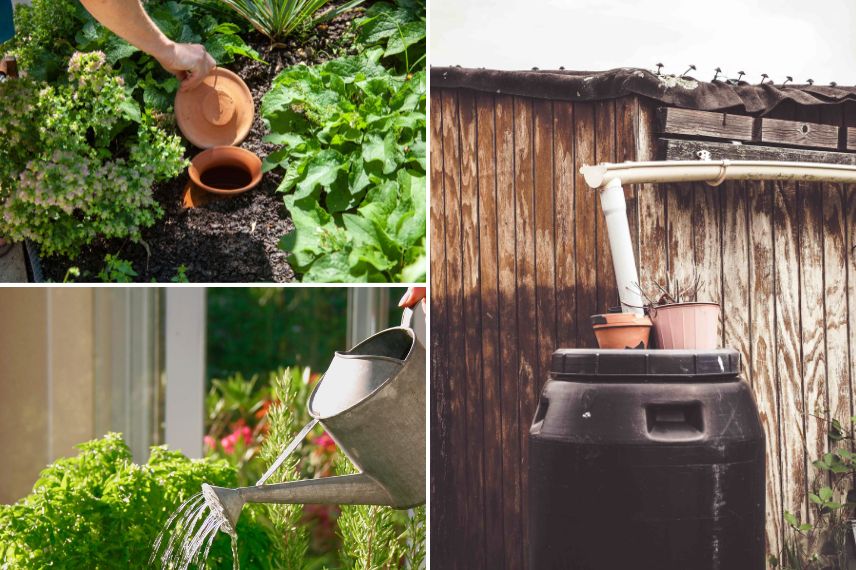
Other watering systems
- Subscribe!
- Contents
![[title]Frozen Garden Hose[/title]](https://en.promessedefleurs.eu/blogwp/wp-content/uploads/2023/01/Proteger-les-systemes-darrosage-du-gel.png "Protecting Irrigation Systems from Freezing")
Comments