





























Protecting Your Garden from Frost with Makeshift Solutions
Tips and advice for preserved plants on a budget
Contents
Autumn leaves are adorned with a thousand hues and the days are getting shorter. The cold is slowly starting to make its presence felt in the garden, and it’s high time to prepare your plants for winter. For ecological or economic reasons, it is possible to protect your garden using simple and effective methods, sometimes even repurposing everyday objects or giving them a second life. You can also use some of your garden waste, such as fallen leaves, as insulating mulch. In short, a bit of imagination and elbow grease for a dormant and serene garden, while waiting for the return of spring.
Discover our tips and advice to protect your garden from frost using what you have on hand.
A bit of imagination allows for creating winter protections for the garden

Bring in the most tender plants.
Cold is the sworn enemy of tender plants, often of exotic and tropical origin, such as cacti, succulents, begonias, agaves, certain fuchsias, or other banana plants. And there is only one solution to keep them alive: shelter them! In regions with cold winters, it is preferable to grow these perennial and tender bush plants in pots, which you can easily protect.
Deciduous plants can be stored in a cold greenhouse, garage, cellar, conservatory, or an unheated room in the house. Plants with evergreen foliage will also need to be sheltered, but with a source of light. They should be placed in a conservatory or in the house, preferably in a room that is little or not heated, near a window or not, depending on the needs of each plant. Avoid placing them too close to a heat source, such as a radiator or fireplace.
Sometimes, it is the humidity and abundance of rain in winter that can be fatal, for example with Opuntias, which are indeed very hardy, but do not tolerate excess moisture. These plants then need a well-drained substrate, with gravel or river sand. All that remains is to shelter them from the rain, by placing the plant under a porch, pergola, against a wall, in a greenhouse, in a conservatory, or why not under an old umbrella or a tarp stretched between stakes?
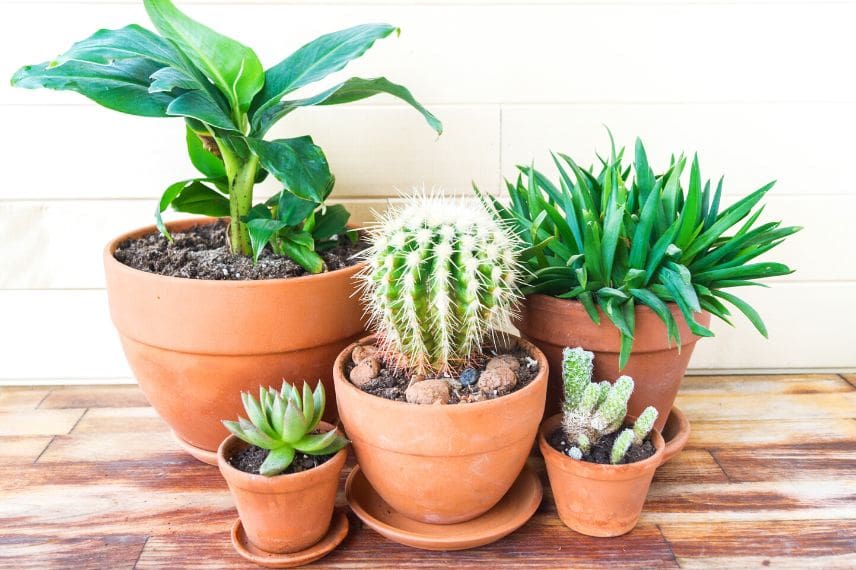
Banana plants, cacti, and other tender plants simply need to be sheltered in winter
Makeshift shelters and bottle mini-greenhouses
If you have some tender plants in your garden, such as the last lettuces of the season or a Fuchsia, don’t hesitate to make makeshift shelters. For example, you can use a translucent plastic bottle as a protective cloche, particularly the large containers of 6 to 8 litres. Simply remove the bottom of the bottle, then place this upcycled cloche over your plant. Remember to take off the cap to prevent moisture from accumulating during the day and thus avoid mould formation. In case of wind, make a small hole near the base of the bottle to insert a garden stake or tent peg, which will prevent your cloche from blowing away at the slightest breeze.
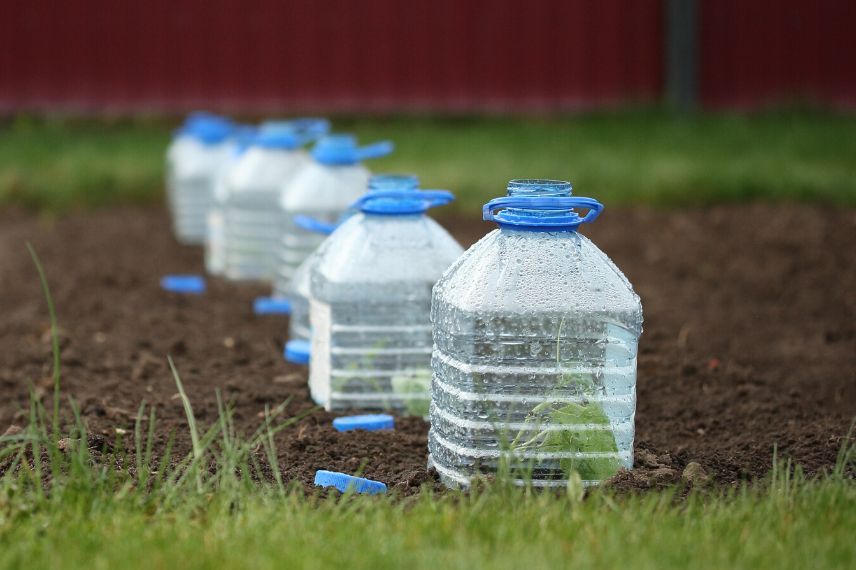
Plastic bottles make excellent protective cloches
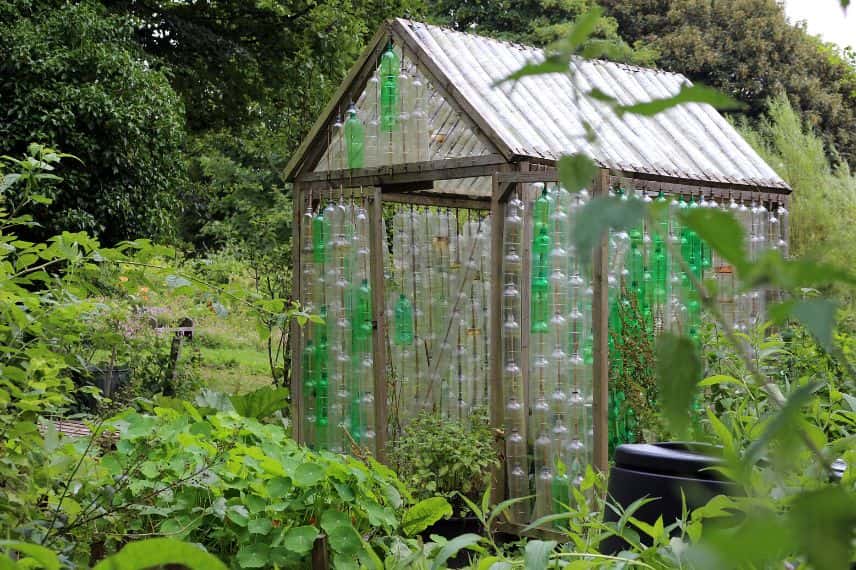
You can also create shelters using various recycled materials. For instance, you can form a frame around the plants with straw bales, pallets, or other insulating materials, then cover the top with an old window or a sheet of polycarbonate. This results in a frame, also known as a mini-greenhouse. Let your imagination run wild, while keeping in mind that you must create small openings or use partially breathable materials to avoid excessive condensation and thus limit the proliferation of rot.
Note: In case of strong sunlight, remember to open your shelters and remove your cloches, as the temperature can rise quickly inside.
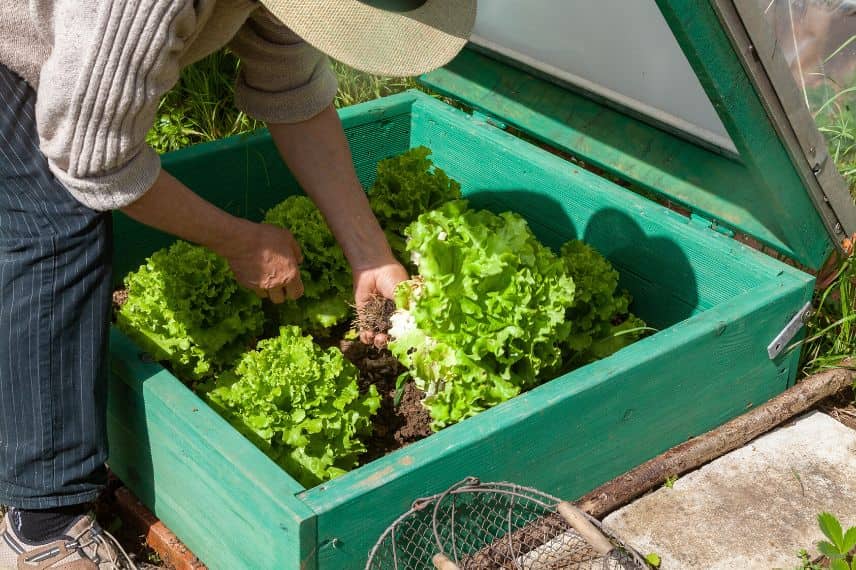
A wooden frame, an old window, or a piece of translucent plastic, and there you have a garden frame
Homemade winter covers
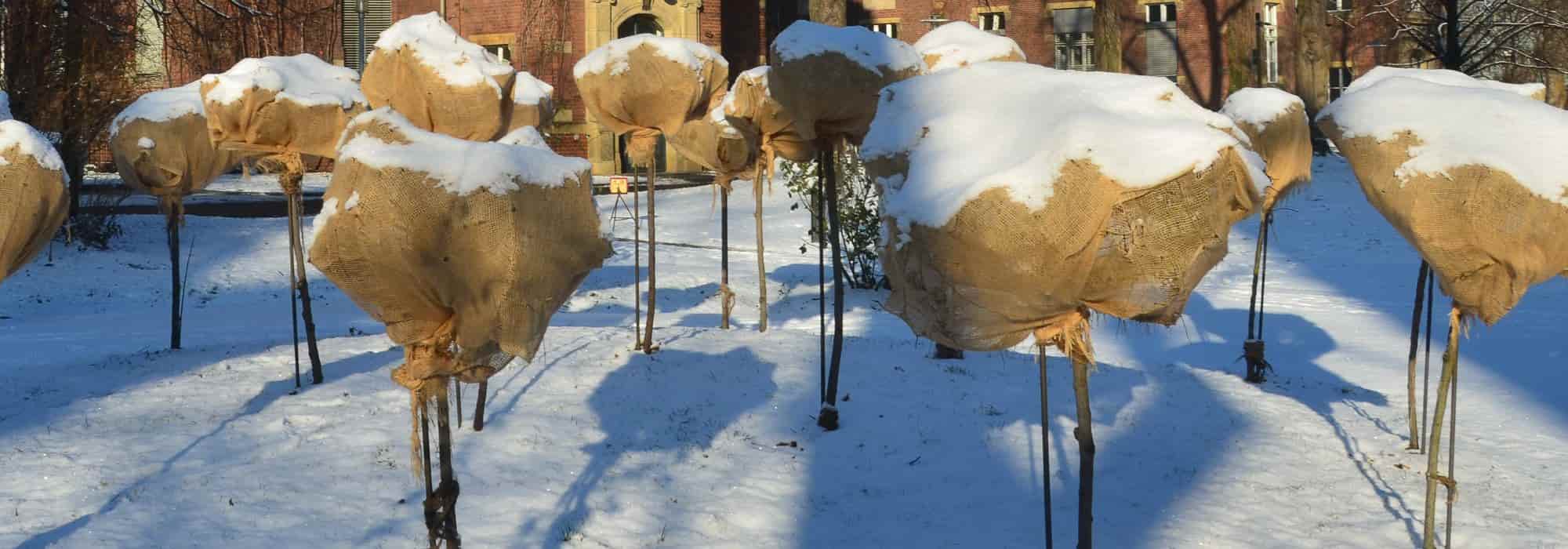
If you don’t have a winter cover, you can also use old net curtains, hessian sacks, or even old sheets. They will be perfectly suitable for short night frosts or mild cold spells, especially in regions with mild or temperate climates. For bushes, place the sack over the branches and secure it with string or pegs. For perennial plants or vegetables, use bamboo stakes, branches, or even wire mesh to hold the fabric above the foliage, much like a makeshift forcing tunnel.

Hessian sacks protect bushes from the cold
Read also
What to do with cardboard in the garden?A good mulch of fallen leaves
Like a warm blanket, mulching has the advantage of insulating your plants, particularly their roots, from the winter cold. In addition to preventing the soil from freezing, it also stops the pounding from autumn showers. If you have deciduous trees and bushes, you will be fortunate to have one of the best mulches available: fallen leaves. This mulch should be applied in autumn, before the soil gets too cold. Using a leaf rake, cover the bases of the bushes, perennials, and winter vegetables in the vegetable garden with a thick layer of leaves, up to 30 cm. Don’t skimp on the size of the leaf pile, as they will tend to compact very quickly, and you may lose up to two-thirds of the height within a few weeks. Also, remember to clear a bit of the collar of the plants in case of significant moisture. Moreover, the fallen leaves will enrich your soil and help maintain soil life as they decompose.
→ Note: avoid using diseased leaves, such as those from roses at the end of the season.
→ Check out Olivier’s video on the subject:
You can also use the very large dry leaves from a palm or fern, which can be placed like a “straw hat” to protect other sensitive plants. And if you don’t have or have insufficient fallen leaves, don’t hesitate to use the last grass cuttings before winter. You can also find straw or hay from local farmers, who often sell small bales from the previous year, specifically intended for mulching or composting. When cleaning the vegetable garden, feel free to also use the leftover leaves from your crops, as long as they are free from diseases. In extreme cases, you can use untreated brown packaging cardboard with little or no writing. It may not be very aesthetic, but it will do the job.
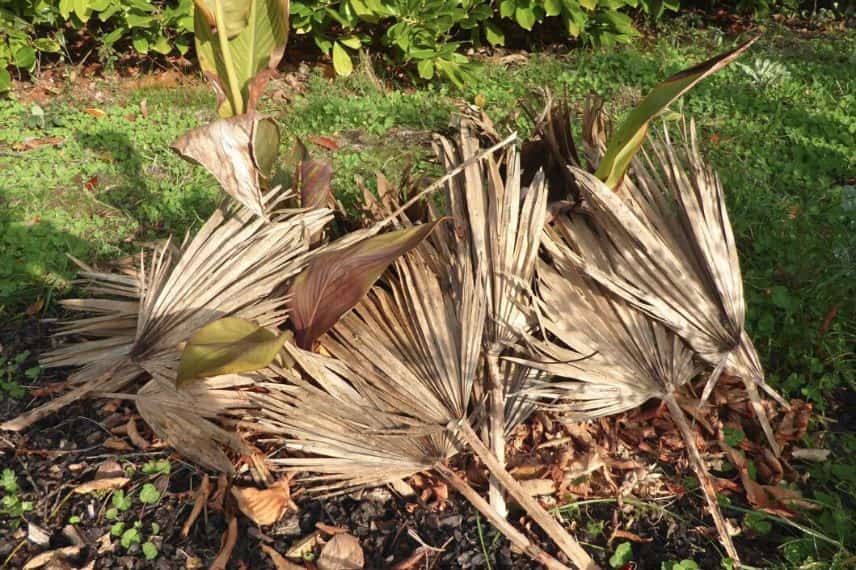
Dry palm leaves make a good mulch against the cold (here for Cannas)
Protect the pots as well.
Protecting your plant pots is also very important in winter when they remain on the terrace or balcony. By insulating the pot, you protect the root system of your perennials and bushes from the cold, while also preventing terracotta pots from cracking due to frost. To start, remove the saucers and replace them with wooden blocks to improve drainage of rainwater, as well as to insulate the pot from the cold of the terrace slab. Next, wrap your pot with any insulating material: an old blanket, cardboard, old carpet, a worn doormat, a hessian sack, a sports mat given a second life, bubble wrap, etc. Remember to mulch the base of the plant and cover it with a winter fleece if it is sensitive to the cold.
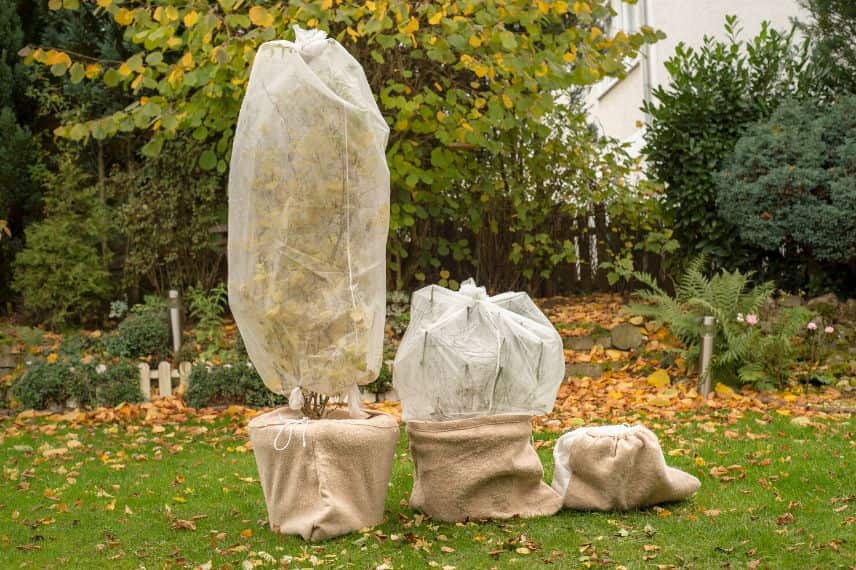
A hessian sack helps insulate the pot in winter
- Subscribe!
- Contents

Comments