































Get 10% off your first order with the code: FIRST-10
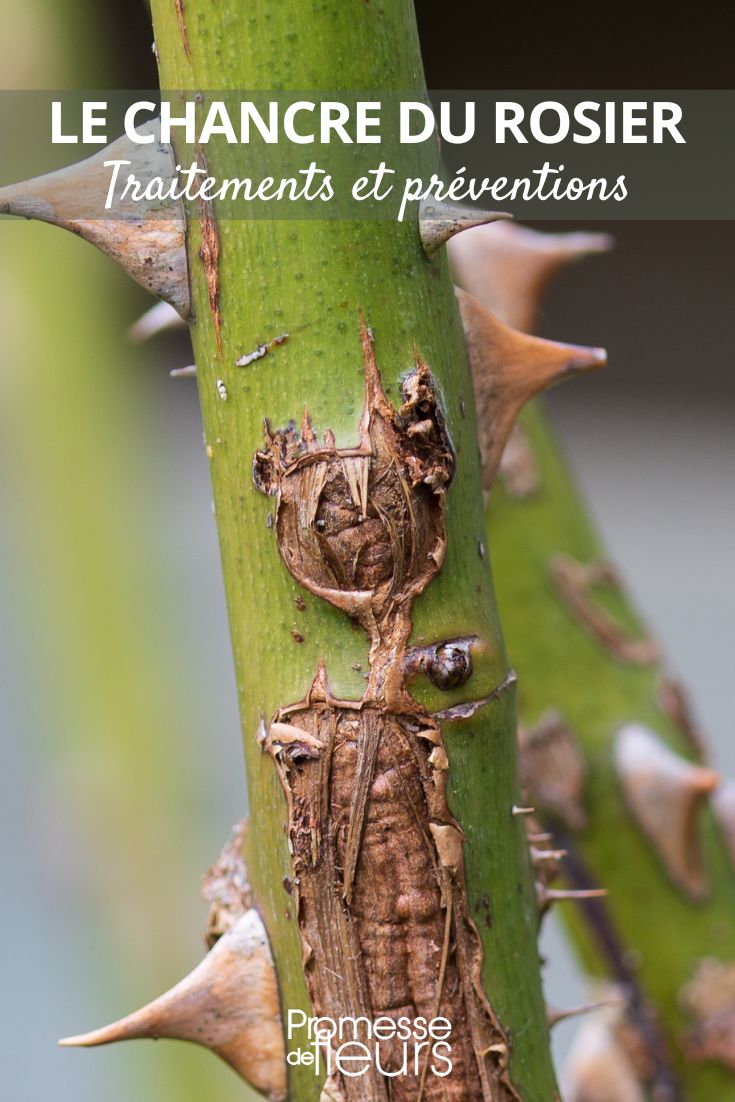
Rose canker: symptoms, treatments and prevention

Rose canker: symptoms, treatments and prevention

Identify and treat this disease naturally

Contents

Modified the 11 February 2026  by Ingrid 6 min.

Roses, whether climbing, rambling or groundcover, adorn many gardens and are regarded as symbols of elegance and beauty. However, these hardy plants are not immune to diseases, and one of the most feared by gardeners is the rose canker. This fungal disease affects the health of roses by weakening their structure and, in the most severe cases, can lead to the death of the plant. Discover, in this article, what rose canker is, how to recognise it, prevent its appearance and fight it effectively.

Difficulty

What is rose canker?

Canker is a cryptogamic disease, caused by several types of fungi, notably Botryosphaeria ribis, Coniothyrium fuckelii, Coniothyrium wernsdorffiae, Cryptosporella umbrina, Leptosphaeria coniothyrium and the genus Phomopsis. These fungi usually enter plant tissues through wounds or poorly healed cuts. Once inside, they proliferate and cause lesions on stems, affecting sap circulation and weakening the plant.

Cankers usually appear in late winter or early spring, when the plant is still dormant and therefore more vulnerable. They thrive particularly in cold, damp conditions, which explains why humid climates and poor pruning practices are often linked to disease.

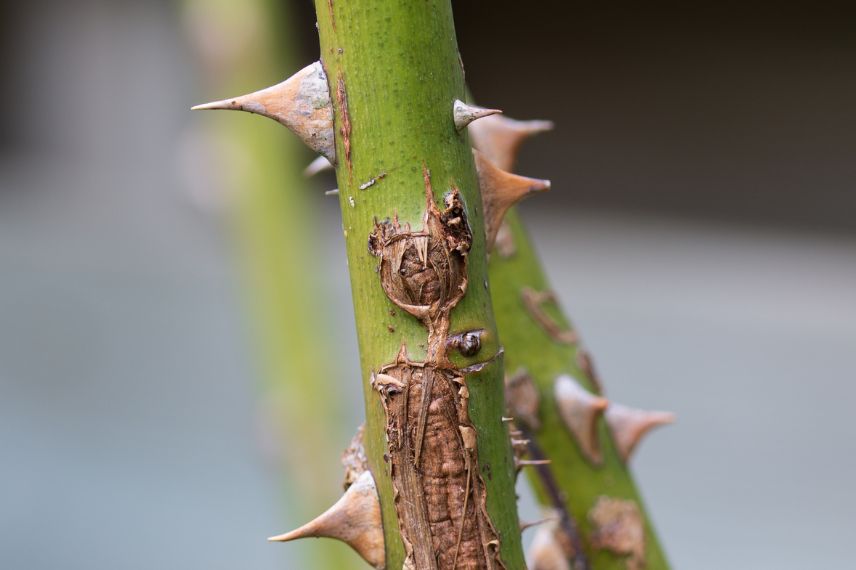
rose canker disease

Cracks and fissures caused by rose canker

Rose canker symptoms

Diagnosis of canker can sometimes be difficult, as symptoms can be confused with other diseases or damage caused by cold. Here are some characteristic signs to watch for:

  • The initial signs of canker appear as small brown or black spots on the stems. These spots can widen and become more noticeable as the disease progresses.
  • As the fungus penetrates the tissue, the stem may crack or become fissured. These cracks may open, revealing dry, discoloured wood inside.
  • Another visible consequence is the wilting of the shoots located above the infected area. This occurs when sap can no longer circulate properly, depriving the plant of the nutrients it needs.
  • The bark around the canker will take on a brownish-red or black colour, contrasting with the healthy green of other parts of the stem.
  • In advanced cases, the rose bush will then lose its leaves prematurely, and the buds will not develop properly or will drop before opening.
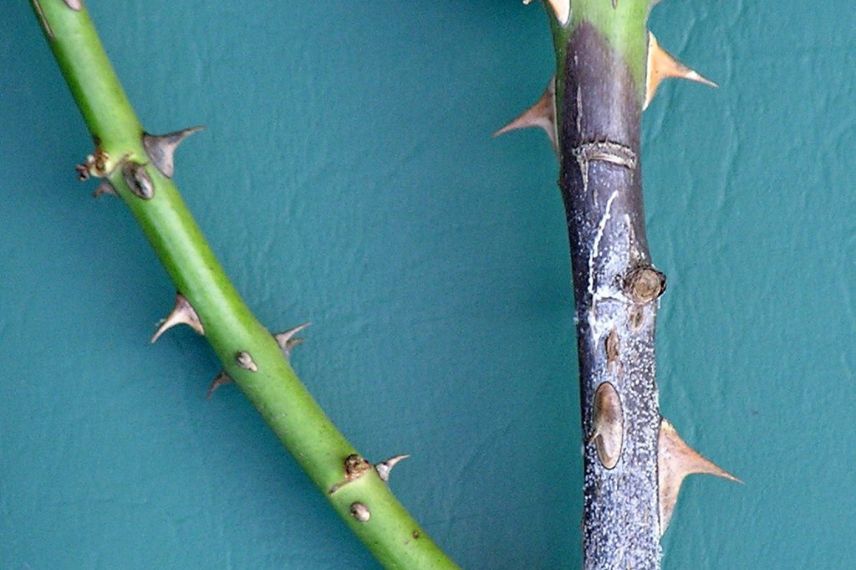
rose diseases: canker

Here, another form of rose canker: black spots on the stems caused by Phomopsis sp. (photo credit: Wikipedia)

Causes and favourable conditions

Several factors contribute to the appearance of canker on roses. By knowing them, you can reduce the risk of infection.

  • Mechanical injuries : Poor pruning or unhealed cuts are often entry points for fungi. An overly severe pruning, especially in winter, can weaken the plant and make it more vulnerable. Likewise, an unsterilised pruning shear can contaminate the rose.
  • Climatic conditions : A particularly harsh winter followed by high spring humidity creates an environment conducive to the proliferation of fungal spores. Roses weakened by frost are more likely to develop canker.
  • Plant stress : A rose plant weakened by nutritional deficiencies, a lack of water or poorly drained soil is more susceptible to diseases, including canker.
  • Presence of other diseases : Other infections, such as black spot disease or powdery mildew, also weaken the plant and make it more vulnerable to secondary infections such as canker.

Prevention of rose canker

Prevention is the best weapon against canker. Here are some simple and effective measures to protect your roses:

1 – Perform clean, neat pruning : Use well-sharpened and disinfected tools to prune your roses. This helps prevent irregular cuts that could facilitate entry of fungi. Avoid pruning during periods of severe cold.

→ For more information on pruning and the most favourable time, read our article: The pruning of roses.

2 – Apply a healing putty : After pruning, apply a healing putty to large cuts to seal the wound and prevent ingress of fungal spores.

3 – Maintain good air circulation : Plant your roses in well-ventilated areas to avoid excess humidity. Proper spacing between plants helps reduce stagnant moisture that promotes the proliferation of fungi. The planting distance for roses depends on their type; for bush roses, allow 50 to 70 cm between each plant, while climbing roses require 1.5 to 3 metres.

4 – Promote well-drained soil : Roses do not enjoy soils saturated with water. Ensure the soil in which they are planted is well-drained, as excess moisture weakens the plants and encourages the growth of fungi.

5 – Fortify your roses : Regularly enrich the soil with compost and fertilisers suitable for roses. Also apply horsetail manure or nettles manure to strengthen your roses. A well-nourished plant is more resistant to diseases.

6 – Monitor for signs of infection : Regularly inspect your roses to detect early signs of canker. The sooner you identify the disease, the better your chances of fighting it effectively.
Treatment for rose canker

If, despite all precautions, your roses are affected by canker, there are methods to limit the damage and save the plant:

1- Pruning infected parts:
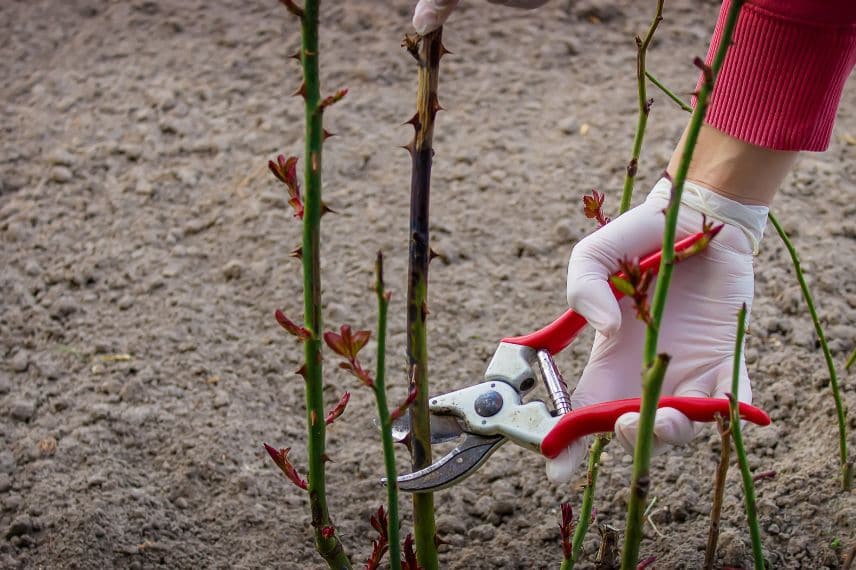
Cut immediately all parts of the plant showing signs of canker. Be sure to cut several centimetres below the affected area to remove all diseased tissue. Disinfect your tools between each cut to prevent the spread of the disease.

Cut the stems of the diseased rose

2- Fungicidal treatments:
Use a fungicide specifically targeted at canker. The horsetail manure and the nettle manure are very effective at boosting the rose’s natural defences against fungal diseases. You can, in this regard, also use them preventively.

Another solution: Mix one tablespoon of bicarbonate of soda in 1 litre of water with a little washing-up liquid. Spray this solution on your roses to limit the development of canker. The bicarbonate alters the pH of the plant surfaces, making fungal growth more difficult.

Apply it as soon as you have pruned the plant to prevent a new infection. It is advised to carry out several treatments, particularly after pruning and before the appearance of the first leaves in spring.

3- Strengthen the plant:
Once pruning is complete, help your rose recover by applying fertiliser rich in potassium (for example wood ash) and phosphorus, or well‑rotted compost. This will stimulate the growth of new shoots and strengthen the plant against future attacks.

4- Remove diseased parts:
Do not leave cut branches and leaves lying around in your garden. Canker is highly contagious, and spores can survive in plant debris. Take the diseased branches and leaves to a household waste recycling centre or a specialist recycling facility where they will be treated properly. This prevents any spread of spores in your garden.

Comments

Rose Canker: Symptoms, Treatments, and Prevention