





























Rosemary: the best varieties to revegetate a slope
Selection of groundcover varieties
Contents
It’s one of the emblematic plants of the Mediterranean: rosemary. This aromatic bush is an essential in the kitchen, used to flavour many dishes and can also be used in phytotherapy.
But its evergreen foliage and its sometimes creeping habit also make it a very good candidate for greening up unattractive areas of the garden, such as slopes. From its origins, it is, in fact, undemanding. It tolerates poor, rocky or sandy soils, even when very dry in summer and calcareous.
Discover our selection of the best rosemary groundcovers to plant in the garden to brighten up a slope.
To learn everything about growing rosemary, discover our complete guide: Rosemary: planting, benefits, harvest

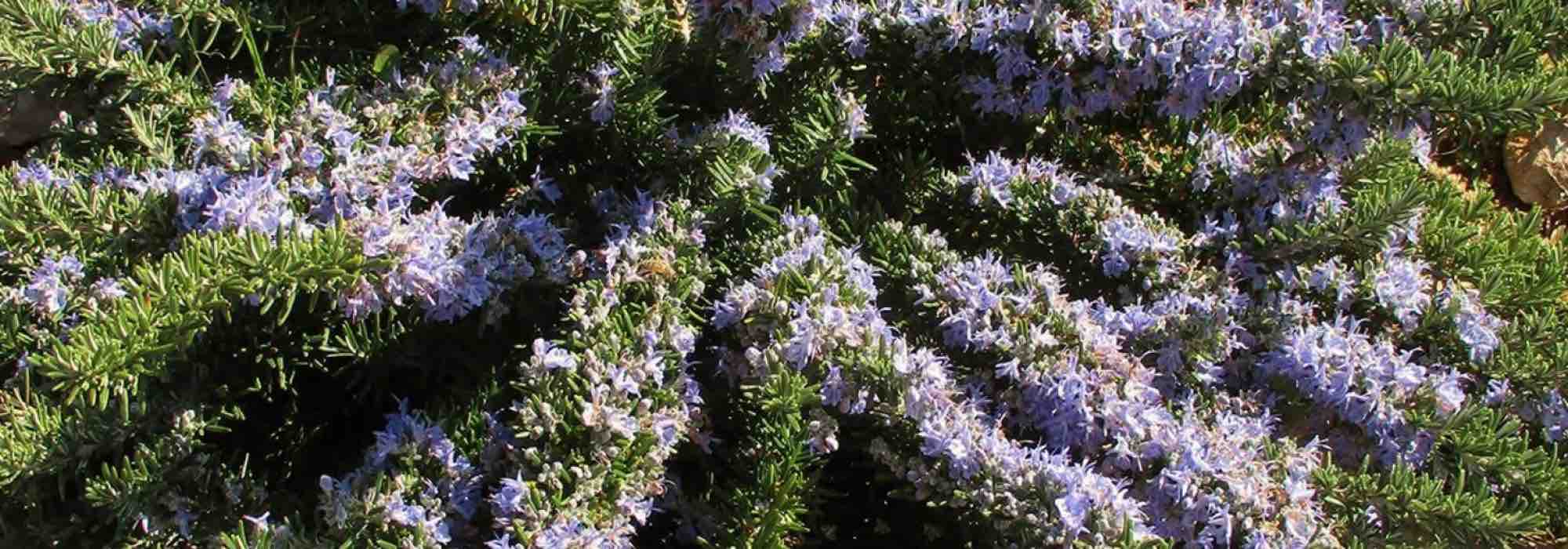
Creeping rosemary - Rosmarinus officinalis 'Prostratus'
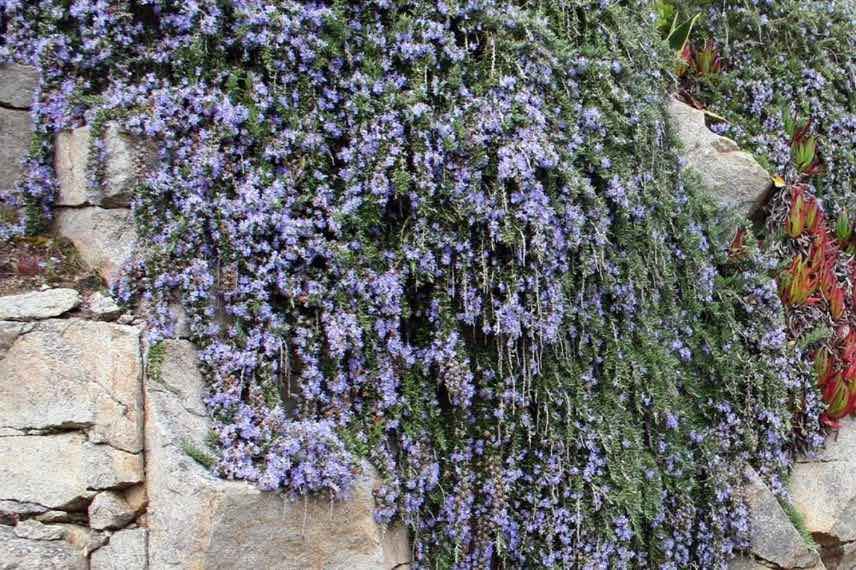
This creeping rosemary grows to a maximum height of just 30 cm, but can spread to more than 1.25 m. Its prostrate, horizontal habit makes it ideal for easily covering ground in parts of the garden. If it thrives planted over a low wall or in a rock garden, this is obviously also an ideal candidate for dressing a bank, even very dry in summer and exposed to strong winds. It easily outcompetes weeds.
The flowering, in the form of a multitude of small lavender-blue flowers, is a boon for pollinating insects. They have the typical shape of flowers in the Lamiaceae family, with bilabiate corollas (forming two lips). Flowering takes place in spring, but can be repeat flowering in late summer and autumn in mild southern regions.
The evergreen foliage, remaining attractive all year round, releases camphoraceous and resinous notes when brushed.
Despite its Mediterranean origins, this rosemary has fairly good hardiness down to -12°C, provided the soil is well-drained and that water does not stagnate there in winter. It benefits from natural self-regeneration over time by layering (young shoots take root when they come into contact with the soil).
Read also
9 creeping shrubsCommon rosemary - Rosmarinus officinalis ‘Corsican Blue’
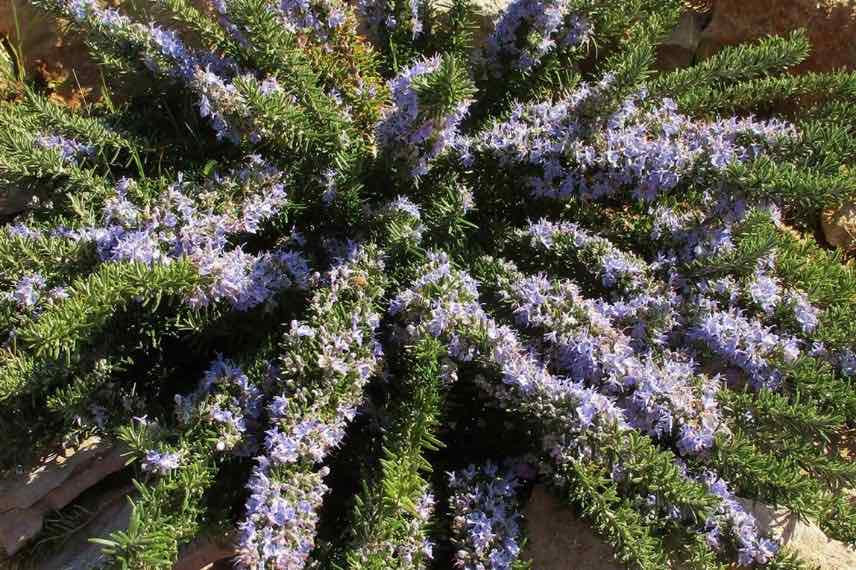
‘Corsican Blue’ is a creeping rosemary variety that will reach just over 50 cm in height and a 1.2-metre spread. Its slightly arched silhouette is quite graceful and will make a wonderful groundcover for a slope, even very exposed and arid. It forms a dome that becomes a true blue floral cascade from the end of winter (in mild regions) or at the start of spring (north of the Loire).
The foliage retains the typical appearance and fragrance of Rosmarinus officinalis.
Hardy and floriferous, this shrub brings colour and light to the garden, while attracting valuable pollinators.
It proves a little less hardy than some of its congeners, but will still be able to withstand frosts down to -10°C, if the soil is light.
Prostrate rosemary - Rosmarinus officinalis ‘Whitewater Silver’
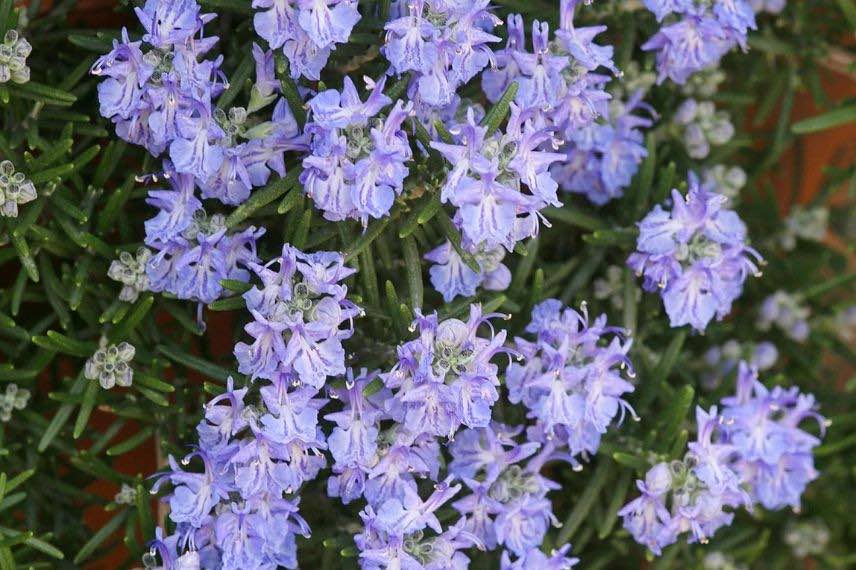
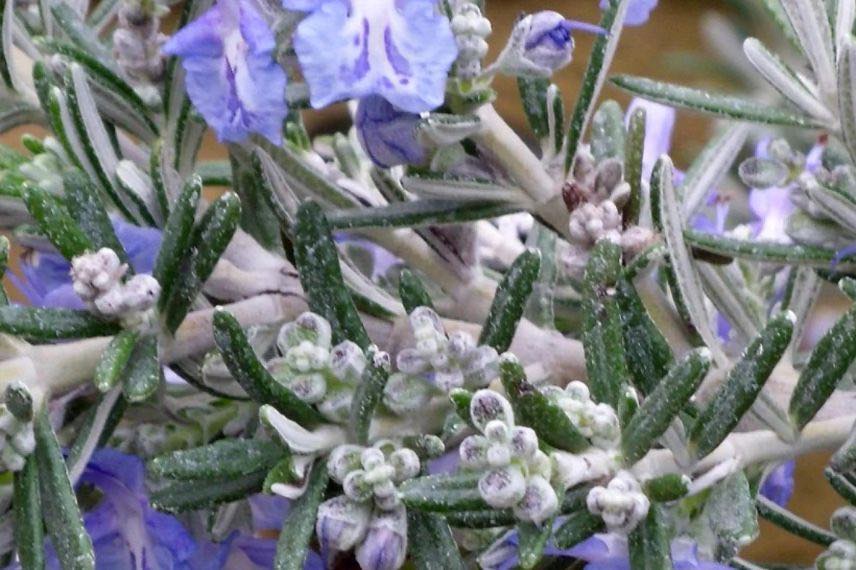
Another groundcover option for dry, sunny soil: rosemary ‘Whitewater Silver’ is a variety with a prostrate habit, creeping to nearly 1 metre wide. It is distinguished by its foliage that is particularly bright. It bears a typical dark green foliage, but reveals a silver underside or woolly white, gleaming in the sun’s rays.
The late winter or spring flowering reveals a profusion of pale blue flowers tinged with violet.
If this variety is perfect for brightening up a bank, it is because it requires sun and thrives on dry, poor soil. It will be able to withstand frosts down to -10 °C as long as its soil is not too wet and waterlogged in winter.
As with all rosemary, it is an aromatic and medicinal herb, suitable for a range of uses.
Read also
Growing rosemary in a potGroundcover rosemary - Rosmarinus officinalis 'Pointe du Raz'
‘Pointe du Raz’ is a groundcover rosemary variety that’s really easy to live with, which requires no special care and will be ideal for low-maintenance dry gardens. Its creeping habit extends up to 1.5 metres across for 10–50 cm in height, which will allow it to green up a slope with ease. Aridity, poor soils, chalk, drought and large stones: words that do not scare it and will let it grow with ease. Of course, owing to its wide tolerance, it is also a very good candidate for sunny rockeries and walls, from which it will cascade gracefully, helping to soften their minerality.
Evergreen, it remains ornamental all year round. It releases, when crushed, that strong, highly recognisable fragrance, which is found in the making of bouquet garni.
In spring, ‘Pointe du Raz’ treats us to clusters of small lilac-blue flowers veined with dark blue. This flowering can be repeat-flowering in summer, depending on the region. It pleases both the gardener and insects equally.
If you prefer relatively mild winters and not too damp, this rosemary is nonetheless capable of withstanding frosts down to -10°C, which allows it to be grown in the open ground in many regions.
Creeping rosemary - Rosmarinus officinalis ‘Capri’
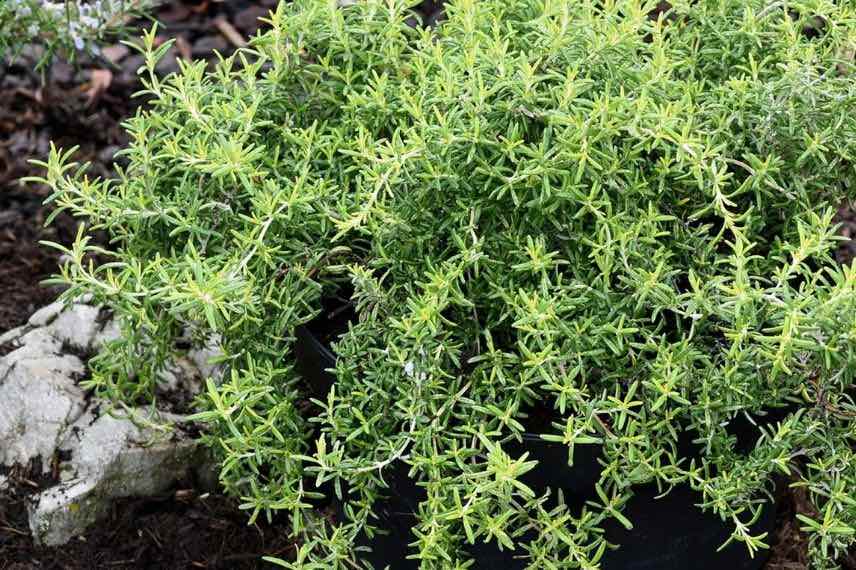
‘Capri’ stands out for its smaller, more compact silhouette, which allows it to blend in anywhere. It actually grows to only 20 cm tall with a 40 cm spread. That makes it a perfect candidate for pots and rockeries, and of course for slopes. If the area to cover is large, don’t hesitate to plant several of these adorable little compact rosemaries to bring it to life with charm.
In spring, and sometimes also in late summer, it treats us to small lavender-blue flowers that attract a ballet of insects.
Just like its congeners, the aromatic foliage can be used in cooking all year round. It exudes camphoraceous and resinous notes, with a hint of lavender.
Particularly drought-tolerant, it simply needs protection from hard frosts below -10°C. The better drained the soil, the more it will be able to withstand the cold. Over time, it will self-propagate by layering, and it has the advantage of not becoming bare in the centre as it ages, which helps it stay attractive for many years.
- Subscribe!
- Contents

Comments