





























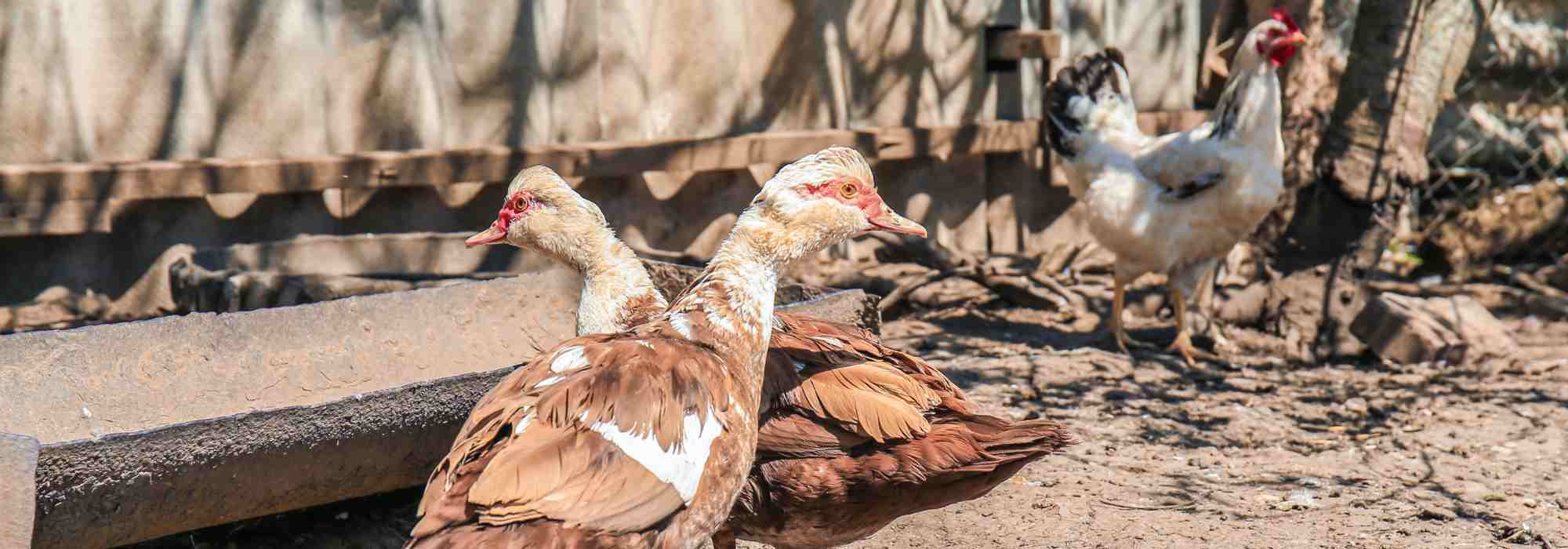
Raising backyard chickens: how to do it?
All the tips for choosing your animals, setting up your space and ensuring their well-being
Contents
Setting up a smallholding is an exciting and rewarding activity that reconnects you with nature while producing fresh, local food. But, before you get started, it is essential to understand the specific needs of each animal to ensure their welfare and optimum production. Discover how to arrange your space, feed your animals in a balanced way and maintain a healthy environment for a thriving and harmonious smallholding.

What is a poultry yard?
The poultry yard refers to an enclosed space, usually located near a house, where various domestic animals are raised for food production.
The French term ‘basse-cour’ meaning poultry yard originates from medieval French ‘base-court’, meaning a low court or rear courtyard, used to denote the courtyard situated behind the main buildings of the estate. Traditionally, these yards housed animals such as chickens, ducks, geese, and rabbits, enabling self-sufficient production of meat, eggs and feathers.
Different animals that make up a farmyard.
- Chickens: Chickens are the most common animals in a backyard. They provide fresh eggs and, depending on the breed, meat. Popular breeds include Sussex, Marans and Leghorn.
- Ducks: Ducks, such as Pekin ducks or Rouen ducks, are kept for their tasty meat and eggs. They need a water feature to bathe.
- Geese: They are valued for their meat and their feathers. Breeds such as Toulouse geese and Guinea geese are popular. They also play a protective role in the backyard, thanks to their territorial behaviour.
- Turkeys: Turkeys, such as Bronze or White turkeys, are raised mainly for their meat. They require more space than chickens and must be protected from predators.
- Rabbits: Rabbits, notably breeds such as the Rex rabbit or the Californian rabbit, are raised for their tender meat and fur. They require suitable hutches and a high-fibre diet.
- Guineafowl: They are valued for their tasty meat and their role as guards thanks to their shrill call. The grey guineafowl is a common breed in backyard flocks.
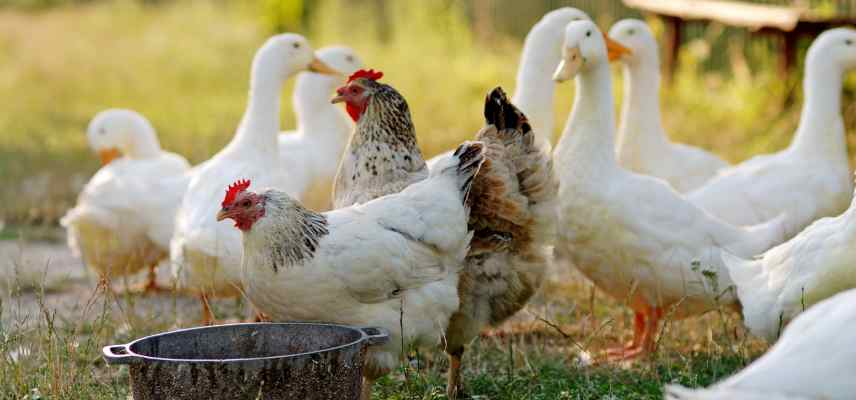
Chickens and geese are traditionally kept in the backyard.
How to set up a chicken coop and run?
Space
Poultry yard size will depend on the number and type of animals. In general, it is advised to allow about 1 to 2 square metres per hen to move freely and avoid overcrowding. Ducks and geese, being larger and needing aquatic space, require more room. For these birds, a minimum of 3 to 5 square metres per bird is recommended. Rabbits, on the other hand, must have spacious hutches to move and dig, with a minimum of 0.5 square metres per rabbit. All that remains is to do the maths…
Shelters
Each type of animal requires a specific shelter to ensure their comfort and safety :
- Chickens: A well-designed coop is essential for hens (1 m² per hen). It must include perches where hens can sleep, nest boxes for egg laying, and good ventilation to prevent damp and respiratory diseases. The floor should be covered with absorbent litter, such as wood chips or straw, to be renewed regularly.
- Ducks and geese: These birds require a shelter larger than that for chickens (approximately 3 to 5 square metres per bird). The shelter must be large enough to allow each bird to stretch out and move freely. Access to a water source is essential, as ducks and geese spend a large part of their time in the water. A small pond or shallow basin will do nicely.
- Rabbits: Rabbits should be housed in secure hutches, sheltered from the weather and predators. Hutches should provide hiding places, spaces to move and chewing materials to prevent boredom. The floor should be covered with hay or straw, regularly cleaned to prevent disease.
Enclosures
A fenced enclosure is essential to protect the animals from predators such as foxes, martens or stray dogs, and to prevent escapes. Here are some tips for building the enclosure:
- Height and sturdiness: the fence should be high enough, ideally 1.5 to 2 metres, to prevent animals from jumping over and predators from entering. Use a sturdy, durable mesh to prevent breaches.
- Burial of the mesh: bury the base of the mesh to a depth of 30 to 50 centimetres to prevent predators from digging and entering the enclosure. A concrete edging can also be effective to reinforce this protection.
- Top protection: for particularly vulnerable poultry, consider covering the top of the enclosure with netting or mesh to protect against aerial predators such as birds of prey.
- Secure gates: gates should be securely closed with sturdy locks to prevent accidental openings and intrusions.
- Size of the enclosure: for hens, the outdoor enclosure should provide at least 2 to 3 square metres per hen. It should be fenced with sturdy mesh, buried at about 30 cm to prevent diggers. For ducks and geese, the fence should be higher (1.5 to 2 metres) to prevent escapes and protect against predators; and we would consider around 5 to 10 square metres per bird.
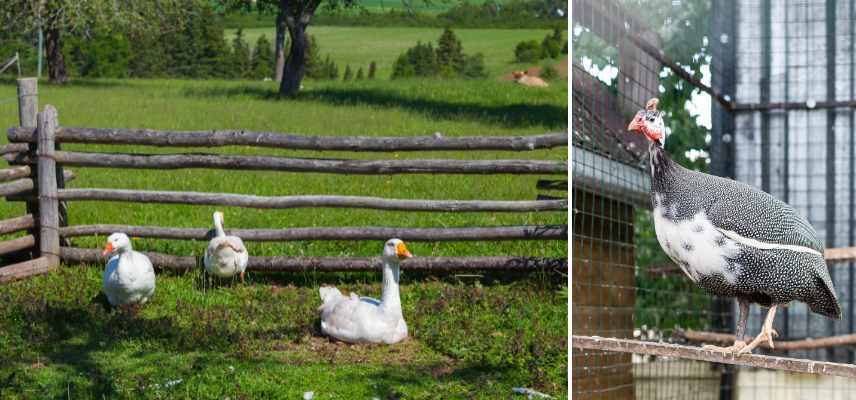
The enclosure should suit the birds, with overhead netting where appropriate.
Care and maintenance to plan for
Feeding
A balanced diet is essential for animal health. Here are the specific needs for each type of backyard poultry:
- Chickens : they require a diet rich in grains, protein and vegetables. A mix of maize, wheat, barley, oats and soybean meal is ideal. They also benefit from fresh vegetables such as carrots, cabbages and courgettes. Leftovers can be given as a supplement, but salted, sugary or spicy foods should be avoided. Ground oyster shells should be added to their diet to ensure calcium intake, essential for egg production.
- Ducks and Geese : these waterfowl need cereals and leafy greens for a balanced diet. Maize, wheat, barley and leafy greens such as spinach and lettuces are recommended. Ducks and geese enjoy foraging for their food in water, so it is beneficial to provide floating foods.
- Rabbits : rabbits require hay, vegetables and rabbit-specific pellets for a balanced diet. Quality hay forms the basis of their diet, essential for digestion and tooth wear. Fresh vegetables such as carrots, spinach, broccoli and herbs (parsley, mint) should be given as a supplement. Rabbit-specific pellets, high in fibre and low in calories, complete their diet.
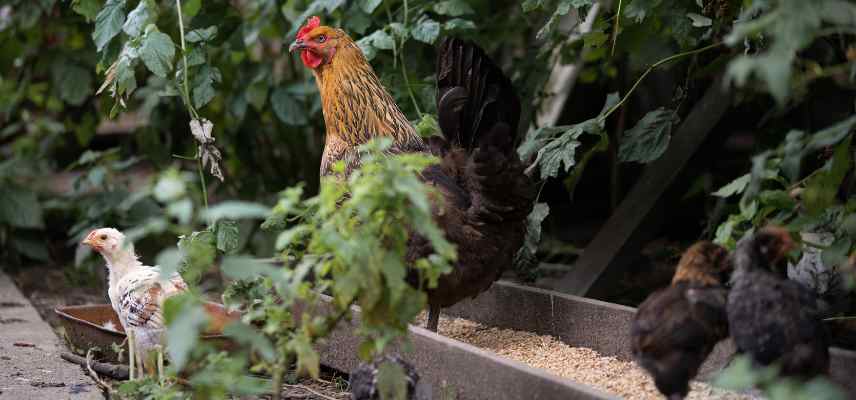
Diet should be balanced with cereals, vegetables and specific pellets.
Care and maintenance
Regular maintenance of the shelters and enclosure is crucial to ensure health and welfare of backyard animals. Here are some essential practices to adopt:
- Litter cleaning : litter must be cleaned regularly to avoid waste buildup and parasite proliferation. For chickens, wood shavings or straw in coops should be replaced at least once a week. The rabbit hutches should be cleaned daily, removing droppings and changing soiled litter.
- Water renewal : animals must always have access to fresh, clean water. Drinking troughs should be cleaned daily to prevent contamination and the growth of bacteria. For ducks and geese, pond water should be changed frequently, as these birds like to dabble and can quickly dirty the water.
- Providing suitable food : it is important to provide a balanced and species-appropriate diet for each species. Feeders should be filled daily and leftovers removed to prevent mould and parasites.
- Veterinary monitoring : regular veterinary checks are essential to prevent and treat diseases. Animals should be vaccinated according to recommendations and any signs of illness addressed promptly. A veterinarian specialising in backyard poultry can provide tailored advice and treatments if needed.
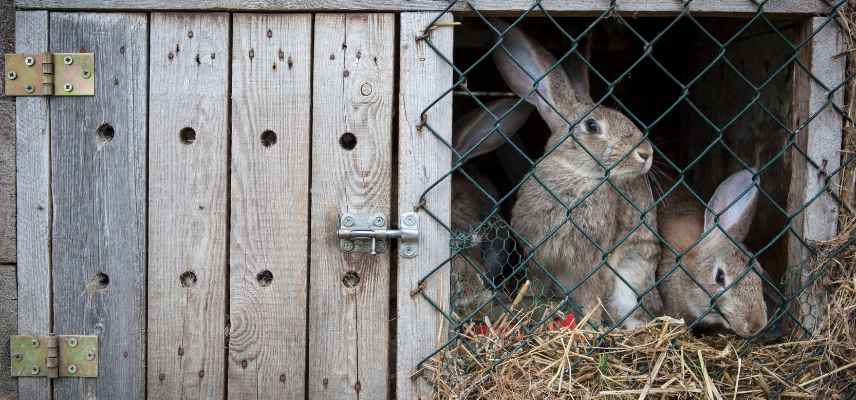
The rabbits’ litter is changed daily to keep them comfortable and to prevent disease.
- Subscribe!
- Contents
Comments