





























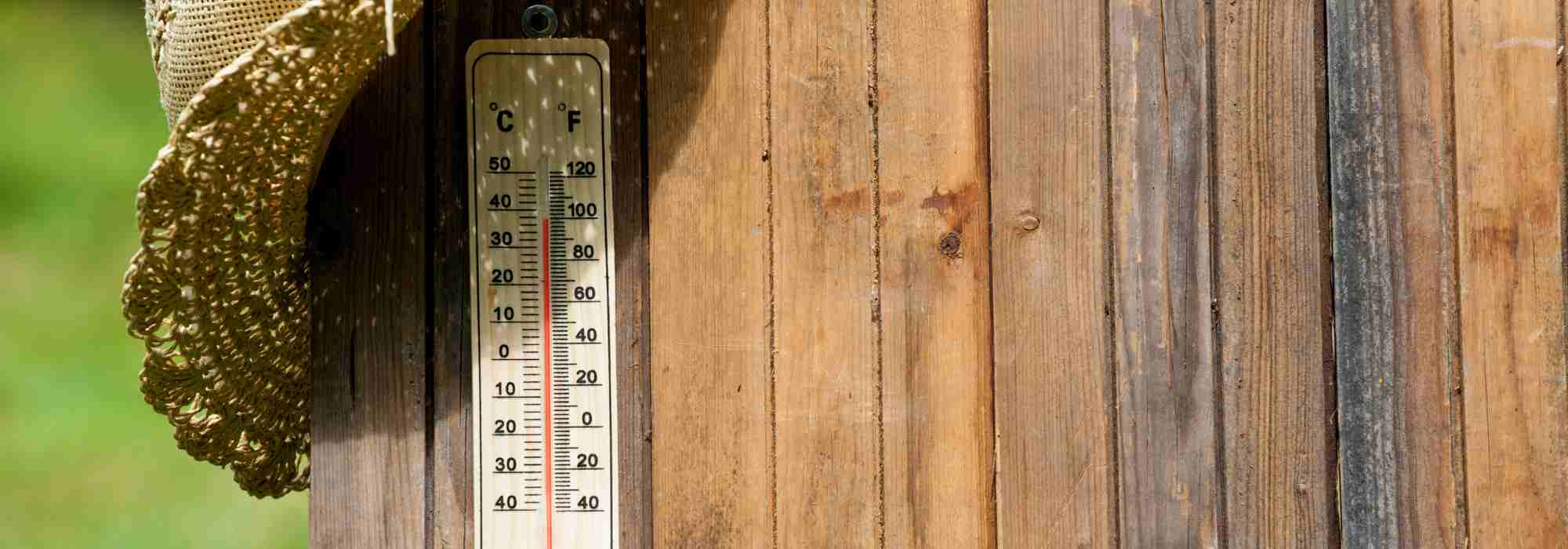
Survival guide for the garden in summer
Recurring issues in the warm season and our solutions
Contents
Summer is often a much-anticipated time for gardeners, as this season is supposed to offer us a vibrant and lush display of nature. In practice, however, this is not always the case! Indeed, this hot and sunny season can bring its share of challenges. From drought to pest invasions, as well as managing container plants and the sometimes uncontrollable growth of certain species, the garden in summer requires special attention.
In this article, we will explore the most common problems you may encounter in your garden during summer and provide you with practical and effective solutions to help you overcome these challenges.

The lack of water
The lack of water during summer is the main concern for gardeners, as it can affect the growth and health of plants, as well as their ability to produce flowers or fruits (as we will see shortly). Remember: water is essential for plants as it is necessary for photosynthesis and helps transport nutrients from the soil throughout the plant. Without a sufficient amount of water, plants can wilt, their growth may be delayed, and they may be more susceptible to diseases and pests. In short, depending on the species of the plant, this can range from slowed growth or reduced flowering to… the death of the plant.
Watering can help you avoid this (what a revelation!). However, it is important to keep in mind that it is not necessary to water too often. Instead, try to water deeply, applying a large volume at once, but less frequently, as this encourages plant roots to grow deeper into the soil where moisture persists longer. Do not wet the foliage, but water well at the base of the plants. Water early in the morning or late in the evening, using recycled water if possible, to minimise evaporation. Personally, I prefer very early in the morning, as the water will then be available for the plants during part of the day, thus aiding their growth phase.
Additionally, mulch can help retain soil moisture by slowing evaporation. It can also help keep plant roots cooler by blocking sunlight.
Keep a close eye on your plants and learn to recognise the signs of water stress: often, we intervene too quickly. The plant is in great distress when the leaves wilt, turn yellow, or dry out.
The plants most at risk of suffering are often those that have been newly planted: keep them in mind (or note them in a notebook) to avoid unpleasant surprises, like “Oh dear, my extremely rare bush bought at a plant fair in May has passed away. Why didn’t I water it! Poor me…” Well, at least it will make room for another plant…
A little word from Oliver: Some plants are more drought-tolerant than others. If you live in an area where summers are often dry (which is practically everywhere in France and Belgium these days…), consider choosing plants that are naturally suited to these conditions. Plantfit can help you choose the plants best suited to your region. Keep that in mind!
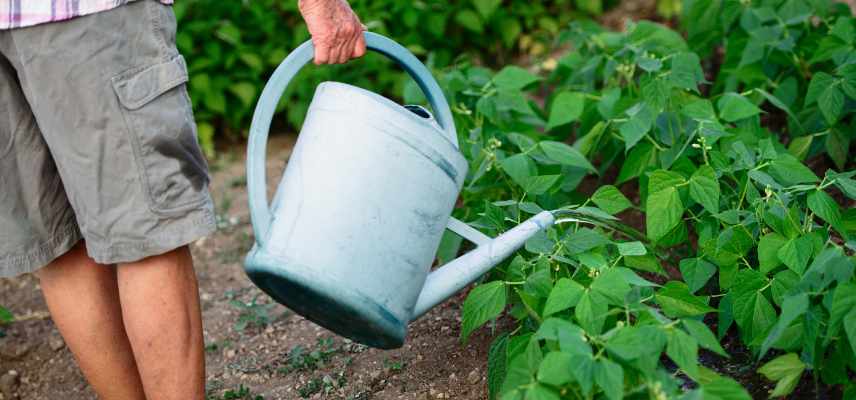 A golden rule: water at the base of the plants without wetting the foliage, in the morning, while it’s cool…</caption]
Heat strokes
Plants do not wear hats and cannot seek shade when the sun is blazing and the air is particularly hot. However, extreme heat during summer can significantly impact the health and productivity of your garden and vegetable patch. Here are some heat-related issues and how to address them:
- Heat stress and dehydration of plants: High temperatures, especially when combined with a lack of water, cause stress to plants. Leaves may wilt, fade, or turn brown, and in extreme cases, plants may die.
- Solution: Water plants early in the morning or late in the evening to minimise evaporation. Installing shade cloths or mulching can help protect plants from intense heat.
- Slow growth: Many plants enter a phase of dormancy when it is very hot, meaning they stop growing. This is particularly true for vegetables, which may also cease to produce fruit.
- Solution: Regular watering and providing shade for plants during the hottest parts of the day can be beneficial.
- Stress in potted plants: Potted plants are particularly sensitive to heat as their roots are confined to a small space. The pots themselves also become very hot in the sun.
- Solution: It is crucial to water potted plants more frequently in summer. It is also advisable to move them to shaded areas during the hottest parts of the day.
- Seedling germination: Seedlings struggle to germinate in overly hot soil, and those that do may have difficulty surviving the heat.
- Solution: If possible, sow in the shade or use shade cloths. Additionally, water seedlings regularly to prevent them from drying out.
→ Consider shade structures for your most delicate plants! Read our tutorial: How to build a shade structure?; also read Drought: my tree is losing its leaves, what is happening?
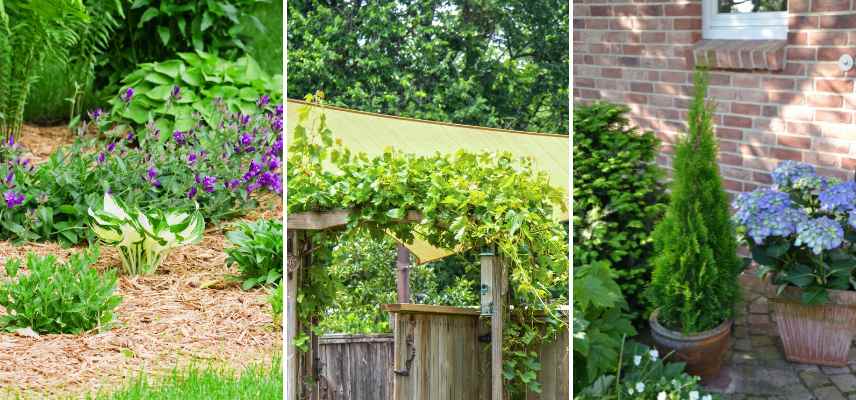 Mulching, shade cloth, pots grouped in the shade… Simple and practical actions to implement
Diseases, pests and insects
During the summer months, the risk of diseases, pests, and infestations in the garden and vegetable patch increases. Warmer temperatures and humidity can create an ideal environment for the spread of various issues. Here are some common problems and suggestions for managing them:
- Aphids: These small insects can cause significant damage by sucking the sap from plants. They are also known to spread certain viruses.
- Solution: Introduce natural predators such as ladybirds, lacewings, and parasitic wasps. If the infestation is light, you can also remove them with a strong jet of water. For more tips, read Aphids: identification and treatment.
- Downy mildew: This fungal disease often develops in warm, humid conditions and can cause yellow or white spots on plant leaves.
- Solution: Ensure good air circulation around your plants and avoid watering the leaves. There are specific fungicides to treat downy mildew, but prevention is often the best strategy.
- Slugs and snails: These pests are particularly active during the warm, humid months of summer and can cause significant damage to vegetables and other plants.
- Solution: Encourage natural predators such as birds and hedgehogs. Otherwise, Ingrid shares more tips on fighting slugs effectively and naturally.
- Whiteflies or Aleurodes: These small sap-sucking insects can weaken plants and promote the growth of sooty mould, a blackish fungus that covers the leaves.
- Solution: Encourage natural predators or use yellow sticky insect traps to capture the adults. To learn more about whiteflies, check out the advice sheet on the subject.
- Caterpillars: Many species of caterpillars can cause significant damage to plants during the summer months by eating the leaves.
- Solution: Encourage natural predators in the garden, mainly birds.
- Rust: This is a fungal disease that causes orange-brown pustules on plant leaves. It often spreads in warm, humid conditions.
- Solution: Remove and destroy infected leaves and ensure good air circulation around your plants. Follow all our tips to prevent rust in the garden.
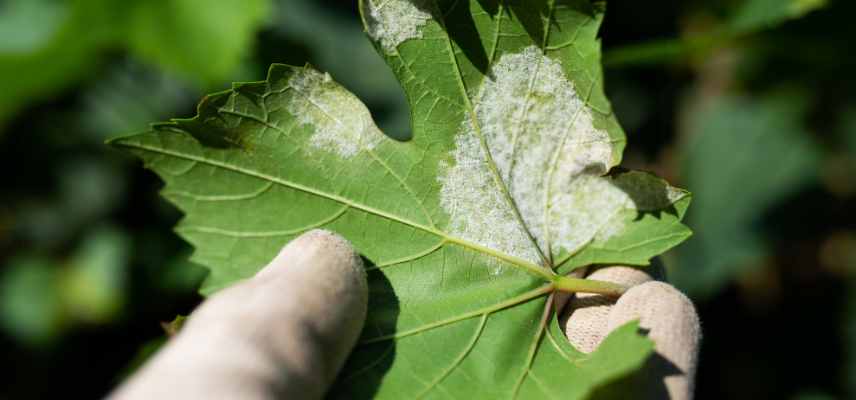
Powdery mildew often makes an appearance in the garden during the height of summer!
Flowering abortion and fruit drop
During hot and dry summer periods, it is common for some plants to stop their flowering or even prematurely drop their fruits.
Stop in flowering: Plants respond to their environment, and when conditions become challenging, such as during a heatwave, they may halt the production of new flowers to conserve energy and water. This is particularly true for plants that prefer cooler conditions.
- Solution: Ensure your plants have enough water. Water early in the morning or late in the evening to minimise evaporation. Use mulch to help retain soil moisture and keep the roots cooler. When temperatures cool down, most plants will resume their flowering.
Fruit drop: Several factors can cause premature fruit drop. Stress conditions, such as heat and drought, can certainly play a role. Some plants, particularly tomatoes and peppers, have optimal temperatures for fruit set, and if temperatures are too high, they may drop their flowers or fruits.
- Solution: Just like with the stop in flowering, ensure your plants are well-watered and use mulch to help retain soil moisture. For certain plants, like tomatoes, you might consider installing a screen or shade cloth to reduce temperature.
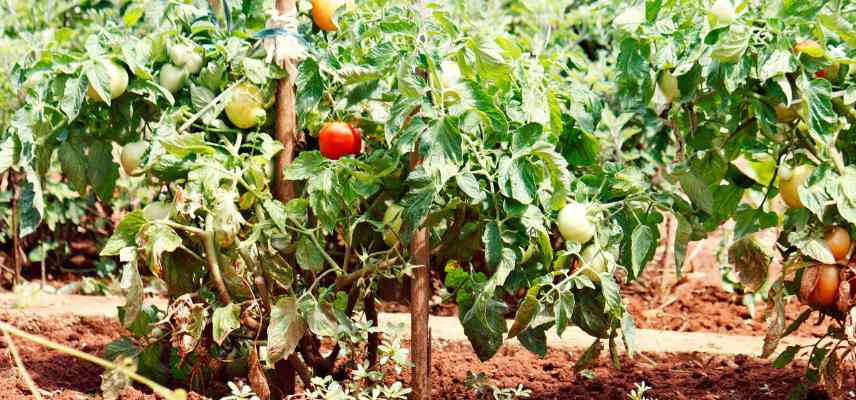 Tomatoes are prone to premature fruit drop during very hot summers
Here we go!
We, gardeners, are not supermen or superwomen! Working under a blazing sun is not the best idea of the year. Let’s take care of ourselves during this hot, dry, and uncomfortable period and instead plan to relax in the shade with a good book and a refreshing drink.
Moreover, the garden actually fares better during the hot season when we do less. However, if you can’t resist or need to intervene occasionally, do so very early in the morning or late in the evening.
→ If you want to let go in the garden and allow nature to work for us (especially in summer), we recommend reading the French Petit traité du Jardin Punk by Eric Lenoir.

- Subscribe!
- Contents

Comments