





























The best dwarf Berberis for small spaces
Compact varieties that can easily be grown in small gardens or in pots
Contents
Berberis, or barberry, are spiny, colourful shrubs that are easy to grow. They are prized for their foliage, their flowering, which is often yellow or orange, or their decorative fruits.
The good news is that you don’t need a large space—or even a garden—to enjoy their aesthetic appeal: the dwarf varieties will easily fit into restricted spaces or even in pots. Here you’ll find our favourite miniature Berberis, which do not exceed 60 cm in height.
For more on growing Berberis, discover our comprehensive guide: Berberis, barberry: planting, pruning and maintenance.

Berberis thunbergii 'Bagatelle': beautiful purple foliage
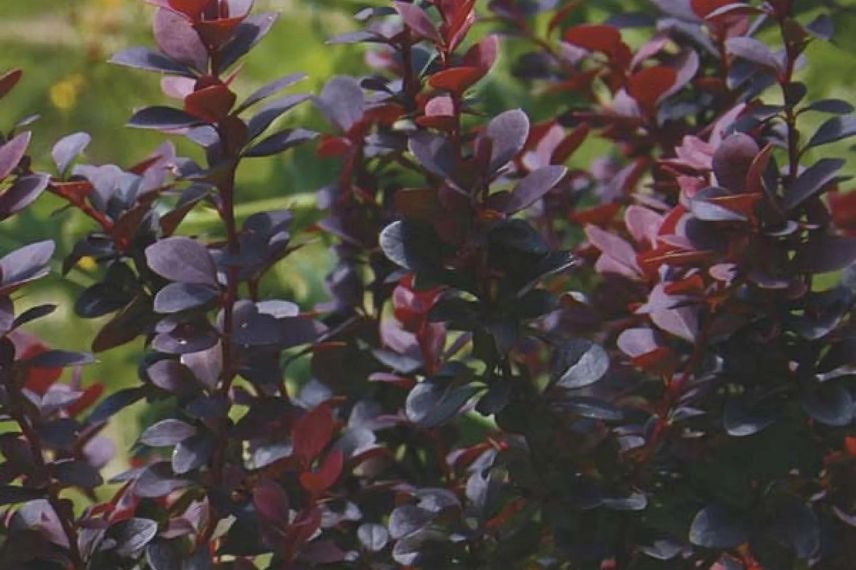
‘Bagatelle’ is an adorable variety of dwarf Berberis that stays under 40 cm tall and wide. It forms a true little globe, thanks to its dense foliage and compact habit. Even with its spines, it adds a touch of softness to small gardens or containers.
It stands out for the colour of its foliage, a deep purplish-red, very elegant at maturity. It is a deciduous variety, whose foliage falls in autumn after taking on vivid, fiery colours.
Flowering is springtime: our Berberis is then clothed with small pale-yellow flowers with orange-tinted undersides, which delight pollinating insects. The flowering gives way to pretty decorative red fruits.
Hardy and easy to grow, it thrives in sun or partial shade, in any soil that is not too dry and well-drained (where water does not stagnate).
Read also
Growing a berberis in a potBerberis thunbergii 'Tiny Gold': very bright, light-coloured foliage.
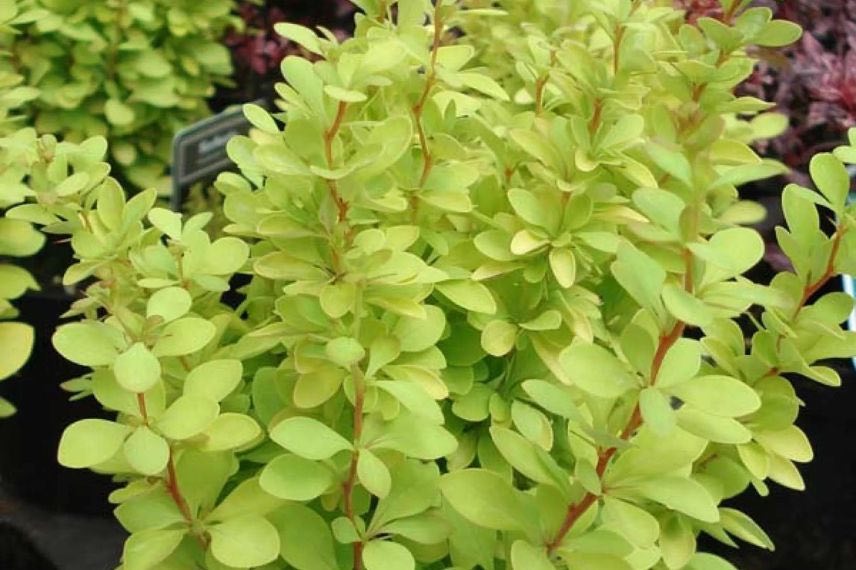
The mini Berberis ‘Tiny Gold’ forms a globose shrub about 40 cm across. Its glossy foliage reveals light-green leaves with golden highlights which makes it particularly bright. It is evergreen in regions with mild winters, experiencing only light and short-lived frosts. In cooler regions, it will produce new leaves in spring.
It flowers in May, revealing clusters of yellow flowers streaked with red, often visited by insects. Red berries then take over from late summer and into winter, making it an ornamental shrub for many months.
Easy to grow and low-maintenance, it suits borders as well as rock gardens, in a low hedge or in a pot, to brighten terraces and balconies. It tolerates cold, but also calcareous soils and occasional drought. Plant it in a sunny location to highlight the brightness of its foliage.
Berberis buxifolia 'Nana': an evergreen boxleaf barberry.
Not very thorny: this variety can be planted close to walkways.
The variety ‘Nana’ also stands out for its evergreen foliage, which remains decorative in all seasons. It consists of small, tough, rounded leaves, a dark, glossy green.
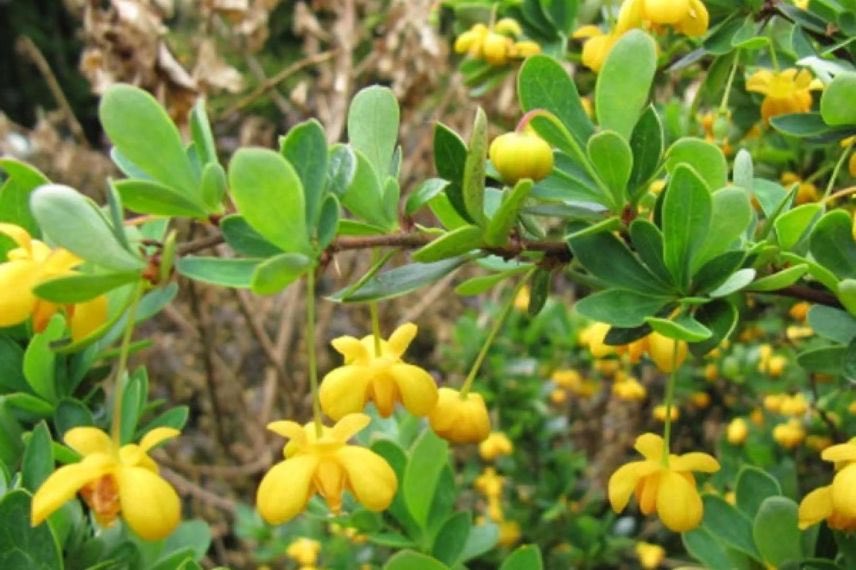
In late spring, between May and June, this Berberis bears melliferous yellow-orange flowers, in the shape of solitary bells. It then rewards us with decorative fruits in a purplish-violet colour.
Over its slow growth, it forms a pretty dense cushion and proves to be an excellent alternative to boxwood, less monotonous. It reaches about 50 cm in height with a 45 cm spread (a little more after several years), which undoubtedly ranks it among the smallest Berberis. It tolerates dry, poor and calcareous soils, and enjoys sun or slightly shadier exposure.
Berberis thunbergii 'Inspiration': foliage that changes colour
‘Inspiration’ is a dwarf Berberis that never fails to impress! Its young leaves first display a pretty purple marbled with pink and white. They then turn purple, before becoming red and orange in autumn before they fall. This evolving colour provides a continually renewing display.
In terms of flowering, it offers pretty little clusters of nectariferous flowers, a soft yellow flecked with red, which precede decorative fruiting in the form of crimson berries.
This Berberis has a compact, neat habit, giving it the look of a pretty cushion of foliage, around 50 cm across. Rockeries, slopes, borders and pots will welcome it without hesitation.
Easy to grow, even for beginners; it’s a small, low-maintenance spiny shrub. Simply give it a sunny position (or partial shade, but its foliage will be less intensely coloured). It will grow in all ordinary soils, even when occasionally dry.
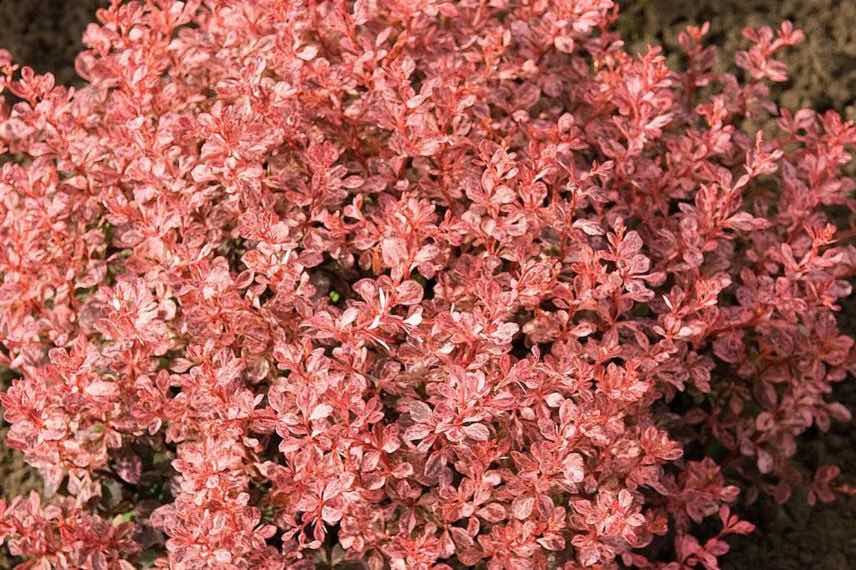
Berberis thunbergii ‘Golden Carpet’: a perfect groundcover
It is a dwarf barberry with a habit wider than tall, naturally low-growing. ‘Golden Carpet’ form, thus a perfect groundcover cushion, which will easily cover a slope or a rockery. It grows to about 50 cm tall with a spread nearly twice that.
This dwarf Berberis bears foliage alternating between golden-yellow and chartreuse, particularly bright. In autumn, the leaves take on warmer tones, in orange hues, before falling.
The spring flowering is pale yellow speckled with red. As with its relatives, it bears ornamental fruit.
Hardy and low-maintenance, it is an ideal variety to brighten the garden, requiring little to no maintenance. Prefer a fairly bright position to bring out its foliage, in average soil but well-drained.
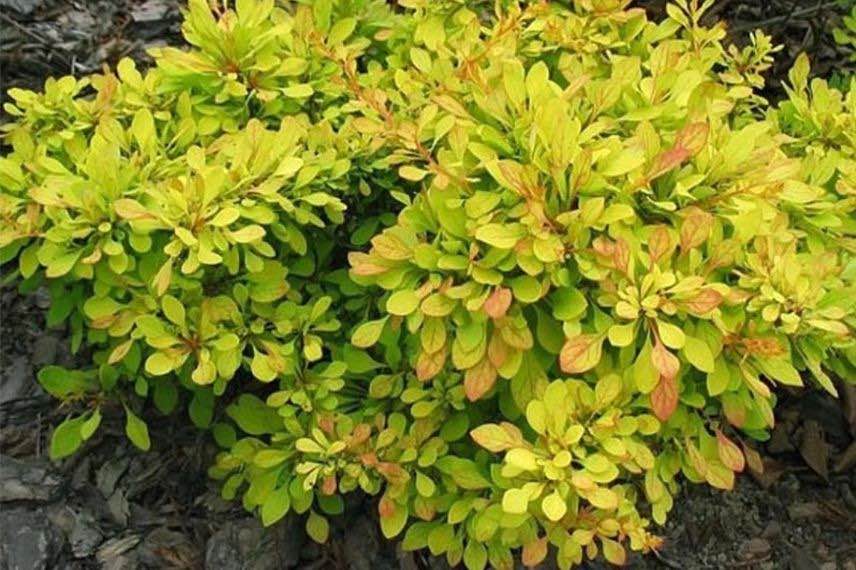
The Berberis thunbergii ‘Golden Ruby’: a real little gem
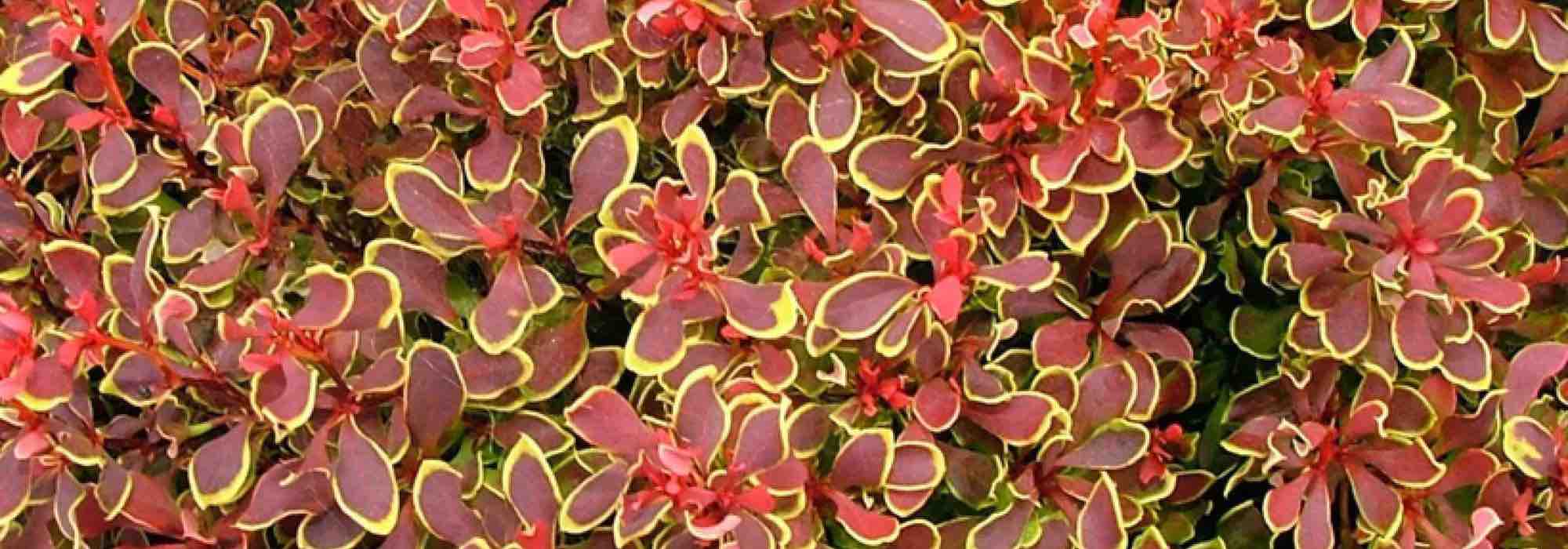
Second-to-last dwarf Berberis in this selection: the small ‘Golden Ruby’! Its compact, spherical silhouette makes it suitable for small spaces, standing just 30 cm tall with a 20 cm spread. But don’t be fooled by its small size: this thorny shrub is sure to attract attention! The colour of its foliage will in fact evolve over the weeks. Initially coral-orange, yellow and green, it becomes red in summer. In autumn, the leaves then take on brick-red marginate with golden-yellow, for a dazzling effect.
Let us also mention its spring yellow flowering, followed by bright red berries appearing in late summer.
Grow it in a container, in a border or at the front of a shrub border, even in regions with harsh winters. A sunny exposure will be preferable to highlight the nuances of its foliage. Give it a fairly cool soil (that never dries out completely), which can be poor or stony.
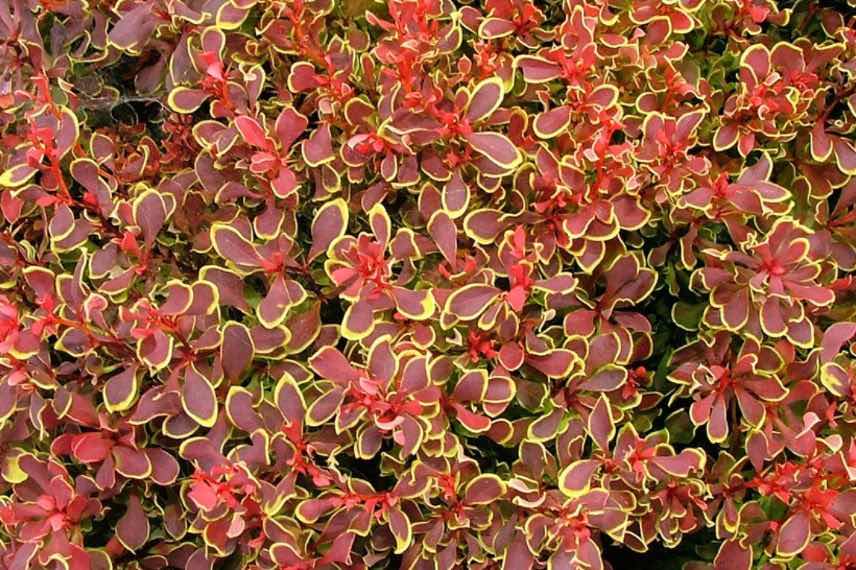
Berberis thunbergii ‘Kobold’: a real little cushion shrub
Finally, ‘Kobold’ is a dwarf Berberis that proves very interesting for forming a small, dense and compact groundcover. Its habit grows to about 50 cm tall, but it spreads to around 80 cm. It naturally forms an adorable little cushion, useful for dressing slopes, rockeries, borders, or the fronts of herbaceous borders.
A little more discreet than its congeners, this Berberis is content with green foliage for long periods. First bright in spring, it becomes darker in summer. In autumn, however, it dons a seasonal coat, offering a yellow colour sometimes tinged with red, before its leaves fall. Note that the foliage can persist if winter is not too harsh (short, mild frosts).
Its thorny shoots also bear small clusters of yellow flowers with red striations in late spring. Then, bright red berries appear, which linger on the shrub, prolonging its ornamental appeal.
Requires little maintenance and is not particularly demanding either: simply provide it with a sunny or lightly shaded site, in soil that can be occasionally dry, but must be well-drained.
- Subscribe!
- Contents
Comments