





























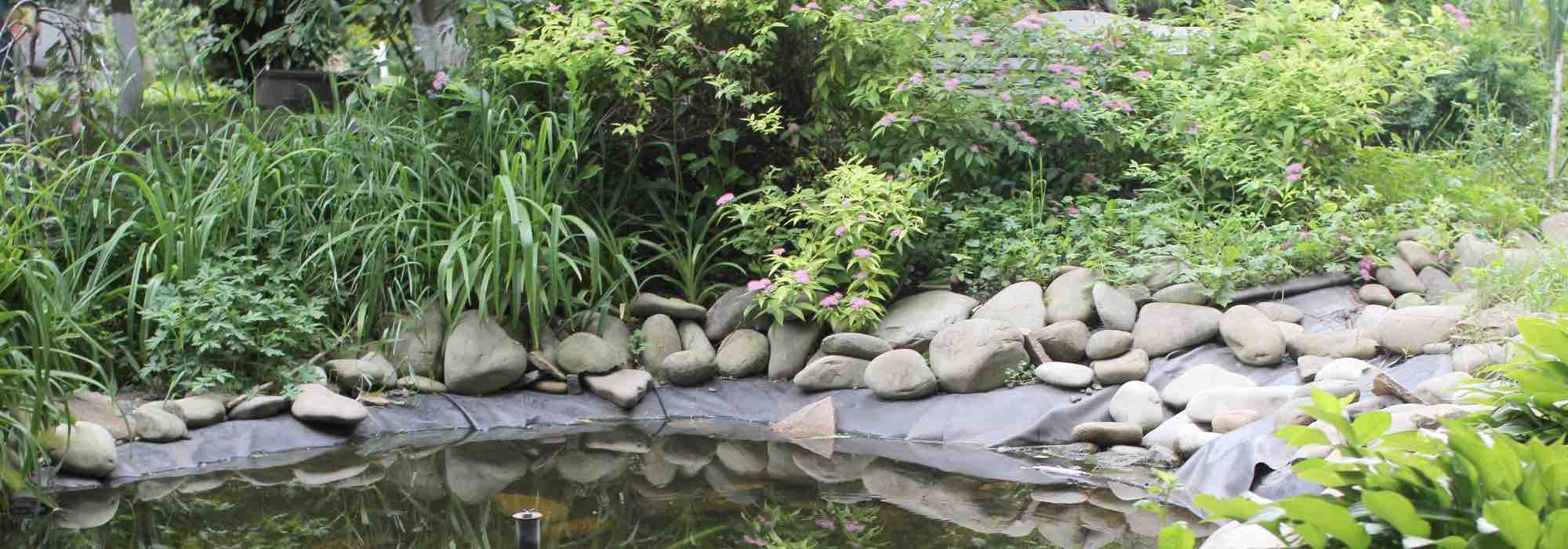
The best perennials to brighten up damp, shady areas
Water-loving plants that tolerate low light well
Contents
Shaded areas are often seen as difficult to plant up. It is true that a lack of light can be unfavourable for many plants, which require a minimum amount of sunlight to thrive. Similarly, the soil there can be particularly heavy and damp, retaining water even if it has not rained recently.
There are many plants, notably among perennials, that enjoy cool or waterlogged soils, as well as low-light areas. Discover here the benefits of these plants for dressing up and brightening a shaded, damp area.

Constraints in shaded and damp areas
These are areas that may seem impossible to cultivate and to showcase. It’s dark there, sunlight hardly penetrates and the soil is waterlogged. We find them near ponds, along rivers or lake shores, and also in woodland. Between the lack of natural light and the excess of water, the conditions are indeed extreme for most plants.
In fact, we are fortunate that there are plants that can meet almost all cultivation constraints. To brighten up these kinds of areas and still have a beautiful garden, even in challenging conditions, it will be essential to find plants:
- that thrive in shaded, or even dark, places;
- that are not afraid to have their feet in water, even for several days;
- that tolerate heavy, clayey, sticky soils;
- that may tolerate root competition.
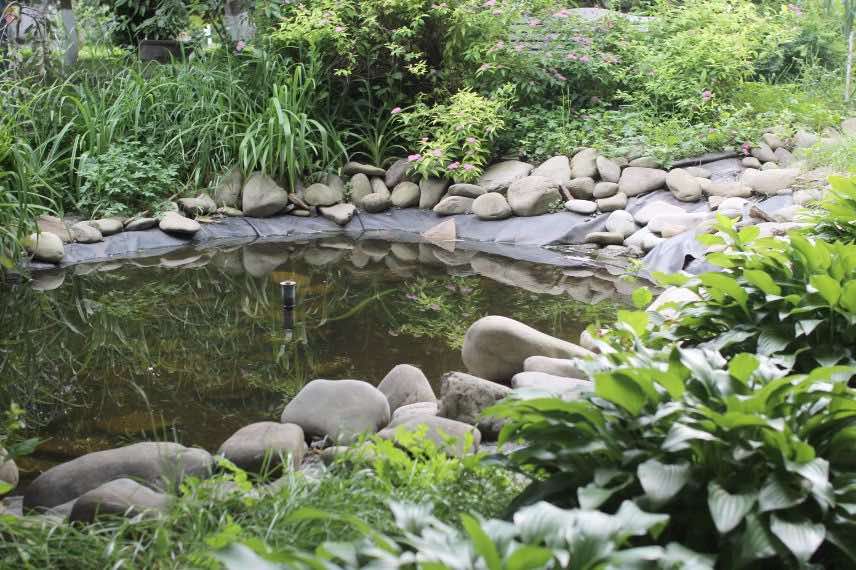
Read also
12 perennials for heavy, wet soilWhy choosing perennials?
Perennial plants are essential in gardens. They generally offer many advantages:
- a wide diversity of plants, species and varieties, suited to all tastes and to all garden styles;
- fairly easy to grow, if you take their requirements into account;
- a long lifespan, without needing to replant each year;
- great aesthetic qualities (flowering, foliage, fruiting, silhouettes, scents, etc.).
To brighten shaded and damp areas, it is particularly worth turning to wet-edge perennials. For a striking effect, mix plants with decorative foliage with those with ornamental flowering. Don’t hesitate to stagger the flowering periods, for a display that continually renews itself over many weeks.
Perennials for shaded and damp areas with beautiful flowering.
To brighten damp, cool spots, nothing beats colourful flowering. For this, you can first rely on the hostas. They are perfect for cool shade, and have plenty of appeal. Their white or mauve flowering occurs in summer, in the form of delicate bells. This is the case with Hosta sieboldiana, which graces us between June and July with a pretty pale mauve flowering, borne on erect flowering stems.
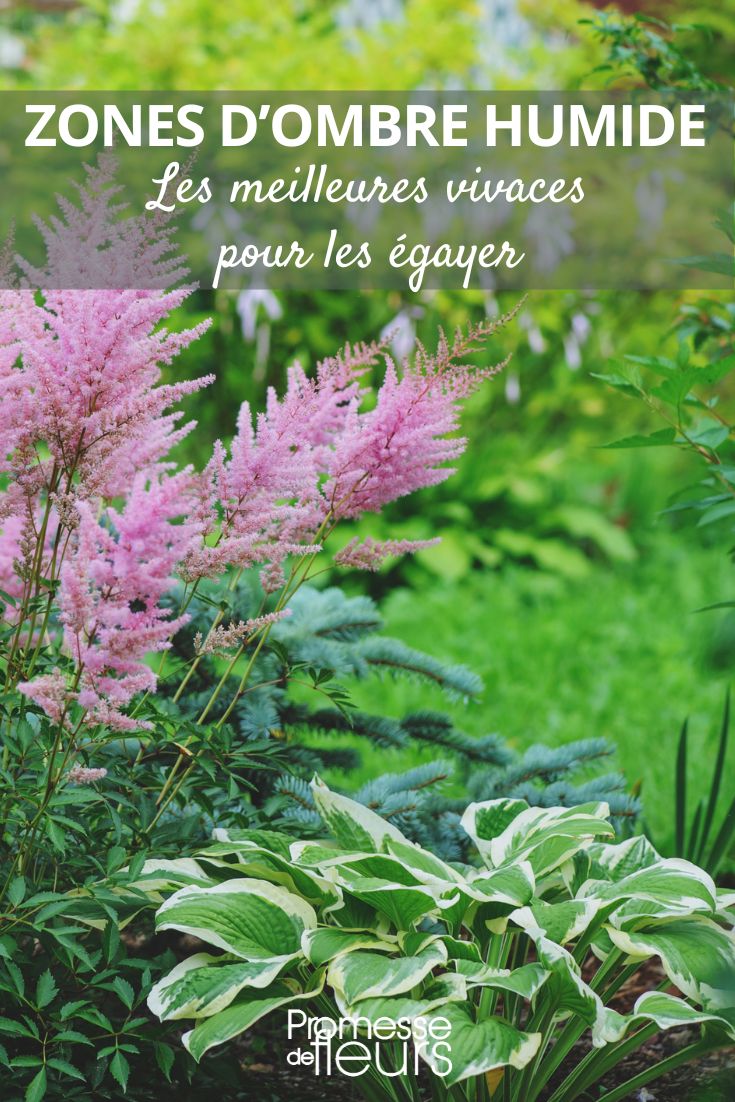
Let’s also mention the astilbes, perennials for heavy, damp soils, quite capable of flowering in shade. They produce lovely plume-like plumes at the start of summer, which add volume and colour to areas even neglected by other plants. For example, the Astilbe arendsii ‘Cappuccino’, with its beautiful white plumeheads contrasting with red stems. This variety benefits from tolerating even dense shade.
Let’s move on to ligularias, woodland plants that enjoy partial shade or shade. These perennials reward us with a bright, vivid yellow flowering, as with the Ligularia stenocephala ‘Little Rocket’, a compact yet generous variety. Throughout the summer, it produces handsome golden flower spikes that brighten damp, shaded areas with a striking graphic touch.
Low-maintenance, comfrey thrives in sun as well as in shade, as long as it benefits from some coolness. We value it for its sky-blue bells in spring, which are also a boon to pollinators.
Let’s also mention the candlestick primrose (Primula pulverulenta), which in summer produces tall flowering stems clad with small, purplish-red flowers.
Finish this not-exhaustive selection with the shooting stars, whose small flowers resemble cyclamens, such as Dodecatheon jeffreyi ‘Rotlich’ with its carmine-pink flowers. For its part, Dodecatheon meadia ‘Album’ produces adorable little white bells. These small perennials thrive in damp, shady areas, but rather in light soil.

Ligularia stenocephala ‘The Rocket’
Perennials for shaded, damp areas with ornamental foliage
Colourful and variegated foliage instantly brightens even the darkest corners of the garden.
For that, there’s no avoiding mentioning hostas: their foliage can be green, but also blue, yellow or even bicolour. Hosta sieboldiana ‘Frances Williams’ produces notably dense blue-green foliage, margined with paler green. Impressive with its heart-shaped leaves reaching around 40 cm across, the Giant Hosta ‘Jurassic Park’ adds a remarkable amount of lushness. The foliage displays a blue-tinged green and a puckered texture, with veins very pronounced. Also mention the cultivar ‘Justine’, with its variegated golden-yellow leaves margined with dark green.
Stunning, the Houttuynia cordata ‘Chameleon’ is a small spreading perennial groundcover that grows naturally in shaded and damp places. It offers heart-shaped foliage that is very colourful, mixing pink, yellow, green and cream. Note, however, that it can be invasive if the soil is waterlogged, particularly along riverbanks or pond margins.
On the astilbes side, some foliage is also decorative, like that of Astilbe arendsii ‘Color Flash Lime’. The leaves, neatly cut, are golden in spring, before taking lime-green hues. This foliage accompanies a beautiful summer flowering with feathery pink panicles. It prefers partial shade, but has the advantage of thriving in a range of soils, including marshy and waterlogged soils in summer.

Houttuynia cordata ‘Chameleon’
If Farfugium japonicum ‘Aureomaculatum’ is nicknamed « leopard plant », it’s because of its sometimes variegated foliage. Here, it is prettily speckled with yellow, which brings a bright touch of light to damp and shaded places. It is also an ideal plant to introduce an exotic note. Its hardiness is limited to -7°C (for the above-ground parts). It tolerates even flooded soils very well.
Let’s also mention heucheras, considered the best colorful foliage perennials. While they thrive in shady areas, most do not like stagnant moisture. There are, however, a few exceptions, such asHeuchera micrantha or purple heuchera, with its dark foliage and metallic sheen.
And we mustn’t forget ferns, with their finely cut fronds, always strikingly graphic and decorative. It is the case with the royal fern Osmunda regalis ‘Purpurascens’, impressive at around two metres tall. The purplish foliage takes on beautiful golden autumn tones, for a truly changing display. It thrives in damp, partly shaded to shaded areas. In less light, it will produce fewer fronds, but spread wider. It is an ideal plant for the edges of a pond, a stream or a water feature.
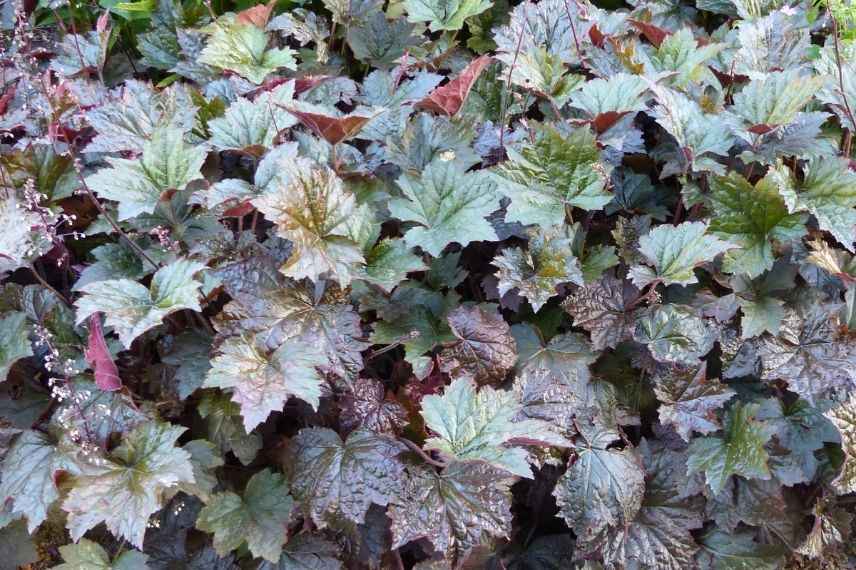
Heuchera micrantha ‘Purple Palace’
Evergreen perennials for a shaded and damp area
Some perennials keep their foliage all year round, even in winter. This helps brighten damp, shaded areas all year round. If you’re after evergreen perennials, consider for example Farfugium japonicum. You will have a choice between ‘Gigantea’ and its large leaves reaching up to 45 cm in diameter, ‘Crispata’ with its very undulate foliage, or ‘Wavy Gravy’, which forms a tuft of leaves in a frilly bluish-green-grey.
Also mention the Lysimachia congestiflora Lysimachia congestiflora ‘Persian Chocolate’, a plant suited to mild climates (hardiness down to -7°C), with its purple foliage turning chocolate. This evergreen perennial forms a groundcover, which is adorned with small yellow cup-shaped flowers from late spring to late summer. It prefers soils that never dry out, even on clay soils.
Don’t forget the Carex grayi, a small sedge with light-green linear and evergreen foliage, forming a dense tuft around forty centimetres across in all directions. It is perfect along the edges of shaded water features and requires little maintenance.
For an evergreen groundcover in damp, shaded areas, also consider the Sagina subulata ‘Pine Green’. It forms a tiny, mossy, acid-green carpet, which is covered with small white flowers in spring. This is a perennial that tolerates damp soils.
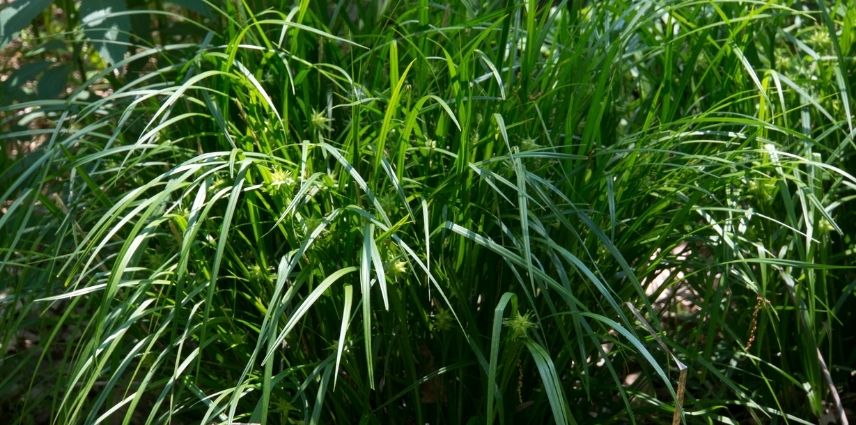
Carex grayi
Fragrant perennials for a shady and cool area
And if you’d like to add a scent to a shady, cool area, go for Japanese butterbur, these rhizomatous plants that thrive in damp shade. The Petasites japonicus ‘Variegatus’ produces, for example in spring, globular inflorescences that transform into fragrant spikes, exuding a honey-sweet scent. This will only occur after the foliage appears. Very lush, it also brings light thanks to its pale green, cream-marbled colouring. This plant tends to spread, so allow it some space.
- Subscribe!
- Contents
Comments