





























The best time to plant pond plants
When should you plant aquatic and riverbank plants?
Contents
Installing a water feature in a garden is a wonderful idea that helps biodiversity, providing a refugium, food and water for small animals and insects. Creating a pond and maintaining it, however, requires a certain investment of time and equipment, and some tips to ensure the operation is successful. The pond indeed harbours different types of aquatic plants: submerged or partially submerged plants, submerged and oxygenating plants, floating plants, shoreline plants. When is it best to plant them so they can flourish? Discover the ideal planting window for a pond, depending on plant types, planting method and climate.

When to plant the different types of aquatic plants?
A pond contains several types of plants. In general, aquatic plants are planted between May and September. Some nuances, however, must be taken into account depending on the plant type.
Oxygenating submerged plants
There are first the oxygenating submerged or filtering plants, which should be placed in the deepest spot, i.e. at the centre of the pond, and which provide the oxygen essential to life in the water, purify the water and make it clearer. They are generally planted in mesh baskets so that they can be moved easily, or even brought indoors to shelter from the cold if necessary, and to limit their spread if they become too invasive. Among this category you will find the water-pest or Hippuris vulgaris, the milfoil, the Ceratophyllum demersum – coontail, or the floating buttercup.
Oxygenating submerged plants are ideally planted in spring, during the plants’ growing phase, between May and June, following a 4–6 week period after the pond is filled with water to ensure they have sufficient CO2 in the water.
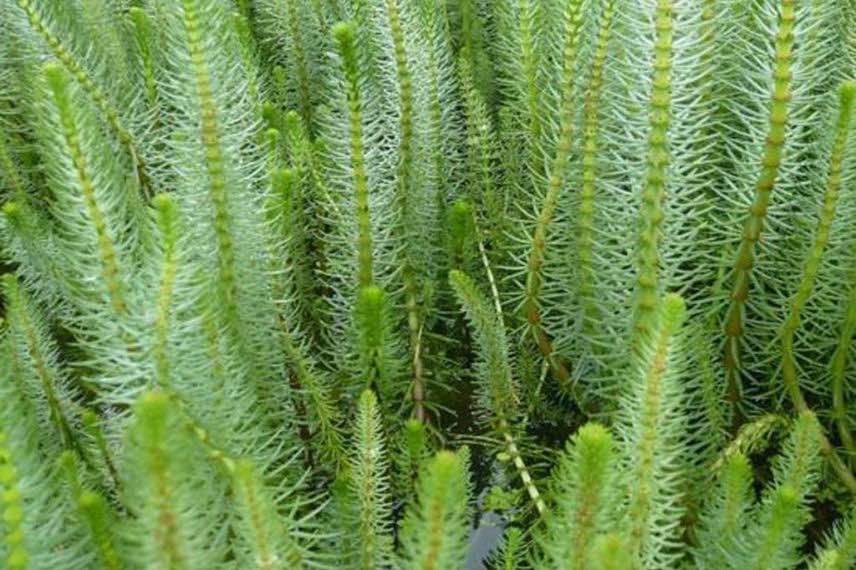
Oxygenating submerged plants generally establish themselves between May and June, here Hippuris vulgaris
Floating plants
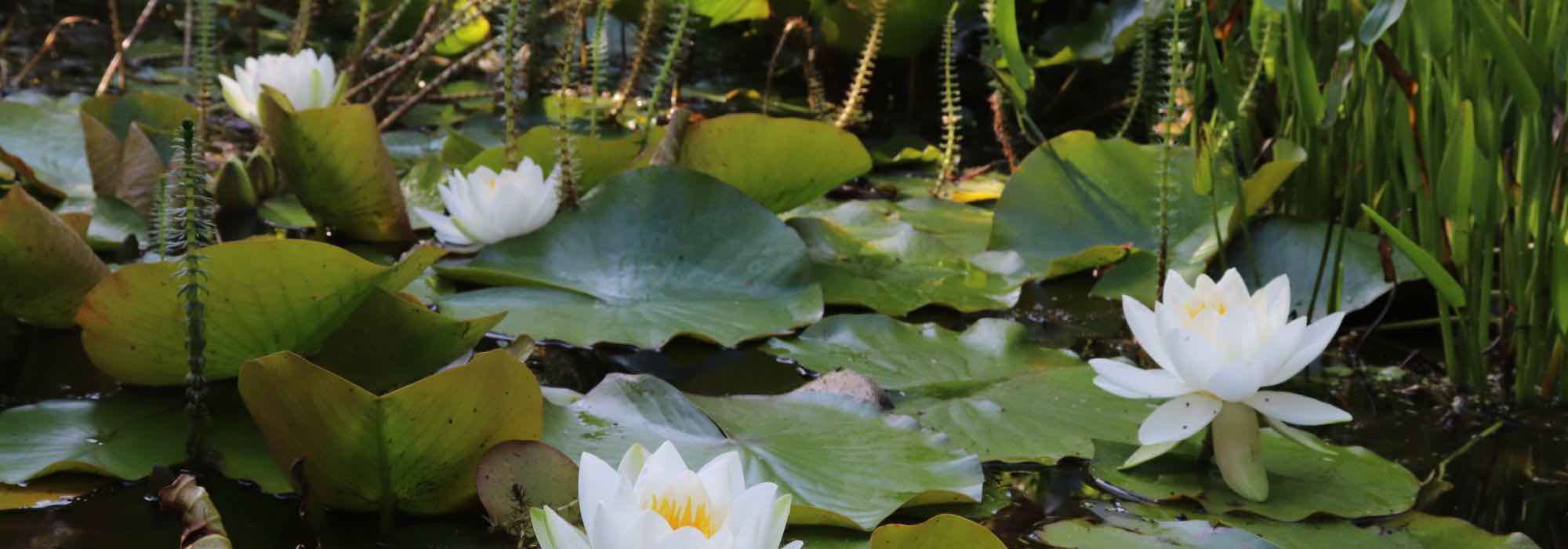
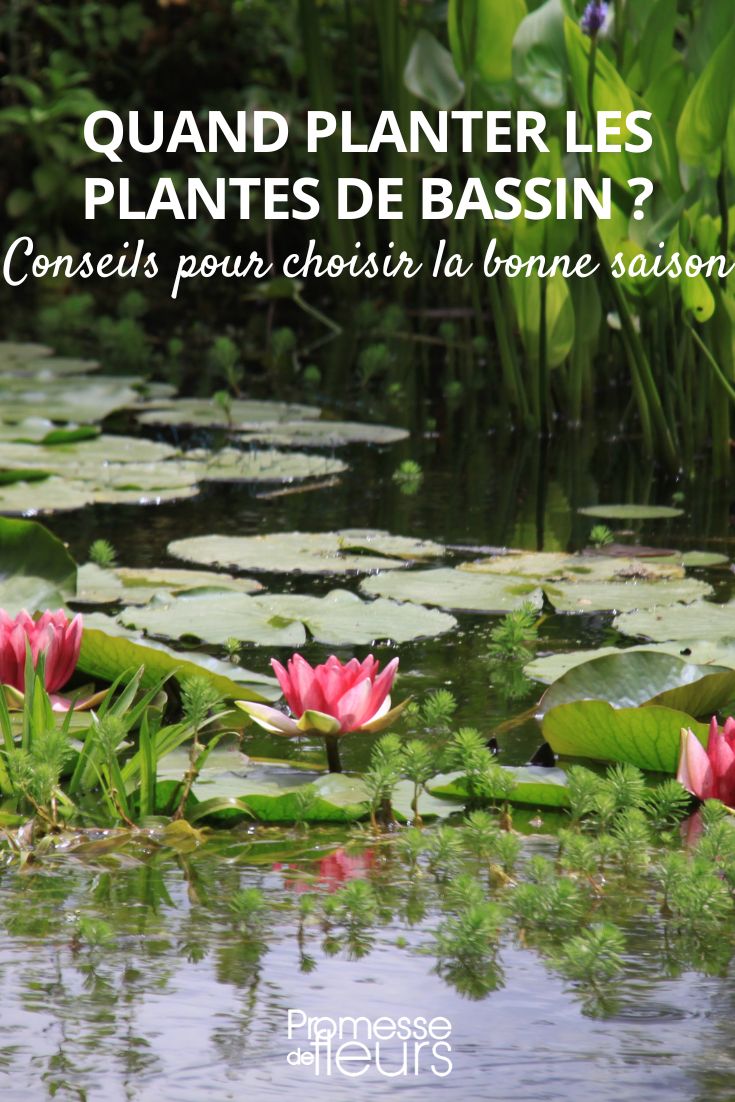
A pond also houses floating plants, which float on the water whether they are rooted or not. These include Water lilies or water lentils. Floating plants establish themselves at the centre of the pond, between March and June, when the water is sufficiently warm and frost-free; May and June are also a good window for warmer water. Water that is too cold can disturb their growth.
Semi-aquatic plants
We then distinguish semi-aquatic plants, which are planted in the shallower parts of the pond, on slopes closer to the edge. For example, the water clover – Menyanthes trifoliata. The best planting period varies by species. For water clover, the favourable planting period is February to April, but it can also be done from September to November.
Shoreline plants
The shoreline plants, such as Iris pseudacorus – marsh iris and Caltha palustris, establish themselves along the pond’s edge in damp, marshy ground. The best planting period for shoreline plants is generally autumn, but it varies by species, especially for the less hardy. The marsh iris, which is hardy down to -34°C, is ideally planted between October and November, but can also be planted between February and April. The Caltha palustris, which are hardy down to -40°C, are planted between September and November, or between February and April.
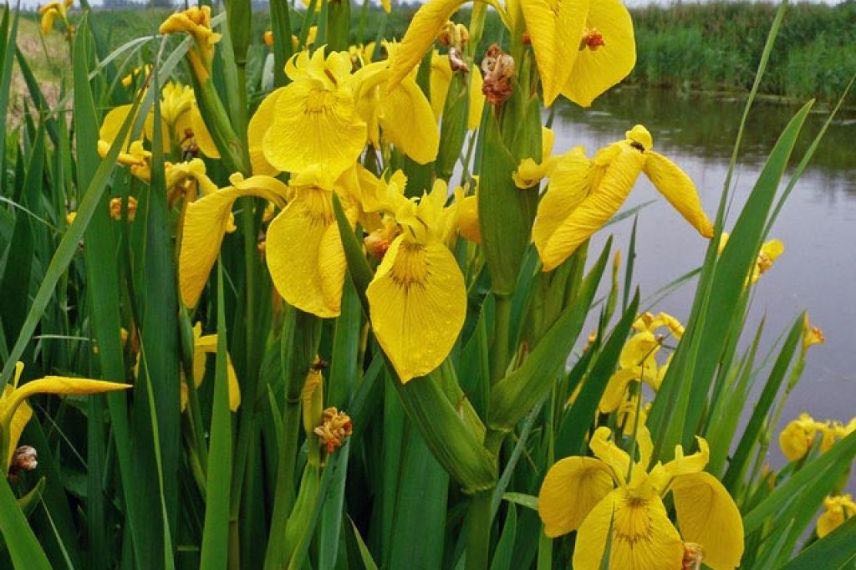
The marsh iris is planted in autumn
When to plant in a hanging basket?
Planting aquatic plants in baskets offers many advantages, such as being able to move them more easily, store them away in case of frost, and limit their proliferation, since the roots are constrained by the size of the basket used. For this planting method, planting periods are the same as those for in-ground planting in a pond, namely between May and September.
The influence of weather and climate
It is advisable to plant outside periods of frost, drought or heatwaves. If the forecast calls for this kind of weather, plan to delay the timing of your plantings to carry out the operation in the best conditions for the plant’s establishment.
Climate also affects the planting window. If you live in a region with a harsh winter, it is better to wait for the water to warm up sufficiently to plant in a basin and avoid any frost damage to the plants. Conversely, in a mild-winter climate, the planting window is longer than in cold regions, as there is less risk of frost.
Read also
10 aquatic plants, submerged or floatingPros and cons of each season
Spring is the best time to plant aquatic plants, whether submerged or floating, in a pond, as the water provides ideal temperatures during this season, which supports more vigorous growth of the plants. Another advantage of spring is that this season coincides with the vegetation phase of aquatic plants, encouraging better establishment. Summer is also favourable for planting aquatic plants, but this season includes periods of drought and heatwaves that can be unfavourable for aquatic plants. Autumn and winter are more risky seasons for planting aquatic plants due to possible frost. However, autumn is generally the best season to plant edge plants along the banks, along the edge of the pond.
For further reading, discover our advice sheet: Where and how to plant plants in and around a pond?
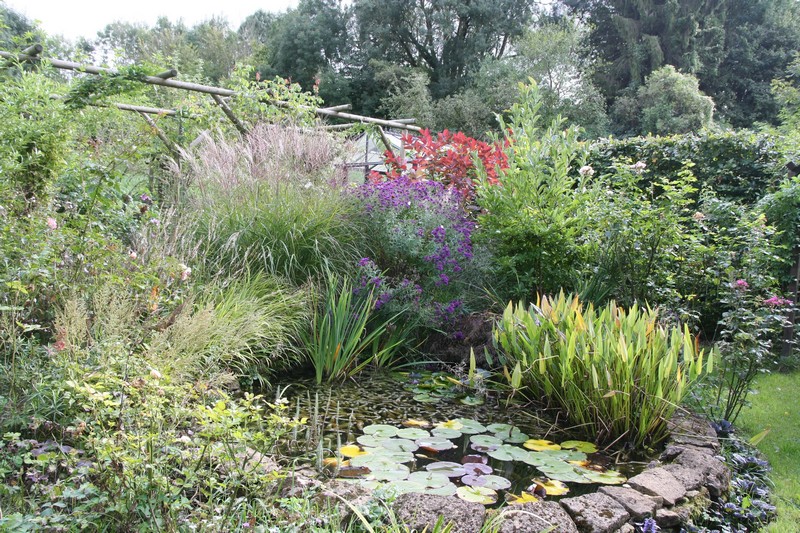
Carefully study the planting period for ponds, which varies depending on the type of plants
- Subscribe!
- Contents
Comments