


Is deadly flower chafer really a problem?
Description, impact in the garden and ecological role
Contents
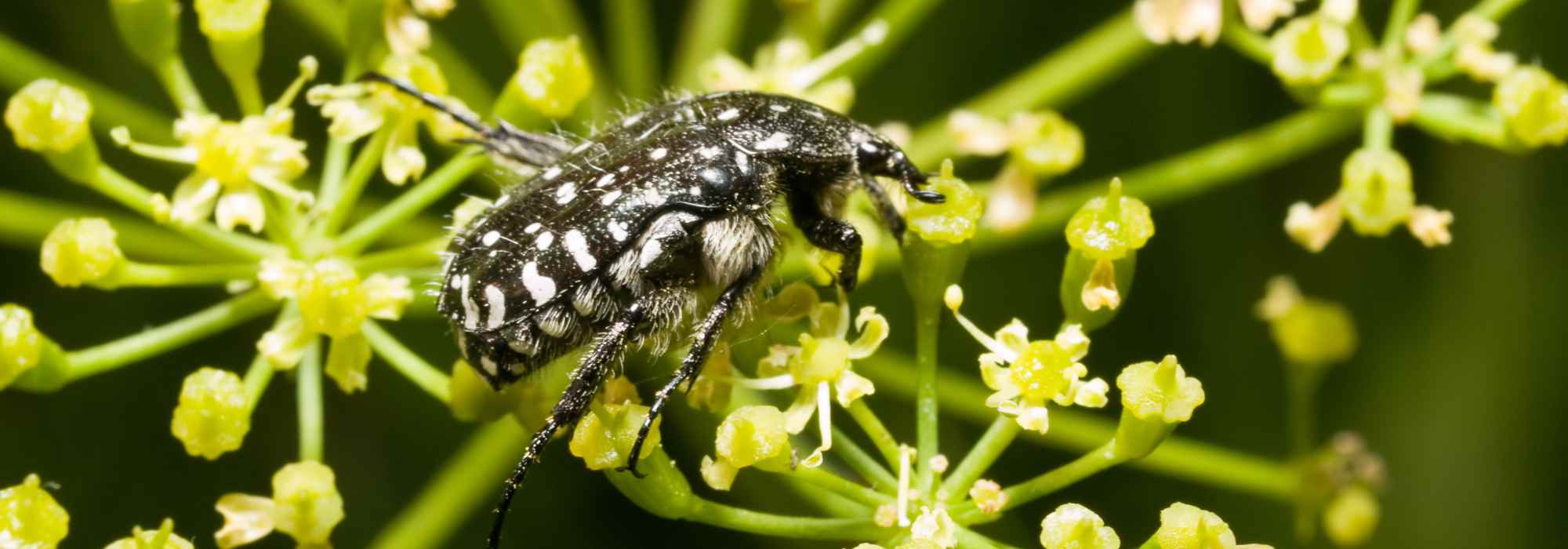
The deadly flower chafer, Oxythyrea funesta, is a small black beetle spotted with white, often present in the gardens of southern France. Although it can cause cosmetic damage to flowers and buds, it plays an important ecological role. Discover how to identify this insect, understand its impact in the garden and adopt natural methods to coexist harmoniously with this little-known pollinator.

The Deadly flower chafer: Description and Biology
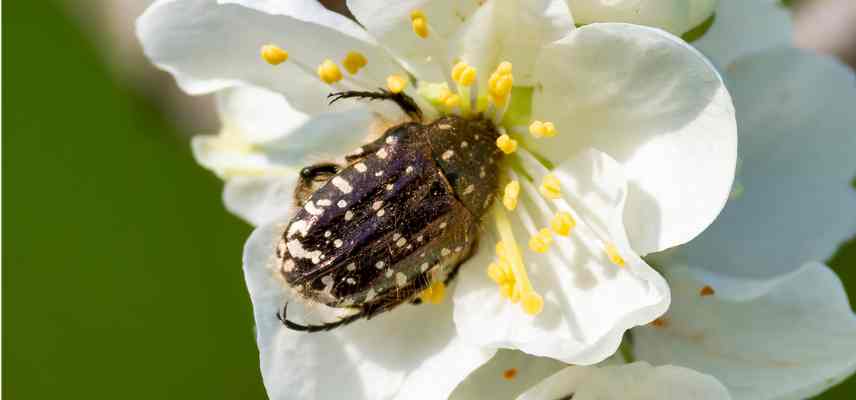
The funereal beetle, scientifically named Oxythyrea funesta, is a beetle belonging to the Cetoniidae family (like the very beautiful golden rose chafer). This small insect measures between 8 and 12 mm in length. It is distinguished by its black colour adorned with irregular white spots on its back. Its carapace, or exoskeleton, is smooth and glossy, adding to its distinctive appearance. The elytra, these rigid parts that cover the wings, do not fully cover the abdomen, allowing the hind wings to unfold rapidly for flight. The funereal beetle takes its name from the dark and black aspect of its exoskeleton, associated with irregular white patches, which gives it a sombre, funeral-like appearance.
Note: The funereal beetle is distinguished by its black colour with irregular white spots, whereas the grey rose chafer, or Oxythyrea cinctella, is uniformly grey without distinctive spots.
Oxythyrea funesta
Habitat and distribution
The funereal beetle is mainly found in Southern Europe, notably in France (Mediterranean and southwest), in Spain and Italy, as well as in some regions of North Africa. It is commonly found in gardens, flowering meadows and cultivated areas where it searches for flowers to feed on.
Life cycle of the funereal beetle
The life cycle of the funereal beetle consists of four distinct stages: egg, larva, pupa and adult.
Egg: Females lay their eggs in the soil, usually near decomposing organic matter such as compost heaps or plant debris. Each female can lay dozens of eggs during her life.
Larva: The eggs hatch in a few weeks, giving rise to larvae commonly called “white grubs”. These larvae feed on decomposing organic matter, playing an important role in nutrient recycling in the soil. They spend several months developing underground, passing through several larval stages before transforming into pupae.
Pupa: After several months of growth, the larvae pupate, i.e., transform into pupae. During this stage, which lasts a few weeks, the insect undergoes a complete metamorphosis to become an adult.
Adult: Adults emerge from the soil in spring and summer. Their lifespan as adults is relatively short, often only a few months. Adults are diurnal, active mainly on sunny days, and are frequently observed flying from flower to flower.
Behaviour and feeding
The funereal beetle is attracted to flowers, on which it feeds on pollen, nectar and petals. It may sometimes cause cosmetic damage to flowers and buds, but such damage is generally limited and does not seriously affect plant health. As a pollinator, it plays a crucial role in the cross-pollination of plants.
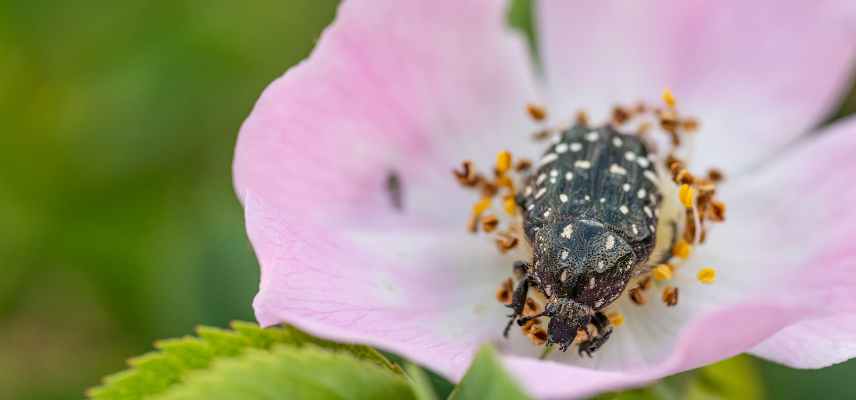
Pollen-laden stamens, here on a dog-rose, are the favourite food of the rose chafers
>
Is the deadly cockchafer really a problem?
The funereal chafer is often perceived as a pest due to its attraction to the flowers and buds of ornamental and vegetable plants. Adults feed on pollen, petals and sometimes young fruits, which can cause cosmetic damage and, in some cases, affect yields of certain crops. However, damage is generally limited and does not seriously compromise plant health. It is rare for this species to cause significant losses in terms of harvest or plant health.
The funereal chafer is particularly attracted to flowers with bright colours and abundant pollen. Among the most attractive plants for this insect are roses, peaches, oxeye daisies, cosmos, chrysanthemums and poppies.
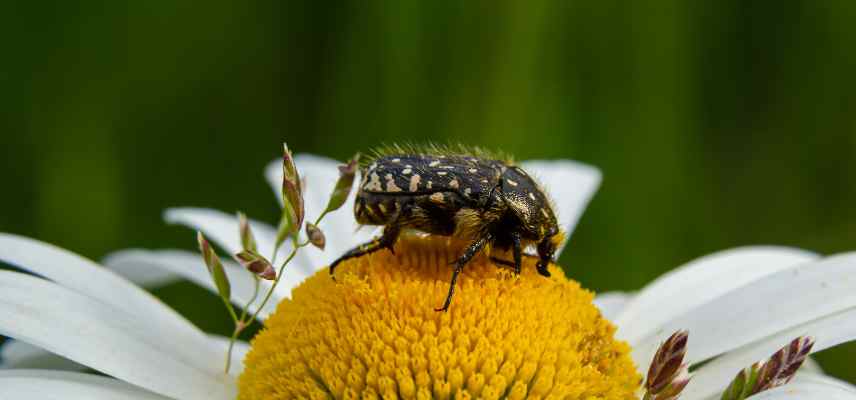
The funereal chafer enjoys large oxeye daisies
The ecological roles of the death's-head beetle
Pollination
By feeding on pollen and nectar, the deadly flower chafer contributes to the pollination of flowers (yes indeed!). By transferring pollen from one flower to another, it helps plant reproduction and the formation of fruits and seeds.
Recycling of organic matter
The larvae of the deadly flower chafer feed on decomposing organic matter, such as dead leaves and plant debris. That is why they are often found in compost heaps. By decomposing these materials, they enrich the soil with essential nutrients, contributing to its fertility.
Maintaining biodiversity
By taking part in the food chain, the deadly flower chafer serves as prey for various natural predators such as birds, bats and some insects.
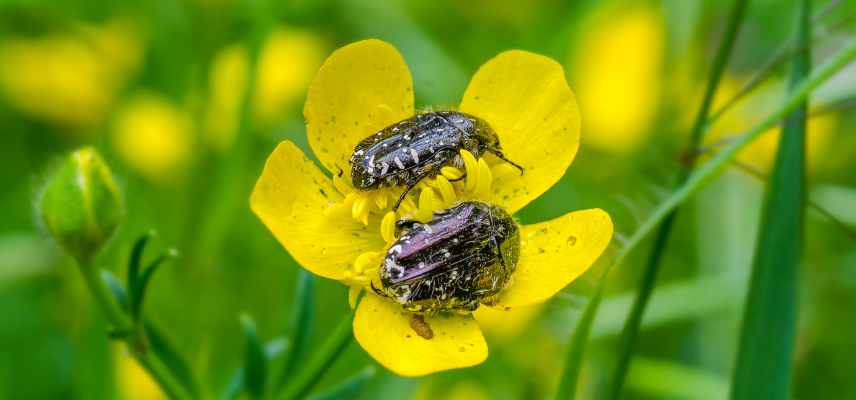
The deadly flower chafer: a definite role in plant pollination
How to live in harmony with the death's-head hawkmoth?
Encouraging biodiversity
Planting a variety of flowers and plants in your garden is essential to attract a multitude of pollinating insects, including the rose chafer. By diversifying plantings, you create a balanced environment where no insect becomes too dominant. Wildflowers, aromatic herbs and mixed vegetable crops ensure flowering continues throughout the season, providing a steady food source for the rose chafer and other pollinators.
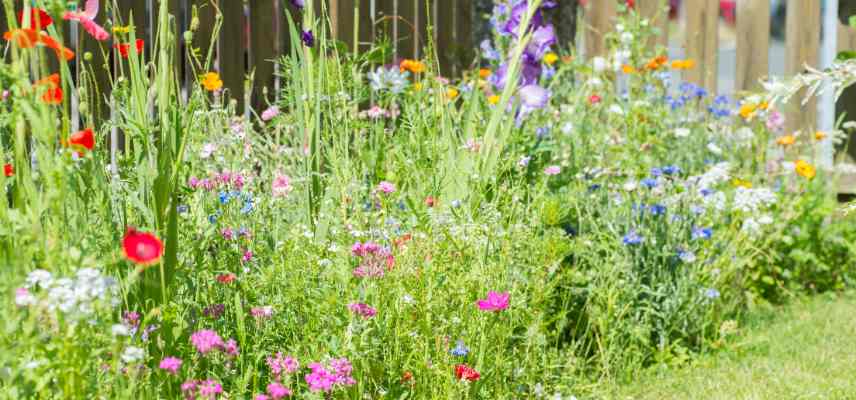
A wide variety of cultivated plants and flowers will help create a healthy garden environment
Protect flowers and young plants
If the damage caused by the rose chafer on certain plants is too severe, you can protect your flowers by temporarily covering them with protective row covers. These covers, lightweight and permeable to air and water, prevent the rose chafer from accessing the flowers while allowing the plants to continue to grow and bloom normally. This method is particularly useful during periods of high activity of the rose chafer, typically in spring and early summer.
Plants such as lavender, thyme or calendula are reputed to be repellant to the rose chafer. But this works… only moderately.
Encouraging natural predators
Encourage the presence of natural predators of the rose chafer in your garden. Birds, bats and certain insects such as ground beetles and rove beetles feed on adult rose chafers and their larvae. To attract these allies, install nest boxes, shelters and water sources. Create hedgerows and refugia to diversify habitats in your garden.
Maintaining a balanced garden
A balanced, healthy garden is less likely to suffer from major infestations. Practise crop rotation, enrich the soil with compost and organic amendments, and ensure a good soil structure. Fertile, well-drained soil promotes plant growth and strengthens their resistance to pest attacks.
Also consider practising crop rotation in the vegetable garden. By rotating the types of plants grown each year, you will disrupt the life cycle of the rose chafer and reduce its population in the soil.
Compost organic matter away from sensitive plants. Rose chafer larvae feed on decomposing organic matter, so by reducing these sources near planting areas you decrease their potential habitat.
- Subscribe!
- Contents
Comments