


The different organic mulches
Plant-based mulches: natural and biodegradable
Contents
We regularly remind you of the importance of good mulching, whether in the garden, the vegetable patch, or even for container gardening. Mulching helps to:
- protect the soil from the elements;
- retain moisture for longer;
- limit the development of adventive plants (“weeds”);
- insulate plants against cold or heat;
- add an ornamental touch.
Mulch can be organic (of plant origin), mineral, or synthetic; it can come from commercial sources or be homemade mulch, made from materials recovered from the garden. Organic mulches have the advantage of being natural and biodegradable. Another significant benefit is that most also gradually nourish the soil as they decompose. These natural mulches are suitable for all plants, except those that require dry conditions (rock garden plants, succulents, etc.).
Let’s take a look at the main organic mulches and their functions.

Buckwheat husks
Buckwheat husks are a renewable material derived from crop residues, as they constitute the shells of buckwheat.
Their advantages
- Their rough structure limits attacks from slugs and snails by making their movement more difficult.
- They naturally enrich the substrate with nutrients as they gradually decompose.
- In protected conditions, they are quite durable (up to 2 years).
- They help retain moisture at the base of plants due to their natural absorption capacity.
- They limit the development of adventive plants.
- They are lightweight and easy to spread.
- Their brown colour is decorative, discreet, and natural.
Their disadvantages
- They are difficult to find commercially.
- They are more expensive.
- Their lightness makes them volatile: gusts of wind and rain can quickly disrupt the mulching and necessitate an uneconomical renewal (be sure to water your buckwheat husks after laying them down to better secure them to the soil).
For what uses?
This organic mulch can be used throughout the garden, in perennial and annual beds, in planters and pots, but it is especially appreciated in the vegetable garden.
A 50-litre bag covers approximately 1 m2 to a depth of 3 to 5 cm.
→ Read also: Buckwheat husks: why choose this mulch in the garden?
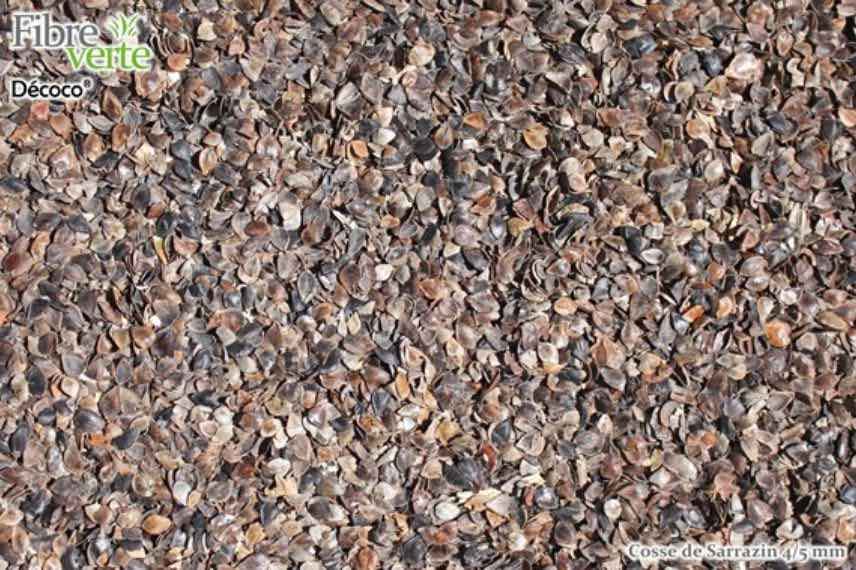
Buckwheat husks enrich the planting substrate
Read also
Mulching: Why? how?Cocoa shells
These are the waste products from the crushing of cacao pods, which contain the famous beans. They are brown in colour.
Their advantages
- Cacao shells make an original aesthetic mulch as they are delicately scented.
- They are rich in nutrients, including nitrogen and potash, which gradually fertilise the soil.
- They limit evaporation and the development of adventive plants.
Their disadvantages
- They are difficult to find in shops and expensive to purchase.
- They can be toxic if ingested by pets.
- They decompose quickly (in about a year).
For what uses?
Cacao shells make excellent mulch for vegetable gardens and small fruit trees. You can also use them in beds of annual flowers and in your pots. They are generally used to enrich poor soils.
A 50-litre bag covers approximately 1 m2.
Notes: Organic mulches made from shells or pods, derived from the recycling of food industry waste, are becoming increasingly popular. You can now also find coconut mulch (shells, chips…), hazelnut shells, etc.
Hemp, flax, and miscanthus pales
Hemp mulch, linen mulch and miscanthus mulch are made from the stems of plants that have been shredded and dried. They are beige in colour.
Their advantages
- They are very aesthetic, beautifully highlighting plants by allowing for contrast. They bring light due to their light colour.
- Their lightweight structure helps aerate heavy soils as they decompose, while providing carbon and nutrients.
- They help warm the soil.
- They are relatively easy to obtain.
- The cultivation of hemp, linen, and miscanthus has the advantage of requiring little to no chemical treatment, thanks to the natural resistance of these plants to pests and diseases. Their mulches are therefore naturally healthy.
Their disadvantages
The main disadvantage of these mulches is that they are very lightweight. They can easily blow away in the wind and may need to be regularly replenished (again, good watering at the time of spreading can help mitigate this risk).
For what uses?
Mulch flower beds, vegetable gardens, or containers. Use the mulches at the base of heat-loving vegetables, such as solanaceae (tomatoes, peppers, eggplants…). You can also apply this mulch in autumn to protect the roots of tender plants and in early spring at the base of bulbs.
Plan for 30 litres of mulch per 1 m2, for a thickness of about 10 cm.
→ Also read: Why choose linen mulch for your garden? and Miscanthus Mulch: what are its advantages and disadvantages?
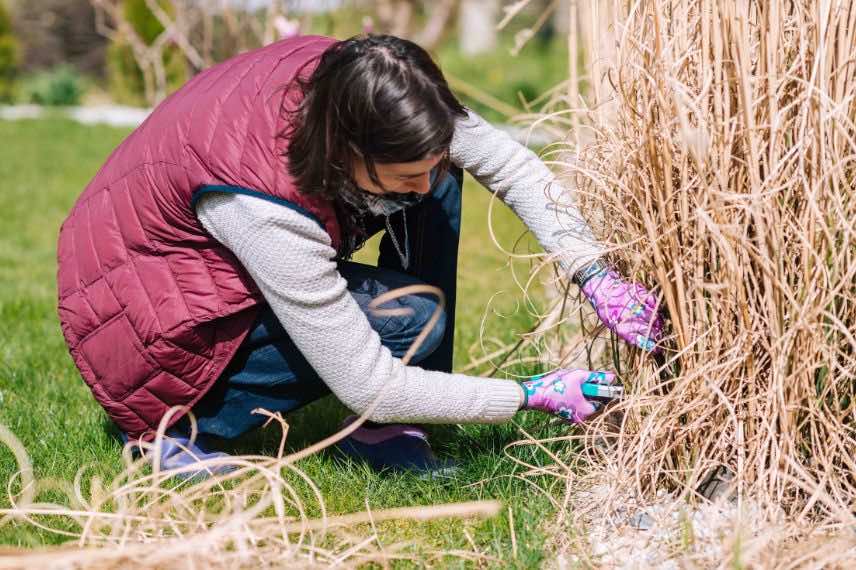
Miscanthus makes an effective mulch
Straw
It is the most common organic mulch. Straw consists of the stems of grasses cut after the harvest of cereals (wheat, rice, rye…) or legumes.
Its advantages
- Straw is very economical.
- It is very easy to obtain, both from stores and from farmers (it can even simply come from recycling animal litter at home).
- In a thick layer, straw protects crops from the cold in winter.
- Well-aerated, it ensures good soil ventilation and allows rainwater or irrigation to penetrate well into the substrate.
- It adds a lot of carbon to the soil.
Its disadvantages
- Straw must be laid in a thick enough layer to be effective (at least 10 to 15 cm).
- Its decomposition causes a temporary loss of nitrogen (known as “nitrogen hunger”): to be avoided in nutrient-deficient soils or at the base of demanding crops.
- It is less aesthetically pleasing than other mulches (its rustic appearance does not suit all gardens).
- It is bulkier to store.
- Low density, it may allow some adventive plants to pass through.
- It can provide a cosy habitat for slugs and snails.
For what uses?
Use straw to protect annual crops in the vegetable garden or in flower beds.
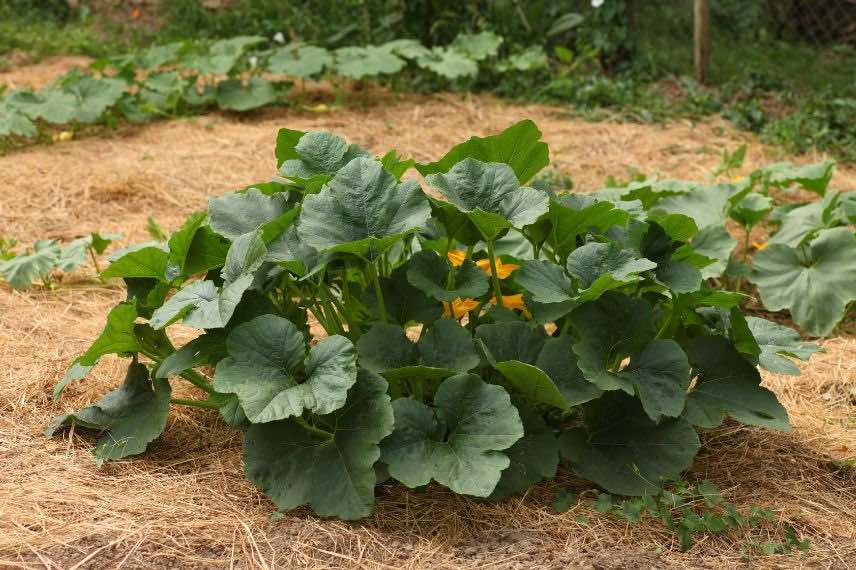
Straw is often used in the vegetable garden
Hay
Hay comes from the mowing of green field herbs before they go to seed. It consists of finer stems than those of straw. Hay is packaged in bales or bundles.
Its advantages
- It is very economical.
- It is easy to obtain both from garden centres and pet shops or from farmers.
- Still rich in nutrients, hay contributes to soil fertilisation.
- It offers a good nitrogen-carbon balance.
- It is naturally well-aerated, facilitating air and water exchange with the soil.
Its disadvantages
- Hay may contain seeds of adventive plants that are likely to germinate.
- It needs to be frequently replaced.
- It is bulkier to store.
- It may sometimes contain weedkillers or chemical fertilisers, depending on its source.
- Slugs and snails may take advantage of the protective blanket it provides.
For what uses?
Hay can be used throughout the garden: at the base of bushes, in orchards, in vegetable gardens, etc.
RCW, pine bark, and other wood-based mulches
RCW or Ramial Chipped Wood comes from the shredding of young branches from trees or bushes. There are other wood-based mulches, of various sizes: maritime pine bark, chips, or shavings. You can obtain them from stores, packaged in bags or sold loose.
Their advantages
- Their slow decomposition makes them durable (about 3 to 4 years, even longer for maritime pine bark).
- They provide good protection against the cold.
- They have good water retention properties, keeping moisture even in dry soil.
- Their weight offers good resistance to wind.
- They add an aesthetic and natural touch.
- They can slow down the movement of gastropods.
For its part, RCW has additional qualities: it enriches poor soils by stimulating soil life and helps to restructure heavy substrates. It can also be made at home from green waste from the garden.
Their disadvantages
- Their decomposition consumes nitrogen from the soil and temporarily creates a “nitrogen hunger”.
- They are not always easy to obtain. Making your own RCW requires time, equipment (shredder and protective gear), and quick use (it does not store well).
- Due to its long decomposition, pine bark does not contribute to improving soil quality.
For what uses?
Wood-based mulches can be used in borders, in the vegetable garden, as well as in ornamental gardens. Since they decompose slowly, they are preferred for crops that remain in place in the garden (perennials, herbs, bushes, etc.). Apply them in a layer of 3 to 5 cm.
Very slow to decompose (between 5 and 7 years), maritime pine bark is more suited for ornamental gardens, borders, pots, and planters, or for protecting the base of perennials.
Notes: pine bark is reputed to acidify all soils, which would assign it solely to mulching acidophilous plants and heather soil. However, as we explain in the article “Pine Bark: Uses, Advantages, and Disadvantages”, this is a misconception that has not been confirmed by recent studies. It would only contribute to acidifying soils with a pH that is already acidic (between 4.5 and 5.5).
For further reading: “RCW or Ramial Chipped Wood: What is it? How to use it in the garden?”
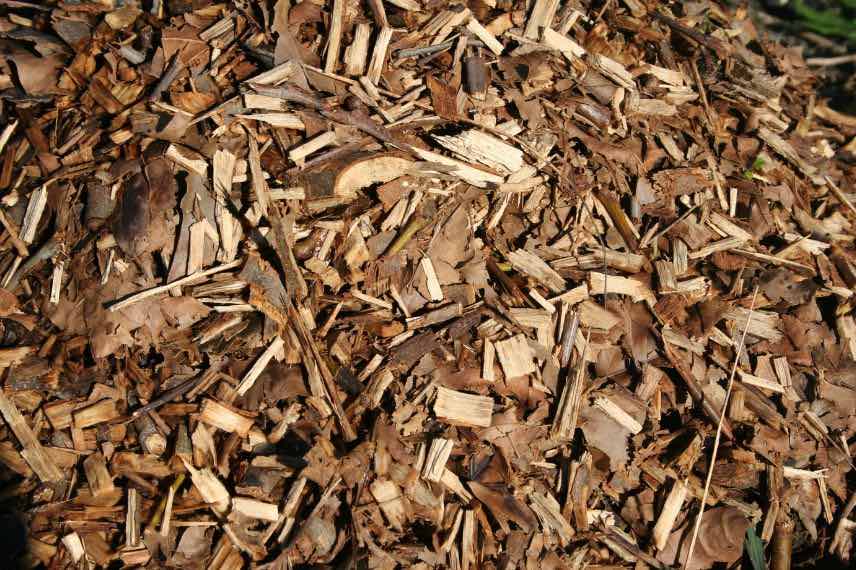
Ramial Chipped Wood decomposes slowly
Green waste from the garden: lawn clippings and fallen leaves
Qu whether they come from your garden, a friend’s, or a neighbour’s, grass clippings and fallen leaves can easily be repurposed as mulch. The clippings will be used in spring and summer, while the fallen leaves will provide protective coverage in autumn and winter.
Their Benefits
- They are a free and economical resource.
- These mulches limit the development of adventive plants.
- Fallen leaves provide good insulation in winter and naturally enrich the soil as they decompose.
- Grass clippings are rich in nitrogen.
Their Drawbacks
- Clippings are dense and can end up forming a compact layer, reducing air and water exchange with the soil. They can ferment if not dried beforehand or spread in a sufficiently thin layer. Not very durable, they need to be replaced regularly. They may also contain seeds of adventive plants.
- Fallen leaves should not come from diseased plants to avoid the risk of proliferation.
For What Uses?
Use these mulches in flower beds, at the base of trees and bushes, or even in the vegetable garden.
Notes: you can also repurpose other waste as mulch, such as perennial pruning waste, kitchen scraps (surface compost), green manures, etc.
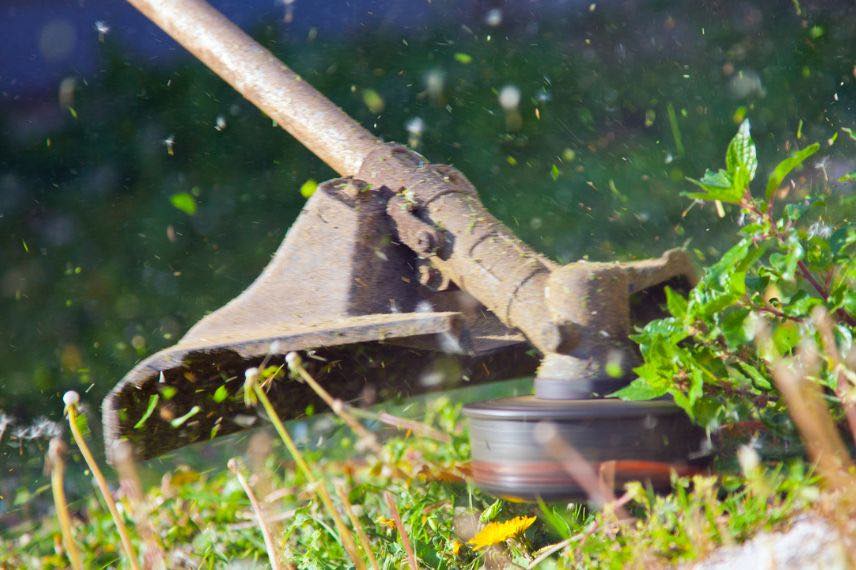
Grass clippings are handy as mulch but can ferment
- Subscribe!
- Contents
Comments