




























FLASH SALES: discover new special offers every week!
The hardiest aquatic plants

The hardiest aquatic plants

Our selection of pond plants that are very frost-hardy

Contents

Modified the 22 January 2026  by Leïla 6 min.

Garden ponds are oases of tranquillity that offer a visually soothing display and a habitat for various forms of aquatic life. At the heart of these ecosystems lie aquatic plants, essential elements that not only enhance aesthetics but also play a crucial role in maintaining ecological balance. Some are particularly hardy in cold conditions. As they are very hardy, they thrive on their own and require little maintenance. They can, however, be invasive, and in such cases the main task is to control their spread. Discover our selection of the hardiest aquatic plants for your garden ponds or water features. All plants in this selection are rated to USDA Zone 4 and withstand frosts down to -34°C or lower.

 

Difficulty

Water clover or Menyanthes trifoliata
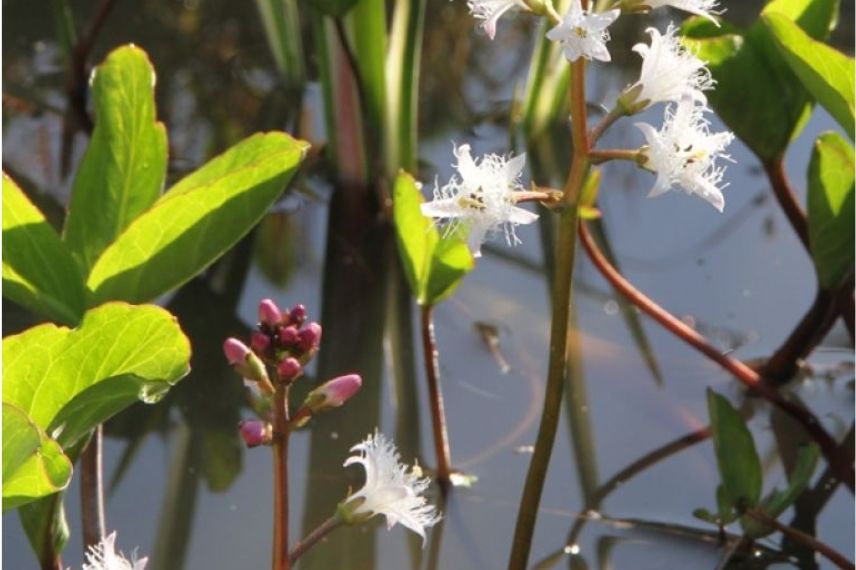
Water clover, or Menyanthes trifoliata, or trifoliate Menyanthes, is a semi-aquatic perennial characterised by its creeping rootstocks and green deciduous leaves, divided into three leaflets. In spring, it is distinguished by clusters of pink and white flowers, adorned with long white hairs, and it thrives in shallow waters or along the edges of water bodies. It is found in the wild in temperate regions of the Northern Hemisphere, in Europe and North America, but also in northern Asia and in north-west India. It forms a clump about 30 cm tall, with flowering from April to June on tall clusters. Its deciduous leaves, 5–10 cm long, are borne on long petiolate leaf stalks.

To grow water clover, place water clover in shallow water, 15 to 25 cm deep, or on a floodable bank, in a basket filled with ordinary soil, in a sunny position. It thrives best in rich siliceous or calcareous clay soils and enjoys cold waters. It can colonise a substantial area.

water clover hardy aquatic plant

The marsh spikerush or Eleocharis palustris
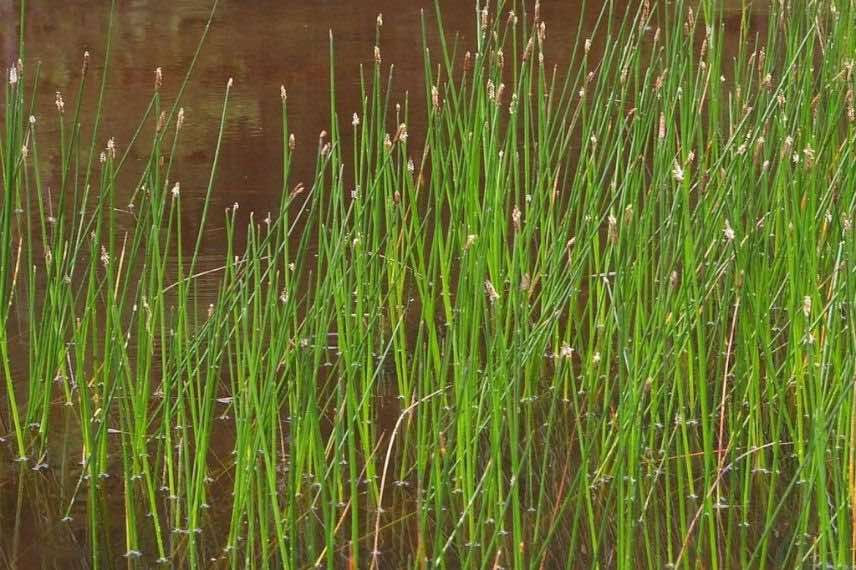
Eleocharis palustris, marsh spike-rush, or marsh scirpus, is a hardy perennial and running pond plant, appreciated for its bright green stems and creamy inflorescences in summer. It grows at the water’s edge or submerged up to 10 cm, often used for natural water purification. It occurs naturally across the cool temperate zones of the northern hemisphere as well as the Arctic to the southern United States. It is characterised by upright stems 30 to 60 cm tall and running rootstocks. Its cylindrical stems bear small flowers from June to September.

Very hardy and resilient, the Eleocharis palustris is suitable for pond edges and marshy areas. It can be invasive. It prefers moist soils and a sunny position. It may be necessary to remove the flowers to prevent substantial spread. Ideal as groundcover in flooded areas, it is also effective for pond purification and can be grown in pots.

Eleocharis palustris hardy aquatic plant

Yellow water-lily or Nuphar lutea

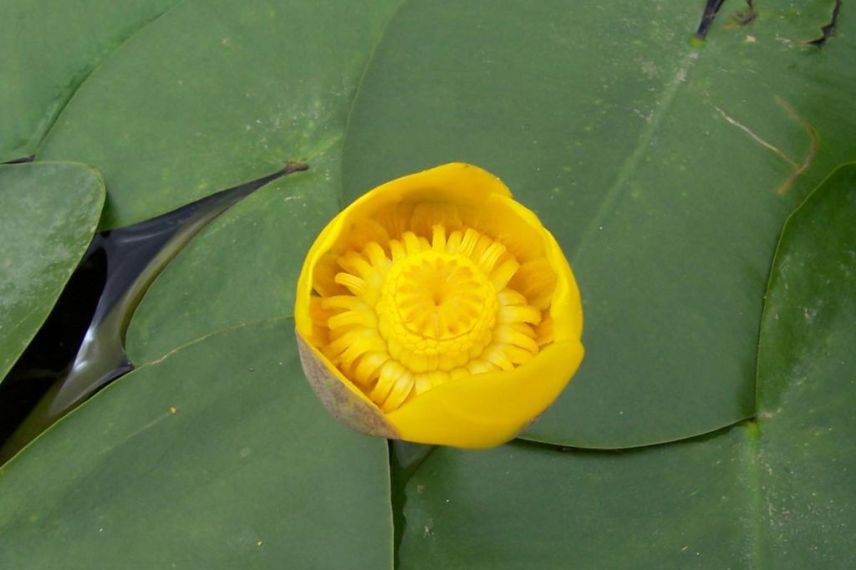
The Nuphar lutea, or yellow water-lily, is an aquatic species with broad heart-shaped floating leaves, common in France’s calm lakes, ponds and rivers with little pollution. Less widely used than Nuphar or Nymphaea in ponds, it offers more vigorous growth and its small yellow flowers are less spectacular, but it has the advantage of tolerating shade better and resisting carp nibbling.

Originating from Europe and northern Asia, it reaches 30 cm in height with a spread of 2 m. Its flowering in July–August features yellow, fragrant flowers, reminiscent of buttercups, that open in the morning and close in the evening. The plant has three types of leaves: finely submerged leaves, broad floating leaves and smaller emergent leaves, providing hiding places for insects and amphibians.

The Nuphar lutea, with its aerial petioles and creeping rhizome, adapts well to the anoxic bottoms of ponds. In winter, it overwinters as a rhizome. Hardier than standard water lilies, it is better suited to large bodies of water, tolerating partial shade and a light current. Sensitive to pollution, its presence often indicates good water quality. Its rhizome, rich in tannins and alkaloids, is edible and possesses medicinal properties.

Hardy aquatic pond plant

Glyceria variegated, or Glyceria maxima 'Variegata'
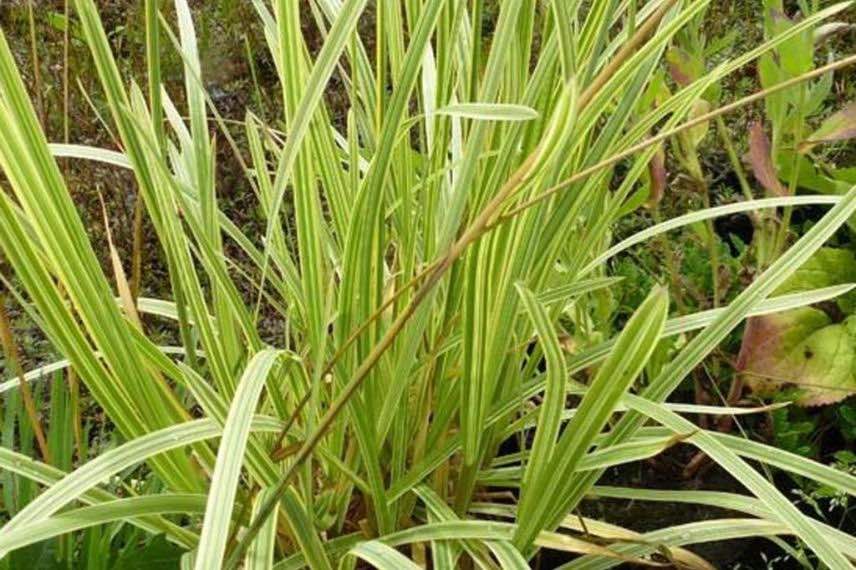
Glyceria maxima ‘Variegata’ is a variegated aquatic grass forming large green-and-cream tufts.
It spreads by rhizomes, which makes it ideal for damp and marshy soils, and brings a wild charm to the water’s edge. It can reach 60 to 100 cm in height. Its long, flat, arching leaves are green with cream-white stripes, turning pinkish in autumn. In late summer, it produces panicles greenish to purplish.

Very hardy, it thrives in rich, cool to damp soils and semi-aquatic conditions, and can be submerged up to 10 cm. It is also adaptable in pots or in drier soil where its growth is more limited. Perfect for stabilising banks, its bright foliage creates striking contrasts with other riverside plants. Beneficial for wildlife, it provides spawning grounds for fish and amphibians and is used in natural filtration systems for ponds.

Glyceria maxima hardy aquatic plant

The Baldingere false reed or Phalaris arundinacea
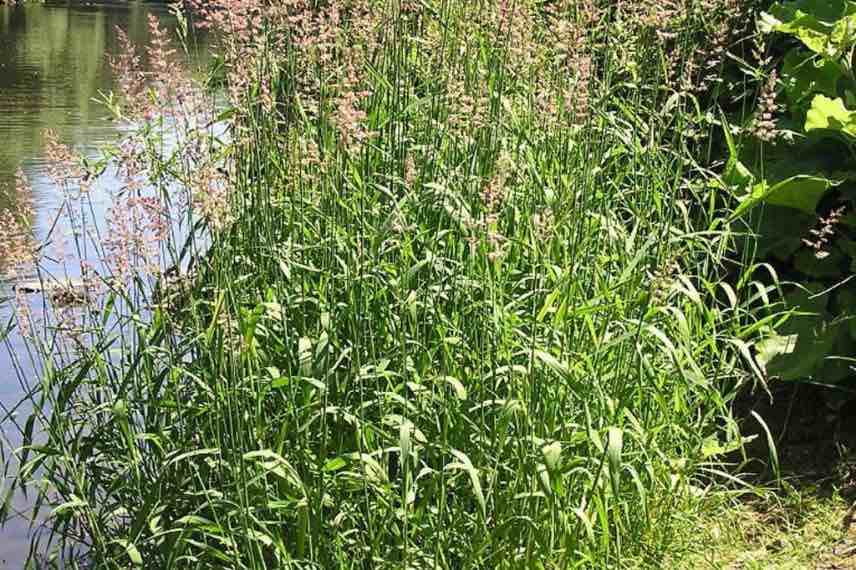
The Phalaris arundinacea, or Baldingère faux-roseau, is a rhizomatous perennial grass suited to banks and edges of ponds. Resembling reeds, it forms spreading tufts and produces large feathery inflorescences from spring to summer. Widely distributed in the northern hemisphere, it is common in France, but less present in the Mediterranean region. This plant forms clumps of narrow leaves about 40 cm tall with erect flowering stems of 120 to 150 cm, topped with silvery inflorescences at maturity. Its black, creeping rhizomes can penetrate hard soils.

Completely hardy, the Baldingère faux-roseau grows in moist soils, but tolerates drought. It is used to stabilise banks thanks to its running rhizome and for natural water purification. It can be the sole plant in a phyto-purification system. It is a striking and ornamental plant, with numerous studies highlighting its qualities for soils and biodiversity.

Phalaris arundinacea hardy aquatic plant

Common water plantain or Alisma plantago-aquatiqua
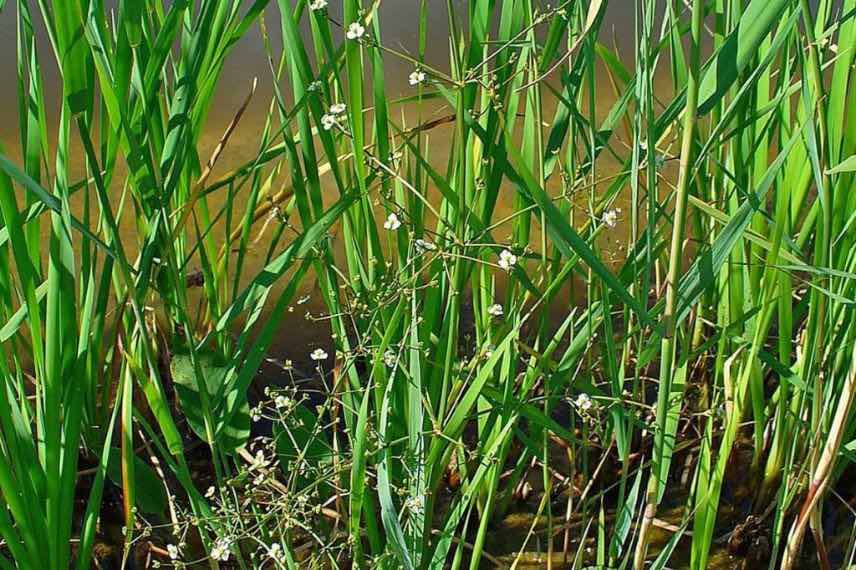
The Alisma plantago-aquatiqua, or common water plantain, is a bulbous perennial adapted to marshy ground, commonly found in France near ponds, lakes and rivers. It flowers in summer with white or pale pink blooms on branched flowering stems. Its heart-shaped leaves are similar to those of meadow plantain. This plant requires little maintenance and it is ideal for stabilising banks. It reaches 60 cm and up to 1 m in height when flowering and 30 cm in foliage, spreading to 40 cm. Its small flowers open in the afternoon. It has a fibrous root and green leaves 15 to 30 cm long.

Adapted to heavy and moist soils, acidic or neutral, it does not require special care, but it is advisable to remove faded flowering stalks to prevent self-seeding. The water plantain is used for phyto-purification and its dried flowering stalks are decorative in winter. Cosmopolitan, it blends well along the edges of any water feature.

water plantain hardy aquatic plant

Flowering rush or Butomus umbellatus

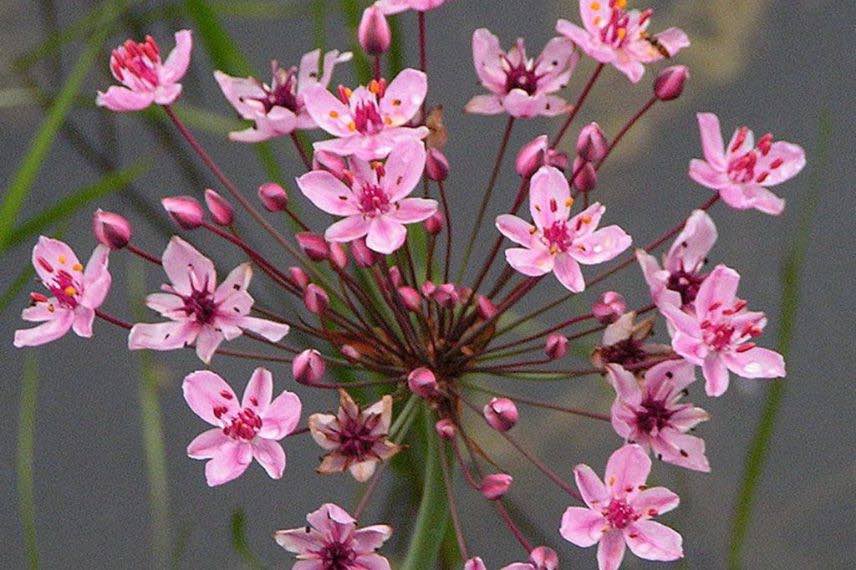
Butomus umbellatus is a herbaceous aquatic perennial plant species that is found on banks, in damp places, pioneer mid-European reedbeds, riverbanks and ditches in temperate zones of Europe and Asia. Height 100–120 cm, with a spread of about 60 cm, this bulrush has a tufted habit of bristly, upright stems, mid-green, bronze when young. In summer, the tall flowering stems bear at their tips fragrant umbels, about 10 cm wide, composed of about thirty pink corollas with a carmine stigma and nine carmine stamens. They are sometimes partly concealed by the foliage. The narrow, twisted deciduous leaves are very sharp-pointed and three-angled. The plant spreads by rootstocks producing small tubercles in summer.

Butomus umbellatus requires rich soil and a sunny exposure. If conditions suit it, it can quickly form a handsome colony. This plant is hardy; it tolerates only extreme frosts and can be submerged to a depth of 20 cm. It is perfectly feasible to grow in a pot.
The flowering bulrush is protected in several regions of France, including Nord-Pas-de-Calais. It is also protected in Algeria. This plant is considered an invasive species in North America.

Butomus ombellatus aquatic hardy plant

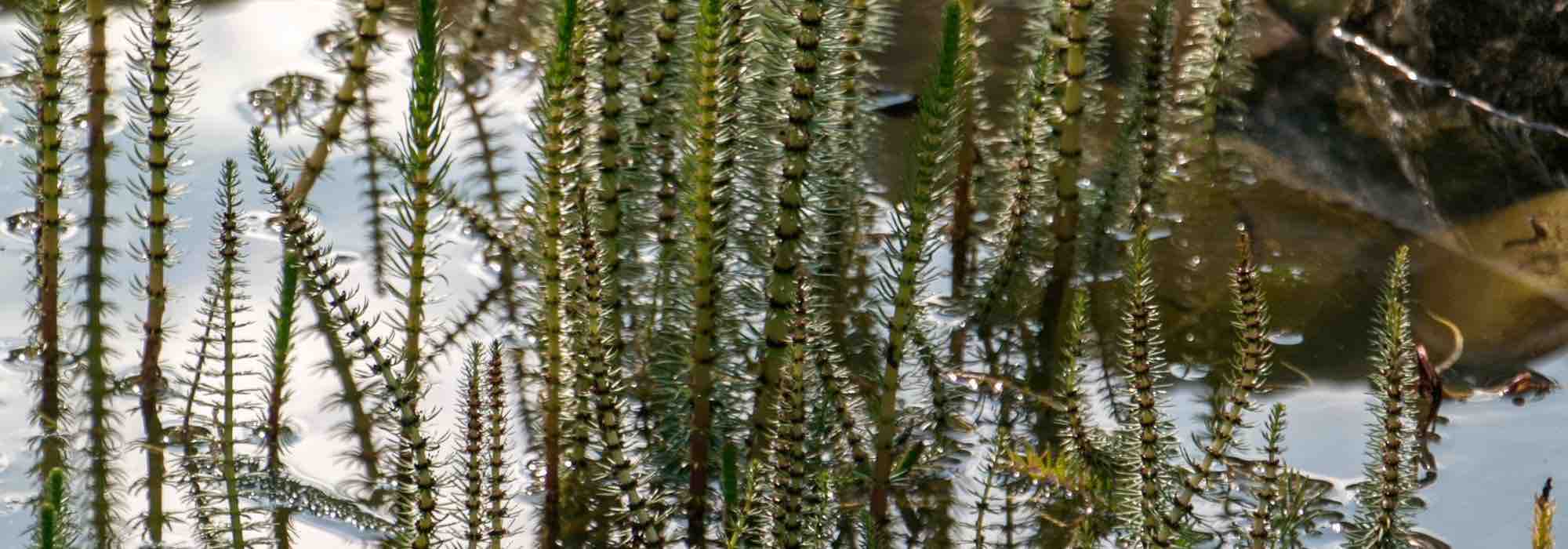
Hippuris vulgaris

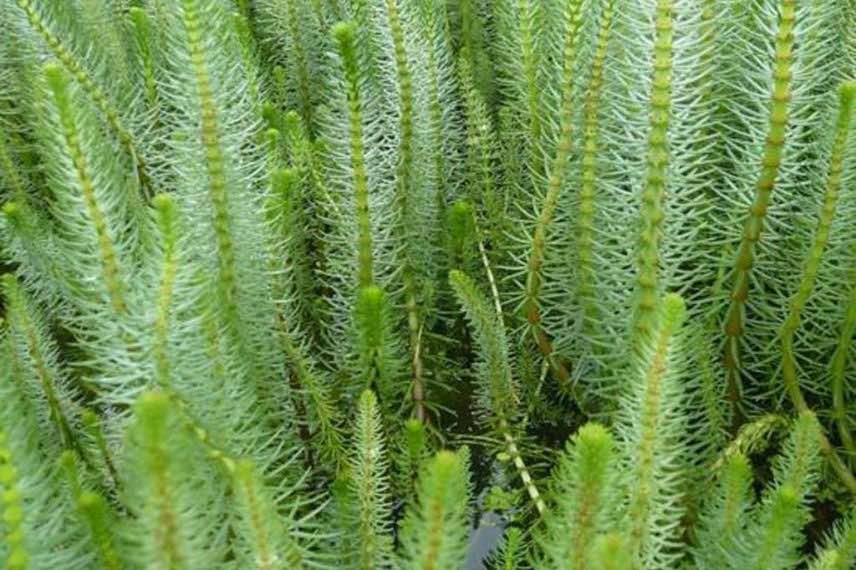
Hippuris vulgaris is an ornamental aquatic perennial plant, but potentially invasive. It is rarely used in garden ponds, although useful for oxygenating and purifying the water. Its discreet flowering in June and July consists of small green flowers. Native to Europe and Asia, it grows in the cool waters of ditches, lakes, ponds and calm rivers. It has upright stems 20 to 50 cm tall, with linear leaves and greenish flowers. In winter, it survives as an underwater rootstock.

In France, it is no longer as common, owing to the threat to its habitat. If it is submerged beyond 60 cm, it remains entirely underwater. If planted at a shallower depth, its stems emerge, resembling small green conifers. Plant it at a depth of 5 to 30 cm to observe this form.

Water mare’s-tail prefers slightly alkaline water and can be kept in a container. Year-round management helps prevent pond eutrophication. It benefits aquatic wildlife, providing habitat for dragonflies, amphibians, invertebrates and fish. Its growth is limited to the rootstock, making it easy to control in a pot or a planter.

mare's tail

Comments

Bogbean