





























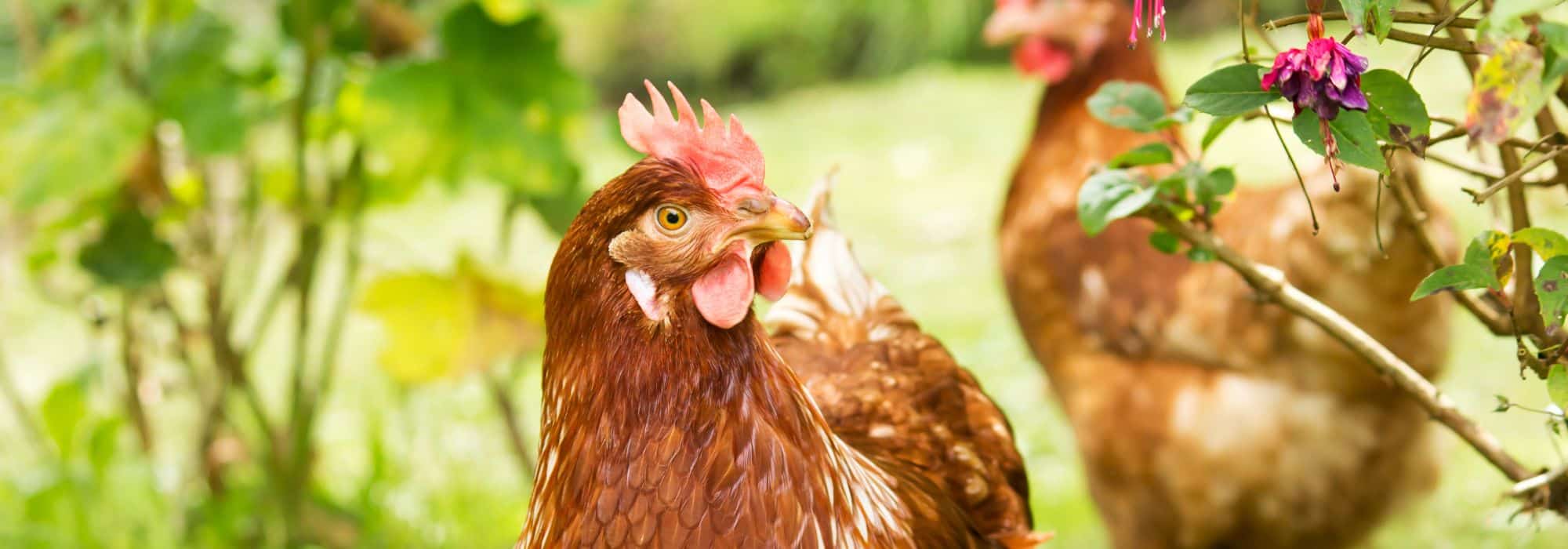
The hen: useful in the garden and orchard
What if you let your chickens roam in the vegetable garden and orchard?
Contents
Are you (like me) the happy owner of hens that live in a perfectly protected enclosure and henhouse from predators? They scratch around all day, lay eggs, and take refuge there in the evening as soon as night falls. However, you often wonder if you can let them roam freely in the ornamental garden, vegetable patch, and orchard. The answer is yes, but…! “Yes,” because hens can be very useful for getting rid of some pests. And, “but” because their outings must be supervised and monitored to avoid turning your garden into a battlefield.

Chickens for pest control
Chickens are omnivores. They spend their days foraging for any little morsel to put under their beak. Of course, to feed them, you need to provide a balanced mix of grains, but their diet should also include greens and proteins, along with table scraps and peelings from fruits and vegetables.
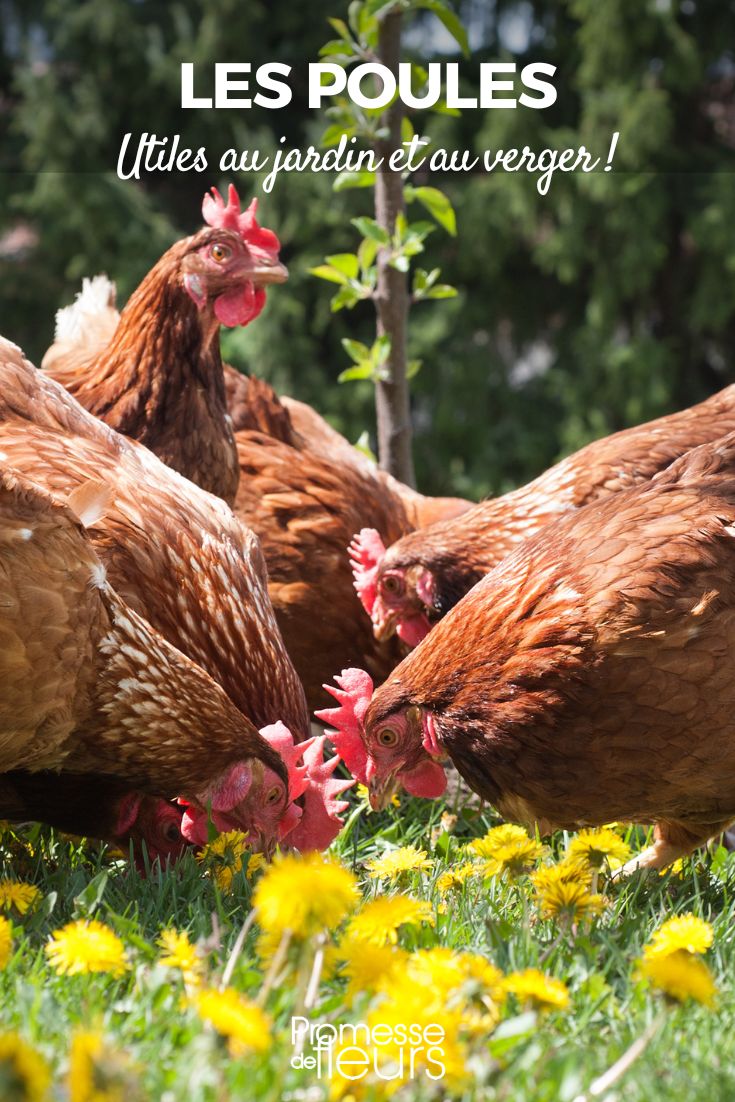
That’s why it can be beneficial to let them roam in the ornamental garden, the vegetable patch (only in winter when it is empty of crops), and the orchard, under supervision and at specific times. They can be very useful in terms of pest control.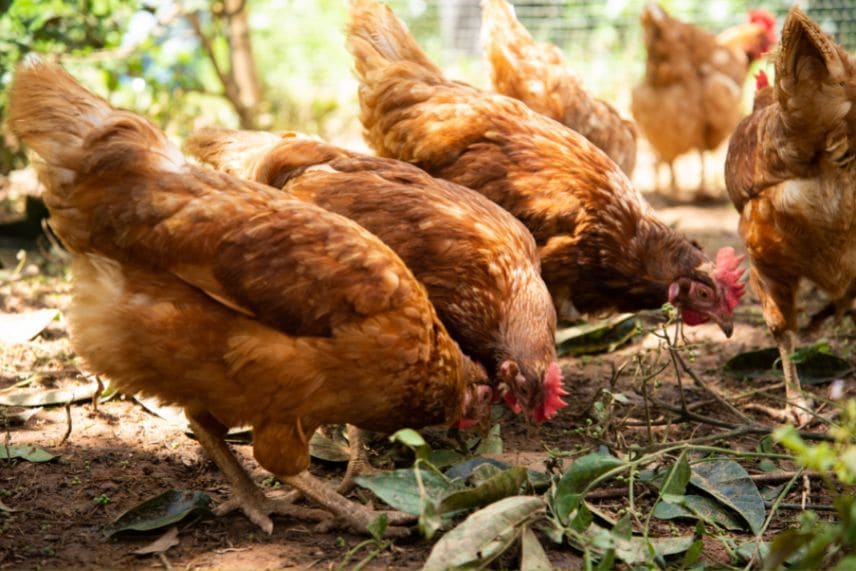
Chickens are indeed fond of many pests that they will unearth by scratching the soil in the vegetable patch, flower beds, or lawn:
- Slugs and snails, which they can manage to break the shell of!
- Insects that hibernate in the soil such as wireworms, larvae of chafer beetles or vine weevils, crane fly larvae, cutworm larvae, or even carrot flies and leek miners, onion flies, flea beetles, and mole crickets…
- Thrips that spend the winter on the remaining vegetable plants
- Leaf beetles that attack plants like rosemary, mint, and sorrel.
In the orchard, they are equally essential under the trees, as by scratching the soil and foraging, they bring up other pests specific to fruit trees. These pests can hide in fallen fruit, in the soil, or among dead leaves. Starting with the codling moth that attacks apple, pear, plum, and cherry trees. This little apple worm overwinters in the soil after devouring the insides of apples. Chickens are not averse to pecking at rotten apples where they can uncover hidden codling moths.
In the orchard, chickens also go after the larvae of the cherry fly, the weevil, or the leaf miner.
Certainly, in the process, chickens will swallow a few earthworms or beneficial insects, but this is a minor issue compared to the pests they will help you eliminate.
Chickens aerate the soil
Have you ever observed a hen’s feet? Covered in scales, they have four toes equipped with very powerful claws. It is with these claws that they scratch the soil in search of a larva or a worm. They also ingest small pebbles, valuable allies for aiding their digestion.
Nonetheless, by rummaging through loose soil with their sharp claws, hens will turn the soil, loosen it, and aerate it over a surface that may be small, but is still beneficial. Indeed, these scratchings will promote the penetration of water and air. So, don’t hesitate to let your hens roam in your vegetable garden during winter… However, when it rains or if your ground is heavy and clayey, their footfalls compact the soil.
Do the same in the orchard, under the trees. If you leave them for a few days, hens will quickly weed the plots. Or in the lawn where hens act as scarifiers. While scratching, they eliminate moss… but they also damage your lovely green lawn!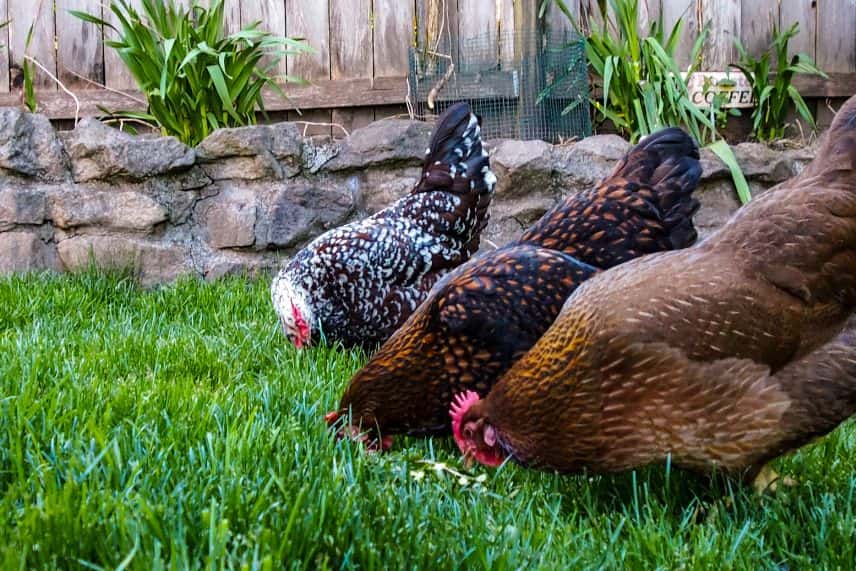
The same goes for perennial beds or hedges. They will loosen the soil there. The only downside is that hens really enjoy organic plant mulches, pine bark, wood chips, and other scales that they scatter everywhere!
Chickens fertilise the soil
It’s well known that chickens eat a lot, but they also produce a lot of droppings. However, when you learn that their droppings are rich in nitrogen, potassium, and phosphorus, as well as trace elements, you’ll see the benefit! Especially since the droppings are immediately available for plants.
However, chicken droppings should never be dumped directly into the vegetable garden or at the base of plants, as this can burn them. You should either store and dry them to crush and mix with the garden soil, or incorporate them into compost, along with carbon-rich waste.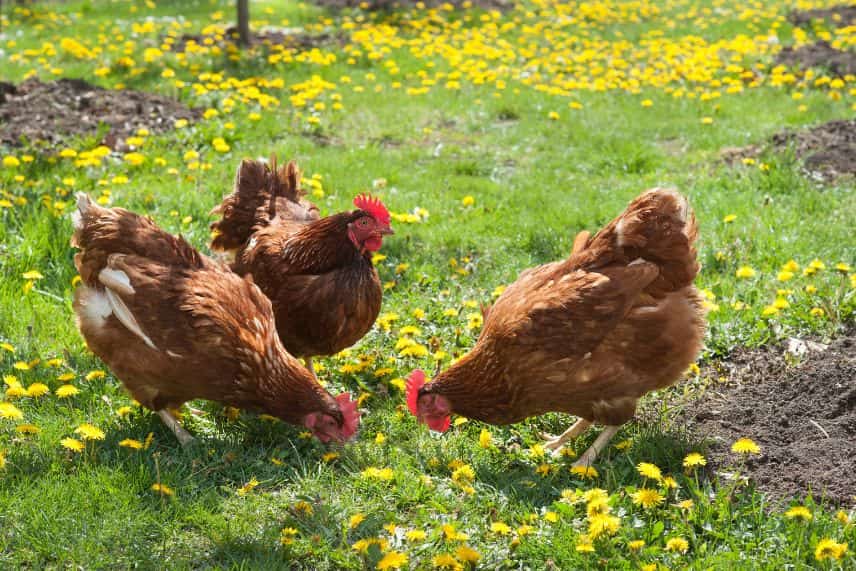
On the other hand, if you occasionally let your chickens roam in the garden, vegetable patch, and orchard, they will produce some droppings that will provide a safe nitrogen boost to the soil. And, as a chicken doesn’t stay in one place for long, they will scatter their droppings everywhere. By scratching around, they may even bury them in the soil. It’s all beneficial for you!
To learn more, check out my article Use chicken droppings as fertiliser in the garden.
Chickens process organic waste
On 1st July 2024, it will be prohibited to throw organic waste in common bins. Composting will therefore be encouraged, both in the countryside and in cities, through communal compost bins or worm composters.
The other alternative for dealing with organic waste is to adopt chickens. They greatly enjoy all vegetable and fruit peelings (sometimes cooked) as well as table scraps like pasta, rice, wet stale bread, cheese rinds (which they love!), and a few leftovers from cooked dishes in moderation…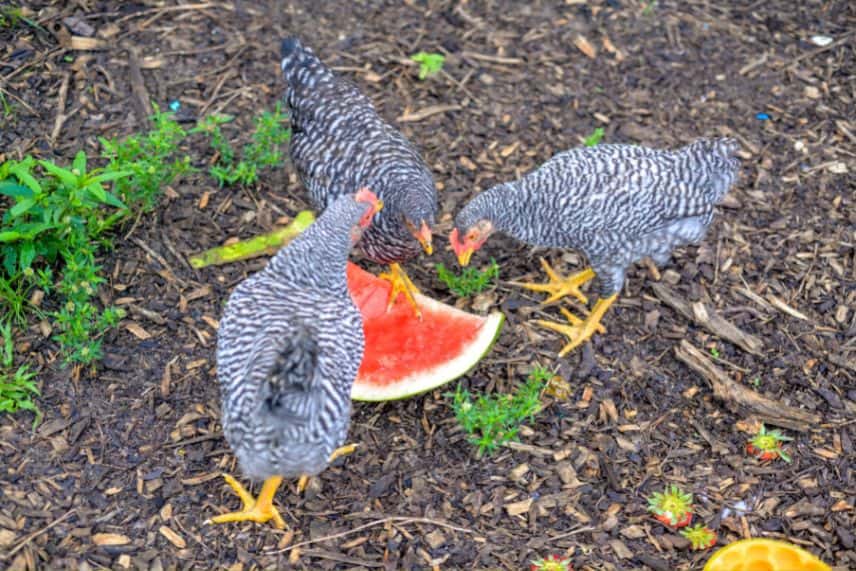
However, a chicken is not a bin, and you should not give them just anything under the pretext that they are omnivores. Feel free to consult the forbidden foods for chickens.
The downside of having chickens: the compost fills up less quickly than you would like!
Chickens provide feathers
Obviously, there’s no question of plucking your hens! However, during autumn, some will moult to renew their plumage for winter. You may find feathers in their enclosure or in the henhouse. You can turn them into a nitrogen-rich fertiliser!
How to do it?
- Collect about 100 g of clean feathers
- Place them in an old stocking with a stone
- Submerge them in a bucket containing 1 litre of rainwater
- Leave the bucket outside in the shade for two months
- Retrieve your feather juice to water your plants
The remaining feathers will be added to the compost.
- Subscribe!
- Contents
Comments