





























Ladybirds: natural allies against pests in the garden
How to attract and protect ladybirds in your garden for a healthy vegetable garden
Contents
The ladybird, or ladybug, is much more than a pretty little colourful insect that we like to see settle on our hands. With its rounded body, its red or yellow elytra punctate with black spots, it is easily recognisable and among the insects most appreciated by gardeners. In addition to being a lucky charm in the popular imagination, the ladybird is a valuable ally for the garden.
Its ecological role is crucial, notably as a regulator of pests. It feeds mainly on aphids, scale insects and other small insects that attack plants, which helps to keep pest populations under control. Thanks to this function, the ladybird helps to maintain a garden in balance and to protect biodiversity. By favouring natural methods of pest control, it helps to preserve the health of plants. A true little guardian of the garden!

Why is the ladybird a natural ally?
The ladybird is often known as the gardener’s helper, and for good reason: it is one of the most effective predators against the aphids. A single adult ladybird can eat up to 50 aphids per day, while its larva consumes even more, up to 200 individuals in a single day.
But ladybirds do not content themselves with attacking aphids. They also feed on mealybugs, on whiteflies, and on mites and other small insects called “pests” for our plants and crops.
Plants attacked by aphids or mealybugs generally show signs of weakness: yellowing leaves, distortions, loss of vigor, or even the development of fungi such as sooty mould (a black fungus that grows on the sugary excretions of aphids, known as honeydew). By acting quickly, ladybirds help limit the damage by reducing populations of parasitic insects.
The presence of ladybirds thus promotes a natural balance in the garden. They help keep crops in better condition, by preventing pests from proliferating and causing outbreaks.
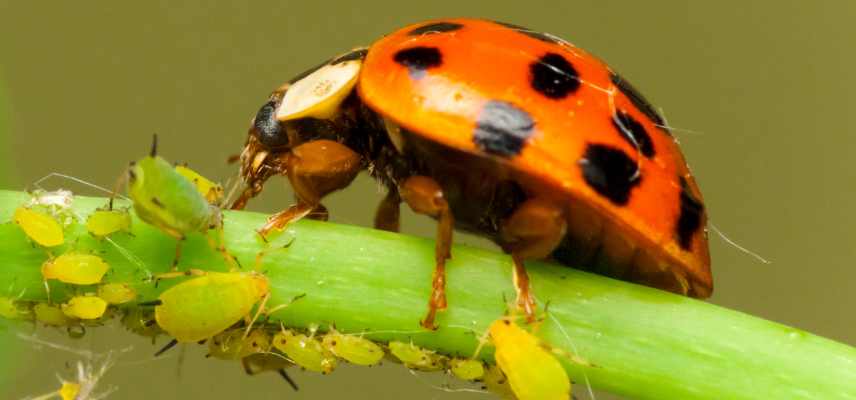
The ladybird, aphids’ worst nightmare!
Read also
Garden Helper: The ShrewHow to recognise the different ladybirds?
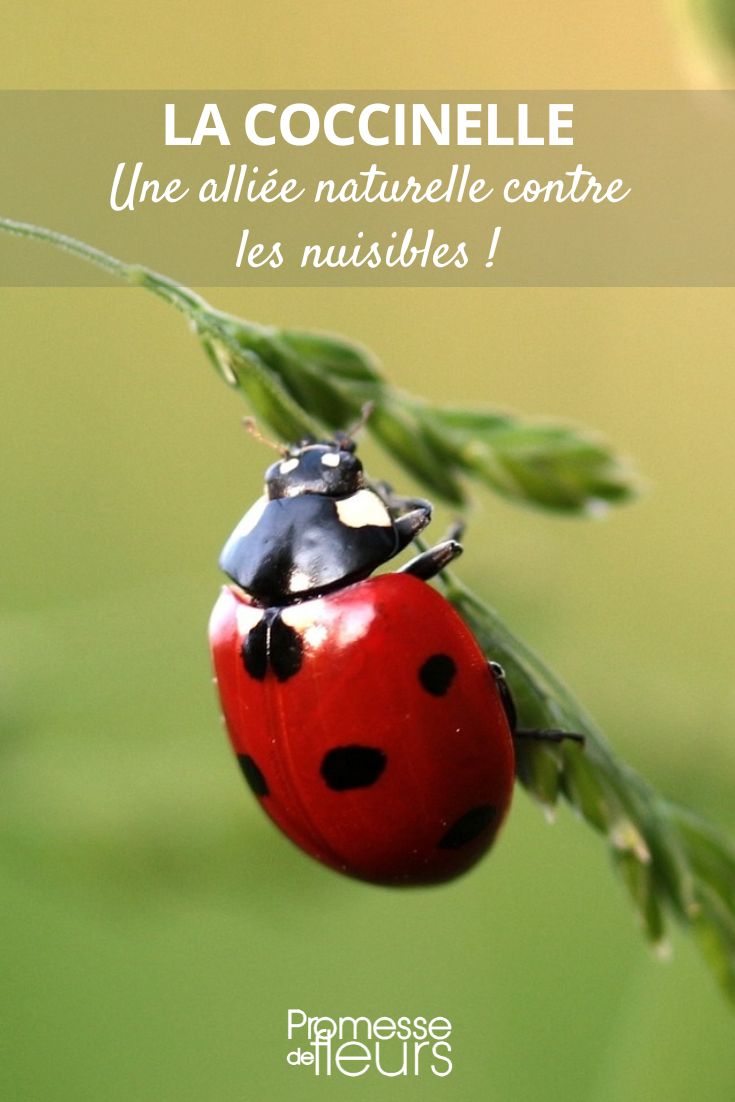
The ladybug (or ladybird) is a small beetle easily recognized by its distinctive shape and bright colors. It has a rounded, often oval body and six small legs. Its hardened forewings, called elytra, protect the delicate hindwings used for flying. Ladybugs are best known for their colorful, spotted appearance.
The most common ladybirds in our gardens are those people naturally associate with the good-luck insect: red with black spots, such as the seven-spot ladybird (Coccinella septempunctata). However, there are several species of ladybirds, and some can vary in colour and the number of spots even within the same species. There are around 90 species of ladybirds in France, and more than 5,000 species worldwide. Ladybirds typically measure between 5 and 10 millimetres, though this can also vary by species.
Three common species in our gardens
Three species commonly found in our gardens
Seven-spot ladybug (Coccinella septempunctata)
- Description: This is the most common and iconic ladybug. It has a bright orange-red body with seven distinct black spots on its elytra (three on each side and one in the center).
- Size: Approximately 7-8 mm.
- Habitat: Widely found in European gardens, this ladybug primarily feeds on aphids..
- Particularities: A native European species, it is easily recognized by its seven spots.
The seven-spot ladybird (Coccinella septempunctata)
- Description: it is the most widespread and iconic ladybird. It has a red-orange body with seven black spots distinct on its elytra (three on each side and one in the centre).
- Size: around 7–8 mm.
- Habitat: very common in European gardens, this ladybird feeds mainly on aphids.
- Particularities: it is a native to Europe, and it is easily identifiable by its seven spots.
Asian lady beetle (Harmonia axyridis)
- Description: much more variable in appearance than the seven-spot ladybird, it can be red, yellow or black, with a number of spots that varies enormously (from 0 to more than 20). Sometimes Asian ladybirds have no spots at all!
- Size: 6-10 mm, it is slightly larger than the seven-spot ladybird.
- Habitat: originating from Asia, it was introduced in Europe to combat pests, but it has adapted so well that it is invasive in parts of Europe.
- Particularities: although very useful against aphids, the Asian ladybird poses a problem as it competes with native species and can also invade houses in search of winter shelter. Unlike the seven-spot ladybird, it is regarded as a threat to local biodiversity.
Two-spot ladybug (Adalia bipunctata)
- Description: as its name suggests, this ladybird is distinguished by its two black spots located on a red or orange body. There is, however, a black form with red spots.
- Size: 4-5 mm, it is smaller than the other common species.
- Habitat: the two-spot ladybird is very common in urban areas and gardens, but can also be found in forests and meadows. It primarily feeds on aphids.
- Particularities: this ladybird is often used in greenhouses to regulate aphid populations. In addition, it is native to Europe and does not pose invasion problems like the Asian ladybird.
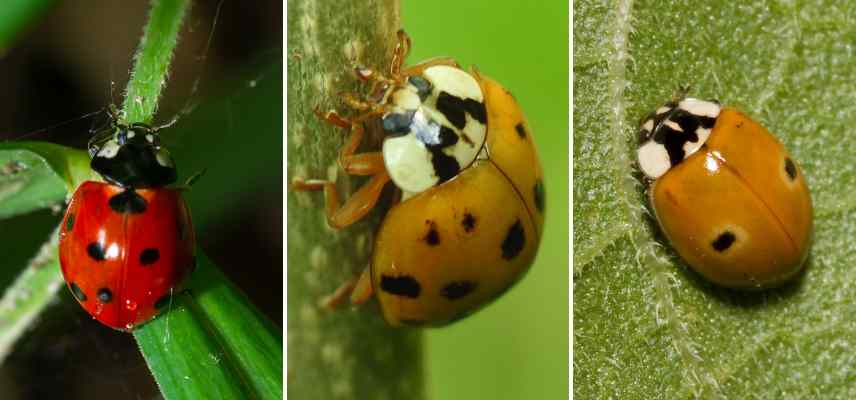
Coccinella septempunctata, Harmonia axyridis and Adalia bipunctata
How to attract ladybirds to your garden?
Which plants attract ladybirds?
Some plants are particularly effective at attracting ladybirds. They provide not only a food source (aphids, pollen) but also refugia for laying their eggs and enabling their larvae to grow safely.
Here are a few essential plants to include in your garden:
- Nasturtium: this plant is a true magnet for aphids, making it an ideal food source for ladybirds.
- Dill and Fennel: aromatic herbs that attract ladybirds thanks to their nectar-rich umbellifer flowers, and also provide an ideal habitat for the larvae.
- Yarrow millefolium : its pollen-rich flowers attract many insect species, including ladybirds.
- Dandelion: ladybirds enjoy dandelions for their pollen, and this wild plant is also a food source for other beneficial insects.
→ You can also sow flower seed mixes selected to appeal to ladybirds.
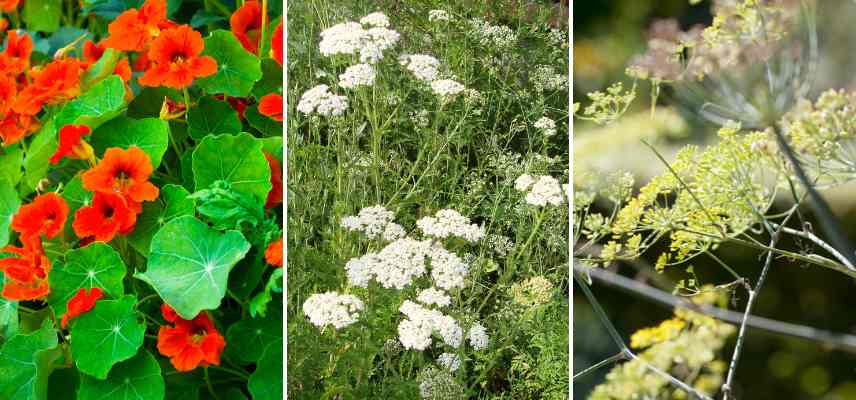
Nasturtium, yarrow and fennel: a winning trio to attract ladybirds to your garden
Creating a favourable habitat
Attracting ladybirds also involves creating a garden that offers refugia and places to lay their eggs. Here are a few ideas to make your space welcoming:
- Presence of shrubs and wild corners: ladybirds like to find refuge in places where they feel protected. Leave some areas of your garden wild, with tall herbs or shrubs such as the Black elder or the hawthorn, where they can shelter from predators and lay their eggs. Leaves piles or dead wood are also ideal refugia.
- Wet areas: ladybirds enjoy slightly damp environments, where they can find natural shelter and food. By creating water features, such as a small pond or a damp patch where water slowly infiltrates, you attract aphids and other prey that ladybirds feed on.
- Maintaining biodiversity: the more diverse your garden is in terms of plants and microhabitats, the more it will attract a variety of insects, which will help prevent pest outbreaks without the use of chemical products.
- Totally ban pesticidal products.
Did you know? You can now buy adult ladybirds or larvae. Yes indeed. These are ladybirds of a native species (often Adalia bipunctata) that you can release into your garden, your crops or your greenhouse. In order to avoid the same problem from a few decades ago with the Asian ladybird…
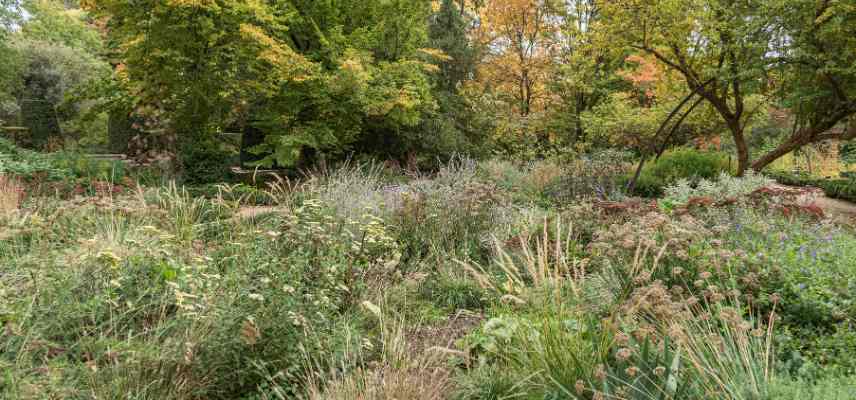
The natural, or even wild, garden is the ideal environment for welcoming a good number of ladybirds.
- Subscribe!
- Contents
Comments