





























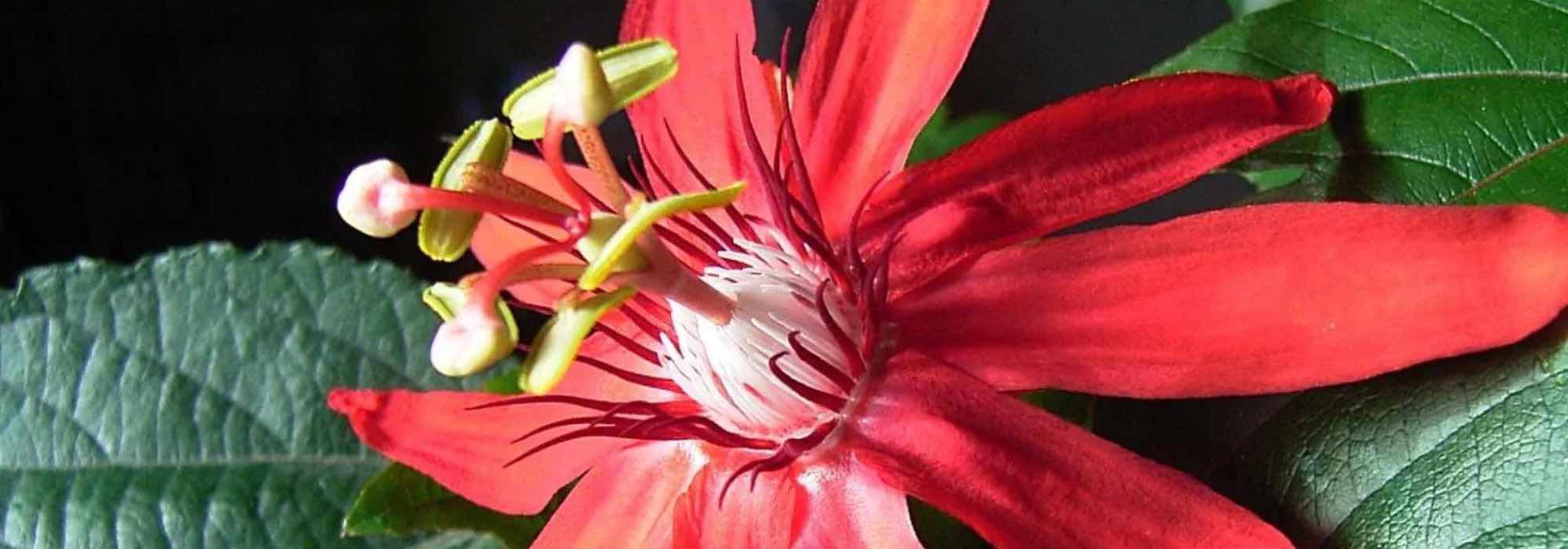
The most beautiful passion flowers with red flowers
Four passion flowers in fiery colours
Contents
Passion flowers are tropical climbing plants widely known for their exotic beauty and their spectacularly complex flowers. Among them, red-flowered varieties stand out for their vibrant and intense colour, undeniably original and unusual.
Red-flowered passionflowers offer not only rich hues, but are even sometimes appreciated for their edible fruits. These plants are characterised by sturdy stems that readily cling to any support thanks to their tendrils, enabling the plant to climb and spread gracefully. Cultivation of these passionflowers is not difficult, but their hardiness is often lacking. They require a sunny, sheltered position, as well as well-drained soil rich in organic matter to thrive.
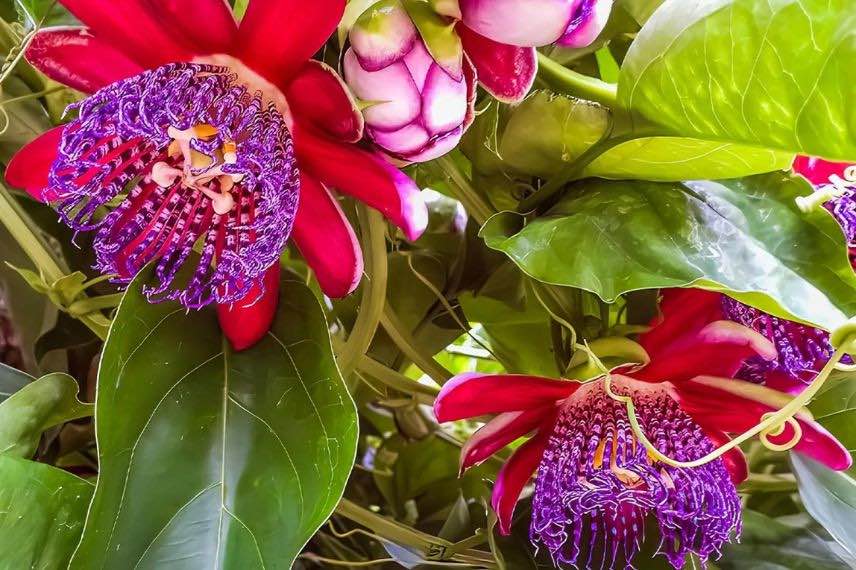
Their flowers, large and slightly fragrant, range in colour from carmine red to orange-red, adorned with spectacular filaments that catch the eye and attract pollinators. Each variety has its own nuances and features. Let’s discover them!

Passiflora vitifolia - grape-leaved passionflower
Passiflora vitifolia is an endemic botanical species of the tropical forests of Brazil.
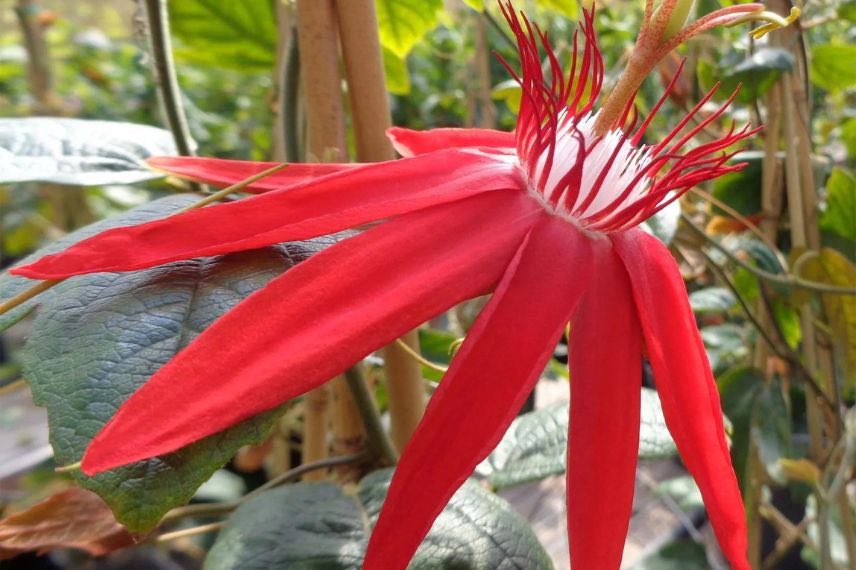
This frost-tender climbing vine is characterised by its vigour and its large red-orange flowers, with elongated and pointed petals, complemented by a collar of purple filaments and yellow and red stamens. It reaches a height of 2 to 3 metres and flowers from late spring to early autumn.
The stems of Passiflora vitifolia bear trilobed, glossy leaves of mid-green with a velvety underside. Flowering runs from June to autumn, with large bright red flowers that frequently renew themselves, exhaling a pleasant fragrance. Suitable for pot culture on a patio or in a conservatory, it needs to be protected from the cold by bringing it indoors when temperatures fall below -2°C.
Easy to grow, Passiflora vitifolia thrives in well-drained, light and deep soil, and does not require complex maintenance. It is ideal for southern and Atlantic regions and fits well in conservatories or glasshouses where it can be sheltered during cold periods. Pruning after flowering helps maintain an attractive growth habit and promotes the plant’s overall health.
Read also
Choosing a passion flowerPassiflora 'Michael' - Passionflower
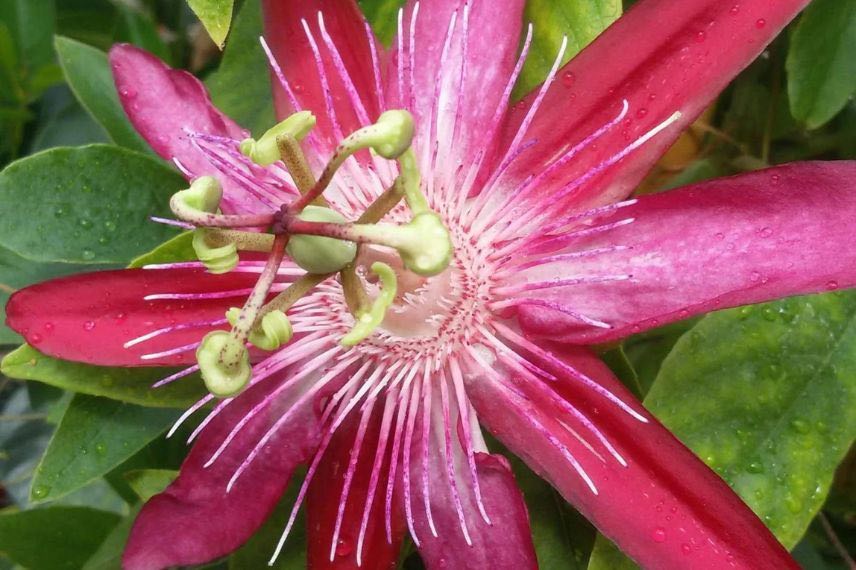
Passiflore alata - Passion Flower
Read also
6 passionflowers to grow in potsPassiflora quadrangularis
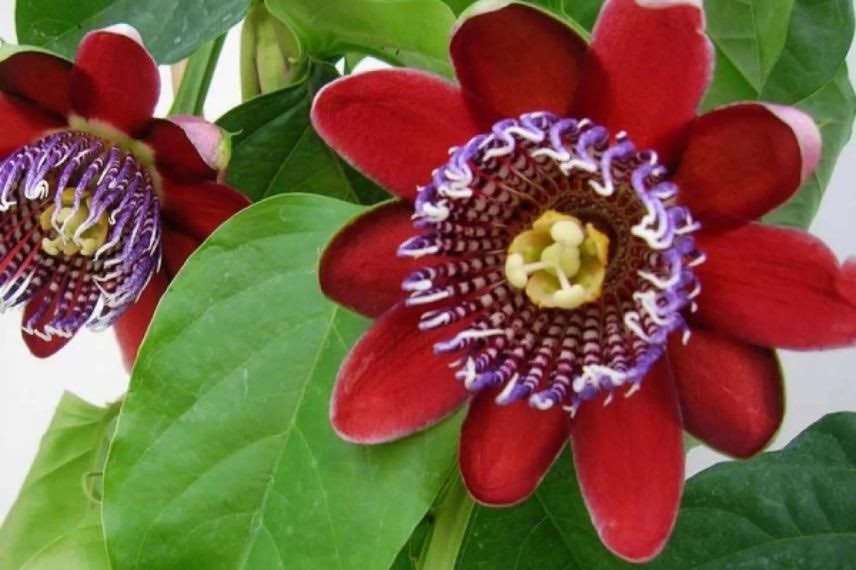
Passiflora quadrangularis, also known as the quadrangular-stem passionflower, stands out for its four-faced stems with precise angles. It is recognised as one of the most beautiful passionflowers. Although it is a giant climber in its natural habitat, it maintains a more modest size in our temperate climates, ideal for growing in a greenhouse or conservatory. Its flowers, large and highly fragrant, carmine red with a crown of curly filaments, purple and white, are not only spectacular, but also produce edible green fruits that turn yellow-orange, often used in juice.
Passiflora quadrangularis, native to the hot and humid tropical forests of Central and South America, also known as barbadine, can reach impressive heights, often exceeding 6 metres in good growing conditions. It clings to its support with tendrils, and its quadrangular stems are furnished with small wings. The leaves, heart-shaped and entire, 7 to 13 cm long and 5 to 15 cm wide, are light green with dark green veins. Flowering from early summer to autumn, its solitary flowers measure about 10 cm in diameter.
This variety, requiring a warm climate, is ideal for large greenhouses or beautiful conservatories where it can thrive. It prefers rich, cool and well-drained soil, in a sunny and sheltered position.
- Subscribe!
- Contents

Comments