






























The most colourful decorative dogwoods
for a super-colourful winter!
Contents
We love dogwoods or Cornus with coloured wood throughout the year for their deciduous foliage, often stunning in autumn and sometimes variegated. But we also appreciate them for their flowering, which is as discreet as it is charming, and their white, black, or bluish fruit that delights the birds. However, it is in winter that these bushes become essential thanks to their bright red, orange, or yellow stems that contrast sharply with the dull hues of the season. Sometimes, it can be difficult to choose among the many varieties of decorative dogwoods. Here is a small selection of dogwoods with the most colourful stems.
→ What are the varieties with the most vibrant stems? Let’s discover them in our advice sheet!

Cornus alba 'Bâton Rouge': bright red stems
The Cornus alba ‘Bâton Rouge’ is a stunning variety of white dogwood distinguished by its young shoots of bright coral red that can be spotted from afar in a landscape devoid of foliage and flowers. Among white dogwoods, it is one of the varieties with the most vivid red branches. The Cornus ‘Bâton Rouge’ also boasts its upright branches reaching up to 1.75 m, creating a flawless graphic silhouette, and is even hardier than the older variety ‘Sibirica’.
The Cornus alba thrive in any ordinary soil, even calcareous and clayey, and adapt to most of our climates. These bushes require little maintenance, apart from an annual pruning of old branches near the stump to encourage new, more colourful shoots.
In a similar hue or nearly so, you can also choose the Cornus alba ‘Aurea’ with golden foliage in season or the classic Cornus alba ‘Sibirica’. However, most other varieties of white dogwoods also reveal young red shoots in winter, although they are less striking than ‘Bâton Rouge’.
Please note: The very bright red branches of the cultivar Cornus alba ‘Bloodgood’ rival those of ‘Bâton Rouge’, but this shrub is less common in nurseries.
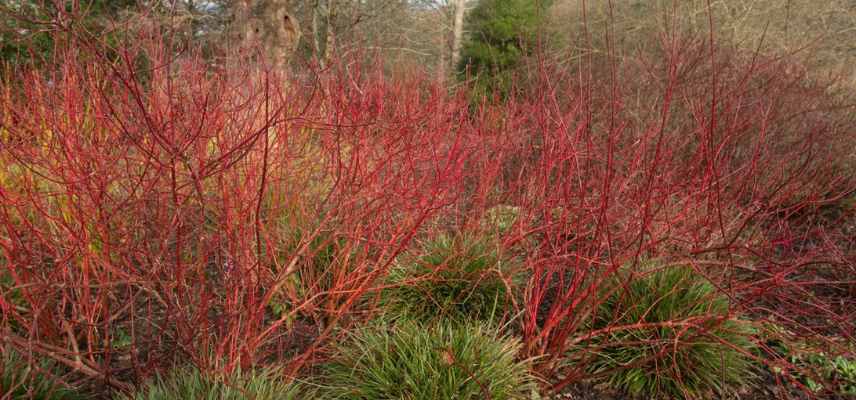
Cornus alba ‘Bâton Rouge’
Read also
Pruning cornus to maintain their coloursCornus sanguinea 'Midwinter Fire': orange-red stems
There are a considerable number of varieties of Common Dogwood, our wild dogwood found in hedges or at the forest edge in our region. Although the type species is quite beautiful in winter with its branches changing from green to purple, the horticultural varieties of Cornus sanguinea reward us with very colourful branches, often a bright orange.
This is the case with the Cornus sanguinea ‘Midwinter Fire’, which has young branches that are initially green-yellow in summer, then almost fluorescent, yellow-orange with orange-red tips in winter. A marvel! The bush will eventually grow into a shrub 3 m high and 2 m wide.
The Cornus sanguinea ‘Anny’s Winter Orange’ also deserves mention: the bark of the branches turns yellow at the collar, orange as it rises up the branches, finishing with bright red tips.
Common dogwoods are not demanding regarding soil type and tolerate the presence of lime in the soil very well. Their hardiness is excellent, and they can grow in both full sun and partial shade, but the branches will be more vibrant in full sun.
Please note: the cultivar Cornus sanguinea ‘Beteramsii’ is very similar, if not almost identical to an untrained eye, to Cornus sanguinea ‘Midwinter Fire’.
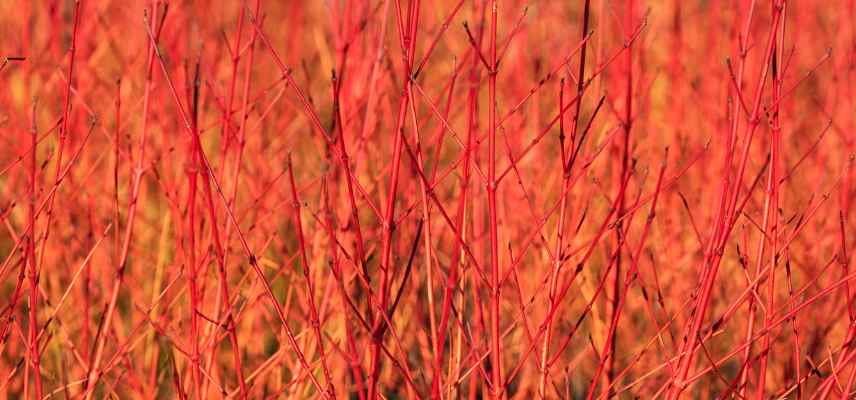
Cornus sanguinea ‘Midwinter Fire’
Discover other Cornus
View all →
Available in 0 sizes
Available in 0 sizes
Available in 2 sizes
Available in 2 sizes
Available in 2 sizes
Available in 3 sizes
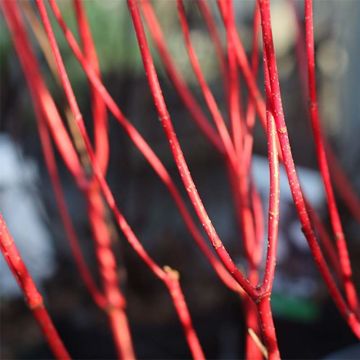
Available in 2 sizes
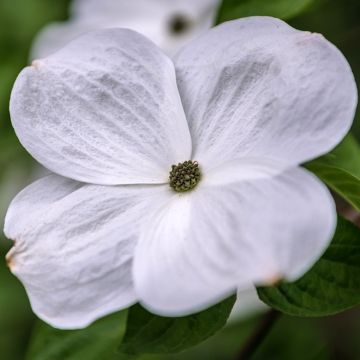
Available in 1 sizes
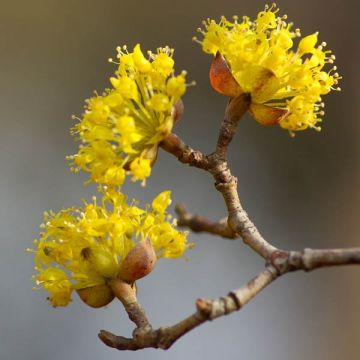
Available in 6 sizes
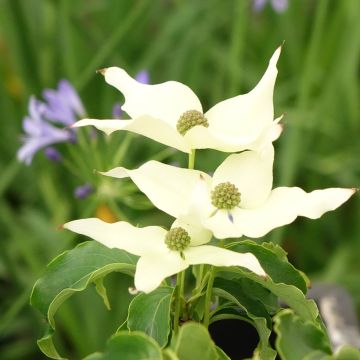
Available in 1 sizes
Cornus sericea 'Flaviramea': bright yellow stems
Although the type species Cornus sericea develops red branches, there are cultivars with much lighter stems: ranging from orange to even bright yellow.
This is the case with the very famous Cornus sericea ‘Flaviramea’, which produces young branches of a spectacular bright yellow in winter. A colour that certainly does not go unnoticed, especially near trees or bushes with darker bark. The bush forms a shrub about 2 m high and 2 m wide.
The Cornus sericea ‘Budd’s Yellow’, reputed to be more disease-resistant (mainly in colder areas, in fact) than other silky dogwoods, develops branches of an acid yellow-green to bright yellow quite similar to those of the cultivar ‘Flaviramea’. However, the shrub spreads a bit more than its “little brother”: up to 4 m wide.
Cornus sericea thrive in rich, fresh, humus-bearing or even clayey, loamy, rather acidic soil. They should be grown in a partially shaded position, away from the scorching rays of the sun.
Nota bene: Cornus sericea are sometimes still sold under their former botanical name Cornus stolonifera.
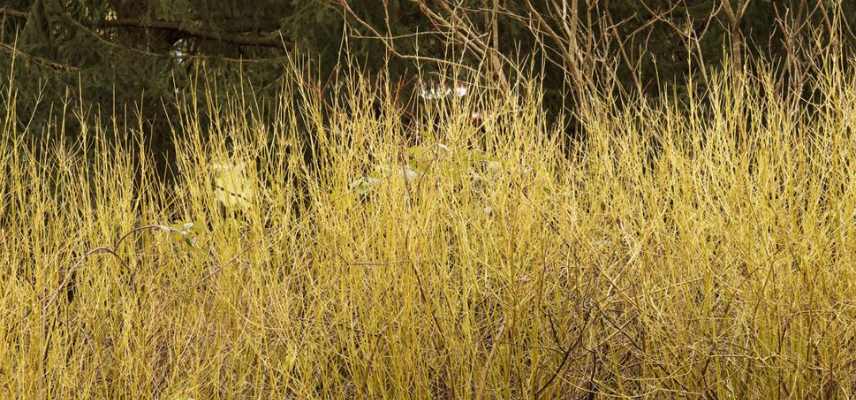
Cornus sericea ‘Flaviramea’
Cornus sericea 'Cardinal': bright pink to red stems
The Cornus sericea ‘Cardinal’ stands out from previous silky dogwoods by the colour of its stems: not yellow, but pink sometimes tinged with raspberry red when it gets very cold. The pink colour of the stems, present all year round, beautifully complements the foliage, which is also pink in autumn.
Stunning when planted alone, in a free-standing hedge, or mixed with other varieties with coloured wood, this bush also impresses in front of a backdrop of conifers or evergreens with dark, golden, or purple foliage. The shrub typically does not exceed 2.50 m in all directions.
The ‘Cardinal’ cultivar is grown like other silky dogwoods: a rich, cool, humus-bearing or even clayey soil and a partially shaded exposure.
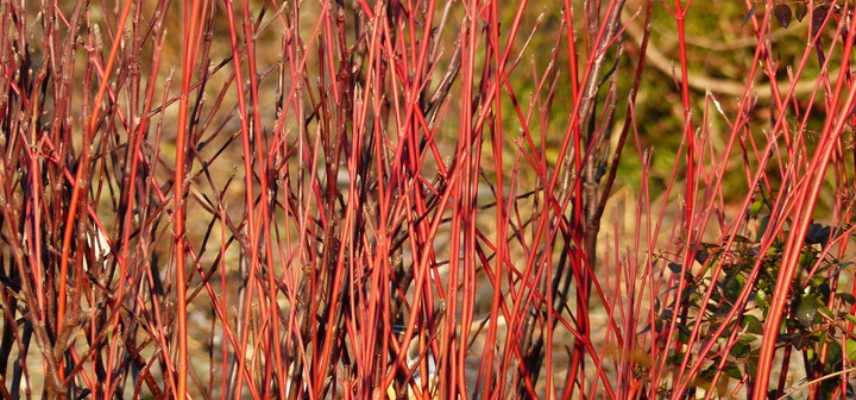
Cornus sericea ‘Cardinal’
- Subscribe!
- Contents

Comments