





























The most fragrant passionflowers: how to choose them and grow them successfully?
Stunningly exotic flowers with an enchanting fragrance
Contents
Passionflowers, or passion flowers, captivate several of our senses with their exotic flowers, a delight to behold, and for some endowed with an expressive, fruity and lemony fragrance. These climbing vines, originating mainly from tropical regions of South America, number around 400 species and numerous hybrids. Not particularly demanding, easy to grow, they primarily require a sunny, sheltered position and well-drained soil. Their main cultivation constraint is their frost hardiness, which varies by variety. They can be grown in the garden in the ground, but also in pots on a balcony or in the conservatory. In this article, let us explore the most fragrant passionflowers, true garden jewels for their visual beauty and fragrance.
→ Read our full guide on passionflowers.

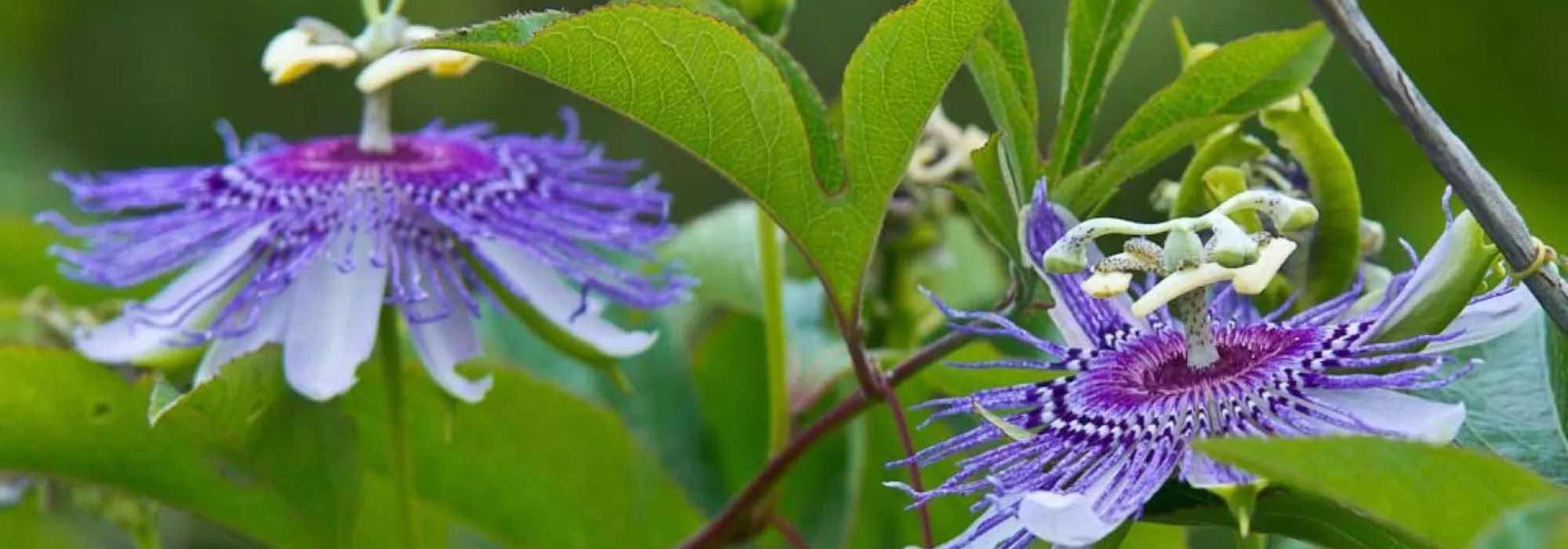
Passiflora incarnata - common passionflower
The common passionflower, or Passiflora incarnata, is a fragrant species with medicinal properties, used in herbal medicine to treat sleep disorders. Its pale mauve flowers, 5 to 9 cm in diameter, are very fragrant, exuding a fruity and tangy aroma. They bloom from July to November and are followed by edible, tasty green fruits. Self-sterile, this passionflower requires two plants to fruit. This vigorous species can reach 3 to 4 metres in height in a season, even in cold climates, and withstands temperatures of -10 to -12°C. Grow it in a pot in very cold regions or in open ground in milder climates.
Originating from the southeastern United States and Mexico, this North American botanical species is a perennial thanks to its rootstock, but its foliage dies back in cold weather. Flowering extends from summer to autumn, offering pleasantly scented flowers formed of pale mauve tepals. The twisted filaments are a deeper mauve, striped with white and blue-violet near the centre. The centre comprises five stamens with orange anthers and three white styles. The flowers, pollinated by other passionflowers, produce edible oval fruits with a tasty and fragrant pulp.
Not particularly fussy about soil, the common passionflower prefers well-drained soil and not too dry in summer. It enjoys warmth to flower and prefers soil without stagnant moisture in winter. Ideal for dressing walls, fences, trellises or hedges, it pairs well with evergreen climbers such as Clematis cirrhosa which flowers in winter and provides foliage all year round. It can also be grown in a conservatory, where it withstands cold winters. Its fruits, edible, can be tasted out of curiosity or for a treat.
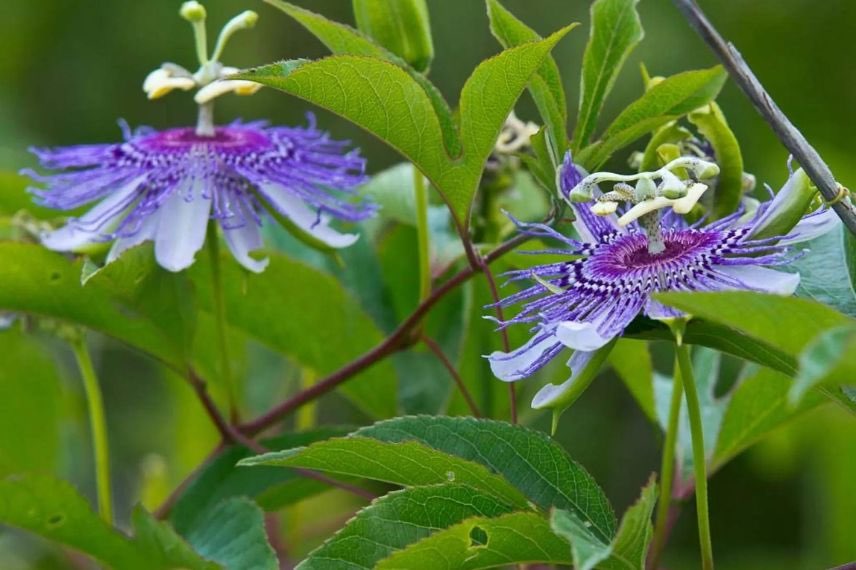
Passiflora allardii – Passionflower
The Passiflora allardii captivates with its large, highly fragrant flowers that measure up to 12 cm in diameter. They are white tinged with pink and crowned by a splendid blue-lavender crown. This frost-sensitive variety, can reach a height of 4 to 6 metres and requires protection when temperatures drop below -2°C. It is ideal for growing in a large pot, on a terrace or in a conservatory.
The Passiflora x allardii is the result of the cross-breeding between Passiflora caerulea ‘Constance Elliot’ and Passiflora quadrangularis. Its abundant and continuous flowering from July through to early autumn attracts many pollinating insects. The flower consists of white tepals and elongated pale pink petals, completed by a crown of blue-lavender filaments ringed with white and d yellow and pink stamens. Its trilobed, glossy leaves, ranging from light to mid-green, are more or less evergreen.
This Passionflower, far from being capricious, grows readily in well-drained, light soil, deep enough and not too dry in summer. It prefers a sunny, sheltered position. A pruning after flowering helps maintain a compact and attractive habit. The Passiflora x allardii is perfectly suited for conservatories or greenhouses, where it can be protected from cold winters, offering an exceptional and continuous floral display.
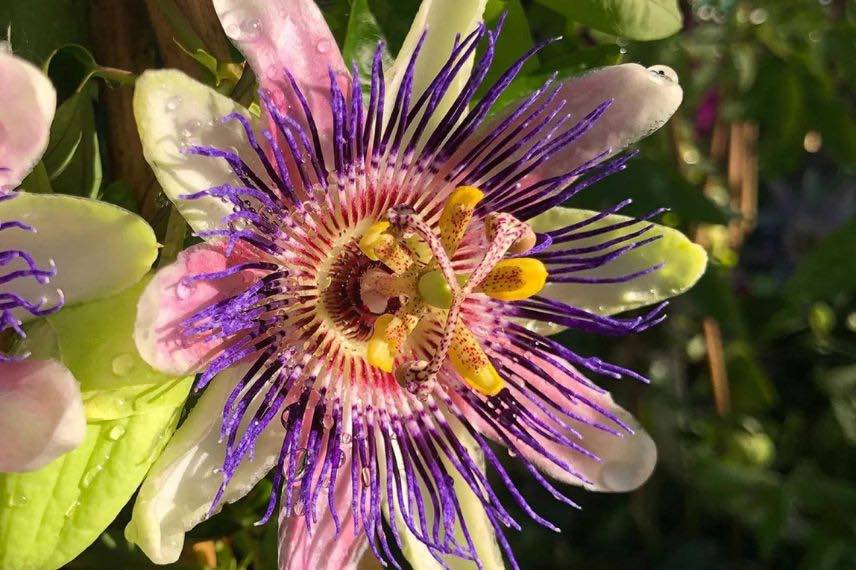
Passionflower 'Incense' - Flower of Passion
The Passionflower ‘Incense’‘ is a rare cultivated variety, stunning to behold, reaching 5 metres in height and bearing from June to October large 10 cm flowers. They are very fragrant, in a deep mauve-violet shade, abundantly endowed with long bluish-violet filaments, with a white centre of stamens that contrasts well.
‘Incense’, developed in Florida in 1973 and rarely available on the market, is the result of a cross between Passiflora incarnata and P. cincinnata. This climber clings to its support with tendrils. Its herbaceous, almost glabrous stems and its five-lobed dark green leaves die back at the first frosts. Its large, fragrant and showy flowers are followed by oval, green-yellow edible fruits with an exotic flavour.
It seems that this hybrid is regularly infected with a virus that affects it little but could harm other, more fragile passionflowers. As a precaution, it is advised to grow it separately, monitor for aphids and thoroughly disinfect pruning tools if you are growing several passionflowers.
This passionflower is hardy to -8°C and not fussy about soil. Prune it in late winter if its stems have frost damage. It thrives in the southern and Atlantic regions. Perfect for an evergreen or deciduous hedge, it adds a lot of originality in summer.
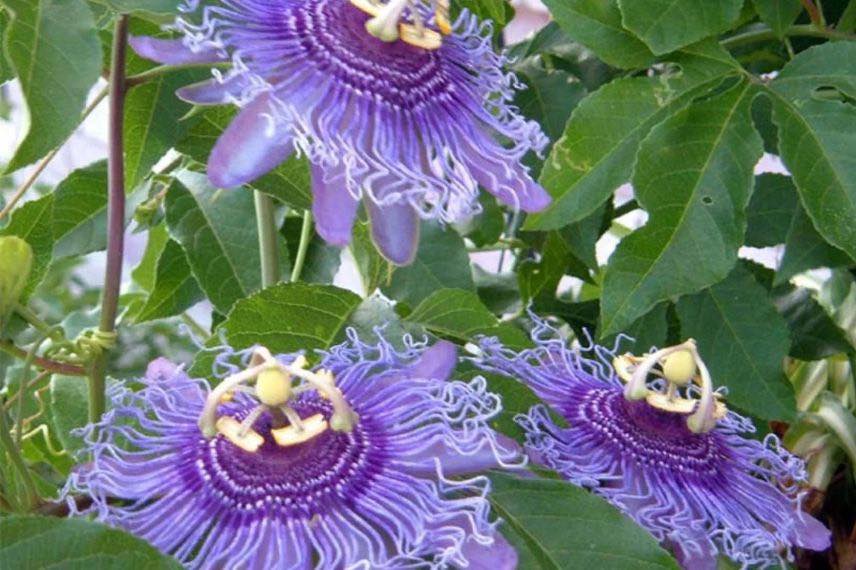
Passiflora quadrangularis - Barbadine
The Passiflora quadrangularis or the quadrangular-stem passionflower, is named for the characteristic appearance of its four-faced stems with sharply defined angles. Native to the floodplains of the hot, humid forests of Central and South America, it is one of the most spectacular passionflowers. Capable of reaching more than 6 metres in height in a large pot, it is not frost-hardy, therefore suited to greenhouse or conservatory cultivation, where it produces less exuberant but perfectly respectable growth.
Its large, beautiful solitary flowers, very fragrant, measure up to 10 cm in diameter. They feature carmine-red petals washed with green on the inside and greenish on the reverse, surmounted by a crown of frilled purple and white filaments. The flowering lasts from early summer to early autumn, continually renewing its flowers. The cream-white centre of the stamens and the crown of white, pale violet and deep purple add to its unique charm.
This passionflower also bears impressive edible fruits, orange in colour when ripe, measuring 20 to 25 cm long. These fruits are coated with a thick and fleshy skin and contain numerous flattened seeds, eaten mainly as juice.
The Passiflora quadrangularis thrives in ordinary but rich, cool and well-drained soil, in a sunny and sheltered position. It is not hardy and will delight amateurs of exotic plants and large conservatories.
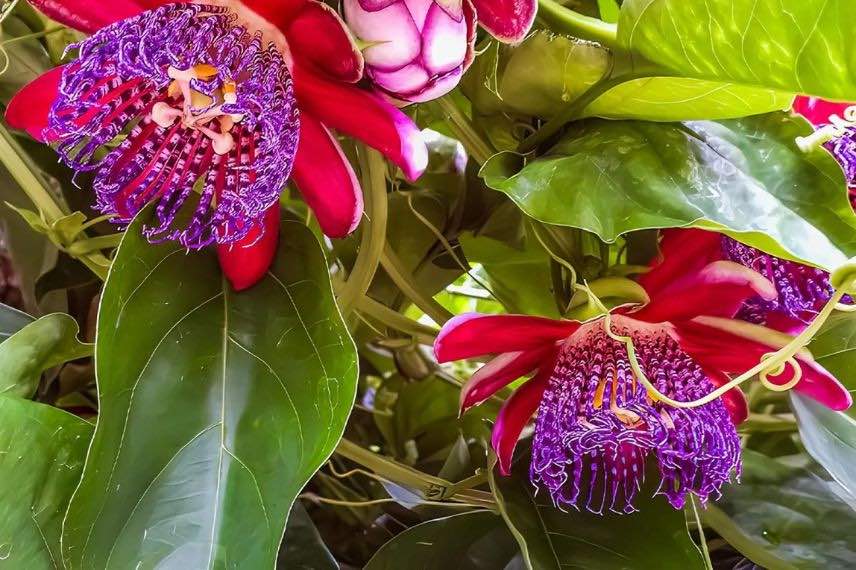
Passionflower 'Perfume Passion'
Passionflower ‘Perfume Passion’, an hybrid derived from Passiflora alata and Passiflora caerulea, is prized for its large bi-colour flowers with a lemon-scented fragrance. Inflorescences are white and pink-lilac, with a crown of blue-mauve filaments. They measure up to 15 cm in diameter.
This sturdy climber is somewhat frost-tender, as it tolerates frosts down to around -7°C. It reaches a height of 4 to 6 metres thanks to its tendrils. It flowers from June to September–October, delighting bees.
Adapted to well-drained, sunny soil, it thrives particularly in southern and Atlantic regions, and can be grown in a conservatory or greenhouse in colder climates. It is ideal for adorning walls and trellises, for example alongside an evergreen liana only marginally less hardy, such as Hardenbergia violacea, which flowers a little later in spring.
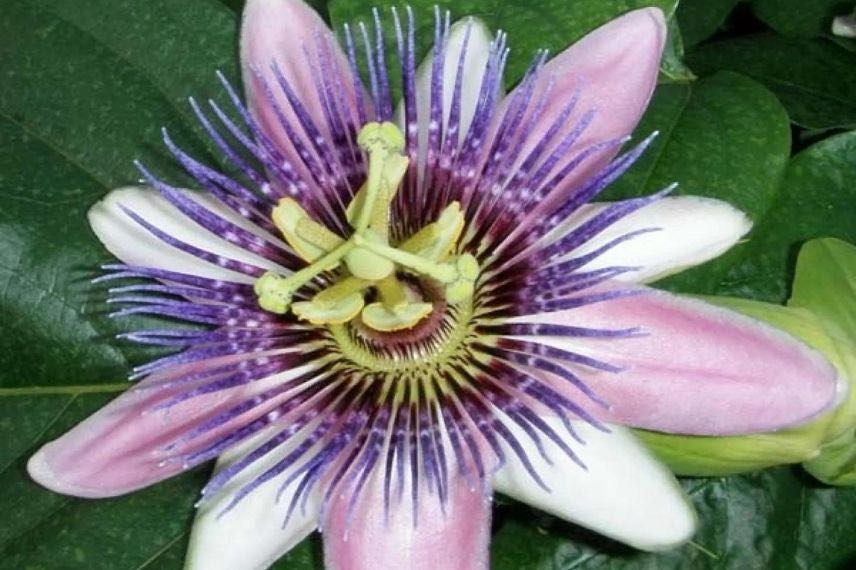
Passionflower 'Marijke' - Passion Flower
The Passionflower Passionflower ‘Marijke’ is a hybrid variety offering from summer to autumn a multitude of large flowers in a deep, intense magenta-purple, beautifully contrasted by indigo-blue filaments ringed with white and pale-yellow stamens. They are well scented, with notes of lily of the valley and lilac.
‘Marijke’ is the result of a cross-breeding between Passiflora decaisneana and the P. caerulea. Its long stems bear leaves that are three-lobed, oval, thick, mid-green and glossy, evergreen only in mild climates. Its 12 cm diameter flowers continually appear on the plant during the warm season and are highly attractive to pollinators.
The young plant is frost-tender; it should be protected from frost below -2°C, but as it remains relatively compact at 3 to 4 m tall, it is perfectly at home in a patio pot, in a greenhouse or a conservatory.
- Subscribe!
- Contents
Comments