


Cold hardy sowing for Autumn
The advantages of autumn sowing for annuals and perennials
Contents
Sowing flowers in autumn, a strange idea? It may seem counterintuitive, but some of them enjoy the cold and will benefit much more from sowing in late summer or early autumn than in spring. What are the advantages of sowing certain seeds out of season? Which of these annuals or perennials that like the cold can be sown? Poppy, mallow and many others, to discover in this guide!

Benefits of sowing in late summer and early autumn
If you sow certain winter vegetables in autumn, there are some flowering plants that will appreciate a spell of cold for germination, even a first frost that can speed germination, as with gentian. These seeds, once germinated, will also resist winter frosts.
Autumn sowings allow you to obtain, in suitable regions (see the next section), more vigorous flowering. Annuals or perennials sown in autumn often develop greater resistance to diseases and pests. They are, in fact, exposed to harsher conditions from the outset, which makes them more robust.
Autumn sowing also yields earlier spring flowering, compared with sowings made in late winter or early spring, because the plants have a head start.
Autumn conditions, humidity and consistently mild temperatures, also finally allow seeds to germinate more quickly and with less stress, not to mention that competition from adventive weeds is weaker.
Sowing under cover (greenhouse, conservatory, cold frame) further hastens flowering so you can enjoy it from the end of spring.
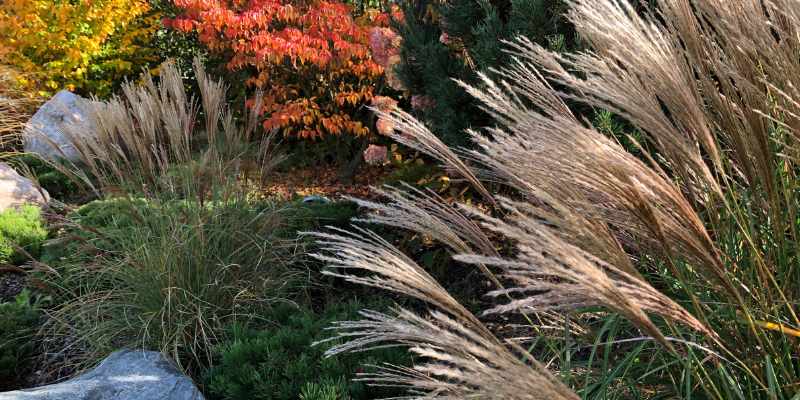
The garden takes on autumn colours and autumn flowering: the starting gun for a sowing of carefully selected annuals and perennials!
Read also
How to fail at sowing in 6 lessons?Conditions for autumn sowing of flowering plants
Not everyone will be able to undertake autumn or late-summer sowing; it depends a lot on your region, your soil and the type of plants. Several conditions must actually be met:
- Sowing is carried out in late summer or very early autumn in temperate regions (oceanic climate – Atlantic coastal region up to roughly a Caen–Poitiers line, and a Mediterranean climate) as these are areas with mild winters. You can even sow as early as the end of August, depending on the forecast.
- Germination temperature: while the ideal temperature for seedling emergence is often between 18 and 25°C for many plants (flowers or vegetables), some flowers require a few degrees less to trigger a germination process. But any seed, whatever it is, needs warmth to germinate, and the soil must stay warm enough, i.e. outdoor temperatures between 10 and 15°C up to 18°C for the plants I will discuss.
- Harvest of your seeds: Sow as soon as you harvest the seeds that are collected in late August or early September on faded flowers that have not been cut. These seeds should have reached full ripeness, be dry and of a brownish colour, but not rotten from rain, and before they fall off on their own or are eaten by birds. You will harvest them in dry weather. This gives you better chances of obtaining good results, compared with seeds from commerce, which are necessarily less fresh.
- Soil type is crucial: if your soil is very clayey, favour spring sowings. The soil must be sufficiently well-drained to avoid becoming waterlogged in winter, which would cause the seeds to rot in cold or wet soil. A loamy or sandy soil, depending on the plants, is ideal: a sandy soil will warm up faster in spring, whereas a soil that is clayey, sandy and rich in humus will retain heat longer in autumn, hence the value of our sowings.
- Sowing in sunny exposure: all the plants concerned should be sown in full sun to benefit from sufficient warmth and light in this season when days shorten.
- Very fine seeds that do not need to be covered, or barely: this is referred to as a surface sowing.
- Direct sowing in the ground, i.e. directly into open soil, is to be preferred, except for certain seeds that prefer sowing under a cold frame.
Which plants can be sown in autumn?
These are mainly annuals or biennials, and perennials, that are easier to succeed with when sowing in autumn. We will sow annuals, biennials or perennials that readily self-seed, following their natural life cycle as they would do in the wild without the gardener’s help.
Annuals
These are the ones that germinate fairly quickly, within two to three weeks, and tend to self-seed:
- nasturtium, the only one that is sown in pockets, because it has large seeds.
- cosmos: flowering all summer, with a cottage-garden look, but adaptable to almost any garden!
- the California poppy: sunny and orange, with handsome grey-green foliage; it also prefers cool temperatures to germinate well, but should be reserved for sandy and very well-drained soils.
- Sweet pea: sow from September or late summer, under unheated protection, they will flower in May, or even April. You will transplant the seedlings arising from the sowing directly into the open ground from October. This method is recommended as for the other annuals presented here for regions with mild winters (Atlantic coast, the south of the country).
- Honesty (Lunaria annua): recognisable by its striking seed pods. Read our tutorial How to sow honesty.
- calendula (Calendula officinalis) and the tagetes: they are no strangers, they are among the plants that self-seed naturally in warm regions, ideal for autumn sowing.
- Nigella: sow directly in the ground, as with all our annuals; for nigella, sow it broadcast.
- nigella too: sow directly in the ground, as with all our annuals; sowing for nigella can be done broadcast.
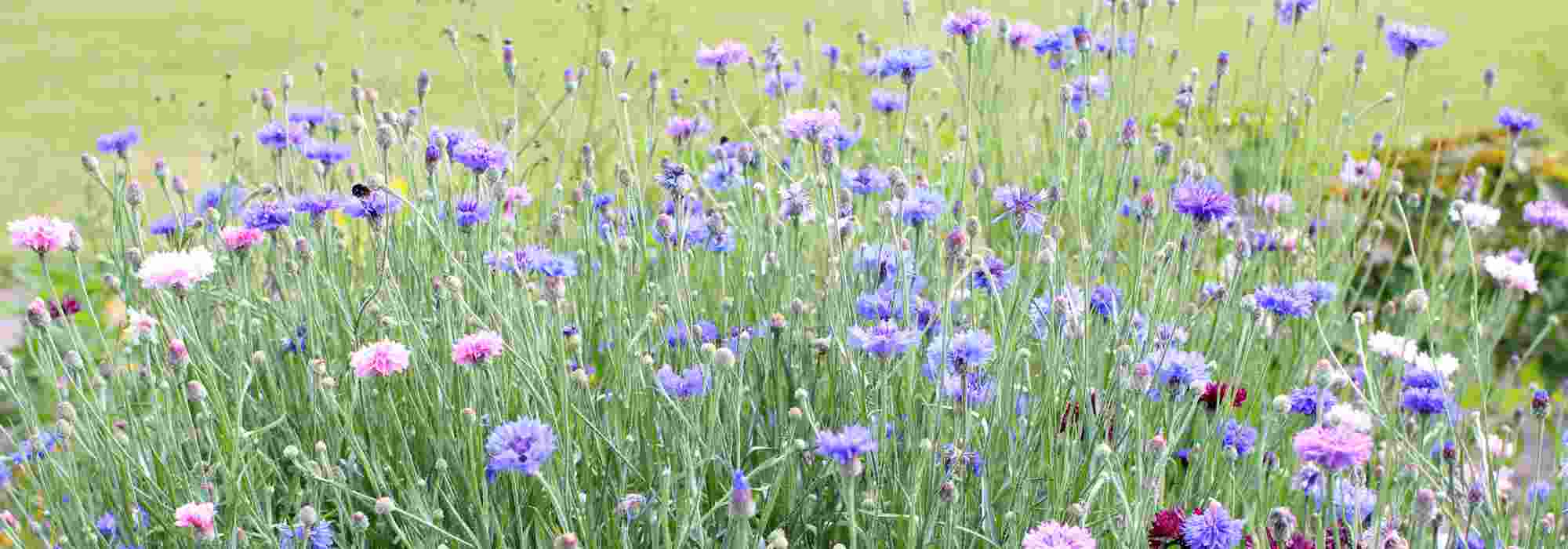
- cornflower (Centaurea): perfect in naturalistic gardens; September sowings are noticeably more vigorous.
- the annual mallow (Lavatera trimestris): ideal for cottage gardens; although often recommended for spring sowing, it is possible to sow in September in mild-climate regions.
- the annual gypsophila.
Perennials
There are hardy, robust perennials that have finished flowering and allow seed harvesting in late summer or early September:
- the alchemilla: with lime-coloured flowers and elegant velvety, undulated foliage.
- the mallow
- columbine : one of the easiest perennials to propagate in autumn, the wild-type species being preferred (Aquilegia vulgaris and its varieties).
- gentian with the deep blue sought after in the blue gardens!
- Stokesia: an adorable perennial, usually mauve, resembling its cousin the cornflower.
- sea holly (Eryngium sp.): sow in very light soil.
- mallows, notably musk mallow.
- thalictrum: gracefully dainty with its pointillist flowering; it is also relatively easy to succeed with in September.
- perennial poppies and oriental poppies, which can be sown in well-prepared and drained soil.
- pulmonaria: a pretty ground-cover perennial with blue to pink flowers and speckled foliage, which should be transplanted to partial shade.
- Tricyrtis and Penstemon can also be attempted after the end of their flowering, in southern regions, as they flower late into the season.
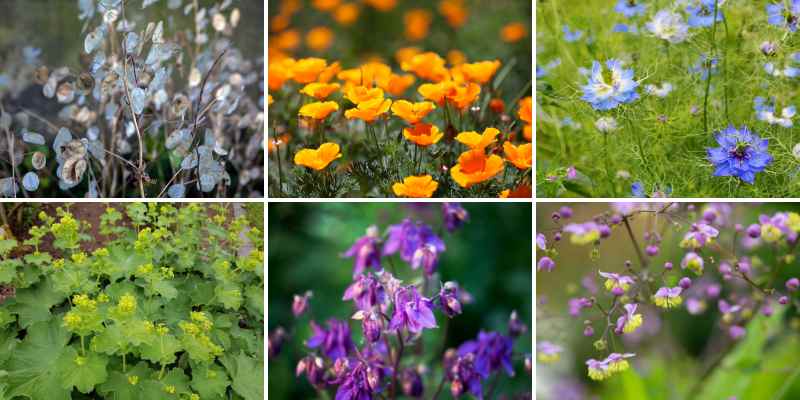
Honesty, California poppy, nigella, and below: alchemilla, aquilegia and thalictrum
We can even try shrubs, still in mild-climate regions, such as chast lamb, for example.
Read also
What is stratification?Autumn sowing under a cold frame and other tips
Cold sowing sometimes needs a little helping hand. For plants that do not transplant or repot well, such as poppies, it’s best to sow in place. But for others, the sowing can be carried out under a cold frame, a kind of mini-greenhouse placed directly on the soil. Don’t forget, as with a spring sowing, to thin out your seedlings once they have emerged: either transplant them into open soil once they are manageable, or pot them up, left under the frame.
The forcing cloches are useful at this time of year to protect your newly sown seedlings, which, like in spring, help retain warmth by day and avoid too much humidity at night.
One of the rules for successful autumn sowing is not to let the soil crust over, which would limit seed germination: a light watering, but never let the soil dry out completely in case of hot late-season weather and without rain.
→ Also read forcing cloches or protective cloches: what are they used for?
- Subscribe!
- Contents

Comments