





























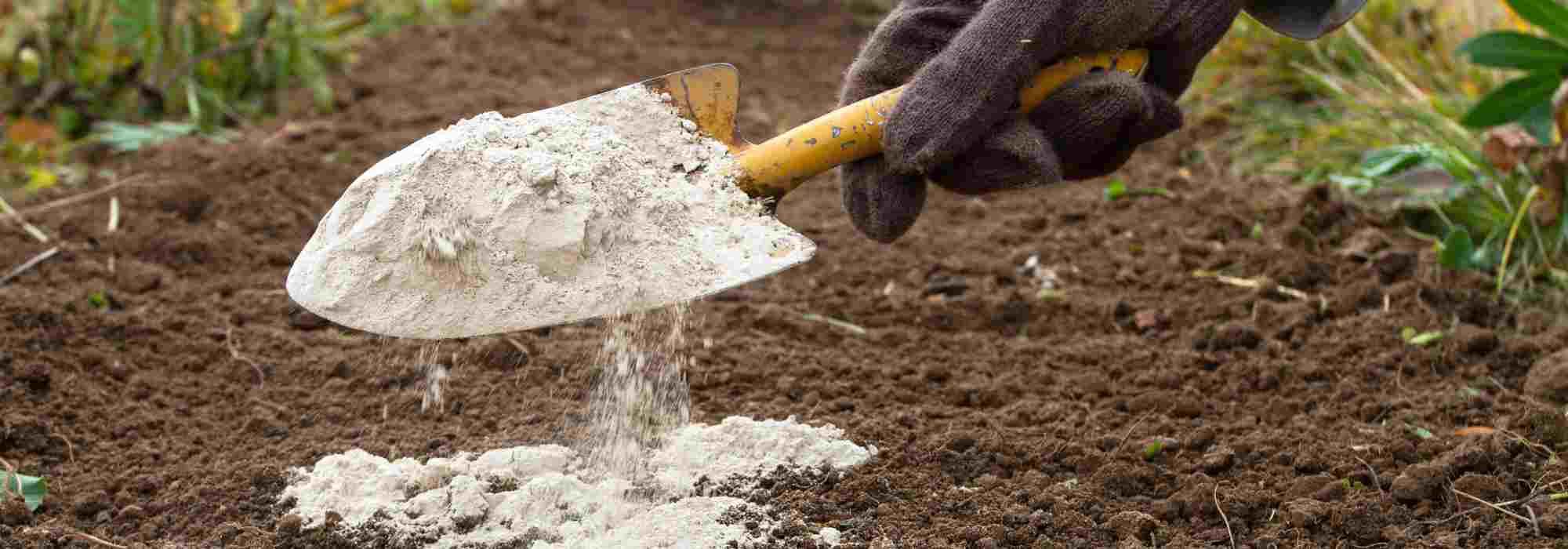
Using lime in the garden: a good or bad idea?
All you need to know about using lime effectively in your garden
Contents
The use of lime in the garden is a common practice, but often poorly understood. It can improve soil quality and promote plant growth, provided you know when and how to apply it. In this article, discover everything you need to know about lime, its advantages, its risks and the precautions to take for environmentally friendly gardening. Which lime to use and, above all, is it really the best solution? We cover it in our advice guide.

What exactly is lime?
Lime is a mineral material obtained by calcining calcareous rocks or chalk. Used for centuries in various fields, including agriculture and gardening, it plays an essential role in improving soils.
Here are the different types of lime:
- Quicklime (calcium oxide)
- Description : it’s the most concentrated and reactive form of lime.
- Uses : previously used to disinfect the soil, as it eliminates certain pathogenous agents and parasites.
- Precautions : delicate handling due to its strength; it can burn plants and roots if not dosed properly, as well as soil life. Avoid if possible in the garden!
- Slaked lime (calcium hydroxide)
- Description : obtained by mixing quicklime with water, it is thus less “aggressive”.
- Uses : ideal for gradually adjusting the soil pH in a garden, particularly for vegetable plots or lawns. It is also the display of arboricultural whitewash (see below).
- Precautions : always apply at the recommended dosages to avoid any soil imbalance.
- Dolomitic lime
- Description : it’s a natural blend containing calcium and magnesium.
- Uses : it is recommended for correcting acidic soils while offsetting a magnesium deficiency, useful for crops such as tomatoes or potatoes.
- Precautions : remember to check whether the soil requires magnesium before application.
WARNING! : Lime, particularly in its quicklime or slaked forms, can cause severe irritation to the skin, eyes and respiratory tract in case of contact or inhalation of dust. Handling without protective equipment (gloves, mask, goggles) can lead to chemical burns or lung injuries.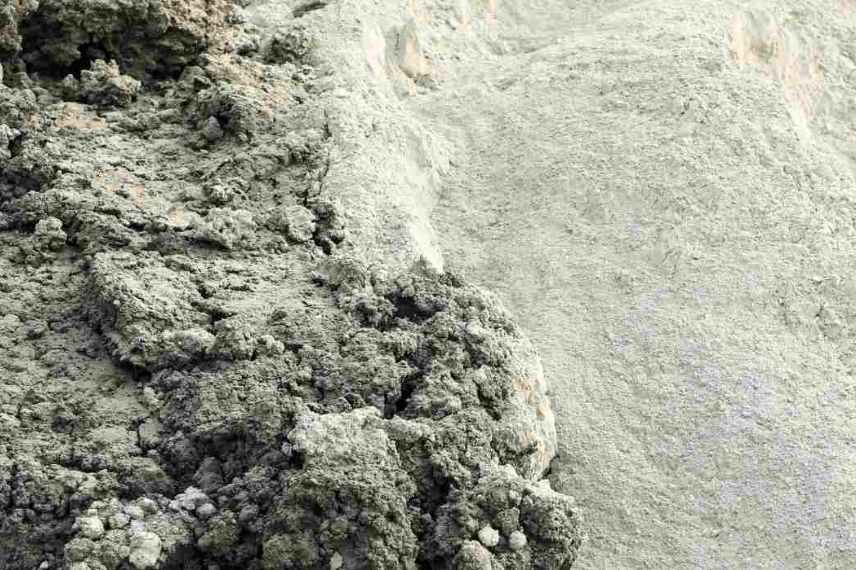
Potential benefits of using lime
Improving acidic soils
Soils that are too acidic can pose significant problems for plant growth. Lime acts as a calcareous amendment that raises the soil pH, bringing it closer to neutral, ideal for most crops (pH 6–7). This correction of acidity has several beneficial effects:
- Increased uptake of essential nutrients: in acidic soil, key elements such as calcium, phosphorus and magnesium can be present but difficult for plants to access. By raising the pH, lime facilitates their availability.
- Improved yields: crops such as vegetables (cabbages, beans and carrots) and cereals (wheat, barley) grow better in soils with balanced pH. The application of lime can therefore improve their growth and productivity, particularly in regions where soils are naturally acidic, such as wetlands or woodland areas.
Reduction in the toxicity of certain elements
In very acidic soils, certain chemical elements become toxic to plants :
- Aluminium : in acidic conditions, aluminium can be released in a soluble form and attack plant roots, limiting their ability to absorb water and nutrients. Lime neutralises this effect by increasing the pH.
- Manganese : although essential in small amounts, manganese can become toxic to plants when present in excess in acidic soil. Lime helps to reduce this toxicity by stabilising the available manganese levels. These adjustments make the soil safer and more fertile for a wide range of crops.
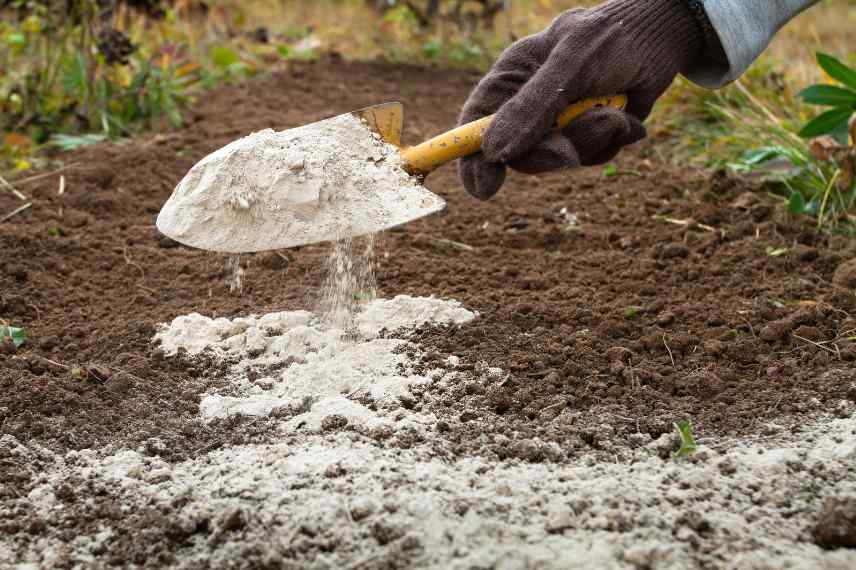
Improvement of soil structure
Adding lime can also positively influence the physical structure of the soil, particularly in clay soils:
- Increased aeration and drainage: lime acts on clay particles by promoting their aggregation, which reduces soil compaction. This allows better circulation of air and water, facilitating root development.
- Prevention of waterlogging: heavy, poorly drained soils often retain too much water, which can suffocate roots. Lime helps make these soils more permeable. Lime is therefore particularly useful in vegetable plots or lawns established on clayey or compacted soils.
Reduction in soil diseases
An imbalanced pH can promote the proliferation of certain pathogens and pests. Correcting this acidity with lime can have protective effects :
- Pathogens sensitive to acidity : some fungal diseases, such as damping-off or root rot, develop more readily in acidic soils. An adjustment of the pH can limit their presence.
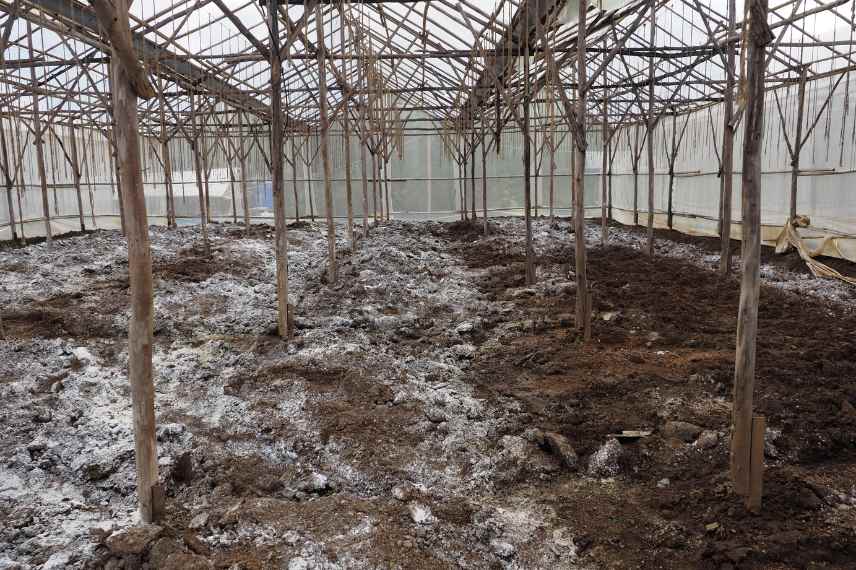
Spreading lime in a greenhouse
How can you tell if your soil needs lime?
Soil pH analysis
Soil pH is the key indicator for determining whether soil is too acidic. You can measure it in several ways:
- Using a analysis kit : available in garden centres, this kit allows pH testing with vittae or reactive solutions. Take a soil sample, mix it with water, and follow the instructions to obtain an accurate reading.
- Laboratory analysis : for more detailed results, send a soil sample to a specialist laboratory. This method also enables evaluation of nutrient levels and determination of any deficiencies.
- A pH below six indicates soil is acidic, which may justify the addition of lime to rebalance it.
Indicator plants
Indicator plants: Some spontaneous plants can reveal overly acidic soil by their dominant presence. These indicator plants include:
- Horsetail which prefers acidic, damp soils.
- Mosses, often found on poorly drained and acidic lawns.
- Dandelion which tolerates acidic soils, though it is also adaptable.
If these plants proliferate in your garden, it’s a sign that your soil could be acidic and may require a calcareous amendment. But this is not an exact science…
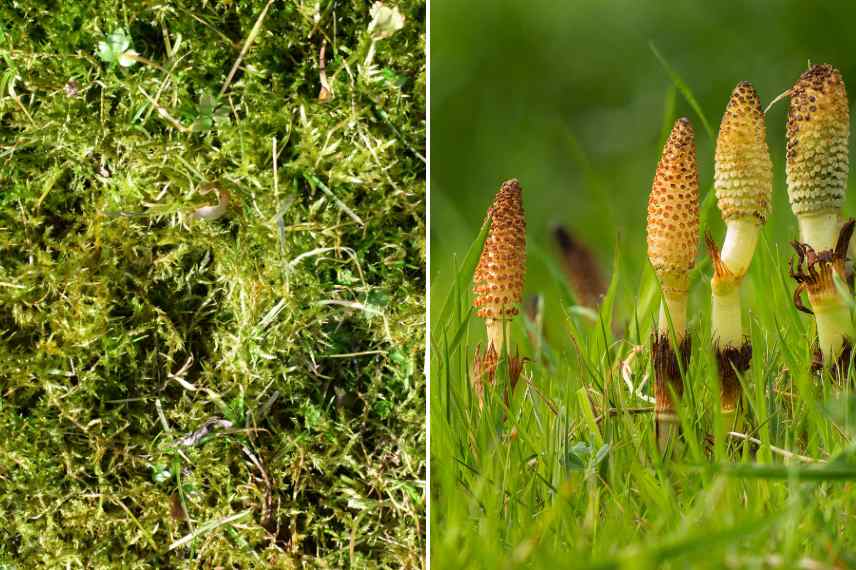
Mosses and horsetail are distinctive indicators of acidic soil
Signs of deficiency in cultivated plants
Acidic soil can limit uptake of certain essential nutrients, causing deficiencies visible on your plants:
- Yellow leaves (chlorosis) : result of an iron or magnesium deficiency, often caused by a pH that is too low.
- Slow growth : plants show weak development or a delay in ripening.
- Underdeveloped roots : acidic soil can affect root health, reducing their ability to absorb water and nutrients.
Why might using lime in the garden be a bad idea?
Lime use in the garden may seem an effective solution for improving soil quality, but it also raises important questions. Is lime application really necessary?
- Risk of soil over-alkalisation: lime, by raising the soil pH, can make it too alkaline. Too alkaline soil can hinder plant growth by limiting access to certain essential nutrients such as iron, manganese and zinc. Plants then show signs of deficiencies, such as the yellowing of the leaves (chlorosis).
- Negative impact on acidophilous plants: some plants, such as rhododendrons, azaleas, camellias and blueberries, prefer acidic soils. Obviously, applying lime in areas where these acidophilous plants grow can be fatal to them, as they cannot absorb nutrients in alkaline soils.
- Disturbance of the soil’s mineral balance: an excessive addition of lime can disrupt the soil’s natural balance by making some trace elements less available to plants. This can lead to nutritional deficiencies and affect overall plant health.
- Risks for soil microorganisms: excessive addition can disrupt the soil’s natural mineral balance. However, lime can also affect the soil’s microbial life. Some microorganisms beneficial for the decomposition of organic matter and nitrogen fixation can be inhibited by abrupt pH changes. The result is a less fertile and less biologically active soil.
- Delicate application and burn risks: finally, improper application of lime, particularly in excessive amounts, can burn plant roots and hinder their development. It is crucial to mix lime well into the soil and water thoroughly after application to avoid these problems.
- Environmental risks: excessive lime application can lead to the leaching of lime into groundwater and watercourses, which can have negative impacts on aquatic ecosystems.
Many amateur gardeners do not have a thorough understanding of their soil or of correct lime application methods. Mistakes can easily occur, leading to damage to plants and soil. This lack of knowledge fuels the debate about whether to use lime without a prior soil analysis.
Precautions to take before and after applying lime
To apply lime effectively and safely, a few precautions are essential.
Generally, an application every 2 to 4 years is sufficient to maintain a balanced pH, provided you follow recommendations based on a soil analysis. Regular monitoring of the pH allows you to determine whether a new application is necessary.
It is recommended to spread it in autumn or late winter, as this gives the lime time to blend into the soil before spring sowing or planting. The amount should be adjusted to the initial pH and soil type: for example, between 200 and 400 g/m² is generally sufficient to correct a slight acidity, but a prior soil analysis is essential to avoid excess.
Finally, never mix lime with nitrogen-rich fertilisers or fresh manure, as this can cause the release of ammonia, harmful to plants and soil.
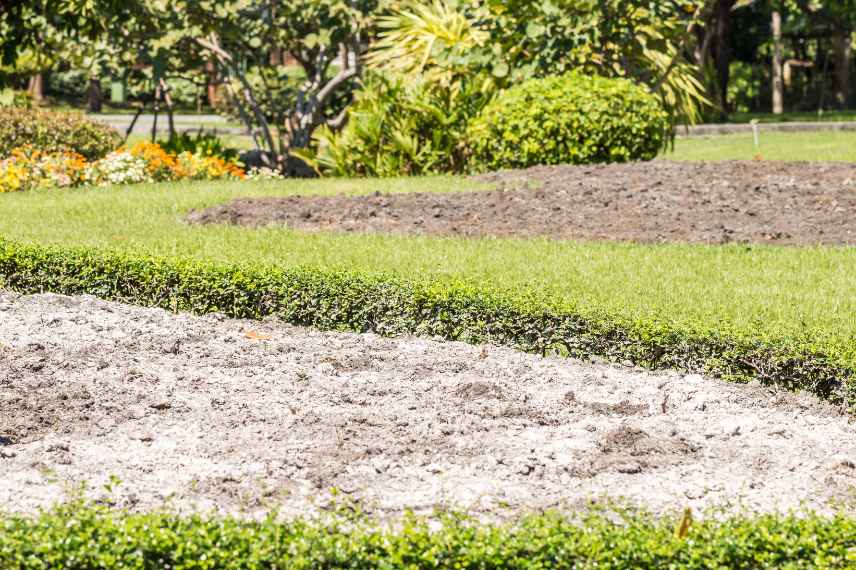
The dosage should be measured precisely for use in a flower bed, for example
Are there any alternatives to lime?
Yes! To gently and sustainably adjust soil pH, several alternatives to lime can be considered.
Adding compost or organic matter gradually stabilises soil pH while enriching the soil with essential nutrients. Wood ash, rich in potash, is a natural option which slightly raises the pH while providing nutrients.
Finally, green manures such as mustard or clover improve soil structure and fertility without disturbing its chemical balance, offering an eco-friendly and balanced solution.
The special case of arboricultural white
The arboricultural limewash, also known as limewash, is a traditional preparation used to protect tree trunks, particularly fruit trees. This whitewash, primarily made from slaked lime mixed with water, offers several benefits for tree health and protection:
- Protection against parasites: the limewash acts as a physical barrier that prevents insects and parasitic pests from overwintering in the cracks of the trunk.
- Disease prevention: lime has antifungal and disinfectant properties, limiting the development of fungi or noxious mosses.
- Protection against temperature fluctuations: in winter, the whitewash reflects sunlight, reducing the risk of bark cracking due to abrupt temperature changes (freeze/thaw).
Apply the arboricultural limewash at the end of autumn or early winter, once the leaves have fallen, to protect the tree during the cold season. A second application can be made at the start of spring, if necessary. First, clean the bark to remove mosses and lichens. Then brush the trunk from the base up to the first branches, using a brush or broom.
→ To learn more about liming fruit trees, read Ingrid’s advice sheet on the subject.
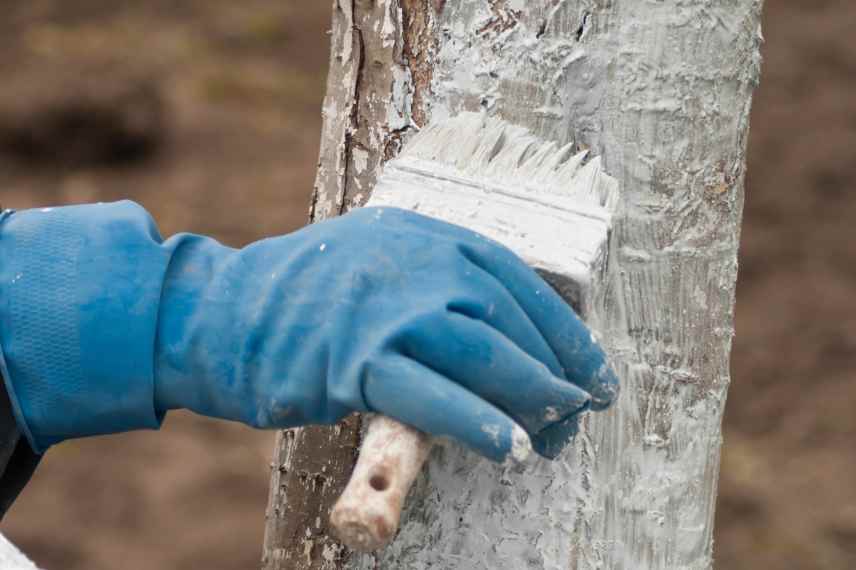 Apply the arboricultural limewash with a large brush during autumn
- Subscribe!
- Contents
Comments