





























What diet for laying hens?
How to feed your hens for beautiful eggs
Contents
In recent years, hens have been widely promoted as table waste reducers. Admittedly, hens are omnivores, but they are not just bins that can survive solely on the scraps we choose to give them. Healthy hens that lay beautiful, tasty eggs require a well-balanced diet rich in proteins, vitamins, minerals, and trace elements, primarily composed of cereals. This does not prevent us from giving them some selected table scraps and more indulgent treats for their well-being, depending on the seasons.
As an owner of five rather healthy hens for a few years now, I will explain how to feed laying hens in the best way.
The importance of a balanced diet for chickens
To live healthily, you need a diet properly balanced in animal or plant proteins, fats and carbohydrates, vitamins, minerals, and trace elements. The same goes for hens. Especially since they expend a tremendous amount of energy (and quite a few nutrients!) producing an egg every day (or almost).
Thus, it is in their food that hens will draw all their energy. This is why their daily ration must be perfectly suited to their nutritional needs. Imagining feeding your hens solely with table scraps (even in a large family of good eaters) is completely unrealistic. And especially not recommended for the health of your hens. Our food is often too salty, too fatty, and, above all, not suited to their needs.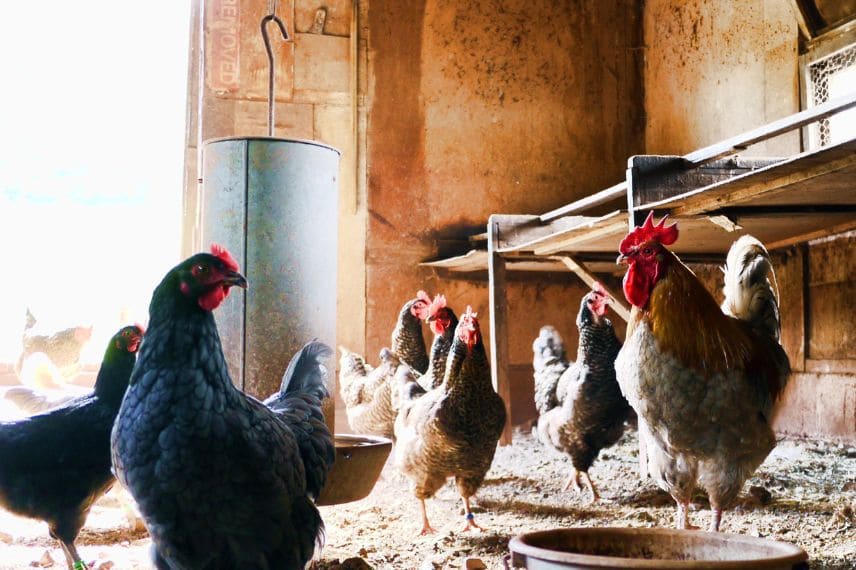
70% cereals and 30% proteins
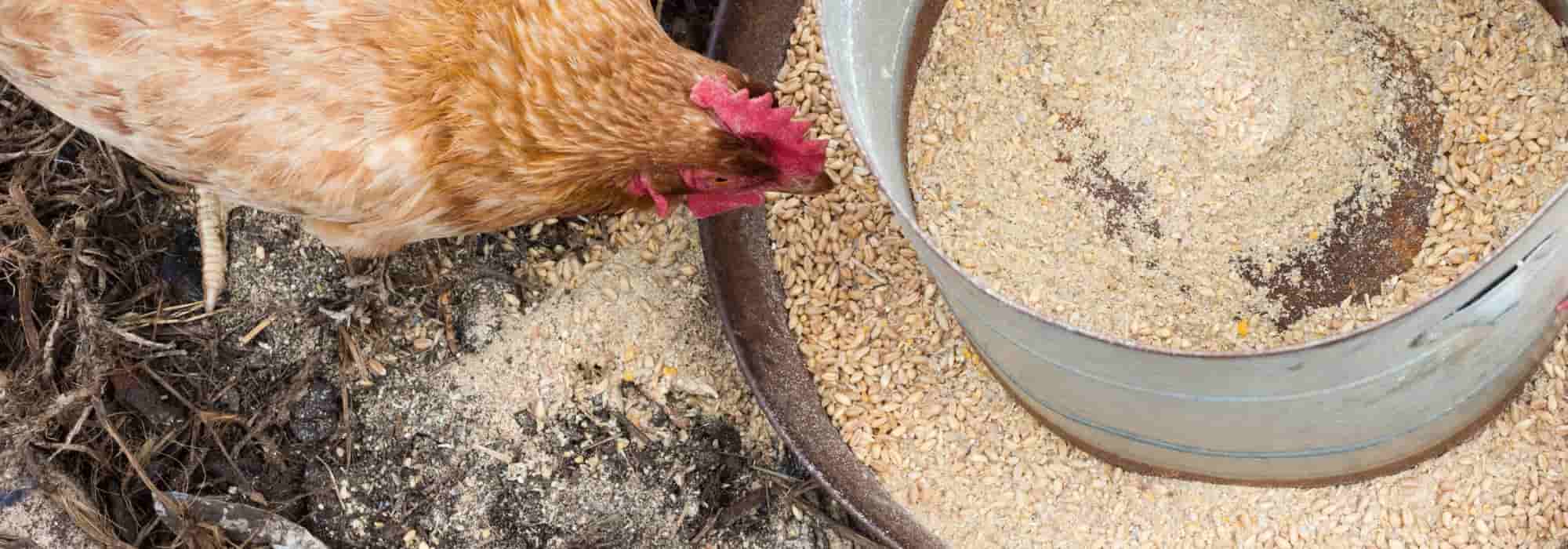
Indeed, for a hen, a quality diet should consist of 70% cereals and 30% animal or plant proteins. Cereals provide them with fibre, iron, vitamins, calcium… The ideal is a mix of crushed cereals that includes wheat, barley, corn, oats… If you can source it directly from a farmer, that’s perfect. Otherwise, garden centres, cooperatives, specialist shops, or certain websites offer special blends for laying hens that are properly balanced. Always check that these cereal mixes contain no additives or preservatives. This is why it is better to avoid reconstituted pellets. Moreover, your hens will always prefer to peck at real seeds.
In addition to cereals, the diet of hens consists of 30% proteins. If they are lucky enough to roam in greenery, they should find worms, snails, larvae, and other insects, which are sources of protein. Otherwise, you can also offer them some dehydrated worms or add peas, flax seeds, or soybeans to their diet. Most cereal mixes actually contain these! (check the labels).
As for their daily ration, it ranges from 100 to 200 grams per day, depending on the breed of the hen, the time of year, its activity… and especially its greediness!
Making your own mix?
Why not, but it is tedious, time-consuming, and complex. The mix must be perfectly dosed to be balanced. And a deficiency can occur quickly! However, it is possible by ensuring to maintain the balance of 70% cereals and 30% proteins. For cereals, you can mix wheat (20%), crushed corn (30%), barley (10%), oats, and rye. And for proteins, consider rapeseed or soybean meal, flax seeds, or lupin…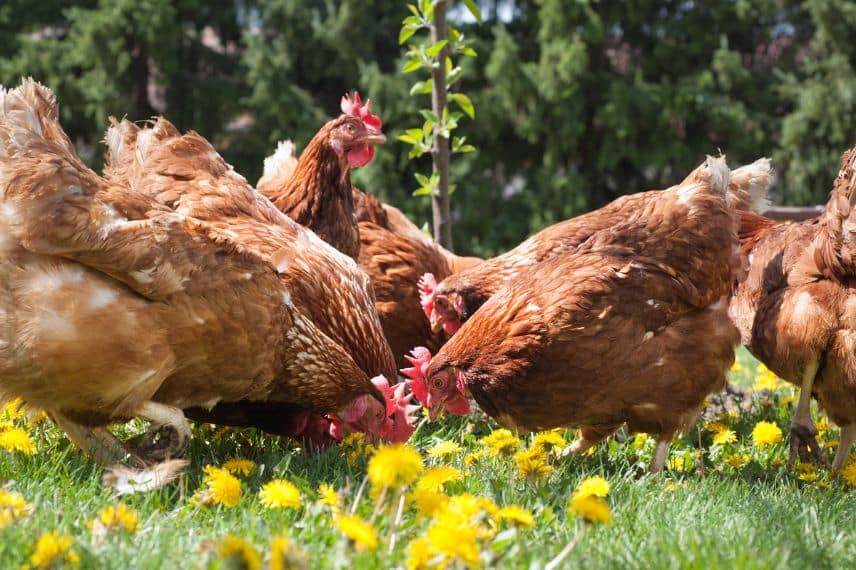
Feed available at all times
A hen spends most of its day pecking and thus eating. Feeders should therefore be available to your hens throughout the day. The same goes for water, which they must have access to at all times. This includes winter, as a hen drinks a lot regardless of the season.
However, if there is leftover food in the evening, it is better to bring it in to avoid attracting rats…
Read also
Forbidden foods for chickensAnd what about kitchen scraps?
Even if you’re not going to feed your hens solely with your table scraps, they are still a significant supplement. Provided you give them in moderation and with discernment. Some foods are not recommended, while others are forbidden!
What you can give them (and they love!):
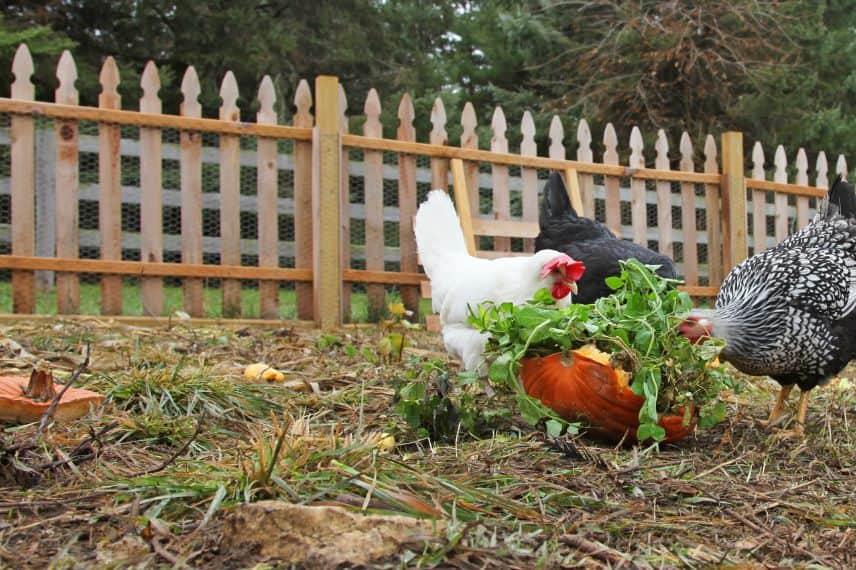
- Vegetable peelings and leftover vegetable dishes, cut into small pieces or grated, as the risk of choking is significant. Don’t hesitate to add leftover garden vegetables, salads or bolting spinach, radish leaves… They also adore pumpkin and courgette seeds.
- Fruit peelings (avoiding apple and pear pips which contain amygdalin that converts to cyanide when crushed), cut into pieces.
- Leftover mixed salads
- Leftover pasta and rice, lentils (without the cured meat!)…
- Cheese rinds
- Organic shrimp shells in small quantities and occasionally
What can be given occasionally:
- Tomatoes, aubergines, peppers, and potatoes are nightshades that contain solanine, a toxin found in the leaves, flowers, and unripe fruits. It is therefore not recommended to give them these foods raw. However, they can be given cooked (for potatoes) or raw and well-ripened in small quantities and not too often.
What is forbidden:
- Allium peelings (garlic, onion, shallot…), avocados, kiwis, rhubarb leaves, citrus peels
- Chocolate and all cocoa-based products
- Industrial prepared meals
- Snack biscuits
- Dairy products
- Coffee and tea
Of course, it is out of the question to give them mouldy or spoiled food.
For further reading, feel free to check out my article Forbidden foods for chickens and “Opt for natural remedies to keep your hens in top condition”.
Extras to add to the daily diet
For the well-being of hens, other supplements can be added to their food:
- Crushed oyster shells for a source of calcium, essential for the formation of the egg shell
- Grit to help hens digest (only for hens that have a run poor in small gravel)
- Dehydrated insects for the supply of animal proteins and lipids are recommended for hens that do not have access to a grassy run. Moreover, it’s a treat they love
- Homemade mash made of rice or pasta, cooked vegetable peelings, leftover soup, lentils, chickpeas… Personally, I mainly serve this mash to my hens in winter, slightly warm, in the morning when they wake up. Ideal for warming them up!
- Melon and watermelon in summer, two sources of water that they adore.
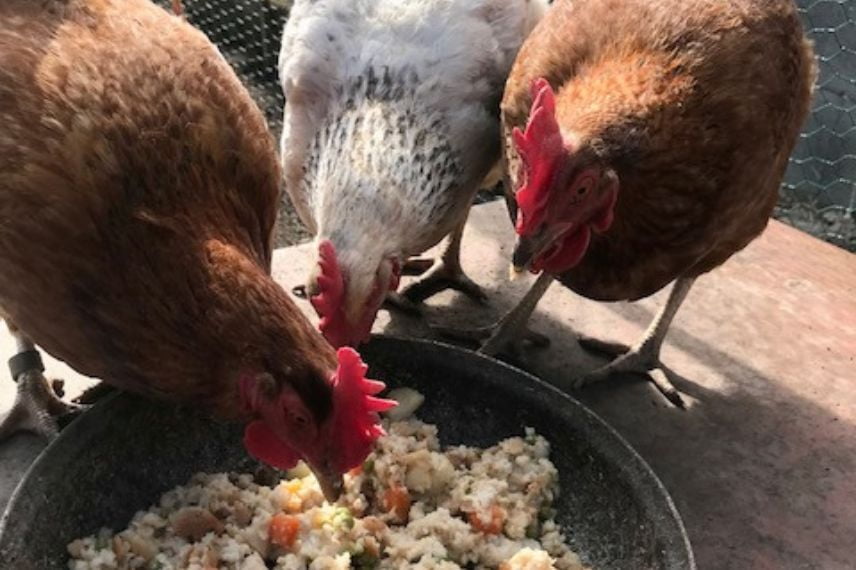
Homemade mash for three of my five hens
Read also
Chicken eggs in 10 questions/answersAnd what about stale bread?
Giving bread to hens is often a contentious issue. If a decision had to be made (about the bread!), it might be wise to give stale bread in small amounts, like a little treat offered occasionally.
Alternatively, you can add a bit of hard bread, rehydrated in a little soup or water mixed with vegetable stock, to homemade feeds to give them some density. Once again, two to three times a week in winter, and not every day!
- Subscribe!
- Contents
Comments